|
|

International Newsletter and Forum on Corneal & Scleral Rigid Gas Permeable Contact Lenses, Corneal Shape, Health and Vision
|
|
|
|
|
|
|
|
|
|
|
I-site newsletter is a global newsletter which is purely educational in nature and launched in 2009, that monthly provides independent updates from the international literature on specialty (R)GP lenses and related topics. To unsubscribe at any time, click the link 'SafeUnsubscribe' at the bottom of this newsletter.
|

What you hardly hear or read about, but are quite essential aspects of scleral lens fitting, are issues related to lens application and (unexplained) complaints such as 'pain without stain' right after lens application. Lynette Johns covers and tackles a couple of these issues in the August edition of Contact Lens Spectrum in: Trials and Tribulations with Scleral Lenses. When fitting scleral lenses, we may encounter a variety of roadblocks, she writes. Lens application during the fitting process can be the biggest time drain of the appointment, she states. No matter how prepared patients are for their appointments, they cannot overcome their own reflexes. Two common types of patients are the 'squeezers,' who have a strong blepharospasm response, and the 'rollers,' who have a strong Bell's phenomenon. The worst case is a combination of the two, the author writes. Desensitizing reflexes takes time and can be tricky, but it's an investment in a patient's confidence. This article also covers symptoms that patients may encounter after lens application, such the phenomenon of patients who jump out of the chair in pain immediately after a lens is applied. But the lens looks great, it vaults nicely with no bubbles, no edge lift is detected, there's no compression or impingement. This is where the intriguing phenomenon of neuropathic pain comes in. This article is a must read for anyone active in the scleral lens arena, if you ask me. Scleral lenses...so much more than just 'a lens fit.'
|
Understanding the Landing Zone

To illustrate the latter point (scleral lenses are so much more than just a lens fit), let's focus on the landing zone of the scleral lens. In contrast with corneal lenses, scleral lenses land on a 'mushy' surface, the conjunctiva, at first. So, should we call them 'conjunctival lenses' instead? In a beautiful overview by Maria Walker, Muriel Schornack and Stephen Vincent, the anatomical and physiological characteristics of the conjunctiva and the sclera are looked upon in depth. Literally. The conjunctiva is a vascularized mucous membrane, which is of particular relevance to scleral lens wear because the mucus secreted from goblet cells influences tear film stability, alterations in its vasculature can inform the fit of the landing zone, and the conjunctival tissue in conjunction with the underlying sclera supports the weight of the lens' landing zone. Its thickness on average is about 240 microns (about 40 microns of epithelium and 200 microns of stroma). But typically, there is a difference of about 25-90 microns nasally versus temporally. And also, diurnal variations and age-related changes can have an impact on conjunctival thickness. The episclera is the outermost layer (15-20 microns thick at the limbus) of the anterior sclera, followed by the rigid stromal scleral portion. But despite its rigidity, the sclera is a dynamic structure too. The stromal thickness and biomechanical properties are influenced by age and also by diurnal fluctuations and conditions such as glaucoma and myopia. The paper further covers scleral angles and shape. In addition, the paper notes that a scleral lens itself can have an impact on conjunctival and scleral tissue. In essence: if you want to understand the landing zone for scleral lenses, basic knowledge about the structure of the underlying tissue is essential.
|
Orthokeratology & Ocular Surface Effects in Kids

To investigate the effect of overnight orthokeratology (OOK) on the ocular surface and dry eye-related cytokines in children, this study was conducted on 60 myopes treated with OOK and 60 age-matched spectacle-wearing participants. No adverse events were observed during the study (except trace to moderate corneal staining and allergic conjunctivitis in the treatment group). Noninvasive tear breakup time (NITBUT) was significantly decreased after 6 and 12 months of OOK wear. The upper meiboscore (using noncontact meibography) and the total meiboscore increased gradually and peaked at 12 months of OOK. The concentration of the three cytokines in the treatment group also significantly increased after OOK wear. These increases occurred at different time points. There were no significant differences in the ocular surface disease index or tear meniscus height at any follow-up time point compared to baseline in both groups. However, they did conclude that short-term OOK may reduce the stability of the tear film and that long-term OOK could induce ocular inflammation through the disruption of meibomian glands. Therefore, they recommend that children who undergo OOK have regular examination of the ocular surface and meibomian glands, and extra attention must be paid to children with baseline meibomian gland distortion or a history of allergic conditions.
|
Base Curve Selection of Corneal GPs in Keratoconus
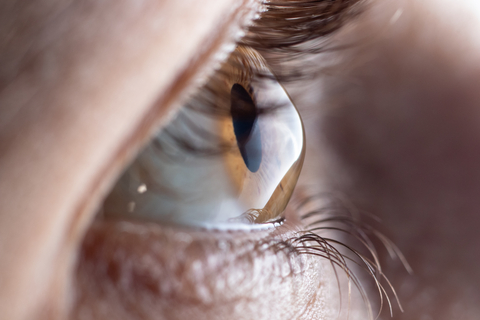
In these 'topography times,' it may raise an eyebrow to see a study on predicting initial base curve of rigid corneal lenses based on Javal keratometry findings in patients with keratoconus. But one of the objectives of this study led by a group from Iran was to simplify the process of corneal GP lens fitting in remote areas where access to advanced facilities and equipment is not possible. Steep keratometry (Krs), flat keratometry (Krf) and corneal astigmatism (CA) were responsible for about 66% of the variance of lens base curve (LBC) used. Single and multiple linear correlations were done, and the result was the following equation: BC=2.455 (constant of the final multiple regression model) + 0.280 (steep keratometry) + 0.368 (flat keratometry) + 0.0470 (corneal astigmatism) to calculate the first lens base curve.
|
Multifocal Corneal Lenses and Low Vision Aids

A case series of two in Contact Lens & Anterior Eye by Christina Cherny, Andrea Zimmerman and Suzanne Sherman presents two visually impaired presbyopic myopes. The first was a 65-year-old patient with a refractive error of -20.00=C-0.75x30 in one eye and +5.0=C-2.50x180 in the other eye post-cataract extraction, and the second patient was a 59-year-old with -21.00D for the right eye and -0.50=C-2.00x165 post-cataract extraction in the left eye. Both patients had poor visual acuities. But by fitting them with multifocal corneal lenses, the patients reported to be less reliant on low vision aids, and they showed significant improvements in quality of life when wearing the corneal lenses.
|
(Two Different?) Myopia Management Strategies
Practically Abstract by Steven Turpin recently looked at myopia management strategies. As myopia management continues to gain popularity, we must continue to recognize the nuances in the disease. It comes in a couple of flavors, maybe. You could compare it to type 1 and type 2 diabetes, which share the same name and a few clinically quantifiable consequences (high blood sugar) but are totally different disease processes. Evidence is increasing that early onset high myopia (<-6.00 before the age of 7) is a much different animal compared to low myopia developing in a patient's early teens. Both practitioners and researchers should keep this in the back of their mind as it relates to treatment/inclusion criteria. Clinically, these insights help to reinforce that not all myopia is created equal and that some of our management strategies may not be as effective in certain cases.
|
|
|
|
|
|
|
I-site is an educational newsletter that is distributed on a monthly basis and provides an update on rigid gas permeable related topics (scientific research, case reports and other publications worldwide). I-site is objective and non-political. Its editor Eef van der Worp, optometrist, PhD, FAAO, FBCLA, FIACLE, FSLS is a lecturer for a variety of industry partners, but is not related to any specific company. Please contact us at: i-site@netherlens.com.
|
|
|