| |

International Newsletter and Forum on Corneal & Scleral Rigid Gas Permeable Contact Lenses, Corneal Shape, Health and Vision
|
|
|
|
|
|
|
|
| |
|
I-site newsletter is a global newsletter which is purely educational in nature and launched in 2009, that monthly provides independent updates from the international literature on specialty (R)GP lenses and related topics. To unsubscribe at any time, click the link 'SafeUnsubscribe' at the bottom of this newsletter.
|
How Mainstream Is Orthokeratology?

The status of orthokeratolgy (OK) is one of the most puzzling things out there for me. It is considered a 'specialty' in most parts of the world. However, in 'myopia management' clinics and, for instance, in my country, the Netherlands (NL), it is pretty much considered a standard procedure, i.e., 'another day at the office' kind of thing for many. The vast majority of all practices have a topographer, and most of them offer OK (in kids and in adults). As another example, OK will be, of course, prominently present at the upcoming
Global Specialty Lens Symposium. But it also is one of the most popular topics at the
Dutch Contact Lens Congress NCC 2020
in March - which may be kind of unusual for a 'general' (not specialty) contact lens meeting. So, the question is: what is a specialty? Fitting corneal GPs used to be a standard procedure - now it is becoming more and more of a specialty. Some parts of soft lens fitting are surely 'specialty' too. But back to OK: the benefits of OK as a mainstream modality are that more people have access to it, which makes it more popular. But the downside is that if 'everybody' starts doing it, there is the risk that it will be perceived more as a commodity than as a treatment (which it is, of course, the latter), with increased risks of complications - whether we like it or not. As said, it is puzzling, and doubly so. I think there is room in every practice for OK - if done well - especially when managing myopia. But let's just make sure we treat it special.
Eef van der Worp
|
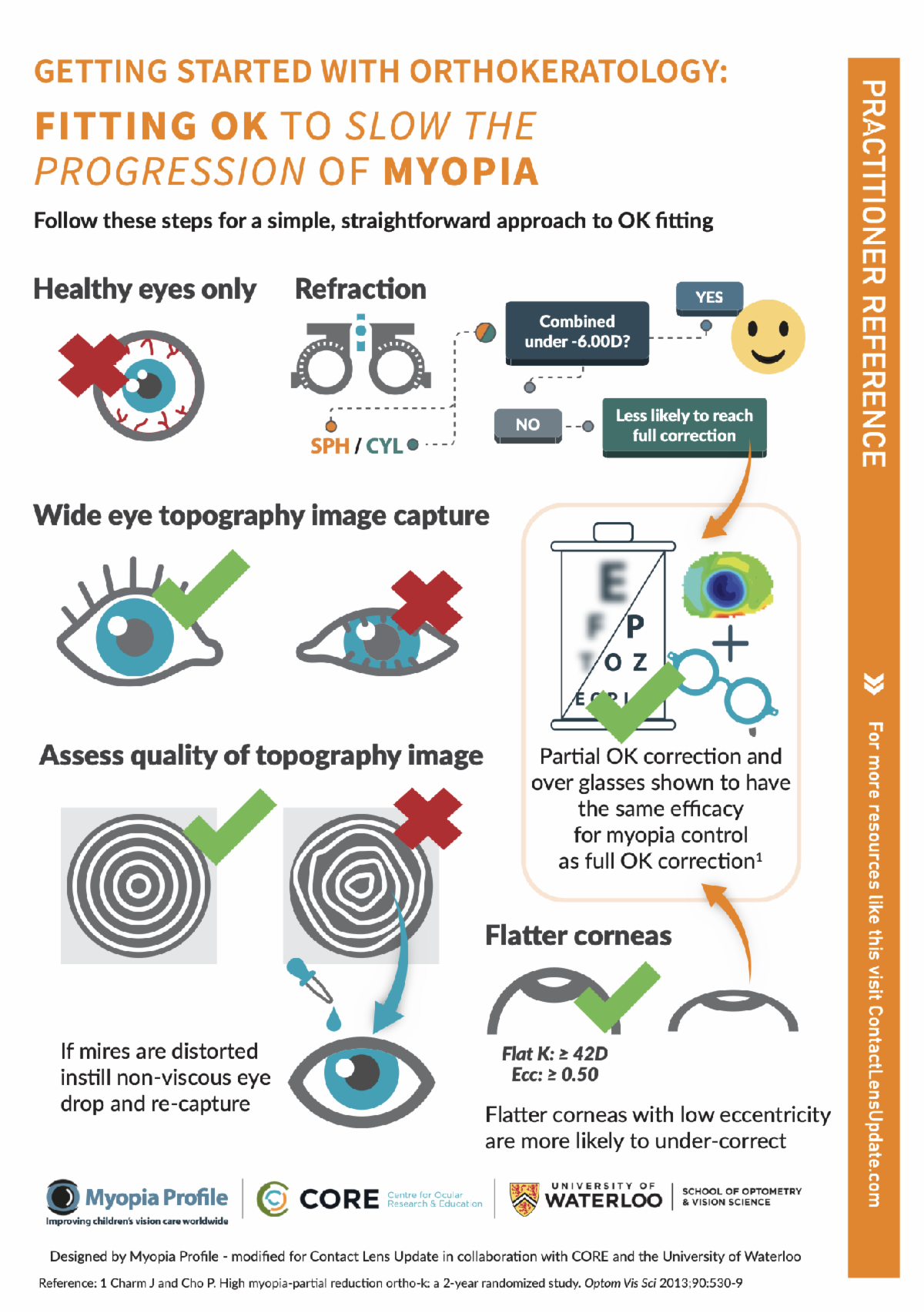
'Contact Lens Update' on Orthokeratology
As another illustration of the dual status of OK ('mainstream or specialty'), Contact Lens Update, which usually covers mainstream contact lens topics, published an entire issue on OK recently. The special is hosted by Paul Gifford and covers a couple of things. From a fitting perspective, the editor discusses in his column things such as 'central toricity' versus 'limbus-to-limbus toricity.' But safety issues and myopia management options are discussed as well. 'At what age should I start OK?' The answer is that there really isn't an age limit, according to Gifford. It is well known, though, that due to the fact that myopia progresses faster at younger ages, the impact of the treatment is better/higher for younger kids. A study by
Hiraoka et al (open access) showed that the increase in axial length during the 5- year study period was 0.99±0.47 and 1.41± 0.68 mm for the OK and control groups, but one of the most interesting findings of the study is that a significant difference in the annual increase in axial length between the OK and control groups was observed until the third year, but not in the fourth and fifth years. The '
getting started with OK' fitting guide offers very clear tips on making the procedure more insightful. The spherical and cylindrical values should not exceed 6D combined (rather less than that preferably), and flat corneas (42D/8.05mm) and corneas with low eccentricities (under a value of 0.5) are more likely to under-correct. The guide also points attention to the quality of the topography measurement - which indeed is absolutely crucial. If there is more than 40 microns of difference between the steep and the flat meridian, it is advised to use toric-back-surface designs. If a residual astigmatism of 0.75D or higher is present, toric front optics are probably desired.
|
Orthokeratology & Atropine
|
|
Controlling Myopia Control
 Regarding
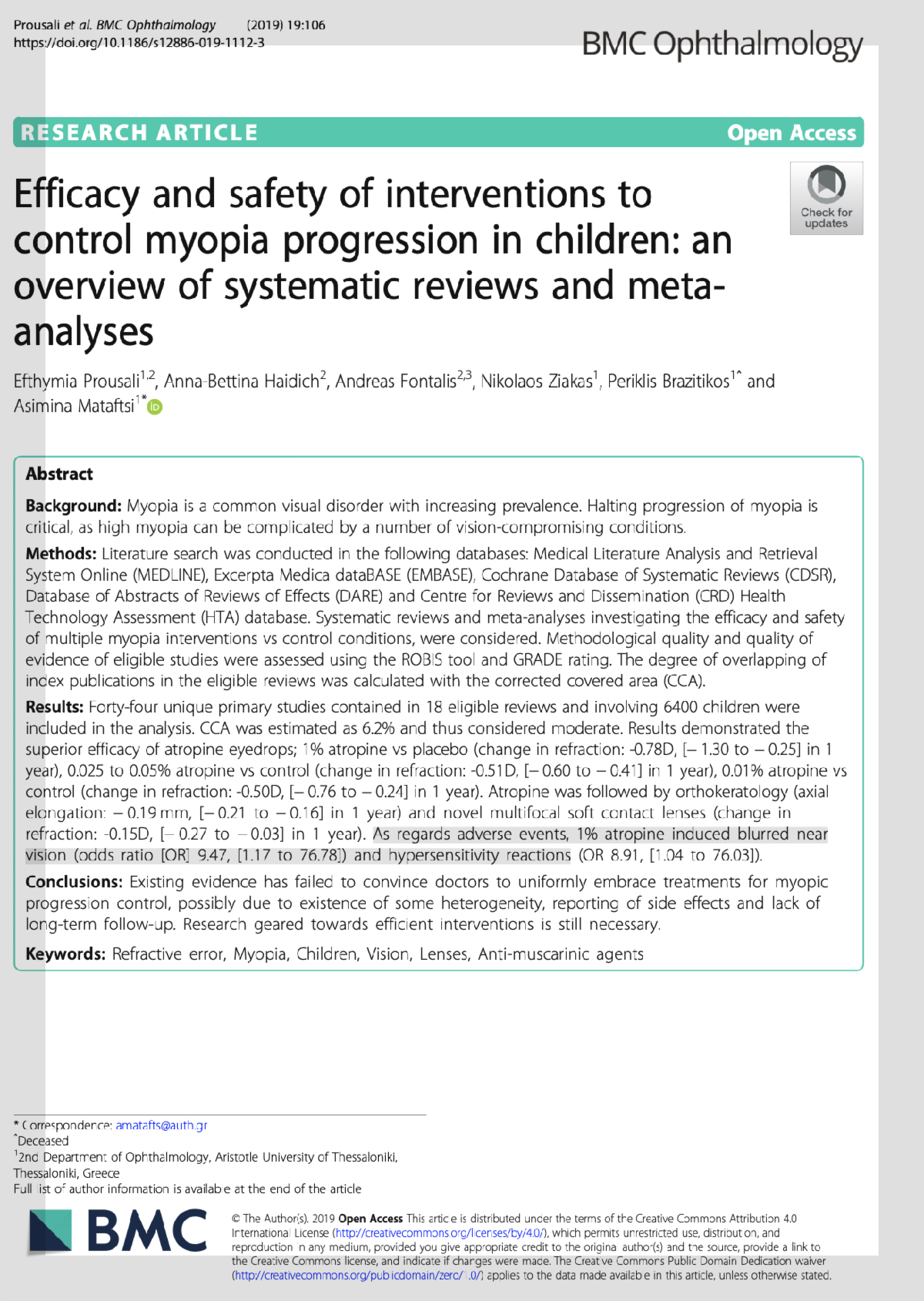
myopia management with OK: an overview of systemic reviews and meta-analyses was assessed in an (open access) article in
BMC Ophthalmology by Prousali et al .
The authors found atropine to be most effective in refraction and/or axial elongation reduction (1% being most effective), followed by OK. With regard to adverse events, 1% atropine induced blurred near vision and hyper-sensitivity reactions. In an interesting
Podcast by Kate Gifford and Mark Bullimore on myopiaprofile.com,
both the effectiveness and the stability of low-dose atropine (0.01%) is questioned. Another study, presented at ARVO
by Ng et al and referred to in the
Contact Lens Update
edition as well, looks at the combined treatment of atropine with OK. The initial six-month results of the study show that a combination of single-dose 0.01% atropine with OK lens wear can have an additive effect in slowing axial elongation when compared with monotherapy of OK alone or 0.01% atropine alone. The combined treatment was well-tolerated, according to the investigators
Chen et al in Current Eye Research looks at the effect of treatment zone decentration on myopia progression during OK lens wear. They found that decentration of the OK treatment zones stabilizes after 3 months of lens wear and that this effect can slightly decrease the axial length growth in children.
|
Pigmented Arc Formation in Orthokeratology
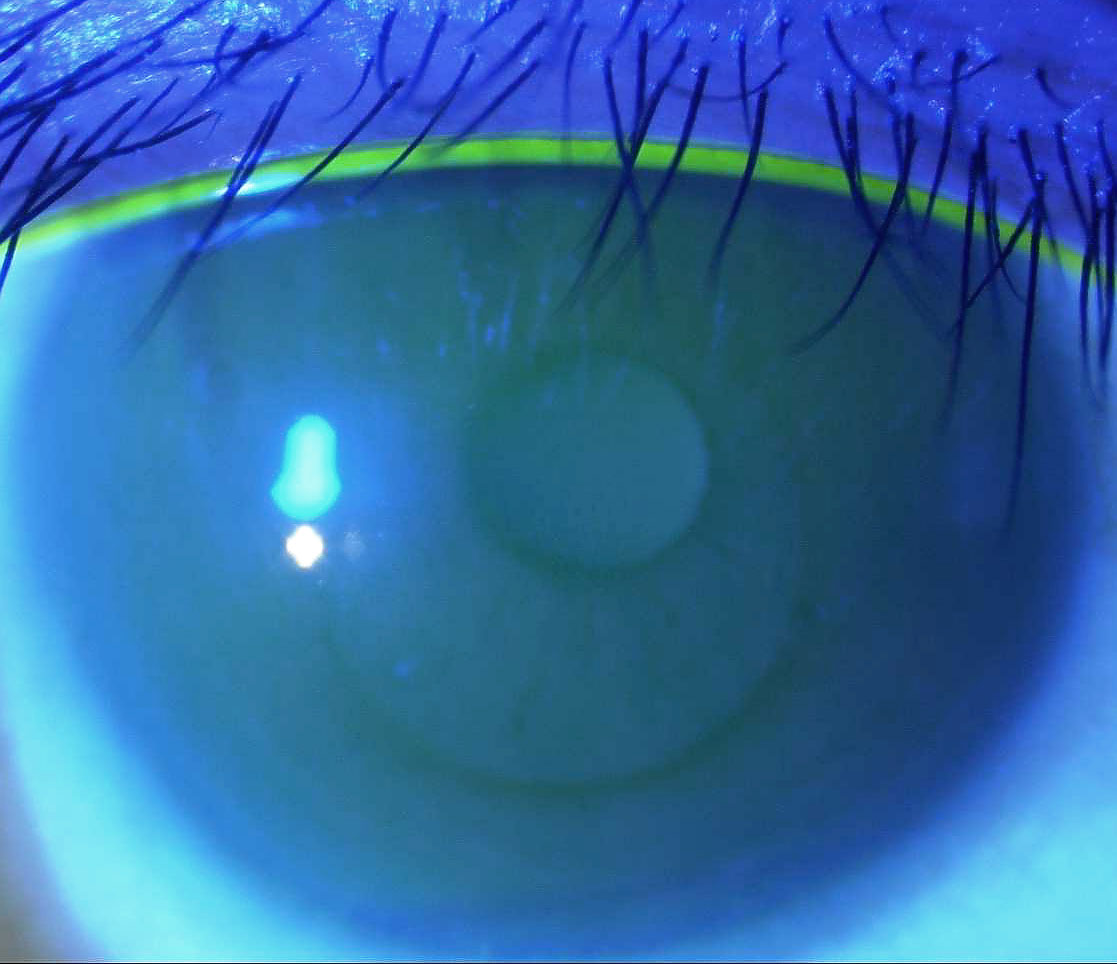
In a retrospective case series publication by Liu et al in Nature, the authors aimed to determine the intensity of corneal pigmented arc in OK-treated children and its correlation with key epithelial thickness measurements obtained by anterior segment optical coherence tomography (AS-OCT). The mean age of the children was 11.4 years, and the incidence of corneal pigmented arc was 92.2% after lens wear for a mean duration of 21.2 months. Intensity of pigmented arc was found to be significantly correlated with key epithelial thickness parameters. Also, there was significant correlation between intensity of pigmented arc and OK target power. In summary, the investigators state that children receiving OK treatment tended to develop pigmented arcs, and a significant correlation between intensity of pigmented arc and key epithelial thickness parameters was observed. AS-OCT can be a useful tool for predicting intensity of pigmented arc in ortho-k-treated children, the authors conclude.
Photo: Pauline Cho
|
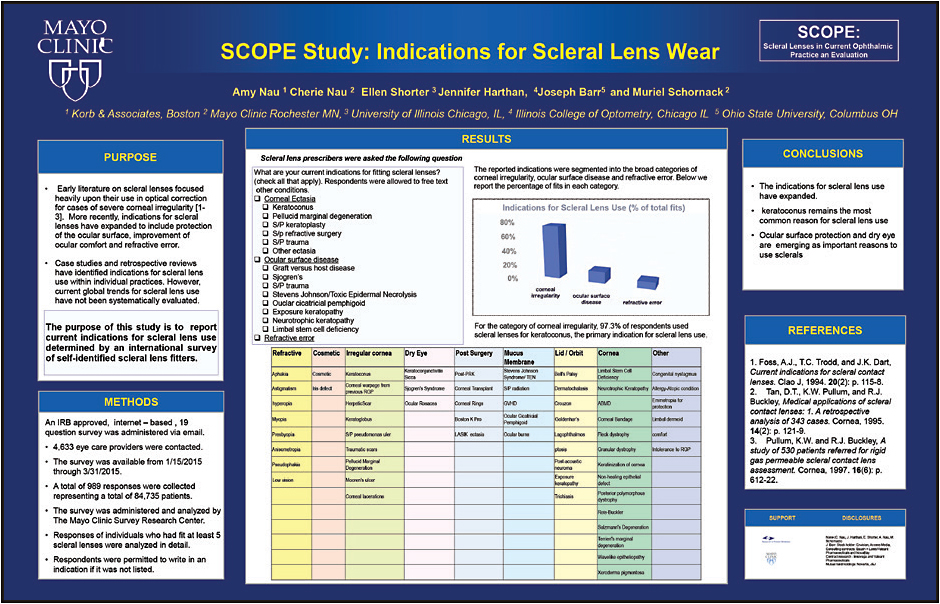
International Forum for Scleral Lens Research Meeting
Just prior to the Global Specialty Lens Symposium (GSLS 2020) in Las Vegas, a special meeting will be held on January 22nd from 12:00-4:30pm dedicated to providing presentations and discussions in a 50:50 mixture to encourage an advanced evidence-based dialogue on scleral lens-related research. Presenters will include Langis Michaud, Stephen Vincent, Jason Nichols, Lynette Johns, Greg DeNaeyer, Gonzalo Carracedo, Melissa Barnett, Daddi Fadel, Clay Radke and others. Join these world-leading practitioners and scientists to discuss a number of hot topics such as whether scleral lenses provide sufficient oxygen, the latest findings and recommendations about the post-lens tear fluid reservoir, scleral shape and how that affects scleral lens fitting and performance.
|
|
Upcoming Events
- Global Specialty Lens Symp, 22-25 Jan, Las Vegas (US)
- NCC 2020, 15-16 March, Veldhoven (NL)
- EFCLIN, 23- 25 April, Berlin (DE)
- EAOO, 15-17 May, Helsiki (FI)
-
- Orthokeratolgy Society of Oceania, 5-7 June, Gold Coast (AU)
- International Congres of Scleral Contacts, July 24-25, Ft Lauderdale (US)
|
|
|
|
|
|
|
I-site is an educational newsletter that is distributed on a monthly basis and provides an update on rigid gas permeable related topics (scientific research, case reports and other publications worldwide). I-site is objective and non-political. Its editor
Eef van der Worp, optometrist, PhD, FAAO, FBCLA, FIACLE, FSLS is a lecturer for a variety of industry partners, but is not related to any specific company. Please contact us at:
i-site@netherlens.com.
|
|
|