| |

International Newsletter and Forum on Corneal & Scleral Rigid Gas Permeable Contact Lenses, Corneal Shape, Health and Vision
|
|
|
|
|
|
|
|
| |
|
I-site newsletter is a global newsletter which is purely educational in nature and launched in 2009, that monthly provides independent updates from the international literature on specialty (R)GP lenses and related topics. To unsubscribe at any time, click the link 'SafeUnsubscribe' at the bottom of this newsletter.
|

In the virus turmoil, let's keep an eye out for other topics that deserve attention too: 'stuff' that seemed important in the old world and that may be of importance again in the world of the future. This newsletter features two articles that were published recently on topics that are both very dear to my heart and are potentially of crucial importance. It is hard to pick a favourite, but let me start with the paper by Jason Lau et al in Investigative Ophthalmology and Visual Science. We have known for a while now that higher-order aberrations (often defined as Zernike polynomials) are associated with axial length growth in children. This paper shows in a clear fashion the link between orthokeratology, higher-order aberrations (particularly spherical aberration) and a slowing down of axial elongation. See the first item below for more. The second paper is by Alejandra Consejo et al in Eye & Contact Lens. Ocular surface shape has certainly had my attention for a while (see item on the 'decade of scleral lens shape measurement'). But the interesting thing about Consejo's paper is that it links scleral shape to axial length and refractive power of the eye. Hence, the sclera may be of importance to the refraction and maybe even linked to myopia progression and axial length development. Myopia is sometimes a different world in the specialty lens community. But in these papers, the two worlds collide. I could be mistaken, but I have a gut feeling we have something here.
Eef van der Worp
|
Higher-Order Aberrations, OK & Myopia
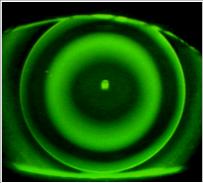 The mentioned paper by Jason Lau et al reports on a retrospective longitudinal study aimed at examining the relationship between ocular higher-order aberrations (HOAs) and axial eye growth in young myopic children undergoing ortho-keratology (OK). Axial length and ocular HOAs were measured under cycloplegia annually over a 2-year period in the right eyes of myopic children, and data from 103 subjects were analysed. After adjusting for age, sex and refractive error, higher root-mean square (RMS) values of total HOAs and for spherical aberrations were associated with both longer axial length and slower axial elongation. For individual Zernike term coefficients, a higher level of positive spherical aberration (Z04) was also associated with longer axial length and slower axial elongation after adjusting for baseline HOAs. In conclusion, the authors state that OK for myopia control significantly increases the Zernike coefficients, and therefore the RMS values, for a range of total ocular HOA metrics in children. These findings suggest the potential role of HOAs, particularly spherical aberration, as the possible mechanism of slowing axial elongation in OK treatment
|
 Vision is a beautiful thing. It sounds complex, how our optical system works. And it is. Especially if you want to look further away, you need optical systems that are free from any form of aberration. After the described 'sphere and cylinder,' there are many 'higher-order aberrations' that cannot be explained by two simple meridians. This is where Zernike polynomials come in. These are mathematical functions that are used very commonly to categorise complex optical aberrations. While in astronomy the list of Zernike polynomials is almost infinite, for the human eye the ones most relevant after spherical defocus and astigmatism are the Zernike polynomials numbers 3 and 4. Zernike order number 3 is coma. Coma is short for comatic aberration, which in optical terms describes the imperfection when rays focus off-axis. Spherical aberration (Zernike order number 4) refers to a type of aberration found in optical systems with spherical surfaces when light rays do not end up in one singe focal 'point' but in a little cloud of focal points. This deviation reduces the quality of images. Did I mention that Zernike was Dutch? His full name is Frits Zernike. Born and raised in Amsterdam (NL).
|
Anterior Scleral Morphometry, Axial Length & Myopia
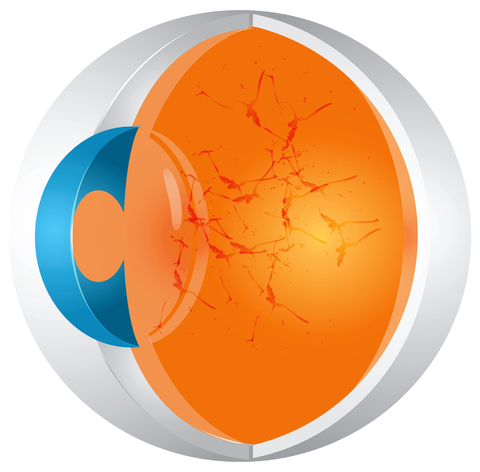
Is there a relationship between anterior scleral shape and the refractive state of the eye? Forty-two participants (84 eyes) were included in this study. Twenty-five participants were categorised as emmetropes, and seventeen participants were categorised as myopes. Axial length was acquired using an optical biometer, and topographical data was obtained using a non-contact corneo-scleral topographer. Anterior scleral asymmetry was calculated from 3-dimensional data using a custom-made algorithm and was further correlated to axial length and refractive power. The anterior scleral shape was highly correlated with axial length and moderately correlated with refractive power. The more myopic the eye, the less asymmetric the anterior sclera was. The fact that both axial length and refractive power are well correlated with the anterior scleral shape means that the refractive state of each patient should be taken into consideration when analyzing scleral shape as part of planning certain treatments or surgeries and when fitting scleral contact lenses. The link to myopia progression and axial length development deserves further attention.
|
A Decade of Scleral Shape Measurement
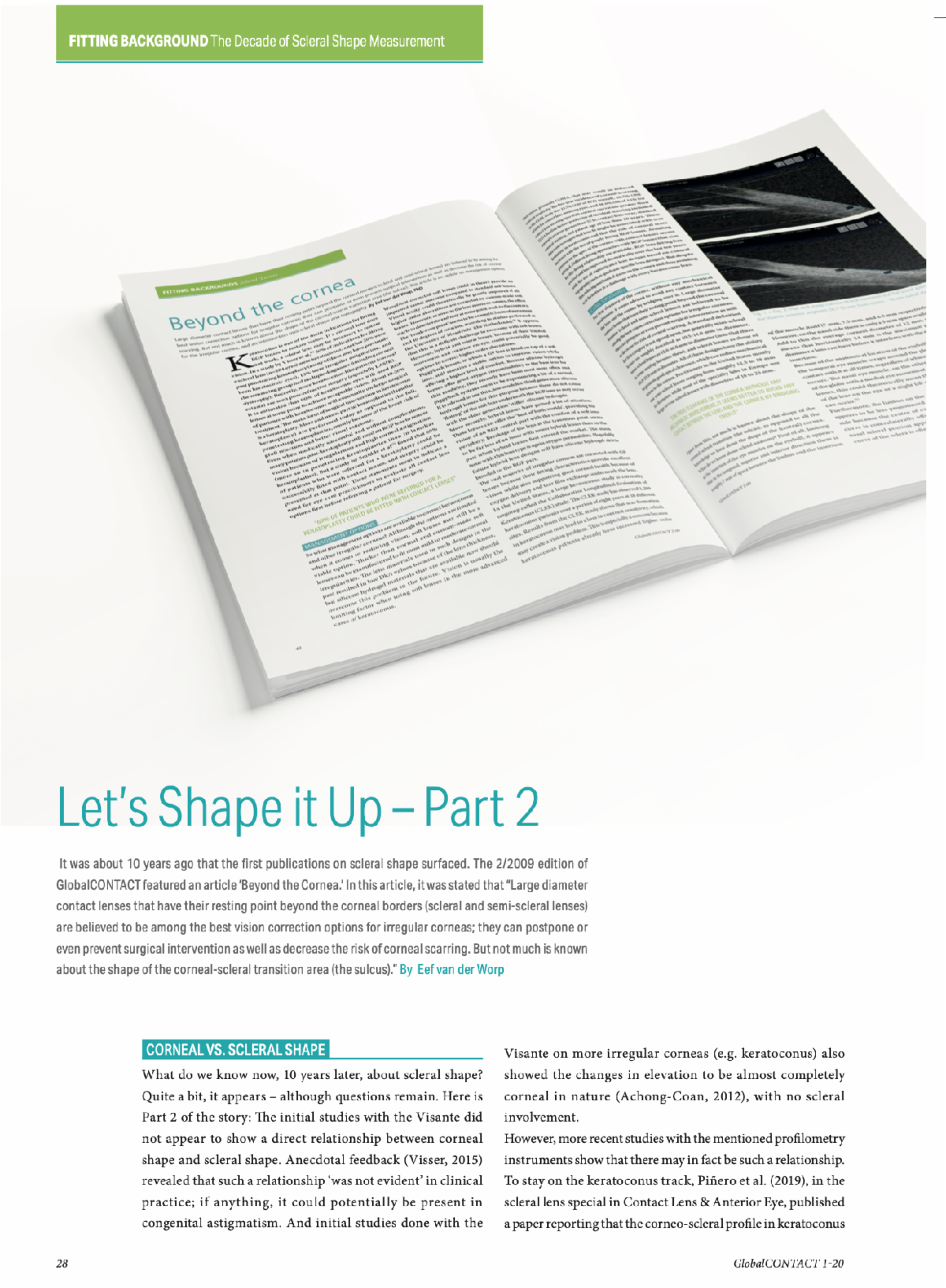
It was about 10 years ago that the first publications on scleral shape surfaced. The 2/2009 edition of Global Contact featured an article 'Beyond the Cornea.' This article stated that "Large diameter contact lenses that have their resting point beyond the corneal borders (scleral and semi-scleral lenses) are believed to be among the best vision correction options for irregular corneas; they can postpone or even prevent surgical intervention as well as decrease the risk of corneal scarring. But not much is known about the shape of the corneal-scleral transition area (the sulcus)." Major steps have been made in understanding anterior ocular surface shape since then, especially the undiscovered limbal and scleral shape characteristics. The period from 2009 to 2019, therefore, will forever go into 'the books' as the decade of better understanding scleral shape using new technology. In fact, it has rewritten textbooks - quite literally - on ocular anatomy. Moreover, this better understanding has led to upgraded scleral lens designs (tangential and asymmetric in nature). Scleral lenses have and will become more available to a larger group of patients who can benefit through potential visual rehabilitation and significant improvement in quality of life. See overview article A Decade of Scleral Shape Measurement Part I & 2 in the Global Contact journal.
|
How Does Ortho-k Wear Affect Binocular Vision?
 Sometimes parents of our younger orthokeratology (OK) patients have a hard time believing that their child will be able to see clearly at all distances just by wearing their lenses overnight. They will occasionally ask whether their kids will need correction for reading or whether OK will affect their child's reading in any way. Steven Turpin notes that he tells patients that near vision should not be affected even though we are "over correcting" their vision by implementing the compression factor. He refers to a paper by Gifford et al in Eye & Contact Lens. Clinically, the results of the study indicate that OK does not compromise binocular vision function and may actually improve it. The explanation for this improvement may be due to the aspheric nature of OK correction and/or to the significant increase in positive spherical aberration. A larger study replicating these results will be needed probably before making these claims to our patients during discussion of the OK modality, but the results are encouraging. See the full practically abstract editorial via link below by Steven Turpin - a Pacific University College of Optometry graduate specializing in cornea and contact lenses and an optometrist working at different practices in the state of Washington (US).
|
|
|
|
|
|
|
I-site is an educational newsletter that is distributed on a monthly basis and provides an update on rigid gas permeable related topics (scientific research, case reports and other publications worldwide). I-site is objective and non-political. Its editor
Eef van der Worp, optometrist, PhD, FAAO, FBCLA, FIACLE, FSLS is a lecturer for a variety of industry partners, but is not related to any specific company. Please contact us at:
i-site@netherlens.com.
|
|
|