I-site newsletter is a global educational newsletter launched in 2009, that monthly provides independent updates from the international literature on specialty (R)GP lenses such as corneal, orthokeratology and scleral lenses and related topics. View as Webpage
|
|
Scleral lenses have become an increasingly common treatment for ocular surface disease and irregular corneas, and multidose, preservative-free saline solutions are frequently used off-label to fill scleral lenses. But, because the fluid resides over the ocular surface during lens wear, contaminated solutions may increase the risk of infectious complications, write Wonjae Seo and colleagues in Optometry & Vision Science. They found in their 2020 published study that environmental gram-negative organisms, many of which can contribute to infectious keratitis, can persist for weeks once introduced into saline solutions. The 2021 paper by Moon Jeong et al from the University of Southern California (US) suggests that off-label multidose preservative-free saline commonly used to rinse and fill scleral lenses before application on the eye may become contaminated with microorganisms once the bottle has been opened. Eye care practitioners and scleral lens patients should be aware of these potential contaminations and should prioritize lens, hand, and environmental hygiene to minimize the risk of ocular complications, the authors state—an important task for us in clinical practice. As a sidenote, the COVID-19 pandemic has raised significant awareness regarding micro-organisms and hygiene among the public, which could be used to our advantage to improve compliance. Stay tuned. More on this topic may surface at the Global Specialty Lens Symposium (live meeting) coming up in January 2022.
|
|
About 10 years ago, only a handful of very specialized experts around the world were capable of fitting scleral lenses successfully, and only a few manufacturers were making scleral lenses. It is in the interest of the patient that more practitioners become familiar with the modality to serve patients with the best optical correction available — which is often a scleral lens for the more challenging eyes. While scleral lenses have surged in recent years, how is this represented in the education system? The SCOPE team looked at this and found that most US programs begin scleral lens education during the 3rd year of optometric education (71%). Students complete an estimated 18.0±18.1 scleral lens evaluations during training. The range is interesting to note: between 2–100 scleral lens evaluations by students is reported. Ideal scleral lens fitting characteristics taught, include central corneal clearance of 206±44 microns (range 150−350), limbal clearance of 62±24 microns (range 20−100), with a maximum of one clock hour or less of conjunctival vascular compression. Educators ranked in-person continuing education (61%) followed by contact lens laboratory consults (22%) as the two most important sources of information on best practices in scleral lens prescription and management. For more educational tools and resourses, see item below in this newsletter. Image Rubén Rodriguez
|
|
With the introduction of corneal topography, keratometry may be considered bypassed to some degree by some in our field when it comes to corneal GP lens fitting. But not everybody has access to a corneal topographer; hence, keratometry remains a first tool for many around the globe. Two recently published papers look at this. |
|
Ortho-k Trial Lens Selection |
|
Fan et al state that currently, the most common method for choosing the first CRT trial ortho-k lens is based on a sliding card provided by the manufacturer. This method requires two parameters to select the first trial lens—the flat keratometry (K) reading and the spherical reduction needed to correct myopia—and does not provide any suggestions for toric lenses. Depending on the relationship between ortho-k lens design and corneal morphology, many factors in addition to the flat-K reading and spherical reduction need to be considered, and eccentricity values (e-values) may have a great influence on reverse zone diameter and on landing zone angle. For this study, a Sirius corneal topography system (CSO, Italy) was used to obtain the corneal parameters including the horizontal visible iris diameter (HVID), flat-K, steep-K, mean-K, corneal astigmatism (CA), e-value and anterior chamber depth (ACD). With this data, a machine learning method was developed and used. The machine learning method proved to have many advantages; it demonstrated good performance for estimating the parameters of the first trial CRT lens and outperformed the traditional sliding card method and the traditional multiple linear regression model in both accuracy and efficiency. This optimized model could be applied to achieve more personalized lens design in the future.
|
|
Keratoconus Trial Lens Selection |
|
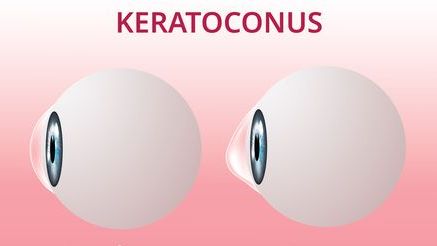
Berjandy et al from the Noor Research Center for Ophthalmic Epidemiology in Tehran (Iran) performed a study involving 121 eyes of 69 keratoconus (KC) patients in an effort to find an appropriate correlation between the base curve of corneal GPs and manual keratometry findings in KC patients to simplify the fitting process and to reduce chair time and costs. The found that predicting initial base curve of the rigid contact lenses according to Javal keratometry findings in patients with keratoconus is feasible, but they also point out that future clinical investigations using new equations could prove to be even better. By using the suggested formulas in the paper, the number of diagnostic lenses required to achieve proper fitting can be decreased, according to this investigators. |
|
Scleral Lens FAQs & Webinars |
|
Amsterdam, Netherlands
Copyright © 2020. All Rights Reserved
This newsletter is kindly supported by:
|
|
|
I-site is an educational newsletter that is distributed on a monthly basis and provides an update on rigid gas permeable-related topics (scientific research, case reports and other publications worldwide). I-site is objective and non-political. Disclosure: I-site's editor Eef van der Worp, optometrist PhD FAAO FBCLA FIACLE FSLS, receives educational grants from a number of industry partners but is not related to any specific company. |
|
|
|
|
|
|