I-site newsletter is a global educational newsletter FOR HEALTH CARE PROVIDERS launched in 2009, that monthly provides independent updates from the international literature on specialty rigid contact lenses such as corneal, orthokeratology and scleral lenses and related topics. View as Webpage
|
|
Dry eye is everywhere, and it may in fact be the number one reason after refractive error for a visit to the eye doctor. It is complex, though, with so many variables involved; even the simple classification into 'mild', 'moderate' and 'severe' is not simple. Not to mention the cascade of management options that the TFOS DEWS II provides, which is considerably long. Typically, when that is the case in health care, it says something about the complexity of a condition and/or what we know about it. In this case, the condition is indeed very complex and diverse. And there is no simple solution either. But from the clinical experiences of many eye care practitioners and doctors around the world, it is clear that scleral lenses can be part of the holistic approach to the dry eye strategy and, at least in some patients, can be beneficial. A recent paper (see next item) by the BostonSight group shed some light on this. Where do sclerals fit in the dry eye management cascade? An international advisory board met on this specific topic and is working on a consensus document addressing this question. Stay tuned. As with myopia, dry eye management requires a holistic approach. Recent papers indicate that factors such as smoking and BMI, not to mention screen time, may have an impact on dry eye; screen time undoubtedly has an impact on the frequency of dry eye. The TFOS group has now even formed a 'Lifestyle Challenges Subcommittee', calling dry eye 'a lifestyle epidemic ocular surface disease.’ So there is more to come on this. As for scleral lenses, this may be a new arena to explore regarding where they can fit in to better help patients in our practices who suffer from dry eye. We have the role and responsibility, in my view, to explore those options as (specialty) contact lens practitioners, to the benefit of the patient.
Eef van der Worp
|
|
Effect of Scleral Lenses in Dry Eye |
|
To evaluate the impact of treating dry eye with scleral lens devices, the symptom outcomes in scleral lens wearers based on the Ocular Surface Disease Index (OSDI) were evaluated. The most common treatment indications in this study were keratoconjunctivitis sicca and corneal ectasia. The baseline average OSDI score was 56.9±23.7 at the beginning of the study. After treatment, the average follow-up OSDI was 23.8±15.6: a statistically significant 55% average improvement from baseline. All patients except for two subjects showed improvement in the dry eye score. Statistically significant improvement occurred regardless of underlying diagnosis, with no statistically significant difference based on age, sex, mental illness, or lens diameter and no statistical correlation with average wear time or duration of lens wear. In conclusion, the authors state that the scleral lens device treatment improved the visual function and symptom relief in patients in this study. See link below for the full (open access) paper. |
|
Corneal Response to Scleral Lenses
in Keratoconus
|
|
Research into scleral lens wear has surged, and our understanding of corneal physiology and pathology keeps improving. To verify corneal alterations in patients with keratoconus who wear scleral lenses, this study from Brazil focused on corneal endothelial layer assessment. Scleral lenses were fitted to 22 patients with keratoconus. The main conclusion of the study was that variables related to endothelial morphology and the corneal thickness as measured by pachymetry did not change significantly over time during wear. Central fluid reservoir measurements were noted to decrease over the 90-day wearing period, which could be of value to scleral lens fitters. No infectious or inflammatory process was found during the study period. |
|
Microbial Keratitis after Penetrating Keratoplasty & Scleral Lens Wear |
|
What about microbial keratitis (MK) risk in scleral lens wear? It is unfortunately hard to pin down an exact number on that (as mentioned in the 'specialty lenses - safety first' article in Contact Lens Spectrum). Often, we are dealing with challenging eyes when fitting scleral lenses, which is exactly the case in an article in Eye & Contact Lens discussing a series of three patients who developed an MK as described. The patients wore scleral lenses for visual rehabilitation of corneal irregularity induced by penetrating keratoplasty (PKP); all three also had concurrent ocular surface disease (keratoconjunctivitis sicca and corneal exposure). Cultures identified a causative organism in two patients, and septated hyphae suggestive of fungal infection were identified in tissue removed during therapeutic PKP in the third patient. All three patients were receiving either topical or systemic immunosuppressive therapy before the infection developed. In summary, the authors state that scleral lenses are often used to manage complex ocular disease, which can make it difficult to determine the precise cause of complications that arise while wearing the lenses. Multiple factors, including scleral lens wear, may have contributed to the initial development of MK in patients in this case series. Patients who wear scleral lenses after PKP should be monitored closely, the authors advise.
|
|
How Can We Best Measure the Performance of Scleral Lenses? |
|
One of the biggest questions in specialty lens practice remains: How can we best measure the performance of scleral lenses? Rute J Macedo-de-Araújo, Daddi Fadel and Melissa Barnett wrote a review paper on this. They state that scleral lenses present several unique advantageous characteristics for patients. But because these lenses are mainly fitted in severely diseased eyes, a thorough evaluation of the ocular surface before and after scleral lens fitting as well as the on-eye scleral lens fitting evaluation are essential and can help minimize potential physiological complications. Their review the current and emerging techniques and instrumentation to best measure scleral lens performance and to ensure optimal lens fitting, visual quality, comfort and physiological responses, highlighting some potential complications and also follow-up recommendations. A single physician should perform most of the evaluations, while at the same time, the authors consider that the assessment of scleral lens fitting technique should be a collaborative and multidisciplinary effort, involving contact lens practitioners, ophthalmologists and the industry. |
|
Meibomian Glands in Ortho-k |
|
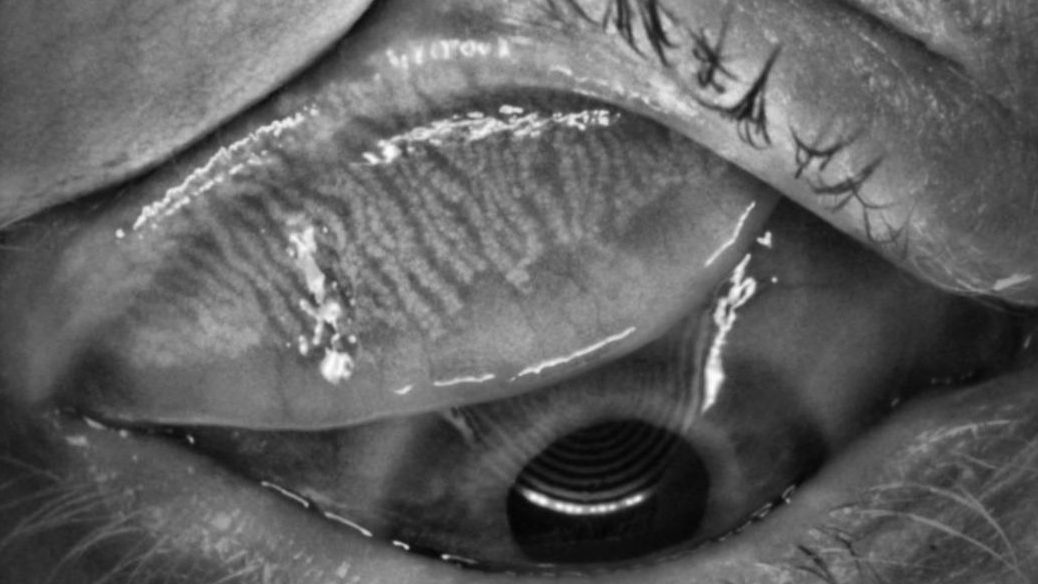
This study from the Republic of Korea used a tear interferometer to investigate the impact of ortho-k lens wear on meibomian glands. Fifty-three ortho-k lens wearers and 79 non-lens wearers were evaluated using the LipiView II ocular surface interferometer, which shows incomplete blink rate, average lipid layer thickness, and meiboscores. The results showed no significant differences in the incomplete blink rate and meiboscores for upper eyelids. However, the lipid meiboscores for lower eyelids were significantly higher in the ortho-k group than in the control group. Higher meiboscores mean lesser quality or loss of meibomian glands. Interestingly, the average lipid layer thickness was significantly higher in the ortho-k group than in the control group, despite fewer meibomian glands in the lower eyelids. No significant correlation between the duration of ortho-k lens wear and the parameters measured was found. Among subgroups based on average duration of lens wear, the longer duration (≥ 24 months) subgroup showed higher meiboscores of lower eyelids but no other significant differences. In conclusion, ortho-k wearers showed no significant differences in the incomplete blink rate and meiboscores of upper eyelids, but they were associated with increased lipid layer thickness and higher meiboscores of lower eyelids. The investigators recommend thorough examination and close monitoring of eyelids and tear quality in ortho-k wearers.
|
|
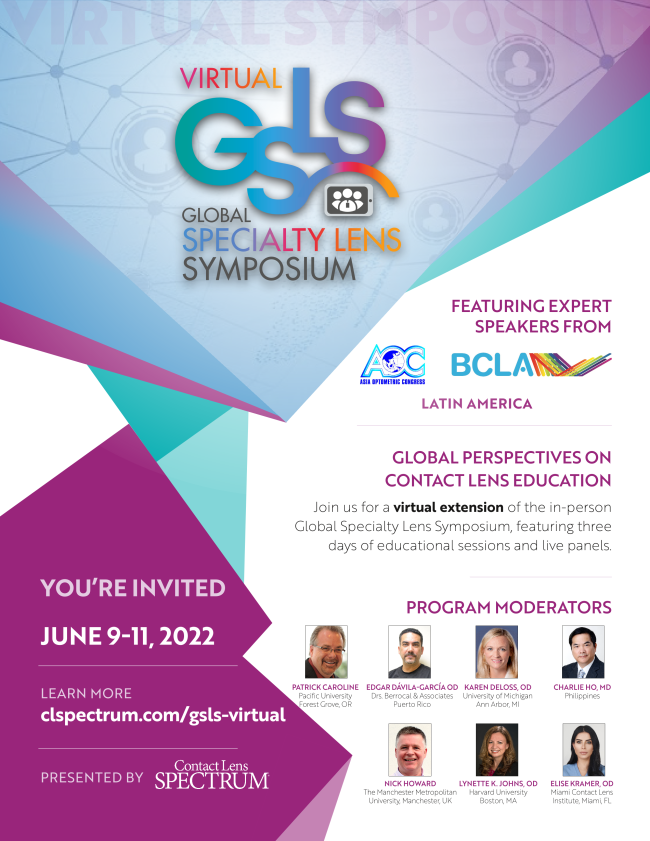
Global Specialty Lens Symposium - Virtual |
|
Amsterdam, Netherlands
Copyright © 2022. All Rights Reserved
This newsletter is kindly supported by:
|
|
|
I-site is an educational newsletter that is distributed on a monthly basis and provides an update on rigid gas permeable-related topics (scientific research, case reports and other publications worldwide). I-site is objective and non-political. Disclosure: I-site's editor Eef van der Worp, optometrist PhD FAAO FBCLA FIACLE FSLS, receives educational grants from a number of industry partners but is not related to any specific company. |
|
|
|
|
|
|