I-site newsletter is a global educational newsletter launched in 2009, that monthly provides independent updates from the international literature on specialty (R)GP lenses such as corneal, orthokeratology and scleral lenses and related topics. View as Webpage
|
|
Tapping into the Water Issue |
|
At a recent meeting of the national association for patients with corneal disease, I was lecturing on the potential of corneal and scleral (R)GPs. At the same time, while summing up all the benefits, I mentioned the Acanthamoeba and tap water issue. Not sure whether they were convinced. Maybe I wasn't persuasive enough, but it felt like I could not get through to them. Until one patient stood up and reported that she was suffering from an Acanthamoeba keratitis (AK). Suffering badly. This happened as a result of tap water use in (soft) lens wear. I could rest my case. But the point is that contact lenses can be a friend and a foe at the same time, which makes it a tough topic. It is of relevance surely for rigid lens modalities too, especially because it is customary to rinse lenses and cases with tap water. Much attention in our specialty lens field goes to the fitting process, the ocular surface shape, the indication range, etc. - but a large part of the success, and failure, of specialty lenses relies on contact lens solutions, hygiene, and handling. More on this at GSLS 2022, with experts in the field including Mark Bullimore, Pauline Cho, Melissa Barnett and James Wolffsohn - a true global panel. Are there special considerations for specialty lenses, or can ECPs apply the basic lens care and instructions for standard lenses to specialty lenses?
|
|
Global Specialty Lens Symposium |
|
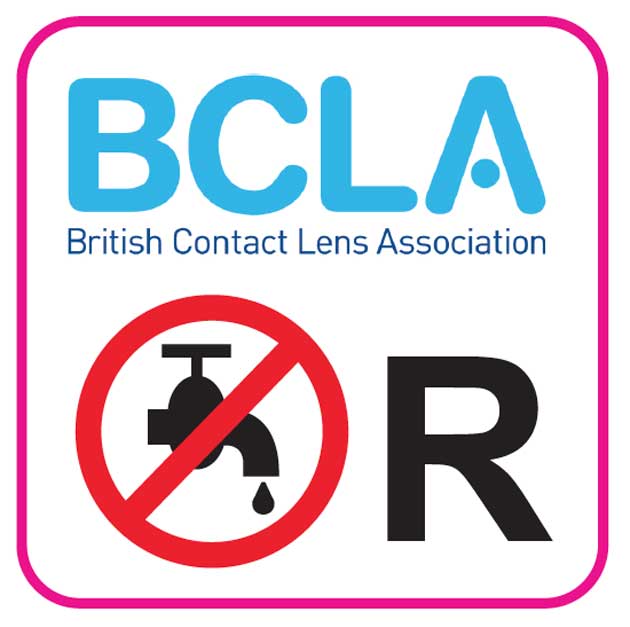
It is clear that water exposure during contact lens wear is associated with microbial keratitis and with sterile corneal infiltrates. Despite the documented risks, water exposure is common among lens wearers. A study by Memoona Arshad et al aimed to determine the effect of education about water, in the form of "no-water" lens case stickers, on water-contact behaviors and storage case contamination. In this prospective, masked, randomized trial, 200 daily lens wearers received either a storage case with a "no-water" sticker (test) or without a "no-water" sticker (control). A no-water infographic on the lens case improved overall water-contact behaviors and reduced storage case endotoxin. We should remind ourselves to use 'visual reminders' in our vision care field. |
|
National organizations, including but not limited to the BCLA, the AAO and the Australian CCSA, have issued such no-water stickers to help us remind contact lens wearers not to use tap water in any part of the care regimen. In a Podcast on the BCLA contact lens evidence-based academic report (CLEAR), first author of the paper on complications, Fiona Stapleton, stated that 10-15% of corneal infections lead to permanent vision loss and that the use of care reminders is empirical. As stated previously by Nicole Carnt: Acanthamoeba corneal infection is largely a preventable disease. Photo by Clay Banks on Unsplash
|
|
Any form of overnight wear, including ortho-k, should be viewed with extra care because of the increased potential risk of corneal infection. The topic of corneal infection in minors is specifically investigated in a number of recent papers. Mark Bullimore et al looked at microbial keratitis (MK) with overnight ortho-k in minors in Russia. During 2018, 139 cases of corneal infiltrative keratitis were reported in children, and 45 (32%) of them were adjudicated as MK: 20 (44%) were associated with lens wear, 15 (33%) of which were soft lens related and 5 (11%) ortho-k. A case series on Acanthamoeba keratitis (AK) by Angelica Scanzera et al from Chicago (US) in children under 18 found 6 cases in ortho-k, 39 in soft lenses, and none with corneal (R)GPs or sclerals. Jinfang Wu and Huatao Xie from China reported a case and an analytical review on the topic of AK in ortho-k. They report the most common risk factor to be rinsing the lenses or case with tap water. Prompt and accurate diagnosis and adequate amoebicidal treatment are essential, as well asa appropriate ortho-k lens parameters (fit) and regular checkups.
|
|
To evaluate compliance with ortho-k lens care among parents of 6–13-year-old myopic children, a large survey was conducted in Taiwan. The full compliance rate (percentage of participants scoring full compliance) for wear and care was 68.8%, but the full compliance rate for follow-up visits was only 22.5%. The compliance rate for wear and care was significantly associated with high myopia in one parent, high education level, early onset of myopia in children, knowledge of ortho-k and myopia control, and neophyte ortho-k lens users (less than 6 months). These results indicate the need for comprehensive education for parents with young myopic children to ensure strict adherence to fitting and wear protocols and good follow-up of ortho-k lenses. Photo by MI PHAM on Unsplash
|
|
Conjunctival Microbiota in Scleral Lenses |
|
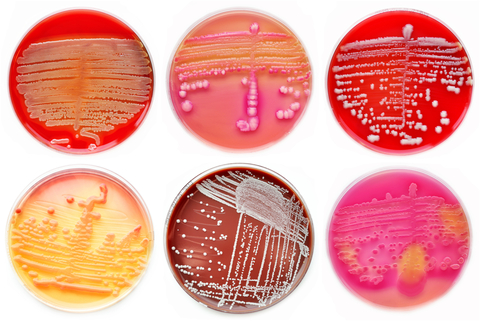
Not much is known about scleral lens wear when it comes to infection rates. The BCLA CLEAR scleral lens paper states that a small number of case series suggests that infections do occur with scleral lens wear - often in diseased eyes that typically require scleral lens correction - but the overall frequency may be low due to the relatively small but growing population of scleral lens wearers compared to other lens modalities. To get some indication of the conjunctival microbiota in scleral lens wear, investigators obtained cultures from the lower fornices in 26 patients wearing sclerals and in 25 healthy controls. After 24-48h of incubation at 37ºC, the growth of different colonies of bacteria was identified. The most commonly observed microorganisms were Staphylococcus epidermidis and Staphylococcus aureus in both groups; but scleral lens users were found to have a higher rate of culture negativity in comparison to the healthy controls, suggesting that scleral lens wear can have a significant effect on the conjunctival microbiota.
|
|
The Biology of Acanthamoeba |
|
Want to dig a little deeper into Acanthamoeba? In this review paper on the biology of Acanthamoeba keratitis (AK), it was noted that at least eight species of Acanthamoeba are known to be able to cause the sight-threatening disease. Acanthamoeba species exist in a wide array environments, ranging from thermal springs to under ice (and every conceivable habitat in between). While contact lens wear is the leading risk factor, the incidence of AK is less than 33 cases per one million lens wearers (on a population of 30 million lens wearers in the US). Interestingly, studies have reported that 90%-100% of individuals with no history of AK possess antibodies for it, indicating that exposure to the organism is commonplace, yet disease is remarkably rare. Studies into the pathobiology and immunobiology of AK indicate that the microbiome (that of the ocular surface and of the parasite) may contribute to the pathogenesis. Antibodies produced by the adaptive immune response can prevent the initiation of corneal infection, but once Acanthamoeba trophozoites breach the corneal epithelium, the immune system is helpless in altering the course of AK. It has been almost 50 years since AK was first described, yet many questions remain, the author describes.
|
|
Bradley, Sicks, and Pucker note in a review article that modern multipurpose disinfecting solutions (MPS) with high-molecular-weight preservatives, including polyquaternium-1 (PQ-1) and biguanides (PHMB), are generally effective against bacteria, but they are minimally effective against fungi and are not effective against Acanthamoeba. Hydrogen-peroxide (H2O2) solutions are effective against all common ocular microbes, including Acanthamoeba, and they have been proven safe with proper compliance. Povidone-iodine (P-I) solutions have shown to be safe and effective too. H2O2 or P-I solutions are preferred for any patients who may expose their lenses to water because they are the only solution categories effective against Acanthamoeba, the authors state. For a review of Antiviral Effect of Solutions Against Coronavirus, Yasir, Vijay, and Willcox evaluated the antiviral potential of five MPS against coronavirus. They found here too that oxidative contact lens disinfecting solutions (i.e., H2O2 and P-I) provide superior antiviral activity against a coronavirus surrogate of SARS-CoV-2, unless the full regimen test (rub, rinse, disinfect) is used in the MPS category..
|
|
The Dutch Contact Lens Congress (NCC) will be held in NH Koningshof in Veldhoven on Sunday 13 and Monday 14 March 2022. The NCC and BCLA’s collaborative research symposium is being run as part of the event, Abstracts can now be submitted for an eagerly anticipated collaborative research symposium.
|
|
Amsterdam, Netherlands
Copyright © 2021. All Rights Reserved
This newsletter is kindly supported by:
|
|
|
I-site is an educational newsletter that is distributed on a monthly basis and provides an update on rigid gas permeable-related topics (scientific research, case reports and other publications worldwide). I-site is objective and non-political. Disclosure: I-site's editor Eef van der Worp, optometrist PhD FAAO FBCLA FIACLE FSLS, receives educational grants from a number of industry partners but is not related to any specific company. |
|
|
|
|
|
|