|
Daily Transportation News
June 30, 2026
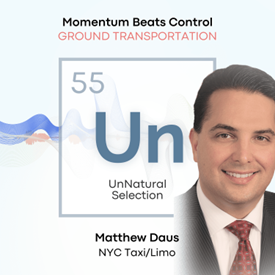
| | | IATR President Matt Daus Releases Podcast on How to Be An Effective Transportation Regulator | |
Image: unNatural Selection Podcast | |
IATR President Matthew Daus recently joined host Nic Encina on unNatural Selection to discuss what the rise of rideshare really taught us about transportation, regulation, and change.
Daus draws on his firsthand experience as the longest-serving Chair of the NYC Taxi & Limousine Commission to discuss how the taxi industry evolved, what made the Uber disruption so far-reaching, and the nuances of the story. Daus covers the human side of the taxi industry, the shifting regulatory landscape, and how what started as fierce competition between taxis and rideshare companies eventually gave way to collaboration.
He also looks ahead at autonomous vehicles, the future of labor in transportation, and the potential of “multimodalism,” where every mode of transportation, from transit to rideshare to bikes, works together on a single platform.
Daus likens transportation regulation to running a 5K. It’s not an all-out sprint, but it’s not an endurance marathon either. Success requires maintaining a steady pace: moving quickly enough to keep up with innovation while exercising the discipline, balance, and perspective needed to make sound regulatory decisions. That means staying aware of the political environment without being driven by it, avoiding bias, embracing collaboration, and never losing sight of the public interest.
The takeaway is that TNC disruption is not just about technology; it is about people, politics, and how industries adapt when the ground shifts.
Source: unNatural Selection Podcast
| | A Transit Playbook for Mid-Size Cities: What a City That Voted It Down Three Times Can Teach Every DOT | |
|
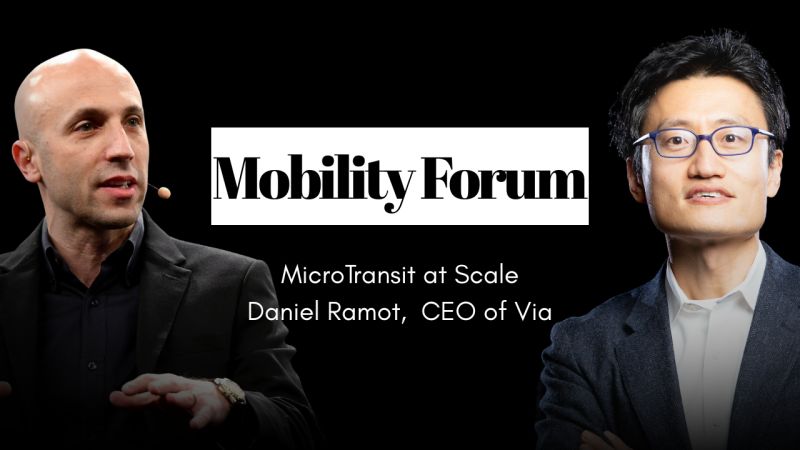
Jinhua Zhao, Professor of Cities and Transportation at MIT, recently interviewed Daniel Ramot, CEO of Via, about how Arlington, Texas, successfully implemented a citywide public transit system using microtransit. Voters in this mid-sized city (population 400,000) rejected traditional sales-tax measures for regional transit authorities three times. The system costs roughly $8 million annually—a fraction of the estimated $40 million regional cost. Arlington’s approach serves as a modern blueprint for cities that are too spread out for rail and lack the density for fixed-route buses.
The playbook centers on four core moves: seek a solution to the transit problem rather than prescribe a predefined technology, manage the political and financial risk by deploying scalable and reversible pilots, identify the right transport mode for local density, and allow the private vendors flexibility to pursue objectives while the public sector sets strategy and goals.
The strategy emphasizes protecting existing transit-dependent riders during any transition, and highlights the role of operational AI, which is moving beyond simple rider matching into the control room to streamline dispatching, preserve the institutional knowledge of retiring workers, and help municipal agencies quickly scale custom software solutions.
The objective for cities is to deliver “the best service quality you can buy per dollar, at your density.”
| | |
New Illinois Law Will Require Speeders to Install Limiters in Vehicles
Illinois Governor JB Pritzker has signed the "Intelligent Speed Assistance Program" into law. Starting January 1, 2028, drivers who commit two speeding or reckless driving offenses within a 12 month period may install speed-limiting devices in their vehicles instead of facing automatic license suspension. Similar legislation has recently been enacted in Arizona, Washington D.C., Virginia, Washington, Maryland, New York, and Georgia.
Click Here to Read More
Waymo and Uber Quietly Part Ways in Phoenix
Waymo robotaxis have officially been removed from Uber’s ride-hailing app in Phoenix, Arizona, bringing a quiet end to their three-year partnership in that city. The companies’ joint operations will continue in Austin and Atlanta. The move comes as these companies are expanding autonomous vehicle operations- Uber has added dozens autonomous vehicle partners to its platform and Waymo is seeking to expand to twenty other cities.
Click Here to Read More
California Bear-Suit Luxury Car Scam Ends in Insurance Fraud Sentences for Three
Three individuals in California have been sentenced and charged with insurance fraud. Allegedly, one or more of them dressed in a bear costume and destroyed the interior of a Rolls-Royce and two Mercedes-Benz vehicles. They submitted $142,000 in fraudulent damage claims, along with video of the bear. The scheme unraveled after a wildlife biologist reviewed video footage and concluded it was “clearly a human in a bear suit.” Detectives raided the individuals’ home and found a bear costume that matched the video.
Click Here to Read More
| |
Changes Are Coming to Auto Insurance Policies in Ontario. Here's What You Need to Know
Starting July 1, Ontario is overhauling its auto insurance system, allowing drivers to opt out of several previously mandatory collision benefits—such as income replacement and funeral expenses—to reduce premiums. While this offers premium flexibility, it leaves drivers, passengers, and uninsured pedestrians highly vulnerable to massive out-of-pocket costs if a serious crash occurs.
Click Here to Read More
Polestar Sticking with Canada after U.S. Ban
The EV brand Polestar has confirmed that its vehicle sales in Canada will remain unaffected despite a recent U.S. ban. The restriction, stemming from the 2025 Connected Vehicle Rule, bars U.S. sales of vehicles with Chinese-connected hardware or software starting in the 2027 model year.
Click Here to Read More
Traffic Cameras, Enforcement Drive Brampton’s Road Safety Strategy
The City of Brampton is accelerating its Vision Zero strategy to protect vulnerable road users this summer. The plan includes expanding its red light camera network from 15 to 35 cameras by 2028. Backed by provincial funding, the city is also investing heavily in speed cushionsnew pedestrian crosswalks and other infrastructure to reduce dangerous driving.
Click Here to Read More
| |
Exclusive: Lyft Explores Whether Drivers Could Invest in Autonomous Vehicle Fleets Operating in Their Own Cities
Lyft is surveying UK ride-hailing drivers about a model that would allow drivers to invest in and own parts of autonomous vehicle fleets within their local cities. Rather than viewing self-driving technology strictly as a competitive threat, some entrepreneurial drivers hope to transition into fleet operators. Lyft predicts where human drivers and autonomous vehicles both fulfill trips.
Click Here to Read More
Attention to Bus Cab Heat Issue in Extreme Weather Is Long Overdue
As summer heatwaves intensify, the UK transport union Unite is taking a firm stand against bus operators over excessive cab temperatures and faulty air conditioning. Highlighting the severe impact of solar gain and prolonged driving shifts on operator fatigue, the union is actively backing drivers who exercise their legal right to refuse to drive dangerously hot, poorly ventilated vehicles.
Click Here to Read More
Uber Boat Expands to Europe’s Coastal Cities This June
Uber is expanding its water-based transportation by launching a boat-booking service across 23 European coastal cities in countries like Italy, Spain, France, Portugal, and Croatia. Partnering with boat-rental platform Click & Boat, the initiative allows travelers to reserve vessels with skippers directly through the Uber app to explore scenic waterfronts and islands.
Click Here to Read More
| |
Uber Accused of Imposing Unfair 'Disability Tax' after $5 Hike for Assist Users
Uber faces criticism from advocacy groups after introducing an additional $5 fee for its Uber Assist service. Under the program, drivers who have undertaken extra training provide passengers help with their bags, stowing mobility aids, or entering and exiting the vehicle. Critics call the fee a discriminatory "disability tax." However, Uber defends the decision, stating that the extra charge goes directly to drivers to compensate them for extra time and care, and the program has successfully reduced passenger wait times.
Click Here to Read More
Careem Expands Welfare Efforts with 2026 Captain Summer Initiatives
Careem has launched an effort to support over 80,000 delivery workers in the UAE from June to September. Open to all taxi or delivery workers regardless of their platform, the program features air-conditioned mobile rest areas, free health screenings with Pakistan Association Dubai, and complimentary refreshments.
Click Here to Read More
Buckled Up and Ready to Go: Territory Certifies New Class of Taxi and Tour Operators
The U.S. Virgin Islands recently certified a new class of 150 taxi and tour operators across St. Thomas, St. Croix, and St. John. The mandatory training professionalizes the industry and ensures drivers will serve as excellent ambassadors for the territory by covering hospitality, local history, road safety, and digital payments.
Click Here to Read More
| | Uber Tightens US Driver Background Checks as Sexual Assault Cases Mount | |
Image: SOPA Images / Contributor / LightRocket via Getty Images |
Uber Technologies Inc. is expanding the criteria for disqualification from the platform and retroactively applying these new standards to its existing workforce. Starting Monday, the ride-hailing company will permanently bar individuals with convictions for violent felonies—such as armed robbery, aggravated assault, child abuse, endangerment, strangulation, and stalking—regardless of when the crime took place. Previously, Uber's screening protocol did not disqualify applicants for these specific non-sexual offenses if the convictions were more than seven years old.
The nationwide policy change is expected to result in the deactivation of tens of thousands of existing gig workers, or about 0.5% of Uber's active drivers. This operational shift comes as the company faces lawsuits from passengers alleging sexual assault and harassment, including a recent landmark case resulting in $8.5 million in damages. Uber will exempt roughly 2,000 highly tenured drivers with clean safety records from the lifetime lookback, provided their non-sexual felony convictions are over 15 years old.
| |
|
Message from IATR President Matthew W. Daus
At the International Association of Transportation Regulators (IATR), our regulators are at the forefront of addressing both the challenges and opportunities facing the mobility paradigm. Our IATR members, partner organizations, and regulated industries will continue on our shared quest to fulfill the mission of our non-profit educational organization - to bring about Multi-Modal Mobility Innovation for All! This mission can best be accomplished through information sharing, collaboration, identifying and promoting best practices, and educating our membership. These educational updates and electronic media clips are affectionately known as “IATR snips” and endeavor to cover all aspects of mobility around the globe - especially news and developments involving safety, technology innovation, multi-modal integration, automation, sustainability, electrification, accessibility, regulatory modernization, and equity.
If you would like more information about the IATR, you can visit our website at www.iatr.global. Current members can renew their memberships when you log in to your IATR portal on the top right-hand side of our website, or click here. If you forgot your membership password, please email our Membership Director, Eric Richardson, at erichardson@iatr.global.
| | | | | |
|
RENEW YOUR MEMBERSHIP FOR 2026:
Weekly news snippets
Access to the membership database
Videos and files from recent conferences
Discounted rates for future conferences, and more!
Renew your membership at http://www.iatr.global or email info@iatr.global for any questions!
| | | | |