|
Curb's combination of technology and operations, and a proven ability to respond when city needs change, makes it a partner regulators can build on, not just a vendor they manage: increasing transportation equity for the riders who need it most, without adding infrastructure or overhead costs for the cities and agencies that serve them.
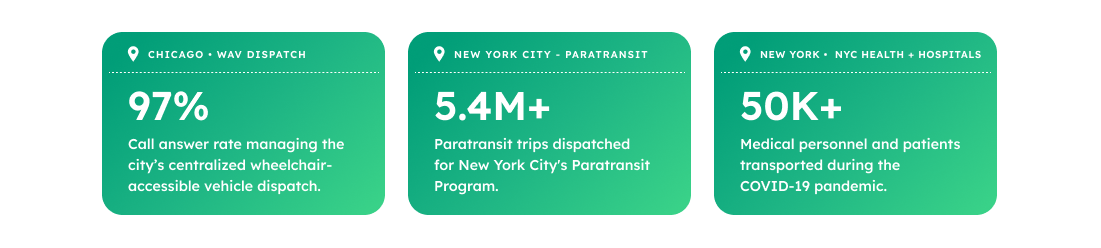
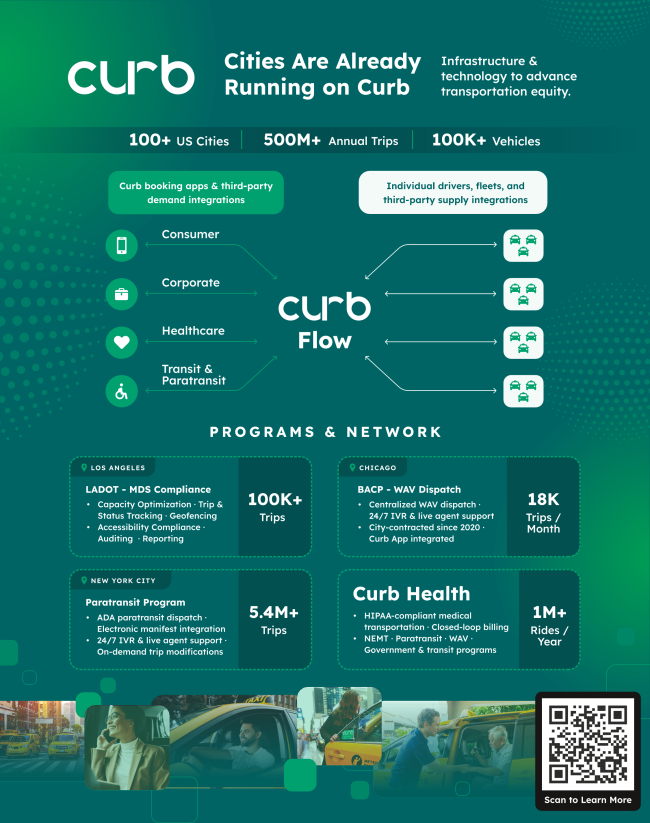
Not every rider can use a standard vehicle, and most cities don't have the infrastructure to guarantee they don't have to. Curb closes that gap by managing the entire program end to end, dispatch, call center, and IVR, so cities can expand accessible transportation without building or staffing a single new system. Chicago runs its Centralized Wheelchair Accessible Vehicle Dispatch Service entirely through Curb this way, giving riders reliable, on-demand access to accessible rides.
Meeting new data and reporting mandates is another challenge entirely, one that usually means new systems and new spend. Los Angeles avoids both by integrating directly with Curb on the backend, satisfying all five Mobility Data Specification requirements, from fleet registration to accessibility reporting, without disrupting how operators already work or adding cost to the city.
Expanding paratransit service usually means expanding overhead too, unless the dispatch, call center, and billing are handled by someone else entirely. Curb Paratransit takes on that full program end to end so agencies don't have to build the capacity themselves. Washington, DC has relied on this model to run WMATA's Abilities Ride program since 2017, and New York City used it to become the first place taxis served as paratransit, now completing rides at a 99%+ rate.
|