|
ICAM'S NEWSLETTER
Summer 2025
| | |
Editor's Note
Samarpan’s editorial team is pleased to share the Summer newsletter of 2025 with our readers. We are looking forward to publishing new contributions from our readers. Please submit your articles here. Thank you!!
Newsletter Team
Subhankar Bhattacharya | Shatavisa Mukherjee | Anu Gupta | Sarika Gupta | Ram Kadirvel | Nisha Kurup | Alka Mehra | Anu Nair | Salitha Philip | Priya Sampathkumar | Ajay Singh | Namrata Tomer
| | |
President's Message
Since the Last Newsletter
- 'Gudhi Padwa: A Celebration of New Beginnings and Cultural Heritage' by Mrs. Vaibhavi S. Nawale
- 'Glimpse into Easter' by Janu Kasper
- 'Ugadi' by Sheela Seetamsetty
-
'Poila Boishakh - A Slice of Home, Away from Home' by Jaita Ghosh
-
'A Traditional Tamil New Year Celebration in Rochester, Minnesota' by Piku
Main Article
- Summary of the New Year Celebrations in India
Youth Scape
- 2025 Congressional App Challenge by Sia Sood and Grace Kaspar
- High School Graduates
- Language Schools
Recipe
-
'Asoga Halwa: A Taste of Temple Streets and Grandmother’s Kitchen' by Priya Ram
Rochester through my lens
Upcoming Events
| | |
Dear Friends, Namaste!
Congratulations to all the students who recently graduated from high schools in Rochester and the surrounding areas of Minnesota! We also wish you a joyful Fourth of July and a wonderful summer season. This is the perfect time of year to soak in the sunshine and enjoy the outdoors.
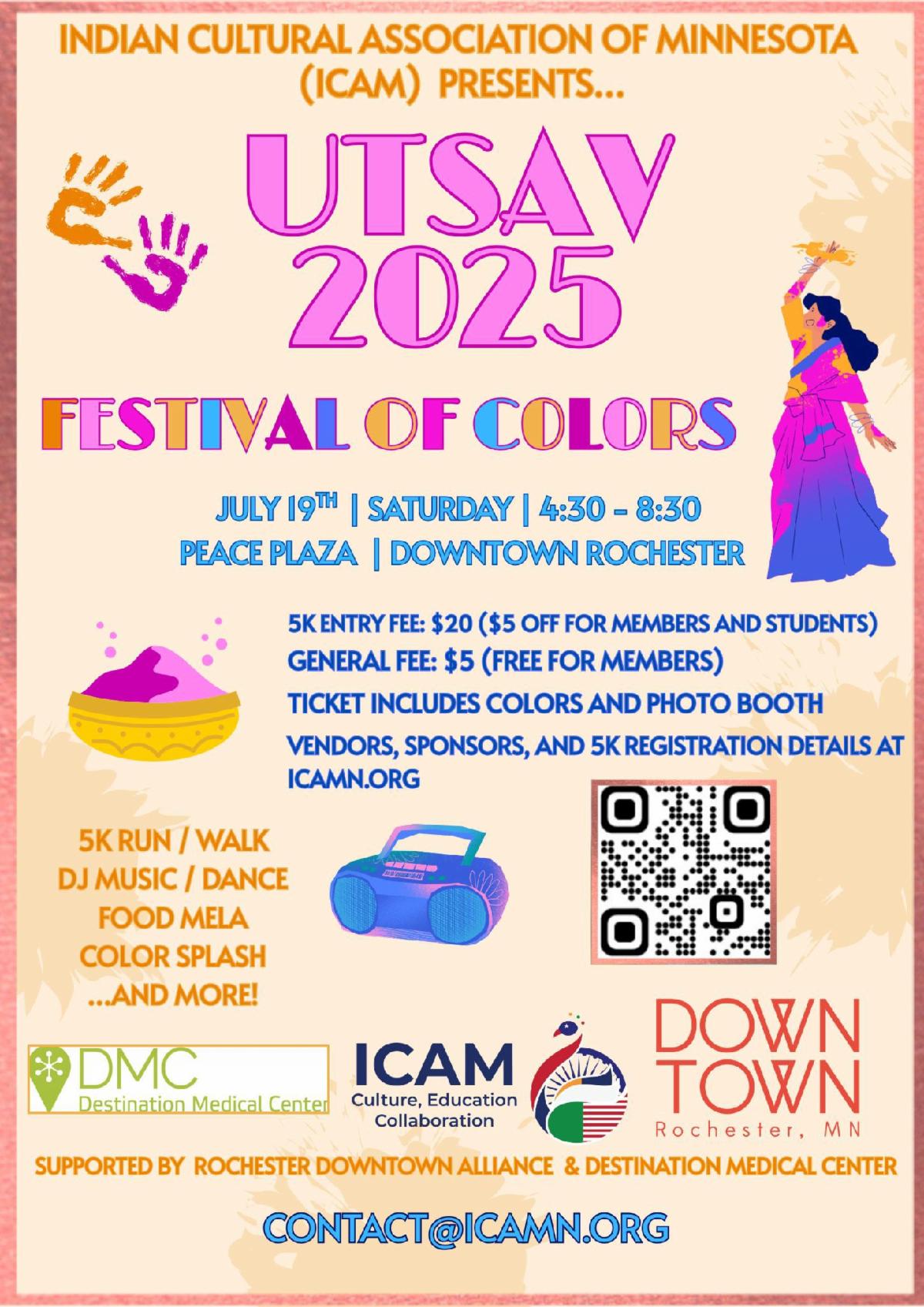
We are excited to announce that planning is underway for ICAM Utsav 2025 – Festival of Colors, which will take place on Saturday, July 19th, at the Peace Plaza. The celebration will kick off with a 5K run/walk starting from Soldiers Field. The day will be filled with vibrant activities including music, dance, playing with colors, and delicious food. We invite you to spread the word and join us in large numbers! More details can be found in the event flyer.
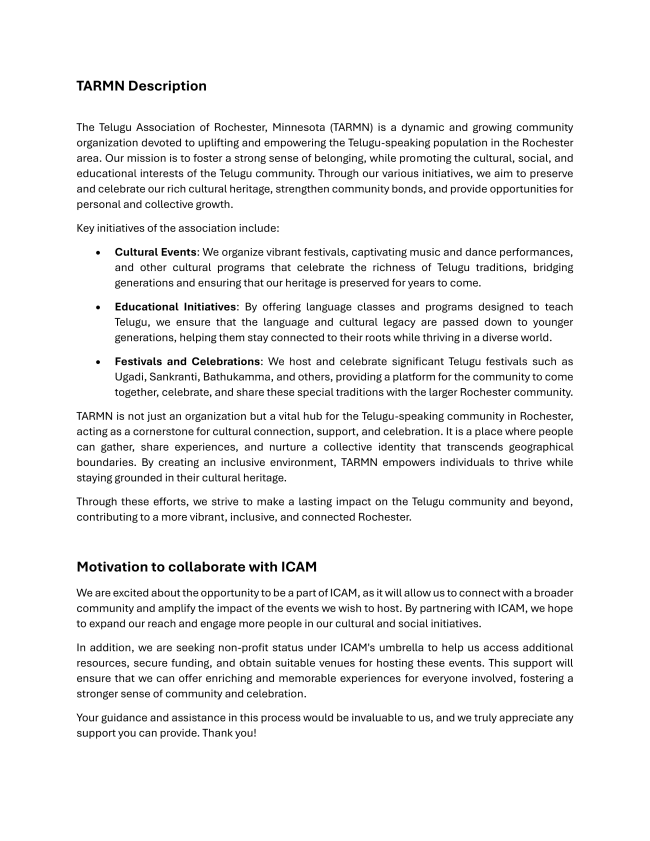
ICAM continues to grow and fulfill its mission to support community organizations and build meaningful partnerships. Recently, we had the pleasure of supporting the Telugu Association of Rochester, Minnesota (TARMN) in organizing a successful Ugadi Festival on May 3, 2025. TARMN is a dynamic and growing organization dedicated to promoting Telugu culture in the Rochester area.
On March 27, 2025, ICAM was honored to attend an event hosted by the Indian Chamber of Commerce Minnesota (ICOC MN). Formed in 2025, ICOC MN is a non-profit organization that champions Asian Indian commerce across Minnesota. It was inspiring to connect with many business leaders from our community in Minneapolis. To learn more, visit icocmn.org.
Our Hindi School recently wrapped up another successful academic year. We're pleased to announce that starting next year, we will partner with SILC (School of India for Languages and Culture) to provide textbooks and workbooks for our students. A special thank you to Shital Aranake, our Director of Education, for leading this initiative.
Thank you all for your continued support. Please visit icamn.org to learn more, subscribe to our mailing list, and become an ICAM member for 2025.
Warm regards,
Ajay Singh,
President, ICAM Board.
| | |
Gudhi Padwa: A Celebration of New Beginnings and Cultural Heritage
Author : Mrs. Vaibhavi S. Nawale
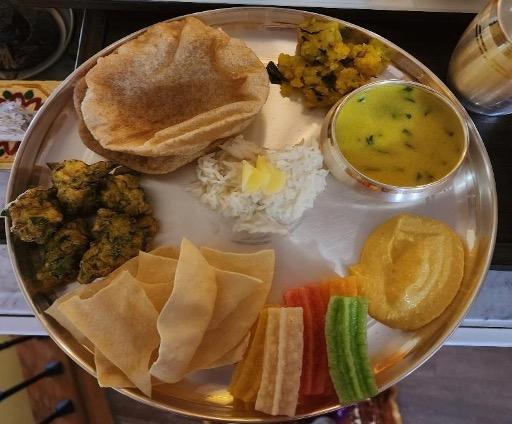
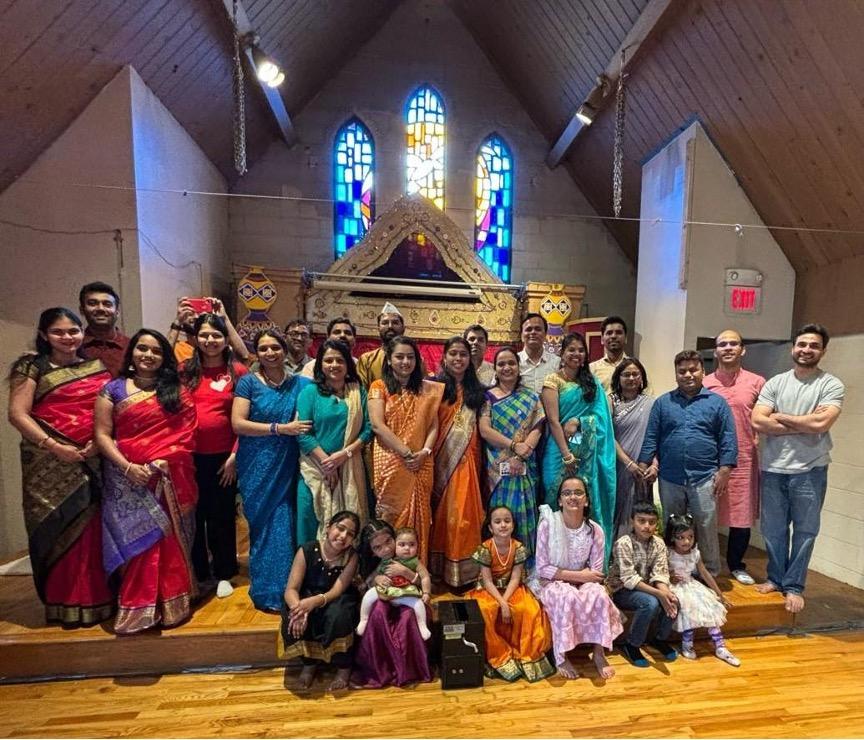
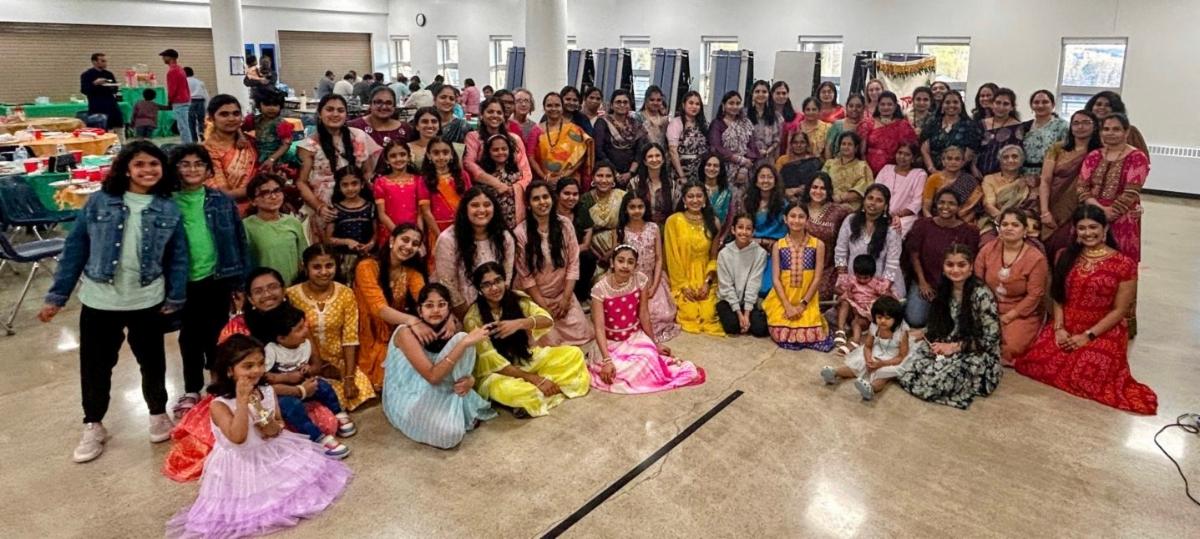
In Rochester the Marathi community comes together to celebrate Gudi Padwa with the same enthusiasm as in India. Families raise the Gudhi at home and share festive meals with loved ones. On the following weekend, a community gathering is held where: Children recite Marathi poems and stories, adults share the cultural and historical importance of the festival and Bhajans (devotional songs) are sung in unison. The celebration concludes with a traditional Maharashtrian feast featuring delicacies like Batata Bhaji, Matki Usal, Kadhi, Daal, Rice, Kairi Dal, Amrakhand, Puri, and Poli.
The Ritual of Gudhi
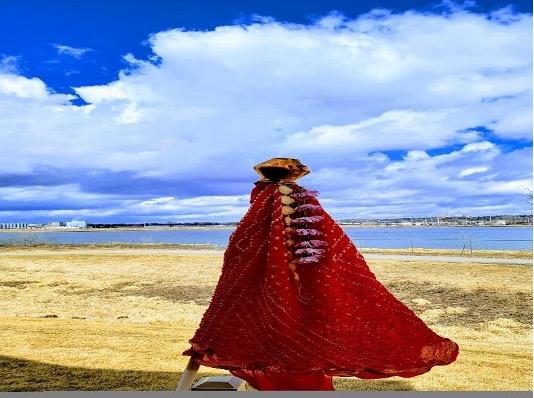
The most iconic element of the festival is the hoisting of the Gudhi, a sacred flag that embodies victory, prosperity, and protection against negative forces. The Gudhi is crafted using a bamboo stick, bright silk or a new cloth (often a saree or dupatta), mango and neem leaves, garlands of flowers and sugar and a silver or copper Kalash (pot) inverted on the top. Each component carries symbolic and spiritual meaning. Traditionally, the Gudhi is placed on the right side of the main entrance or in a window, tilted slightly and facing upwards signifying growth and positivity. Ideal directions for placement include east or northeast, aligning with solar and divine energies.
Culinary Traditions
A unique Prasad made of neem leaves, jaggery, and tamarind is consumed on Gudhi Padwa. This bittersweet mix symbolizes life’s dualities and is believed to purify the blood and strengthen immunity. As part of the festive offerings (Naivedyam), families prepare traditional dishes like Puran Poli or Amrakhand (sweetened hung yogurt blended with mango pulp) served with Puri.
Celebrations Away from homeland: Keeping Culture Alive
These communal celebrations play a vital role in preserving cultural identity and passing on heritage, values, and traditions to younger generations, reinforcing a sense of belonging and pride – no matter where one lives.
| | | |
Glimpse into Easter
Author : Janu Kasper
Easter is one of the most important events in Christianity - a time of joy, remembrance, and hope. From hunting for easter eggs to eating carrot cake, it’s full of celebration!
Easter is a holiday that celebrates the resurrection of Jesus Christ. It gives us joy because Jesus was crucified but now he is risen!
Just like people in America celebrate July 4th to remember adopting the Declaration of Independence, we celebrate Easter to remember the resurrection of our Lord Jesus Christ. Some of the ways we, the Chris Kaspar Family celebrate Easter is by going to church, hosting egg hunts, attending Easter Vigil Mass, reading the Bible, spending time with family + friends, and eating lots of food.
Chris, Janu, and their three kids wake up on Easter morning to attend the special Easter service at church. They attend normal service every Sunday at St. Johns and/or Rochester Assembly. They also attend Easter Vigil Mass which is mass the night before Easter. Easter Vigil Mass is filled with lots of songs, prayer, and community. Our family also hosts egg hunts for our Christian and Non-Christian community which is a fun event for the kids. The eggs symbolize new life and the resurrection of Jesus. Whether you're reading the Easter Story or a different part of the Bible, reading the Bible is a wonderful way to celebrate Easter. It is also a time to spend quality time with family and friends spreading the joy and love that you have for one another. But wait, we can’t forget about the food! The 40 days before Easter is a season called Lent. In the Lent season we refrain from things that we enjoy. Some Christians fast from meat, others from watching movies, and others from candy. Whenever we feel the temptation to eat/do these things, we pray to God and seek his comfort. The Lent Season ends on Easter Sunday and from corn pudding to carrot cake to easter ham, there are so many delicious foods to try!
Easter gives us hope because when Jesus died on the cross for us, he took all of our sins and bore the punishment we were meant to bear. After Jesus rose from the dead, we can now be forgiven for our sins! Because our sins can be forgiven if we ask and believe, we have a chance to go to Heaven and live forever with Jesus.
Let us celebrate together this joyous season of hope and remembrance!
| | |
UGADI
Author: Sheela Seetamsetty
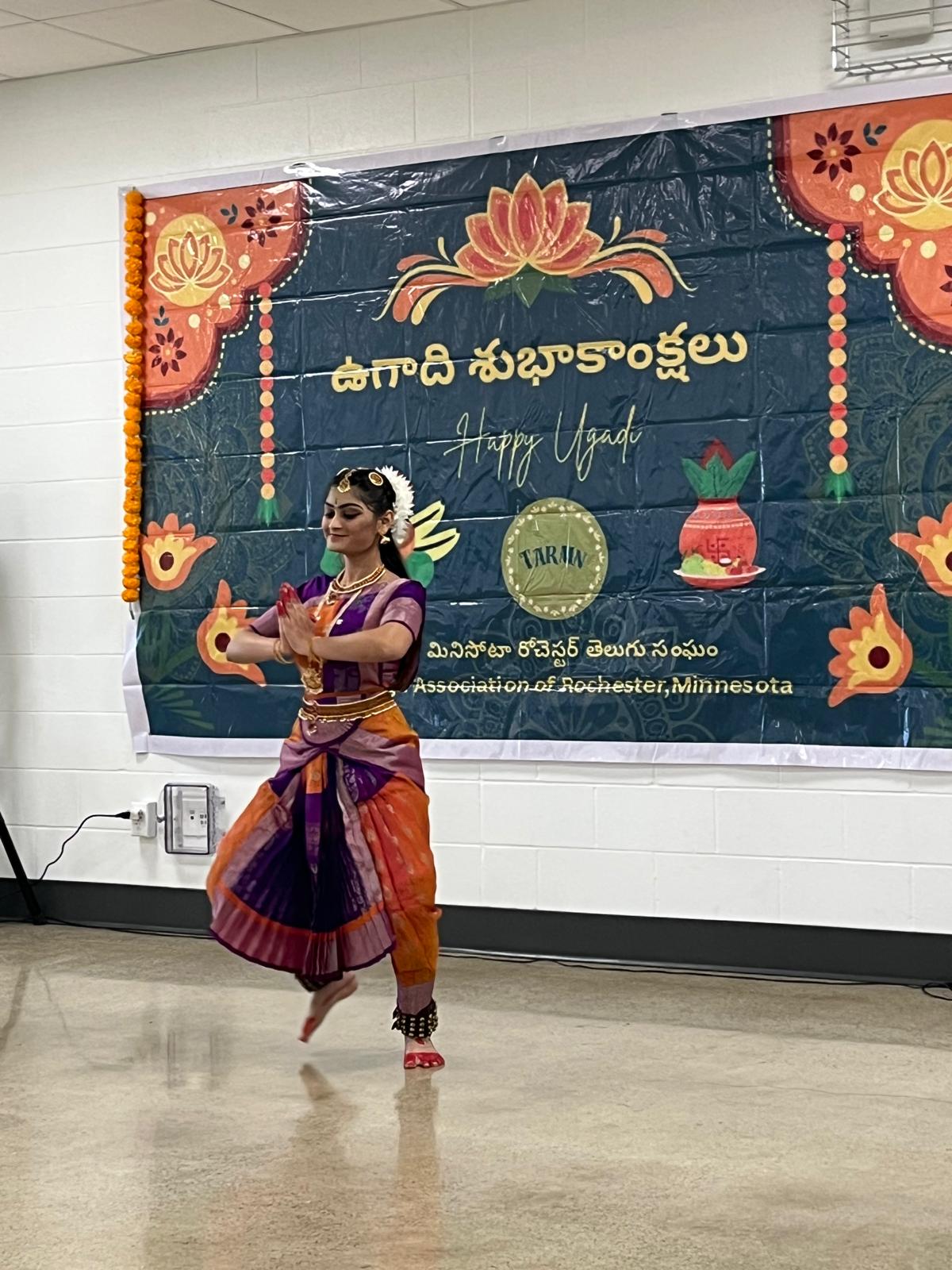
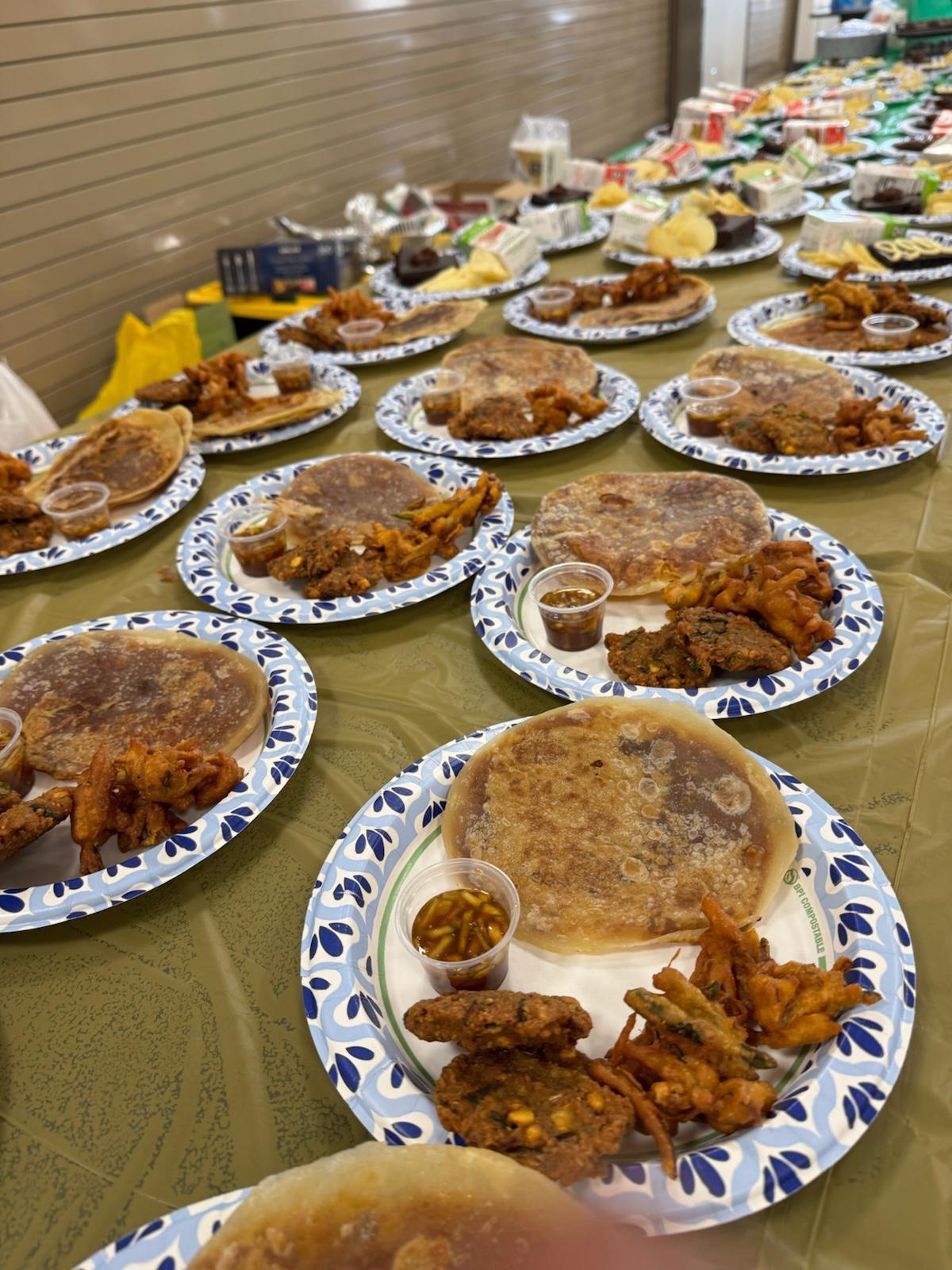
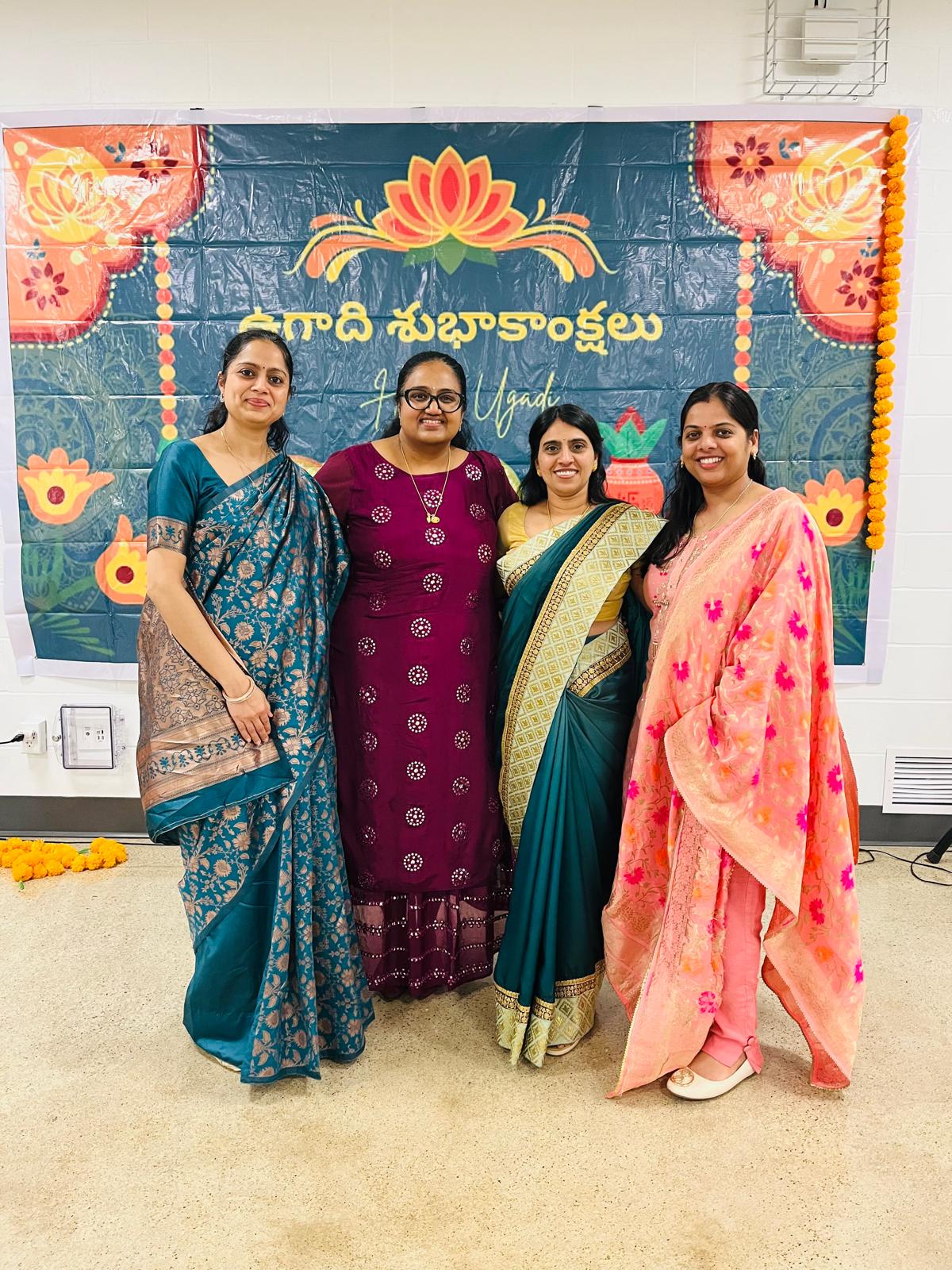
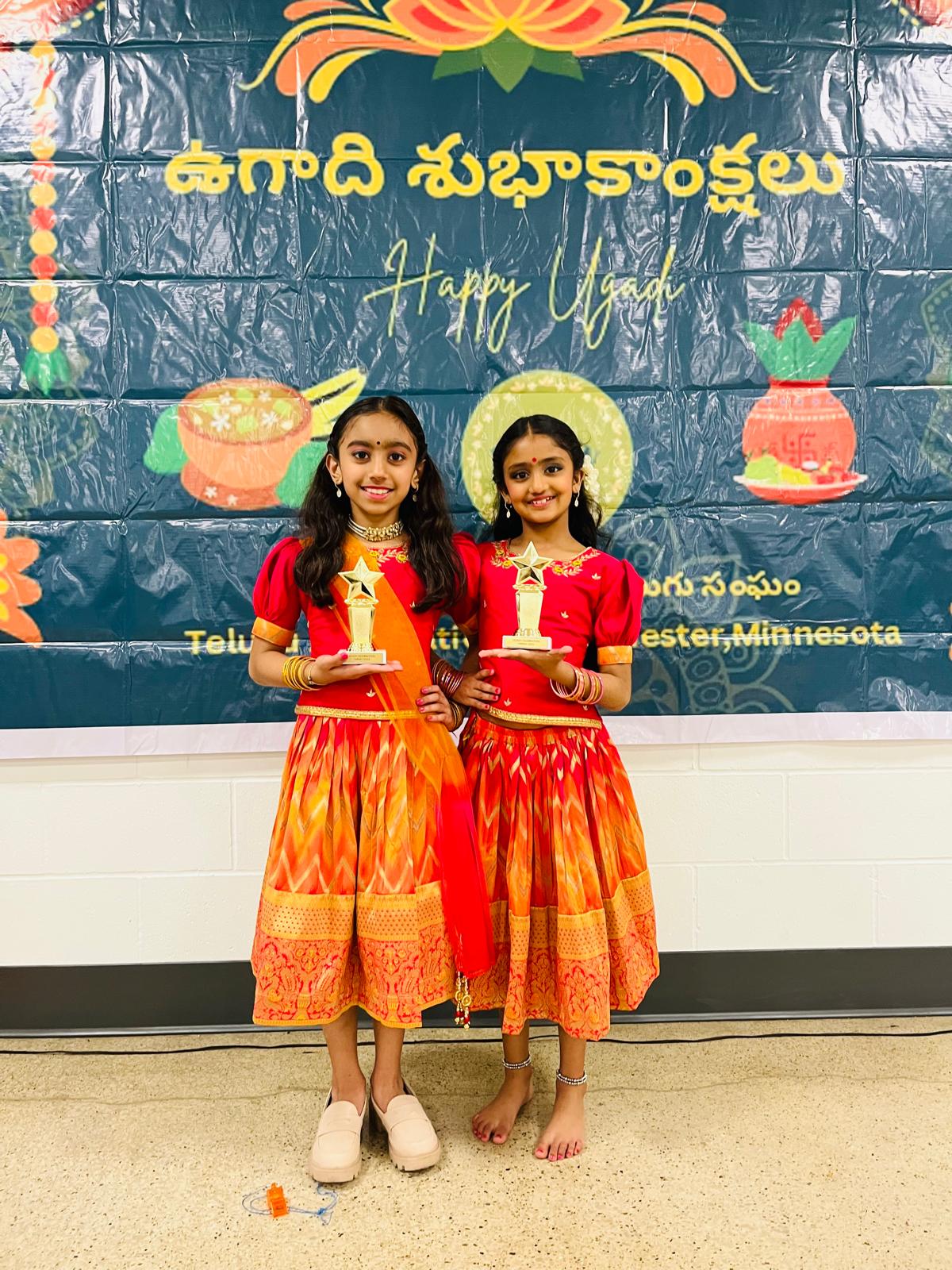
The Rochester Telugu community gathered at the Kellogg Middle School cafeteria on May 3rd to joyfully celebrate Ugadi, the Telugu New Year. Organized by the Telugu Association of Rochester Minnesota (TARMN), the event drew around 100 attendees and showcased a vibrant blend of culture, tradition, and community spirit. TARMN committee members dedicated countless hours to ensure the program’s grand success. The evening began with a traditional prayer to Lord Ganesha by Saketh, setting a devotional tone. This was followed by a graceful Bharatanatyam performance by Samsritha, who began learning the classical dance in India and continues her training in Rochester. In addition to her dance, she captivated the audience with a soulful rendition of a song dedicated to Lord Rama.Children from Manabadi, the local Telugu school, delighted the audience with a comedy skit and recited Telugu padyalu—traditional poetic verses that impart timeless moral lessons. These not only nurture cultural roots in children but also serve as meaningful reminders for adults. Adding energy to the evening, Ganga Gopalakrishnan and Sarika Pandey choreographed a lively dance for young girls. A colorful fashion show followed, with children proudly displaying traditional Indian attire. Teen girls and women later performed dynamic dances to popular Tollywood hits, adding modern flair to the festivities. Samsritha also delivered an insightful speech about Ugadi, highlighting its cultural and spiritual importance.The celebration featured authentic Andhra and Telangana cuisine, delighting everyone with traditional flavors.
| | |
Poila Boishakh - A Slice of Home, Away from Home
Author : Jaita Ghosh, La Crosse WI
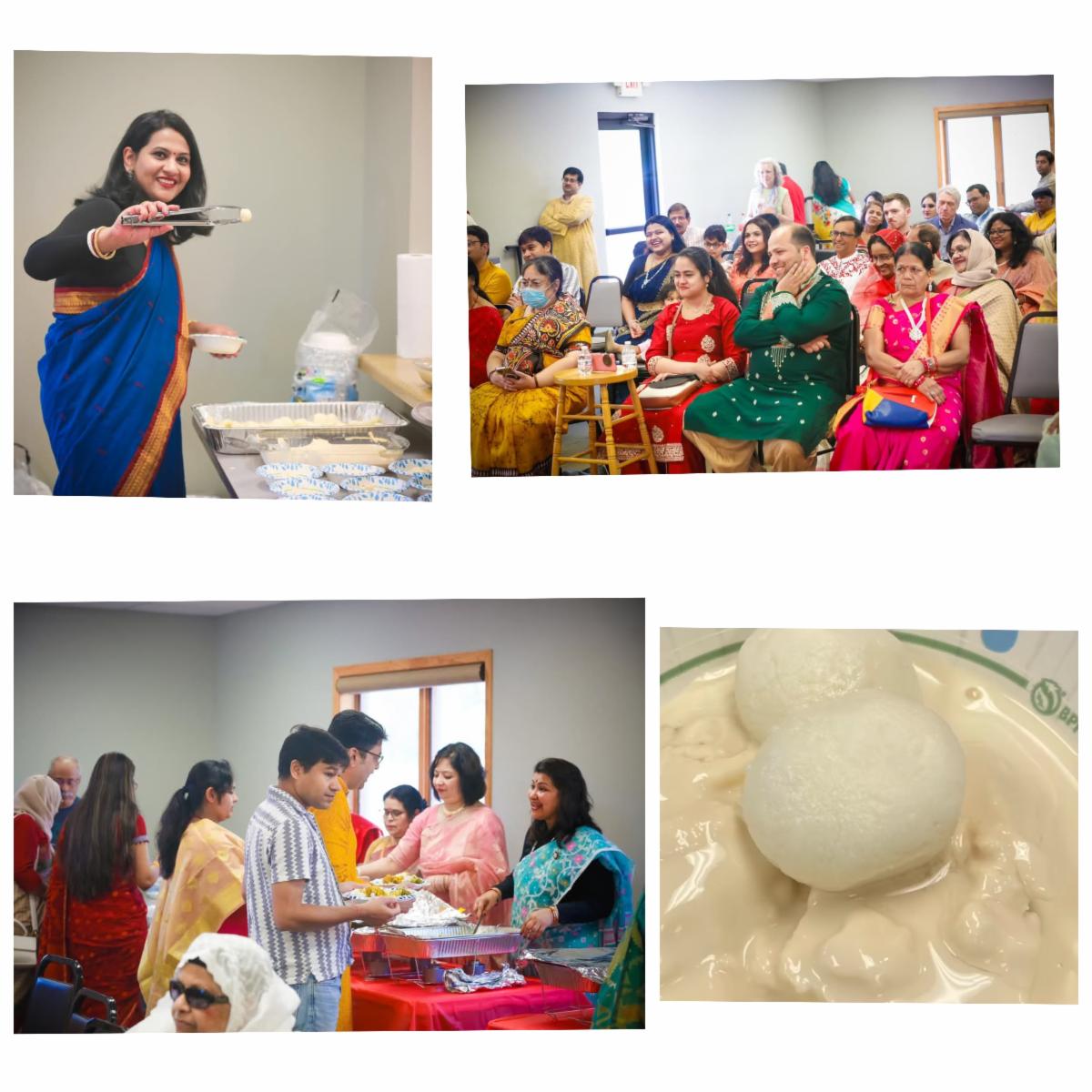
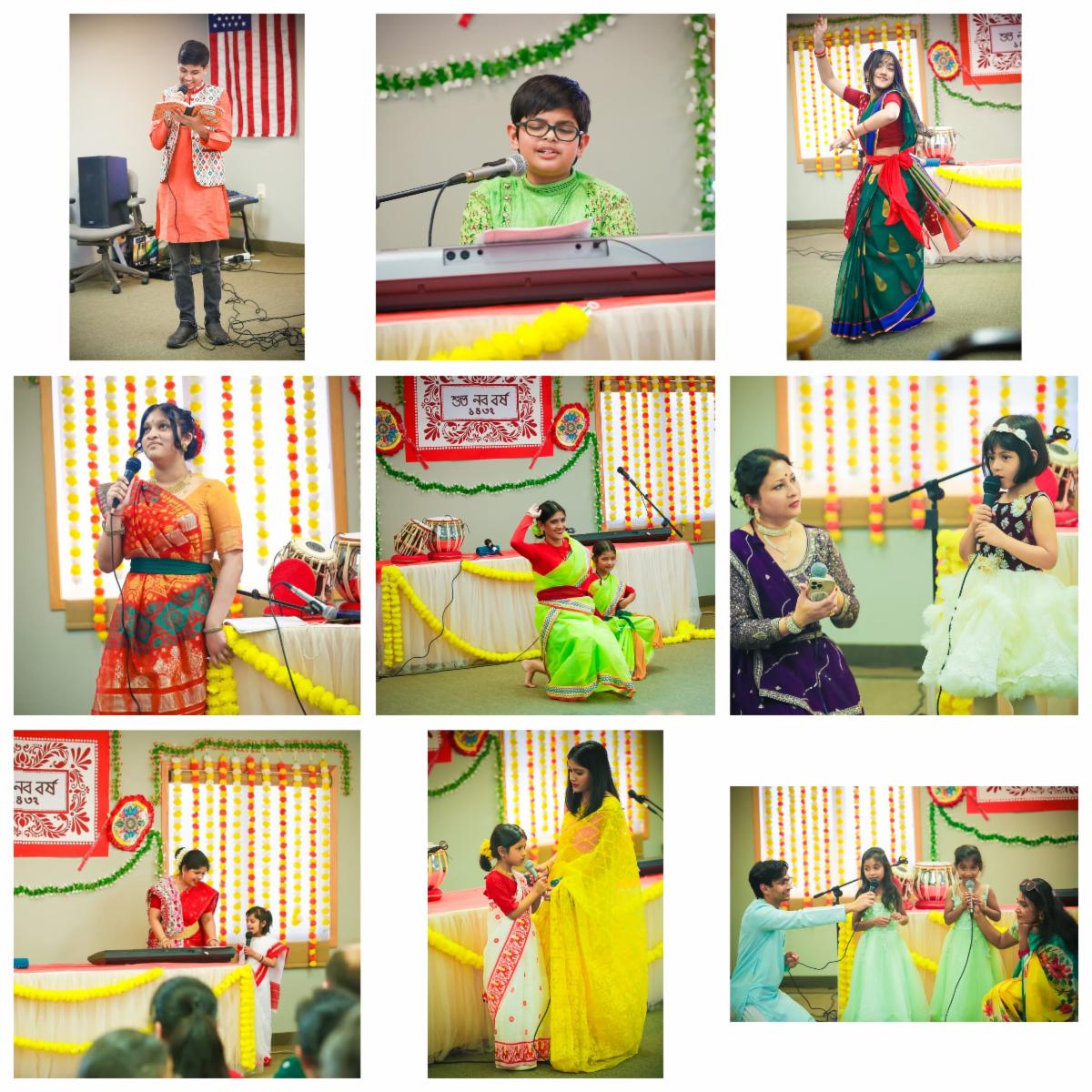
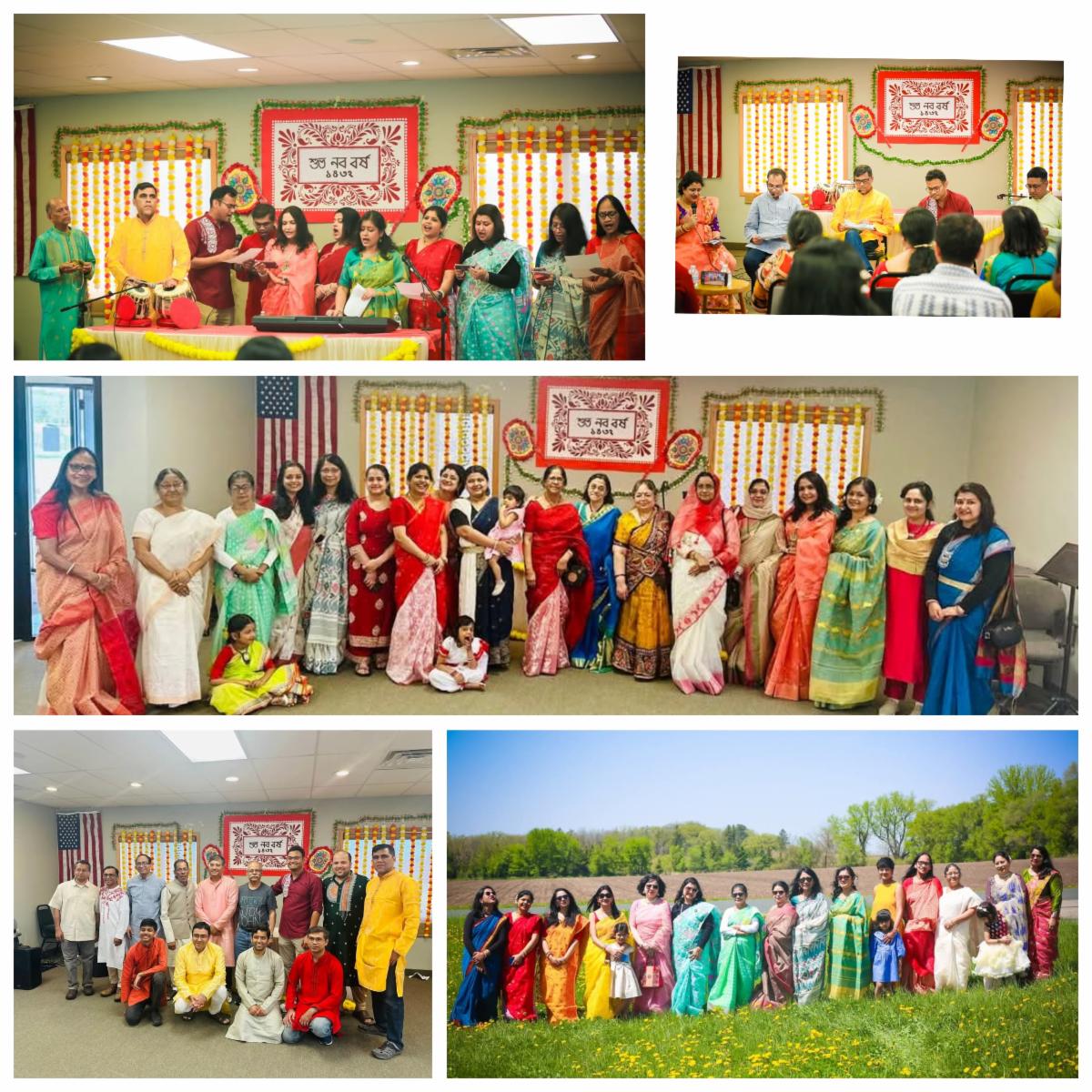
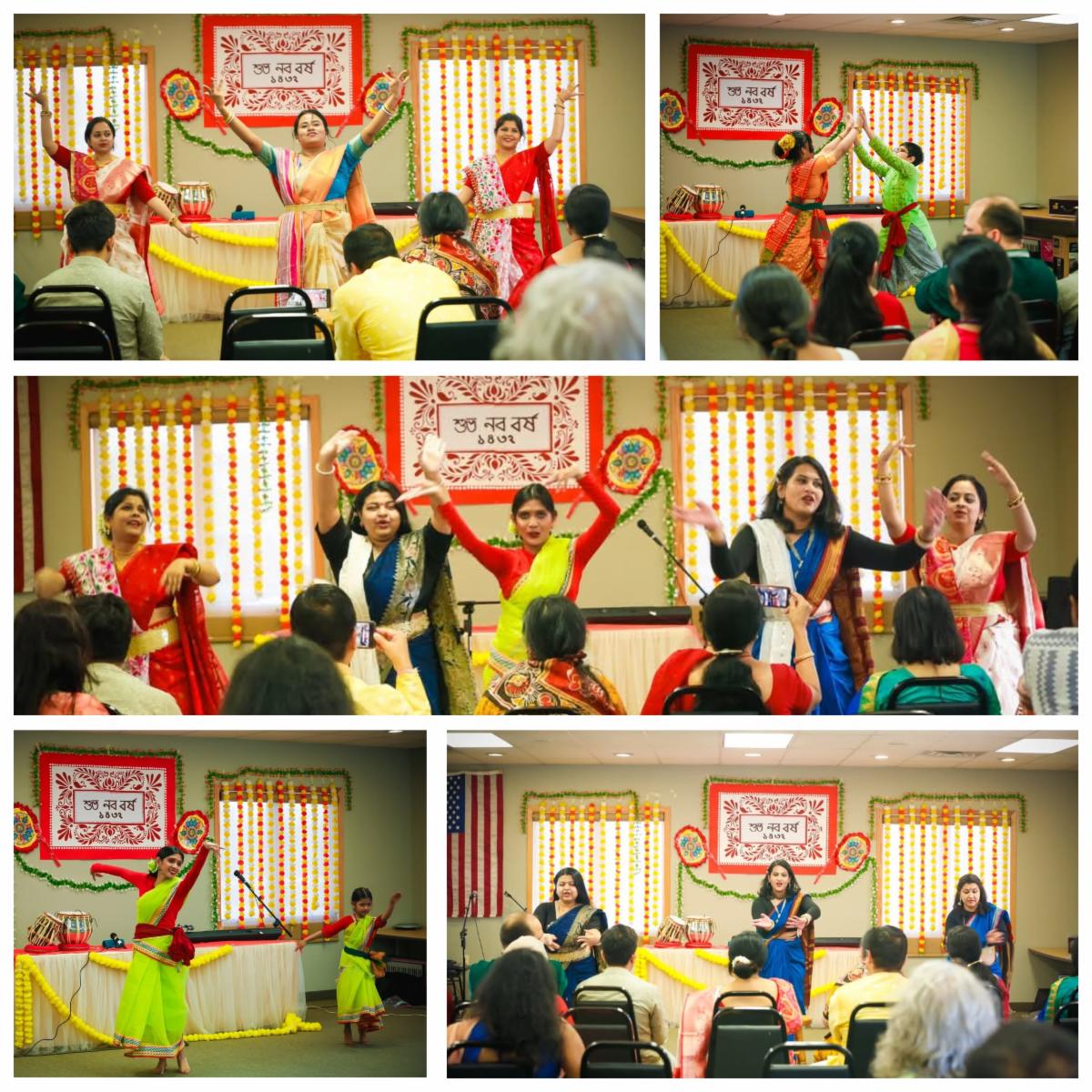
Traditionally celebrated on April 14th or 15th, this year’s official New Year was on April 14th. But here in Rochester, MN, we added a little twist to the calendar. CABERI brought the Bengali New Year to life on May 10th — because for us, Poila Boishakh isn’t just a date, it’s a feeling.
Bengalis from both India and Bangladesh in and around Rochester MN came together under one roof, turning a quiet Minnesota weekend into a full-blown celebration bursting with joyous music, memories making this evening nostalgic.
The air buzzed with the melodies of Rabindra Sangeet, heartfelt poetry, and dazzling dance performances by both kids and grown-ups — proving once again that rhythm and passion are part of Bengali’s DNA.
The highlight was the food, of course. A Bengali celebration without food is like a Rabindrasangeet without emotion — incomplete.
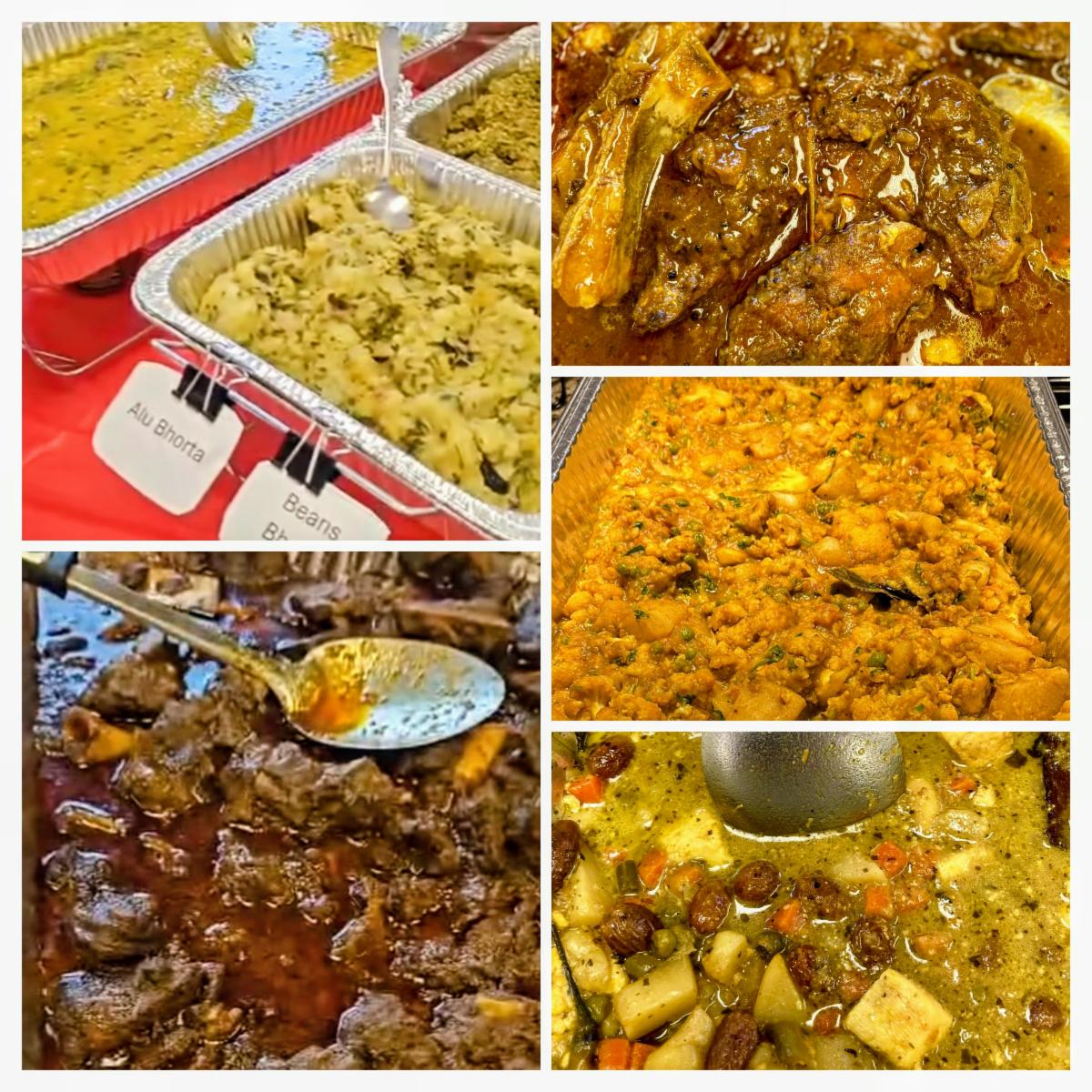
Our lovingly home-cooked delicacies were straight out of Grandma’s kitchen. Slow-cooked Mutton Kosha, rich Macher Kalia, vibrant Shukto-style mixed vegetables, and the ever-iconic Rosogolla served over creamy Mishti Doi. One bite and we were instantly transported back to Kolkata lanes and Dhaka evenings.
Events like this do more than entertain — they nurture our roots, remind our children of their vibrant heritage, and wrap everyone in the cozy comfort of community. On this day, we weren’t just celebrating a new year; we were celebrating us — the global Bengali family.
Subho Noboborsho — from our hearts to yours!
| | |
A Traditional Tamil New Year Celebration in Rochester, Minnesota
Author : Piku | April 12, 2025
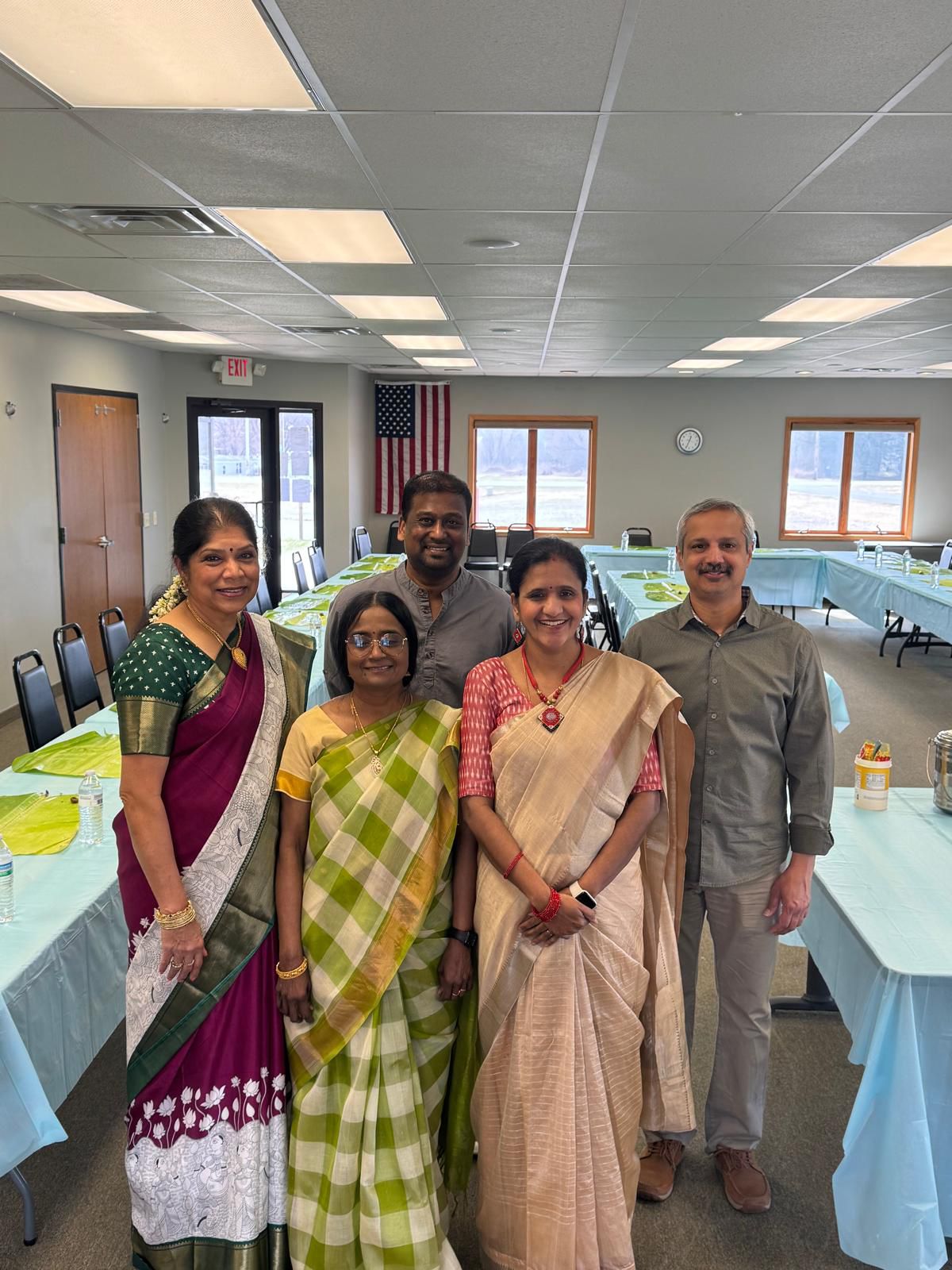
The spirit of Tamil heritage came alive in Rochester, Minnesota, on April 12, 2025, as the local Tamil community gathered to celebrate Puthandu—the Tamil New Year—with grandeur, tradition, and warmth. Hosted at a local community center by Thamarai Tamil sangam ,the event drew families, friends, and cultural enthusiasts together for an unforgettable evening steeped in tradition and togetherness.
One of the most striking elements of the celebration was the traditional South Indian feast, served on banana leaves. This practice, deeply rooted in Tamil culture, added an authentic touch to the celebration. Guests were treated to a wide array of homemade South Indian delicacies, meticulously prepared by volunteers and community members. The menu featured classics such as sambar, rasam, kootu, potatoporiyal, cabbage carrot poriyal ,chicken, curd rice, payasam, kesari,appalam and banana creating a culinary experience that was both nostalgic and heartwarming.
Many attendees came dressed in traditional attire: men in veshti and shirts, and women in colorful sarees and salwars. The hall was decorated with vibrant kolams (rangoli designs), fresh flowers, and traditional lamps, setting a festive tone.
The atmosphere was filled with laughter, shared stories, and a deep sense of belonging. More than just a celebration, the event served as a reminder of the importance of cultural roots in fostering community bonds—especially for those living far from their homeland.
As the evening drew to a close, many left with full hearts and satisfied appetites, already looking forward to next year’s celebration.
| | |
India, being a multicultural nation, celebrates not just one but many New Year's days, each known by different names such as Ugadi, Gudi Padwa, Puthandu, Vishu, and more. These celebrations reflect the country's rich cultural diversity and vary across states and regions, largely influenced by lunar or solar calendars and harvest cycles. In this edition, we feature some of the New Year celebrations in April as observed by a few families in Rochester.
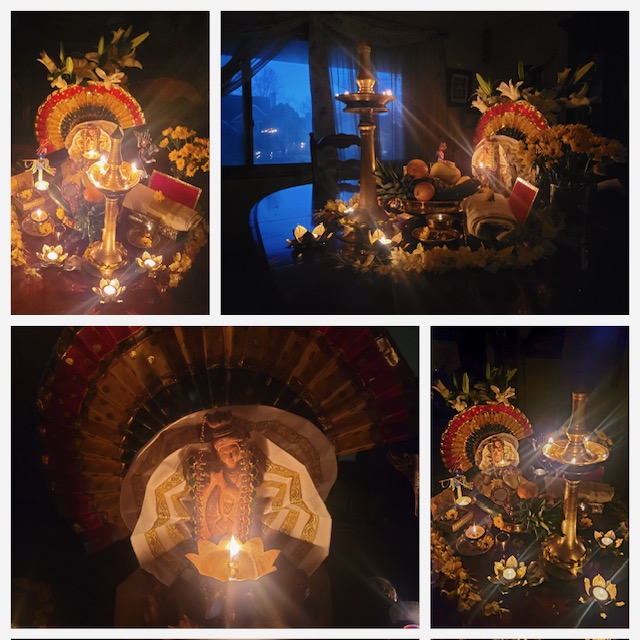
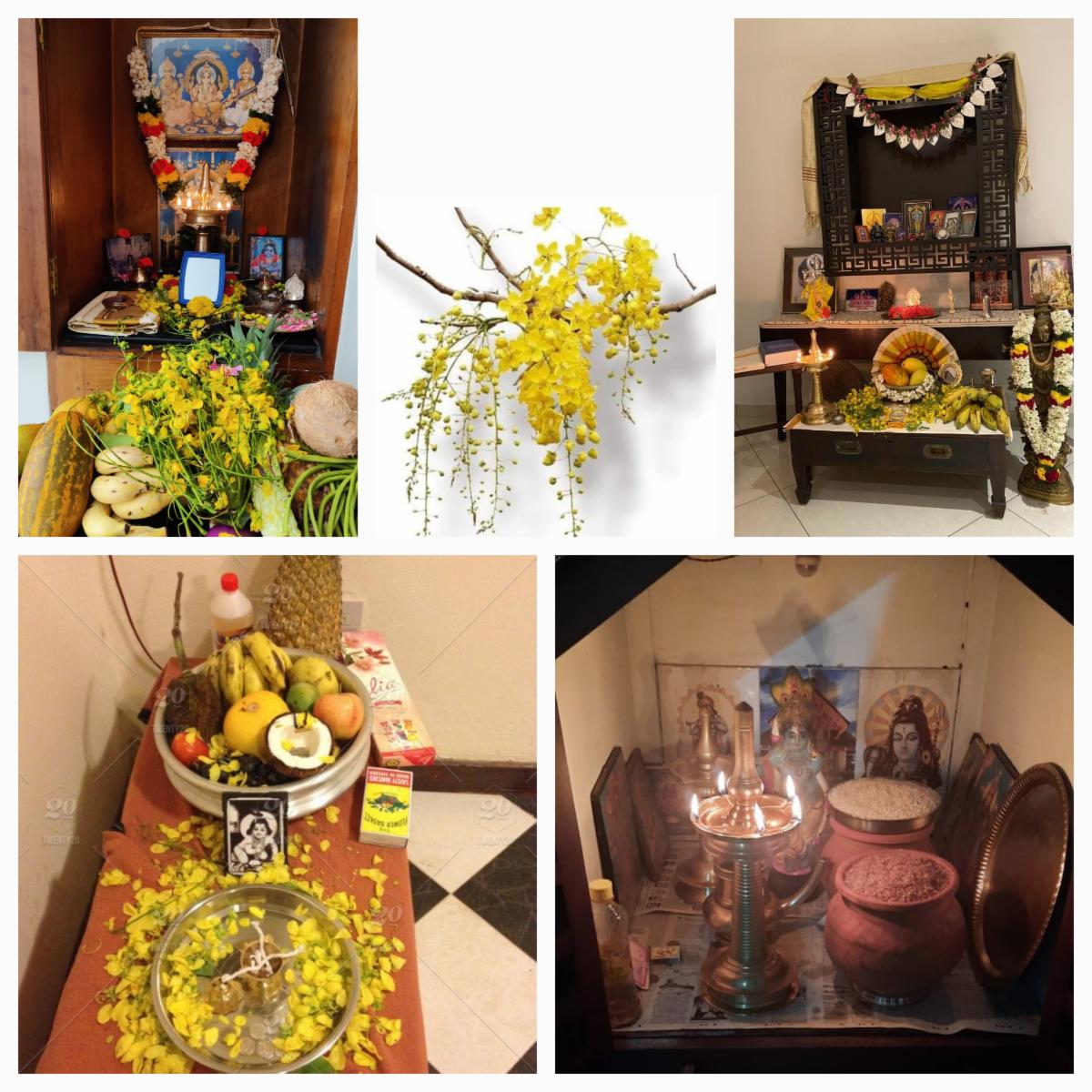
Vishu: Vishu is celebrated in Kerala as both the harvest festival and the astrological New Year of the Malayali community. This year, on April 14th, Keralites around the world marked the occasion with traditional fervor. In Rochester, despite the lingering winter chill, Malayali families rose early to witness the "Vishu Kani"—a symbolic and auspicious sight arranged the night before. The Kani is set up in a prayer room or living area, beautifully adorned with yellow flowers, raw rice, fruits, vegetables, and a central idol of Lord Krishna dressed in yellow attire and ornaments, illuminated by traditional oil lamps. Yellow signifies prosperity and abundance.
On Vishu morning, families begin the day by taking in the glorious sight of the Kani, followed by receiving coins or "kaineettam" and blessings from elders—a gesture symbolizing prosperity for the year ahead. The celebration culminates in a “sadya”, a lavish feast served on banana leaves, featuring an array of traditional Kerala delicacies.
Gudhi Padwa: Gudhi Padwa is a vibrant and significant festival celebrated predominantly in Maharashtra, India. It marks the end of a crisp winter and the arrival of spring, symbolizing renewal, hope, and the beginning of a new cycle of life. Observed on Chaitra Shuddha Pratipada, this day also signifies the start of the Marathi New Year in the Shalivahan Shaka calendar, it was celebrated on March 30th this year.
Tamil New year: Puthandu, or Tamil New Year, marks the start of a new calendar year for the Tamil- speaking community worldwide. Celebrated on the first day of the Tamil month of Chithirai, this year it was on April 14. Families also do special prayers in their home on this day. According to ancient scriptures, Lord Brahma began creating the universe on this day, and devotees believe Lord Indra descended to Earth to bring peace, hope, and happiness. Additionally, it is believed that Lord Shiva performed his cosmic dance, Tandava, on this day, symbolizing the start of creation. So, Puthandu is not just about celebrating a new year, but it is also about celebrating life and new beginnings.
Poila Baisakh: Poila Boishakh — the first day of the Bengali calendar, when the month of Boishakh rolls in with new hopes, sweet wishes, and a whole lot of mishti! Every Bengali heart hums “Eso hey Boishakh, eso eso” to welcome the New Year with open arms. It is considered auspicious for starting new ventures, paying off debts, and signifies a fresh start. Traders and businessmen open new account books (Haal Khata) to start the new financial year. Social gatherings and cultural expressions showcase the rich heritage of Bengal. In essence, Poila Boishakh is a time of celebration, renewal, and a fresh start for the Bengali community, marking the beginning of the Bengali lunar year and the harvest season
UGADI: Ugadi is a celebration that welcomes the New Year with sadh bhavam (good thoughts), sadh sangathyam ( good companionship) and sadh sankalpam (good intentions) for Telugu people and Kannadigas in Andhra Pradesh, Telangana, Karnataka and Tamil Nadu. Good thoughts inspire good intentions, and good intentions help build and maintain good companionship. Likewise, the support and influence of good companionship encourage us to think positively and set noble intentions. Together, they weave a virtuous cycle that nurtures inner growth and lasting harmony.
Baisakhi:Baisakhi is a lively spring harvest festival celebrated mainly by Punjabis in India and around the world. It usually falls on April 13 or 14, marking the first day of Vaishakha in the Hindu solar calendar and marking the beginning of the Sikh Calendar year. This festival is all about celebrating the harvest of winter crops (rabi crops), making it big celebration for farmers.
| | |
Congratulations High School Graduates!!
Name: Bela M Verma
High School: Mayo High School
College: Gustavus Saint Peter
| | |
Name: Aisharya Bhattacharya
High School: Century High School
College: Duke University for Pre-med Biology
| | |
Name: Krishita Roy
High School: Mayo High School
College: UV Madison for Computer Science
| |
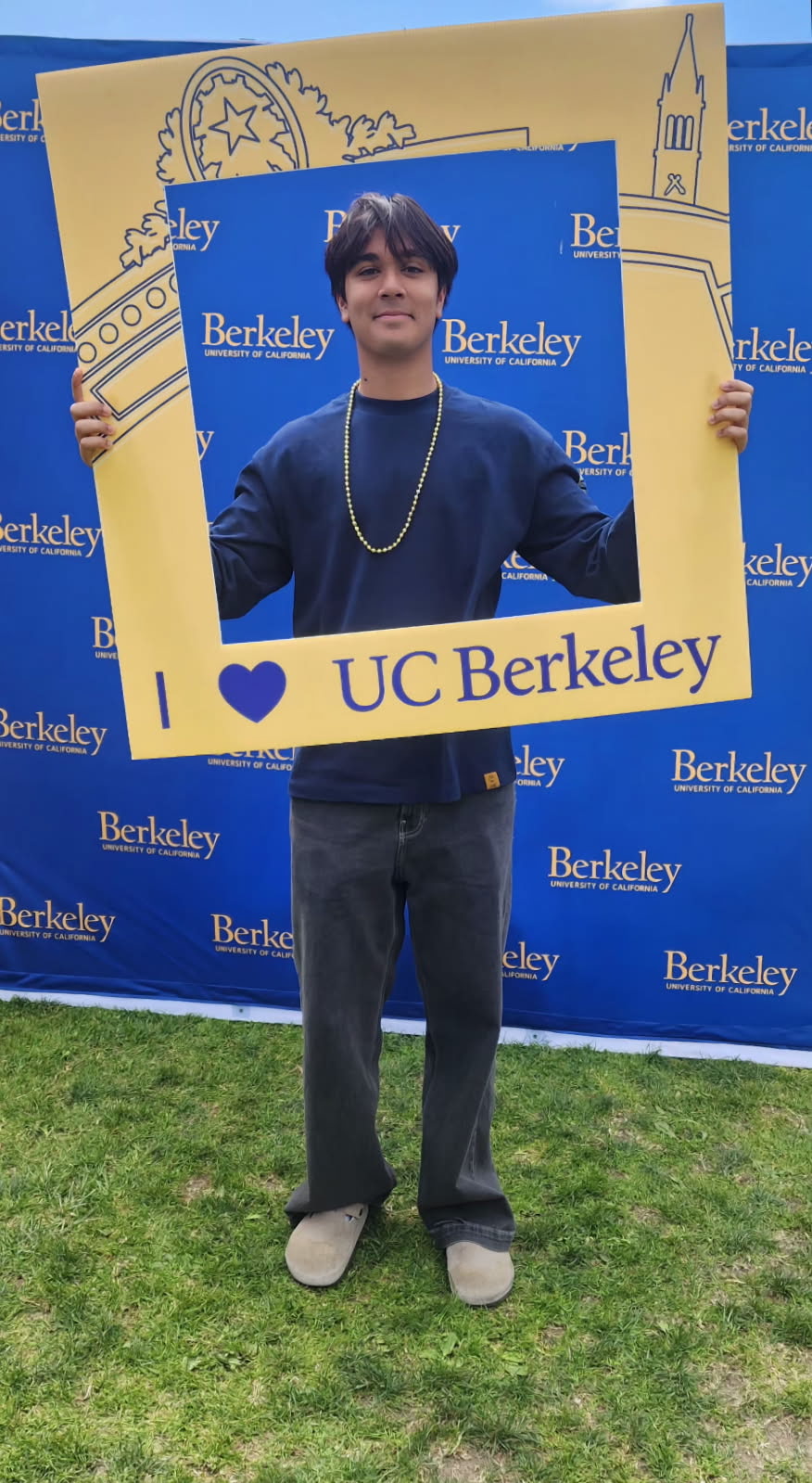
Name: Snehan Majumder
High School: Mayo High School
College: UC Berkeley
| |
Name: Sreyoli (Rai) Bhattacharya
High School: John Marshal High School
College: Georgia Institute of Technology
| |
Rochester Hindi School
The Rochester Hindi School (RHS) has been established in collaboration with SILC, the School of India for Languages and Culture, based in the Twin Cities. RHS offers a wonderful platform for children living in the US to develop basic communication skills, connect with extended family back home, and engage with India through various events we host throughout the year.
RHS follows the Rochester Public School calendar, with classes held every Friday from 6 pm to 7 pm at United Methodist Church. We will have an open house at the beginning of the school year in September, where we will share additional details about the Hindi school program, curriculum, and operations. This will be a great opportunity for you and your children to meet the teachers and staff.
We are currently accepting registrations for the 2025-2026 school year for children ages 5-17 years. For additional information, please visit our website: https://icamn.org/education or contact RHS principal Shital Aranake at education@icamn.org.
Rochester Tamil School
The Tamil School in Rochester is offered in collaboration with the TwinCities Tamil Association, with the goal of fostering a love for the Tamil language and culture among children. The program is designed to spark active and creative interest in Tamil language and literature, while also helping children of the Tamil diaspora in and around Rochester stay connected to their cultural roots.
Location: Northrop Community Education Center, 201 Rochester, MN
Class Time: Fridays, 6:30 – 8:00 p.m.
For more information, please visit https://tctamn.org/paadasalai/ or contact the Rochester school principal, Priya Natarajan, at (507) 226-2829.
Telugu School in Rochester
In Association with SiliconAndhra University (California) Founded in 2014, the Telugu School in Rochester is dedicated to preserving and promoting the Telugu language and culture among children in our community. Our program is affiliated with SiliconAndhra University in California, which is partnered with Potti Sreeramulu Telugu University (PSTU) in Hyderabad. Registrations started for academic year 2025-26. Telugu school follows Rochester public school calendar. Classes start after Labor Day and end mid May.
Contact Sheela Seetamsetty 507-216-0802 with any questions.
Program Highlights:
Age Group: Children can start at age 4
Class Duration: 2-hour sessions on weekends
Schedule: Typically held on Sunday afternoons, with flexibility based on student and teacher convenience
Course Duration: 7-year structured curriculum
Junior Certificate awarded by PSTU after 5 years
Senior Certificate after 7 years
Advanced Opportunities: Eligible students can pursue a Diploma, Certificate, Bachelor's, or even Master's degree in Telugu after completing the program.
Curriculum: Books and materials provided by SiliconAndhra University (soon to be renamed Aria University).
Online Option: For families without access to a nearby center, the Intinta Manabadi online program is available: 🔗 https://manabadi.siliconandhra.org/intinta-manabadi/
| | |
Asoga Halwa: A Taste of Temple Streets and Grandmother’s Kitchen
Author: Priya Ram
Some recipes aren’t just about ingredients — they carry the scent of memories, the sound of festivals, and the comfort of home. Asoga is one of those treasures.
If you’ve ever wandered the temple streets of Thanjavur during a festival, you might’ve caught a whiff of something warm and golden drifting through the air- sweet, rich, and unmistakably special. Or maybe, like me, you remember a grandmother stirring a heavy-bottomed pan with one hand and your childhood with the other.
Asoga - not to be confused with the Ashoka tree- is a soft, fragrant halwa made from moong dhal and wheat flour, steeped in ghee and tradition. It’s not as well-known as other Indian sweets, but in Tamil homes, it’s quietly beloved.
In our family, this sweet marks every celebration. My mother and aunts make it during weddings, festivals, or anytime the house needs to feel a little more joyful. The moment ghee hits the hot pan, the aroma fills the kitchen -and just like that, everyone knows: something special is being made.
Ingredients
(Serves 6–8 generous portions)
- 1 cup moong dhal (cooked in 3 cups of water and blended smooth)
- 2 cups sugar ( can go upto 2.5 cups)
- 1 cup ghee
- 3–4 tbsp wheat flour
- Powdered cardamom (a tsp or two, to taste)
- Cashews (a handful, roasted in ghee)
- A few strands of saffron or a touch of natural color
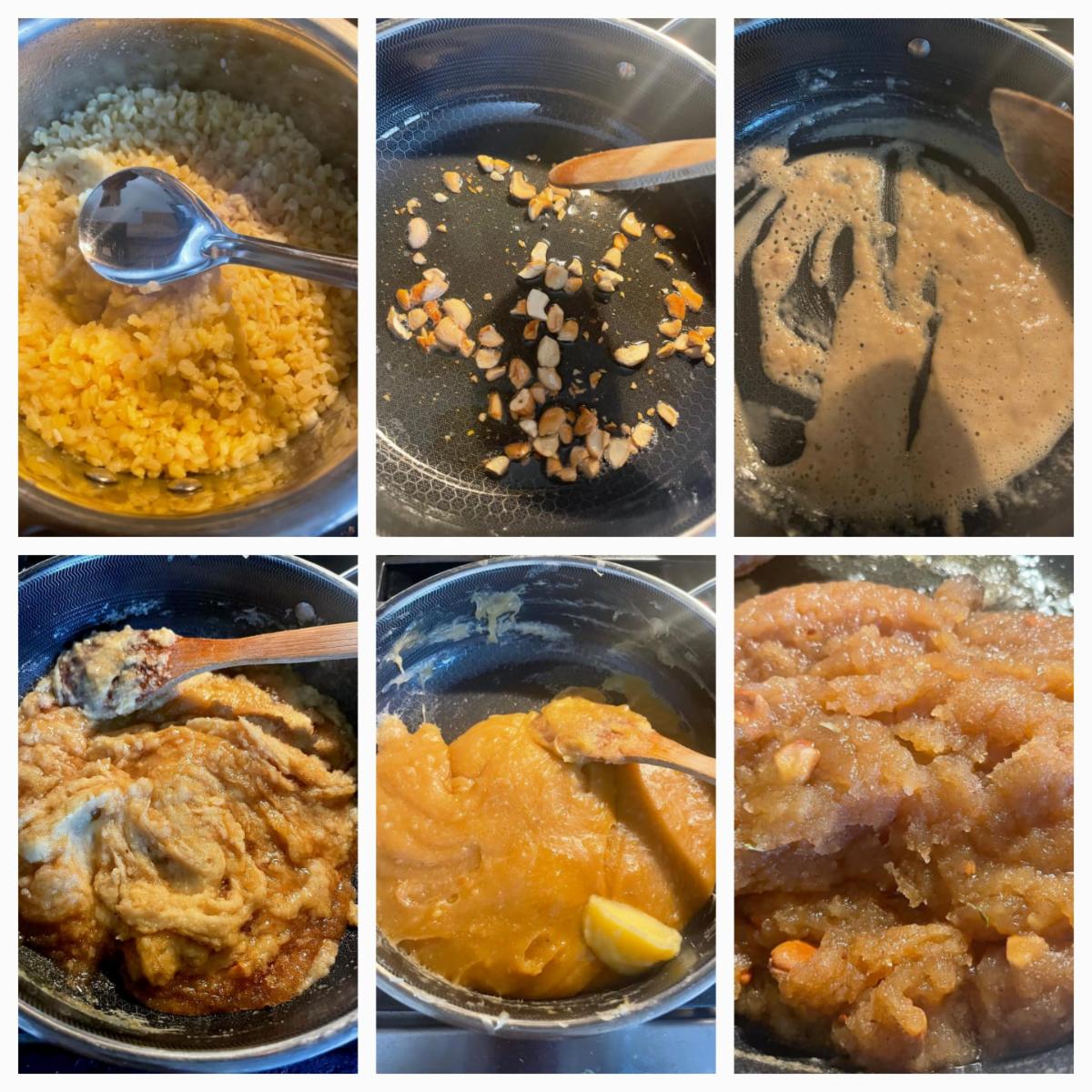
Method- Step-by-step guide below
1. Golden Beginnings
Heat 1/4 cup ghee in a thick-bottomed pan. Fry the cashews until golden and set them aside.
2. Aromatic Alchemy
In the same ghee, roast the wheat flour until the raw smell disappears. This simple step brings a beautiful nutty depth to the sweet.
3. The Heart of the Sweet
Add the moong dhal paste and keep stirring gently over medium heat. Slowly, it thickens and begins to pull away from the pan.
4. The Sweet Spot
Now add the sugar. Stir continuously to avoid lumps. As the mixture melts and bubbles, add ghee little by little. It will soon come together into a glossy, golden halwa.
5. Final Touches
Mix in cardamom powder, saffron (or color), and finish with the roasted cashews.
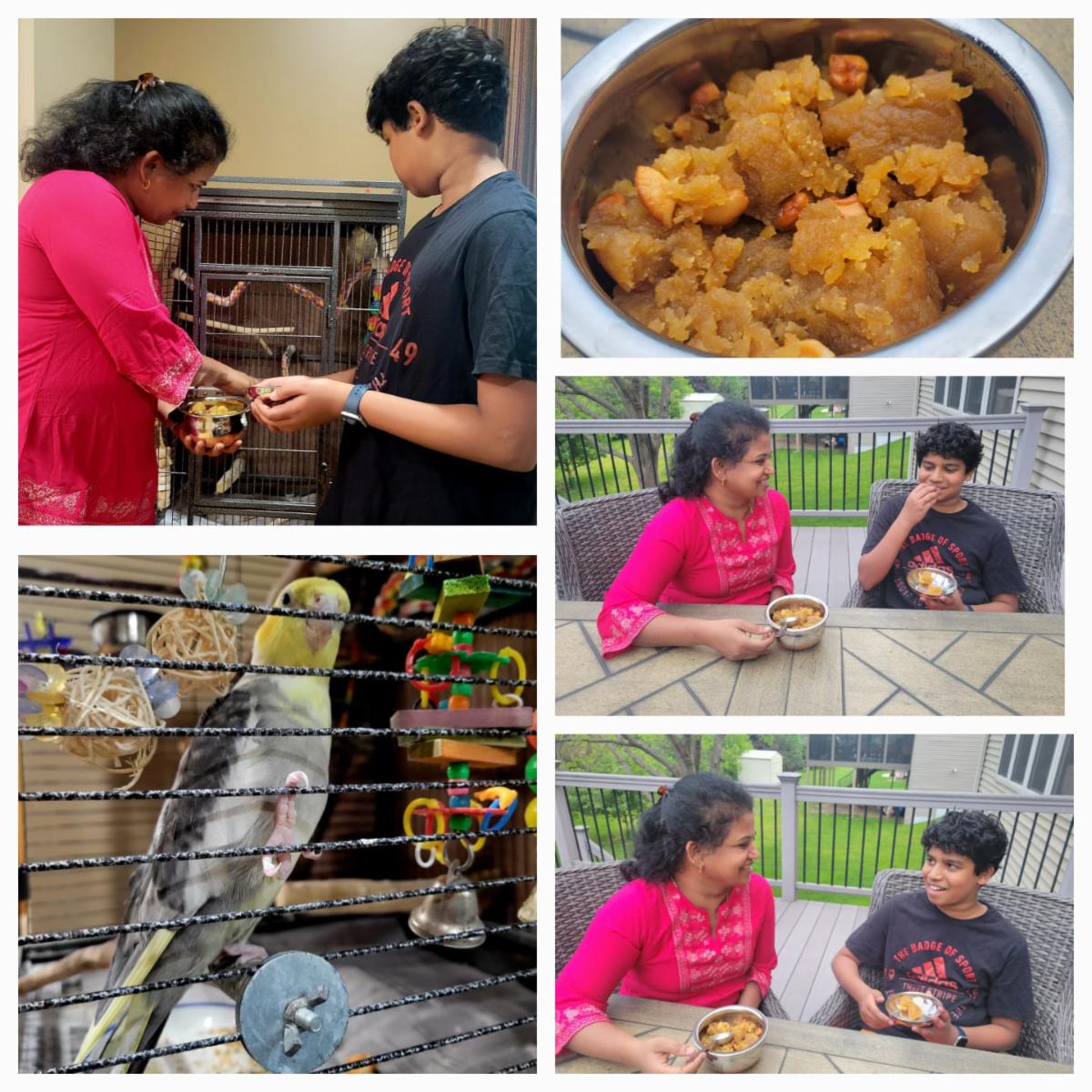
6. Serve Warm
Asoga is best enjoyed fresh and warm — soft, fragrant, and full of comfort.
They say this sweet was once served in royal kitchens — perhaps that’s why it feels so luxurious. But for me, it will always taste like home.
“It’s more than dessert. It’s memory, legacy, and celebration — all in one spoon.”
| | |
Rochester through my Lens
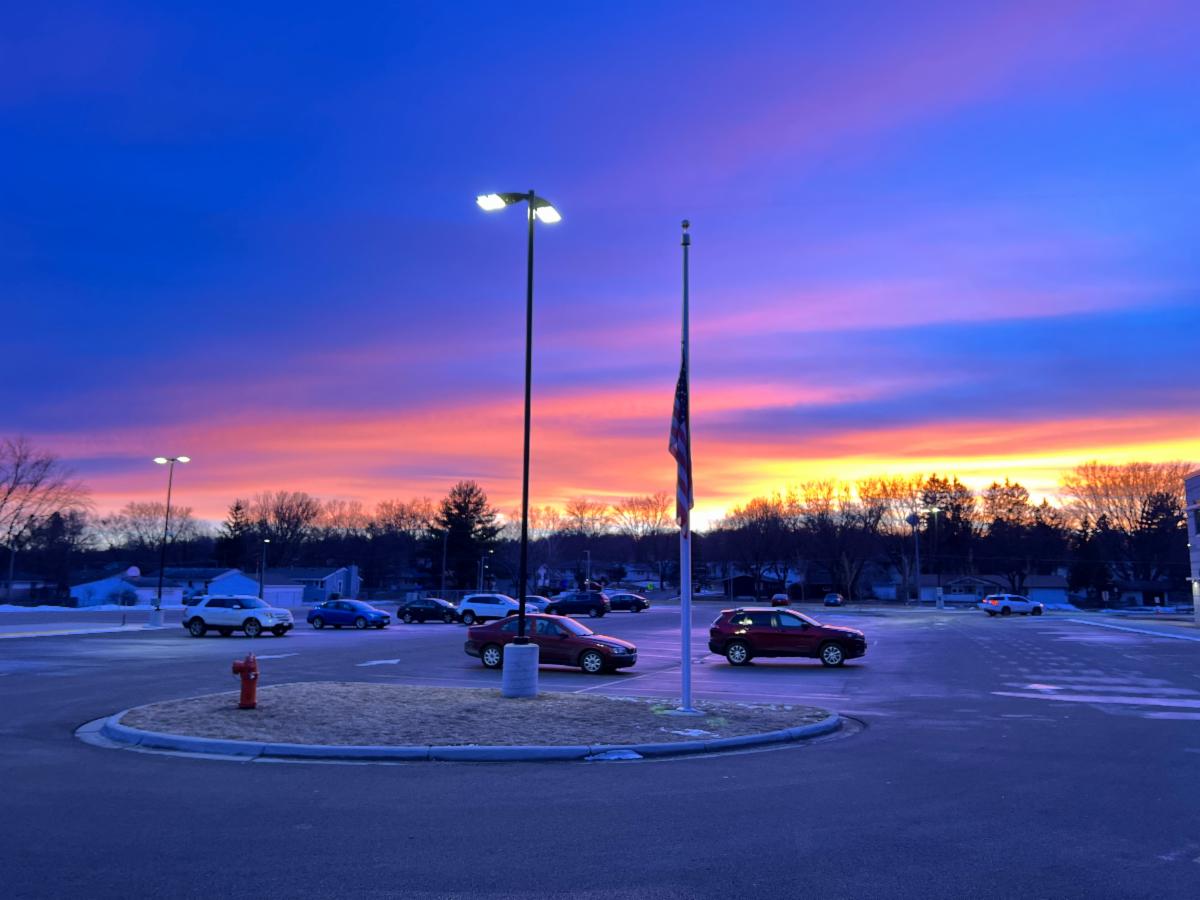
A mobile phone capture - outside Harriet Bishop Elementary school. No editing and straight out of my phone.
| | | | |