International Community Health Network
- Quarterly News -
|
|
|
|
The
Suaahara II Program
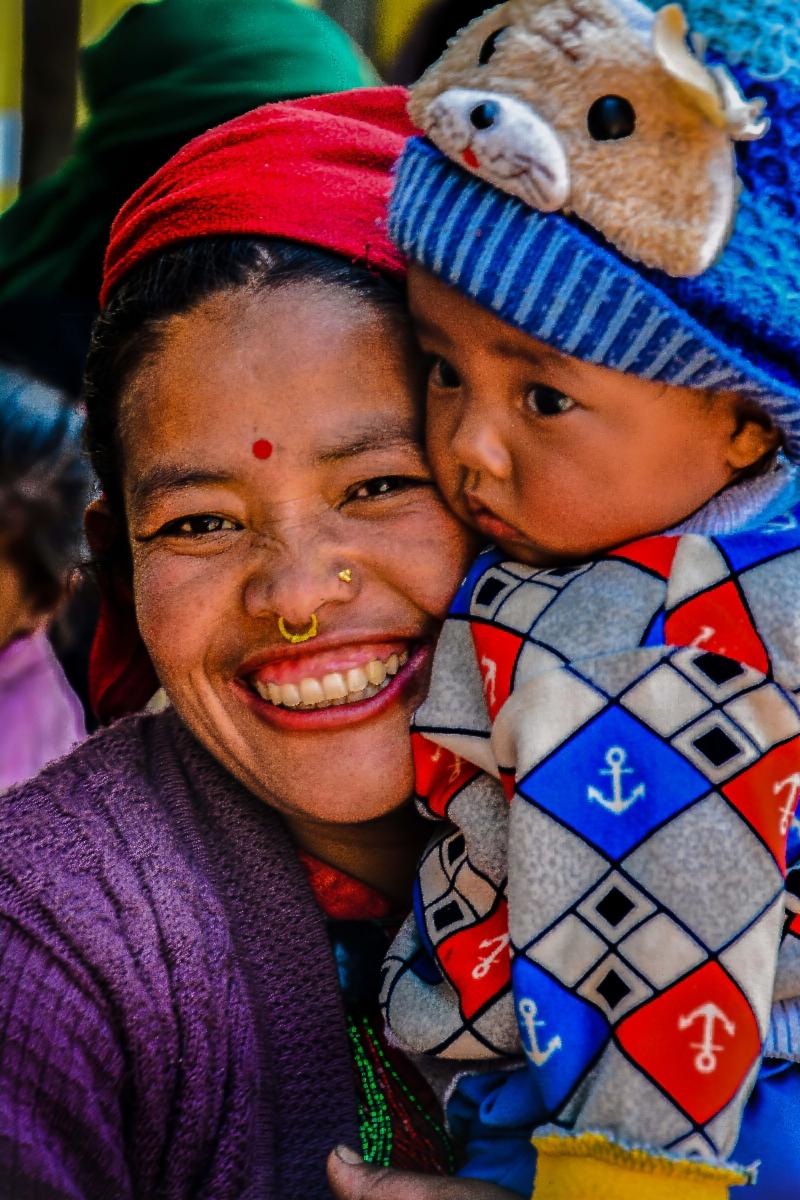
is dedicated to improving the health and nutrition status of women and children who fall within the 1,000 days period, from conception until a child reaches 24 months of age in 40 under-served rural districts of Nepal. Food demonstrations are conducted by community health workers in different health related forums for promoting locally available nutritious and diversified food. Many 1000 days mothers participate, including the mother and child photographed.
Photo Credit: Kiran Shrestha/RDTA
|
|
Improved Member Benefits and Global Membership Engagement
|
|
To be a CORE Group member means to contribute to global community health impact, giving you a variety of opportunities to:
- Lead and Influence
- Collaborate and Expand Your Network
- Strengthen Technical Capacities and Skills
- Access CORE Group Resources
|
|
Responding to organizational and individual needs, we have recently restructured our membership to include three categories:
organizations, individuals, and students.
We are also opening membership globally, recruiting members worldwide to further expand collaboration, innovation, and learning around community health.
|
|
Partnerships and Innovations In Focus at the May 2019 Global Health Practitioner Conference
|
|
Register now
to attend CORE Group's annual Global Health Practitioner Conference (GHPC) on
May 6-9, 2019
in
Bethesda, Maryland, USA
.
GHPC19
will explore the dynamic profile of partnerships that exist between implementers, donors, academia, and private sector at various levels of global health policy and implementation. The conference will also highlight different innovations for community health work, from technology to methodologies and processes.
|
|
Resources Now Available from the New WHO Community Health Worker Guideline Dissemination Event
|
The new guideline provides evidence-based policy recommendations to support national strategies and investments to build fit-for-purpose community health workforces.
This online event discussed the major recommendations intended to guide national policies and country-level perspectives on program implications and to highlight selected USAID funded resources pertinent to CHW programs.
|
|
CORE Group Attends Congressional Polio Reception
|
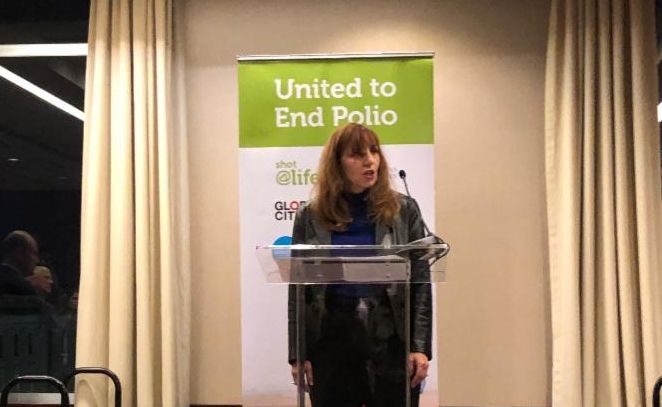
On February 5, organizations involved in the
global polio eradication effort
, including United Nations Foundation, UNICEF, USAID, and CDC, were invited to Capitol Hill in Washington, DC to speak to congressional members and staffers.
Ellyn Ogden, USAID's Worldwide Polio Eradication Coordinator, spoke about USAID's work with the
CORE Group Polio Project (CGPP)
. The USAID multimedia station at the event featured educational materials from CGPP such as flipbooks and behavior charts. CORE Group staff led a quiz wheel game to test participants' knowledge of polio and global eradication efforts.
|
|
Technical Working Group & Interest Group Activities
|
|
Reproductive, Maternal, Newborn, Child, and Adolescent Health: Hosted an
online discussion on confidentiality and adolescent reproductive health services, as provided in low- and middle-income countries.
Monitoring & Evaluation: Hosted an
online event presenting a variety of applied effective approaches that adequately identify culture and plan interventions that factor in the cultural nuances around particular behaviors.
Disability-Inclusive: Convened a group call to share updates on WHO's role not only in the provision of access to healthcare services to persons with disabilities but also on rehabilitation in the current global context. The group also discussed its action plan for the year.
|
|
Management Sciences for Health (MSH)
LeaderNet
hosts virtual seminars, e-courses, webinars, and curated resources, serving over 4,000 members from over 150 different countries. One of the newest additions to this global good for learning is a resource page on
Communities of Practice for Global Health
, which houses a curated list of communities that focuses on learning and knowledge exchange within the global public health sphere.
|
|
Liverpool School of Tropical Medicine (LSTM)
Joe Valadez
of LSTM presented on a new statistical technique called Hybrid Prevalence Estimation, a way of improving the accuracy/estimates from routine health information systems using surveys to adjust. Hybrid Prevalence Estimation addresses the major problem that HMIS systems (like DHIS2) are rolling out across the world without any accompanying measure of their error.
Watch the recording here
.
|
|
IntraHealth International
|
|
Lutheran World Relief, IMA World Health
International humanitarian organizations Lutheran World Relief and IMA World Health announced in January they are combining operations to dramatically increase their impact on breaking the cycle of poverty and promoting healthier families and communities throughout the world.
Learn more here
.
|
|
|
Want to share news and updates from your organization for the next newsletter?
|
|
March 13 | Online | Women Deliver
March 14 | Washington, DC and Online | Chemonics International
March 21 | Washington, DC | Grandmother Project - Change through Culture
March 27 | Washington, DC | USAID Office of Health Systems
April 9-11 | Istanbul, Turkey | WHO and Chaired by IPPF
May 5-6 | San Francisco, California | youth + tech + health (YTH)
June 3-6 | Vancouver, Canada | Women Deliver
June 10-20 | Boston, Massachusetts | Harvard T. H. Chan School of Public Health
|
|
USAID's flagship Maternal and Child Survival Program (MCSP)
Since 2015, MCSP has worked closely with Malawi partners to advance social accountability documentation and research . UNICEF, with funding from the Gates Foundation, implemented the project ‘Social Accountability for Every Woman Every Child’ (SAcc EWEC) in Malawi from 2016 – 2018. The project worked to facilitate community and civil society organization platforms to carry out constructive engagement for social accountability at different levels of the system. This was done through evidence generation, dialogue and debate for responsiveness and quality delivery of reproductive, maternal, newborn, child and adolescent health services based on duty bearers’ responsibilities.
On September 6, 2018, UNICEF and USAID co-convened a round table meeting in Lilongwe, Malawi, to bring together 52 stakeholders from civil society, government, academia and funding agencies to discuss the work done under the SAcc EWEC project and the broader learning context for social accountability in Malawi.
|
|
Jobs and Other Opportunities
|
|
Did someone share this email with you?
|
|
|
|
|
|
|