ICRC-S eNewsletter - July 2018
The Injury Control Research Center for Suicide Prevention (ICRC-S) newsletter brings you the latest news and research in the field of suicide prevention.
|
|
ICRC-S ONLINE PRESENTATION
The Relationship between Suicide and Opioid Abuse
|
|
In this online presentation, the third in the ICRC-S 2018 webinar series, Lisham Ashrafioun PhD, of the University of Rochester and VA Center of Excellence for Suicide Prevention at the Canandaigua VA Medical Center, discussed research on the interaction between pain and substance use, how this association may influence patients’ experience of pain, substance use behaviors, and suicide risk, and the development of interventions to identify and treat patients at high-risk of pain and substance use disorders. Katie Marks, PhD, of the Department for Behavioral Health, Developmental and Intellectual Disabilities and Project Director for the Kentucky Opioid Response Effort, discussed Kentucky’s strategy of using the bridge clinic model and peer support specialists within emergency departments to integrate screening and initiation of treatment for individuals recovering from an opioid overdose, and how these methods were integrated into hospital workflows.
|
|
ICRC-S BLOG POST
Propelling Suicide Research Forward: The ICRC-S Research Training Institute
|
|
"
As a newly minted assistant professor starting my research career in 2012, I was fortunate to join a team of very capable researchers working to advance mental health care for veterans. While my colleagues supported my professional development in innumerable ways, I did not have the necessary training to develop a research portfolio focused specifically on suicide prevention. Then, in 2014, I learned about the Injury Control Research Center for Suicide Prevention’s Research Training Institute (RTI). The institute, which brings together suicide prevention researchers and practitioners, offered a unique opportunity for me to gain the training I was missing in suicide prevention.
What makes RTI such a valuable experience was evident even during the application process. While I knew the suicide prevention coordinator for my site and had worked with her in a previous role, we had not worked together on suicide prevention research. The RTI application process was a catalyst for us to reconnect. Both the local coordinator and her supervisor agreed to be part of my RTI team, and we were selected to attend the institute."
|
|
UPCOMING ICRC-S WEBINAR
Suicide & Bullying: Preventing Suicide through Collaborative Upstream Interventions
|
|
Please join us for this sixth webinar of the ICRC-S 2018 webinar series. In this webinar, Marci Feldman Hertz, MS, of the Division of Analysis, Research, and Practice Integration at the Centers for Disease Control and Prevention will review research on the relationship between bullying and suicide. Her presentation will explore youth risk and protective factors that might increase, or decrease the risk for bullying involvement or suicide across several socio-ecological levels. She will also review specific strategies that schools and youth-serving organizations can implement to increase protective factors for youth. Particular emphasis will be given to increasing school connectedness as part of a multi-tiered strategy. Patricia Agatston, PhD, LPC, Counselor and Prevention Specialist with the Cobb County School District’s Prevention/Intervention Center will present on the history of the district’s Prevention/Intervention Center as a comprehensive crisis intervention and prevention approach to student suicides. She will also provide an overview of district strategies to prevent suicide and bullying through various evidence-based interventions and programs, and the role of community collaboration to support and expand school-based prevention efforts. Participants will be able to ask questions of the presenters.
|
|
ARCHIVED ICRC-S WEBINAR
Understanding the Relationship between Traumatic Brain Injury and Suicide
|
|
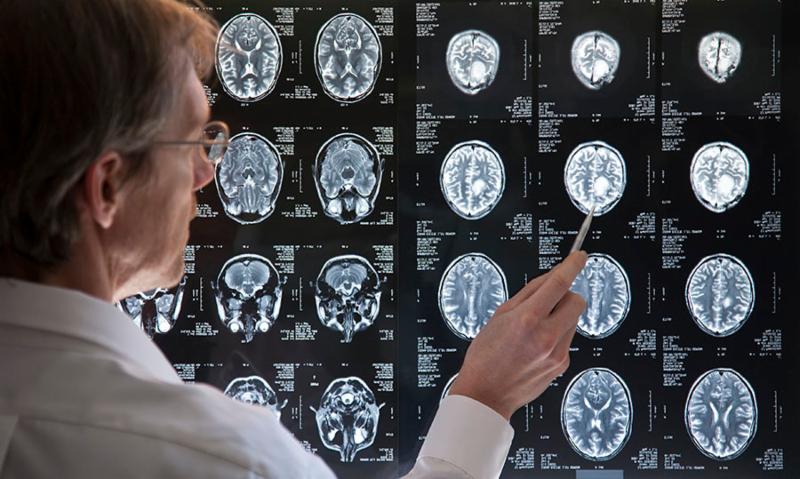
In this webinar, the fifth in the ICRC-S 2018 Webinar series, Lisa Brenner PhD, of the University of Colorado, Anschutz School of Medicine and Director of the Department of Veterans Affairs Rocky Mountain Mental Illness Research, Education, and Clinical Center, discussed research on the relationship between traumatic brain injuries and suicide, how this association may influence patients’ suicidal ideation and suicide risk, and opportunities for early identification and treatment in health care settings of patients at high-risk for suicidal behavior due to a traumatic brain injury. During this presentation, Dr. Brenner reviewed epidemiological data on the prevalence of suicidal ideation and behavior among individuals – particularly veterans – with history of a traumatic brain injury, her current research on best practice interventions in primary care and community settings, and the opportunity for future research to avert suicidal thoughts and behaviors through enhanced care approaches. Participants were able to ask questions of the presenter.
|
|
Wednesday, July 25, 1:00 – 2:30 p.m. ET
|
|
Fan Y, Ma N, Ma L, Xu W, Steven Lamberti J,
Caine ED
Simning A, Fox ML, Barnett SL, Sorensen S,
Conwell Y
Xu DR, Gong W, Gloyd S,
Caine ED, Simoni J, Hughes JP, Xiao S, He W, Dai B, Lin M, Nie J, He H
Rockett IRH
, Caine ED, Stack S, Connery HS, Nolte KB, Lilly CL, Miller TR, Nelson LS, Putnam SL, Nestadt PS, Jia H
Pisani AR, Wyman PA, Gurditta K, Schmeelk-Cone K, Anderson CL, Judd E
Caine, ED
Chen S,
Conwell Y, Xue J, Li LW, Tang W, Bogner HR, Dong H.
Li Y, Cai X, Harrington C, Hasselberg M,
Conwell Y, Cen X, Temkin-Greener H
|
|
Follow us on social media!
|
|
|
|
|
|
|