|
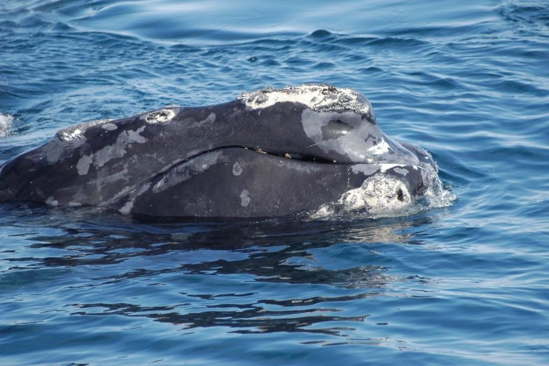
Meet Millipede, the right whale. Courtesy: NOAA
Researchers were pleased to see the sixteen-year-old male named Nimbus displaying normal behaviors because, in January 2023, he was found off the coast of Georgia entangled in a fishing rope. Known for scars on his lips that resemble a cloud, Nimbus suffered from 375 feet of synthetic rope around his mouth and trailing behind. Responders from the Georgia Department of Natural Resources, with assistance from others, disentangled Nimbus and he was able to recover.
Loki, an adult right whale of unknown gender, was also among the whales foraging Jeffrey’s Ledge. Loki is named for the Norse trickster-god because for twenty years, they have been rarely seen, only six times, and only during the winter in the Gulf of Maine. Where Loki goes when many right whales feed off our shores remains a mystery.
The January sighting of 75+ right whales swimming the waters of Cape Ann demonstrates that we really don’t know the ways of right whales. We think they winter in the warm, nutrient-poor waters off Georgia and Jacksonville and, in the spring, come to the cold, oxygen-rich, fecund waters around Cape Cod and the Islands. We think right whales migrate like snow geese, but they don’t.
Right whale calves are born with little blubber, so they need warm winter waters. Mother and calf pairs come to New England’s sandy shoaling waters to fatten on copepods and other zooplankton. They are the exception; most right whales are free to travel wherever they like. From our point of view, they travel without rhyme or reason.
The wandering life of right whales puts squarely on our shoulders the responsibility of cleaning up the portions of the ocean closest to us. What we do on land affects whales. Pollute and we will experience more silent seas. Advance healthy marine ecosystems, and you are more likely to be graced by the company of right whales. The choice is ours.
|