UPCOMING SSCS WEBINARS
August and September 2018
Attendees of IEEE Solid-State Circuits Society webinars have the opportunity to earn Professional Development Hours and Continuing Education Units. Once a webinar is complete, a link will be provided to you via email to complete a form to receive a certificate.


Tactical Grade Gyroscope Performance in a Consumer Grade Process
Thursday, August 30, 2018
12:00 PM ET
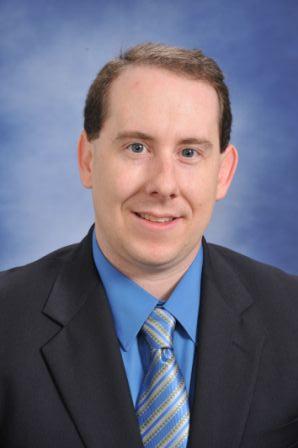
Presenter: Professor Bernhard Boser, UC Berkeley, California
Abstract: GPS has transformed navigation but unfortunately does not work in indoor or dense urban environments. The alternative, inertial navigation, is either too inaccurate or too large, power hungry, and costly in all but niche applications.

Gyroscopes are responsible for direction in inertial sensors. Since even small angular offsets can rapidly add up to large location errors, significantly improved gyroscope accuracy is the key to precise indoor navigation.

I will describe a prototype gyroscope with tactical grade performance. Unlike state-of-the-art solutions, the device does not rely on exotic fabrication technology or trimming, and both its size and power dissipation are comparable to existing mobile solutions.

How is this possible? Sensors, in general, compare their input to a reference. A thermometer compares its input to a reference temperature and reports the ratio. Gyroscope sensors have a huge advantage: their input is rate, degrees per second, also known as frequency. Frequency is the physical quantity that we can synthesize and measure with highest accuracy. While ppm-level precision is out-of-the-question for most properties, it is easily achieved for frequency.

Why then are gyroscopes not just as accurate as frequency sources? Oddly, present MEMS gyroscopes first convert frequency into force, then displacement, capacitance, voltage. Not only are these quantities difficult to measure with high accuracy, the scaling factors of all these transformations are subject to a myriad of fabrication and environmental variations. Not surprising that present gyroscopes suffer from a few errors.

The path to good gyroscopes is to measure frequency directly, without performance compromising detours. In this presentation, I will show you how.



Design Techniques for Scalable, Sub-pJ/b Serial I/O Transceivers
Wednesday, September 12, 2018
1:00 PM ET
Presenter: Samuel Palermo, Associate Professor, Texas A&M University
Abstract : In order to meet the inter-chip bandwidth demands of future systems and comply with limited IC power budgets, both chip-to-chip data rates and I/O energy efficiency must improve. This is a significant challenge for electrical interconnect architectures, which currently offer the lowest-cost solutions, as the frequency-dependent loss of conventional electrical channels prohibit significant data rate scaling without efficient equalizer circuits. This talk will discuss key design techniques that enable scalable, sub-pJ/b serial I/O transceivers. The first part of the talk will discuss low power transmitter and receiver designs capable of low-voltage operation and fast power-state transitioning. Next, low-complexity clocking architectures are detailed. The talk concludes with a discussion on low-power equalizer circuits that enable the support of higher data rates over lossy channels.
DID YOU MISS THE LAST SSCS WEBINAR?
Watch it On-Demand on the SSCS Resource Center

The SSCS Resource Center is a hub of information which includes On-Demand SSCS products. The Resource Center brings value to SSCS members by consolidating, storing, and making SSCS materials easily accessible. On the SSCs Resource Center, you'll find: up-to-date ISSCC short courses and tutorials, past webinar videos and slides, open access publications, and our CONFx series.