|
From New York to Australia to Geneva: Advancing the Longevity Agenda
Over the coming weeks, IFA will be actively engaged in a series of important global moments, bringing the voice of healthy ageing and longevity into conversations that are shaping our collective future.
At the UN ECOSOC Forum on Financing for Development in New York next week, IFA will be helping to ensure that ageing is part of the global economic conversation. As societies live longer, the question is not whether systems will adapt, but how. From financing to investment, these discussions are critical to building economies that are fit for longer lives.
From there, our Secretary General heads to Brisbane for the International Technology and Ageing Conference (ITAC), hosted by IFA Member Ageing Australia. With innovation in the spotlight, ITAC brings together leaders exploring how technology can support healthier, more connected lives as we age. Mr. Gregor Sneddon will deliver a keynote on Shaping a Brighter Future: Innovation, AI, and Global Collaboration for Healthy Ageing, highlighting how innovation and cross-sector collaboration can drive person-centred, policy-aligned solutions. This moment also reflects the strength of IFA’s network in action, where members are helping to lead and shape global conversations.
Later in May, we will join global leaders in Geneva for the World Health Assembly (WHA79). This is a key opportunity to elevate priorities across healthy ageing, ranging from integrated care, long-term care, sensory health, age-friendly environments, adult immunisation, and non-communicable diseases, and to engage with partners and governments on advancing global commitments.
Across each of these moments, IFA’s role remains consistent: to connect, convene, and advocate. By contributing to these global discussions, we aim to ensure that longer lives are supported by systems that enable health, participation, and dignity. We look forward to sharing insights and connecting with many of you across these engagements.
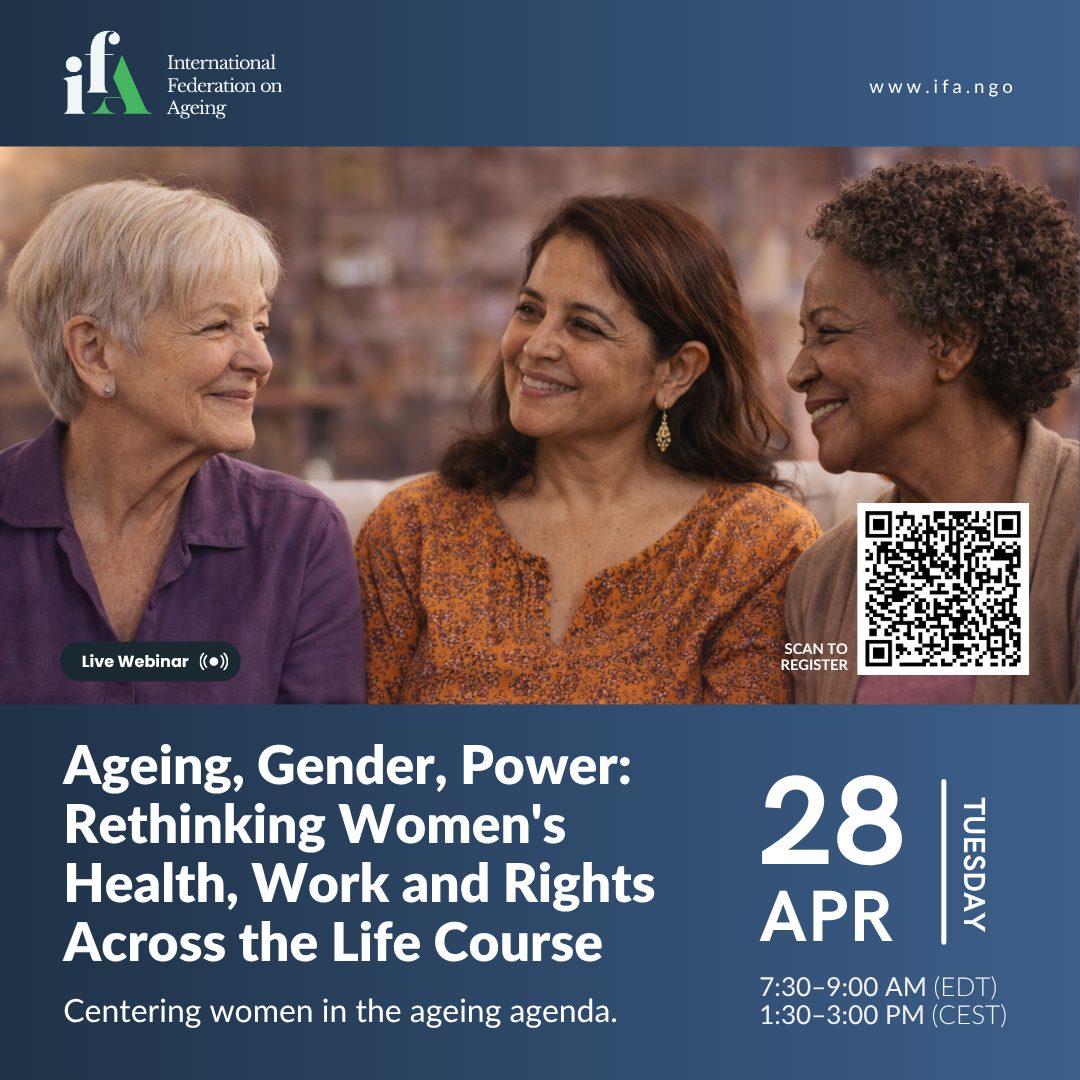
| | Ageing, Gender, Power: Rethinking Women's Health, Work and Rights Across the Life Course | | |
Date: April 28, 2026
Time: 7:30 AM –9:00 AM EDT | 1:30 PM –3:00 PM CEST
As populations age worldwide, a critical question emerges: how can societies better support women across the life course?
Societies around the world are ageing rapidly, reshaping health systems, labour markets, care structures and economies. Women are at the centre of this demographic transformation, yet their experiences across mid and later life remain overlooked. From menopause and health to workforce participation, caregiving responsibilities, income security, and the impacts of ageism and sexism, these challenges are deeply interconnected but rarely addressed together.
Hosted by the International Federation on Ageing, this global convening brings together leaders from health, policy, business, and civil society for cross-sector dialogue on women and ageing. Building on momentum from the 70th Session of the Commission on the Status of Women, the event will reframe women and ageing as a connected agenda of health, work, care, inclusion and dignity. It will explore what needs to change now to build more inclusive, equitable and longevity-ready societies with women at the centre.
| | IFA Advocates to Embed Ageing in Implementation of the New Urban Agenda | | |
IFA recently contributed to a high-level consultation convened by the Permanent Missions of Poland and Malawi to inform the forthcoming Political Declaration on the implementation of the New Urban Agenda to 2036.
While the Agenda sets a global vision for inclusive and sustainable cities, IFA highlighted a critical gap: population ageing remains under-recognised as a defining megatrend shaping urbanisation and social development.
As cities around the world continue to grow, they are also ageing. This demographic shift has far-reaching implications across infrastructure, service delivery, social inclusion, and economic resilience. Without stronger longevity lens, urban systems will fall behind demographic reality.
In its statement, IFA outlined three key priorities to strengthen the Political Declaration:
- Embedding a life-course and longevity lens across the New Urban Agenda to support health, functional ability, and participation throughout extended lifespans
- Strengthening alignment across global frameworks and city-level initiatives, including efforts such as the WHO Global Network for Age-friendly Cities and Communities, to reduce fragmentation and enhance impact
- Advancing multisectoral collaboration and implementation pathways, recognising that population ageing intersects with health, housing, climate resilience, care systems, and economic development
IFA remains committed to advancing longevity-ready cities, and working with partners to ensure ageing is fully integrated into the future of urban development. We invite you to join us in this work.
| | IFA Innovation Challenge Tackles Obesity in Ageing Populations | | |
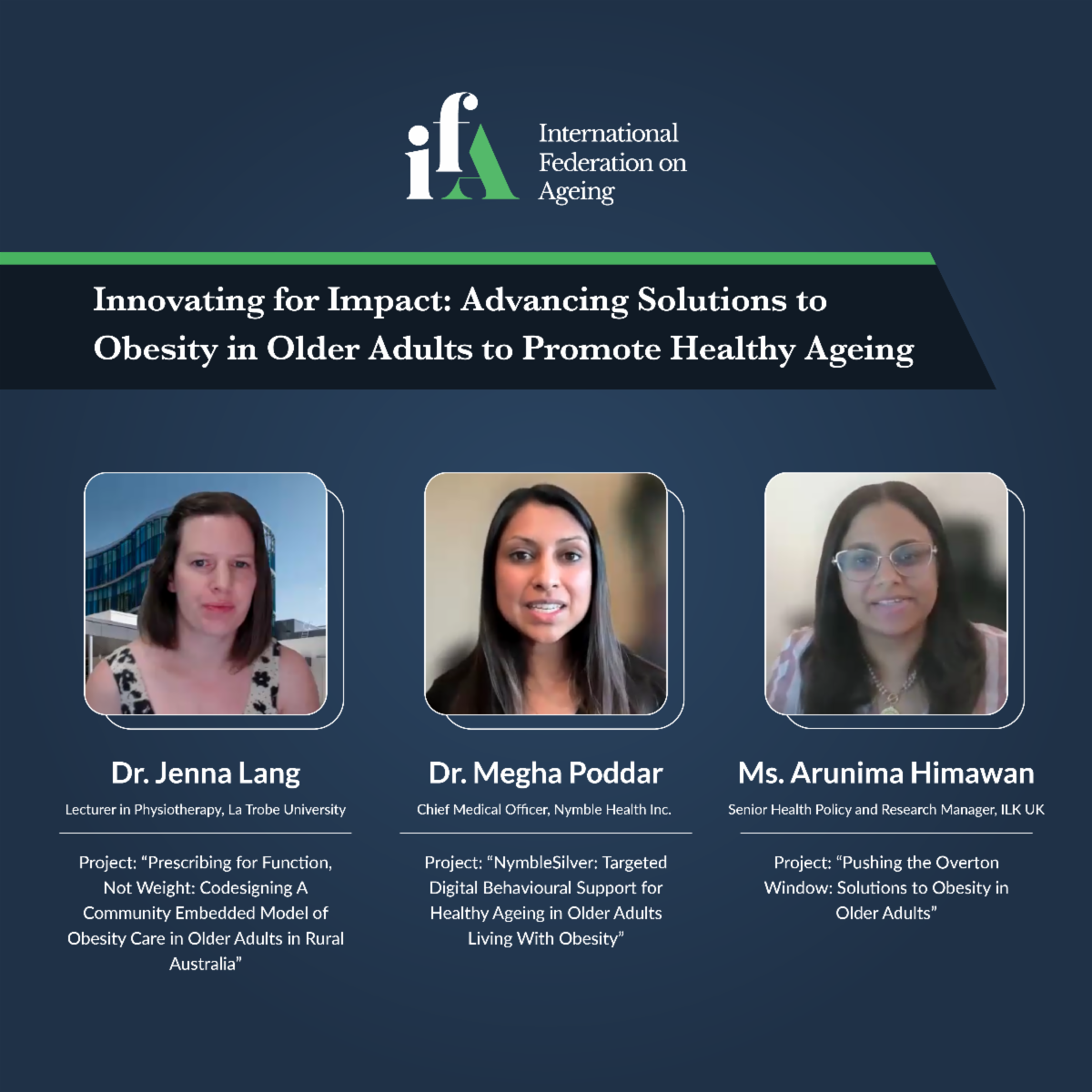
The IFA has announced the winners of its multi-country Innovation Challenge to improve responses to obesity in older adults, spotlighting practical solutions from Canada, the United Kingdom and Australia.
Delivered in partnership with Novo Nordisk, the challenge sought scalable approaches to address obesity in later life, moving beyond weight and individual behaviour to a focus on tailored, preventive, and long-term support, alongside community-based and interdisciplinary models of care.
| | | |
Winning projects reflect a shift toward integrated, system-level responses:
- Canada: Nymble Health’s “NymbleSilver” program uses accessible digital tools like text messaging to provide tailored behavioural and medical support for older adults, focusing on outcomes such as strength, cognition, and wellbeing, not just weight.
- Australia: La Trobe University developed a “function-first” care model that prioritizes independence and quality of life, embedding obesity care into community and primary healthcare systems.
- United Kingdom: the International Longevity Centre-UK is leading a policy-focused initiative to bring together stakeholders and develop actionable strategies to address obesity in later life, including “best buy” policy options.
Explore the winning projects and learn more about the need for integrated approaches to obesity in IFA’s latest blog post.
| | Closing the Gap in Vision Care for Ageing Populations | |
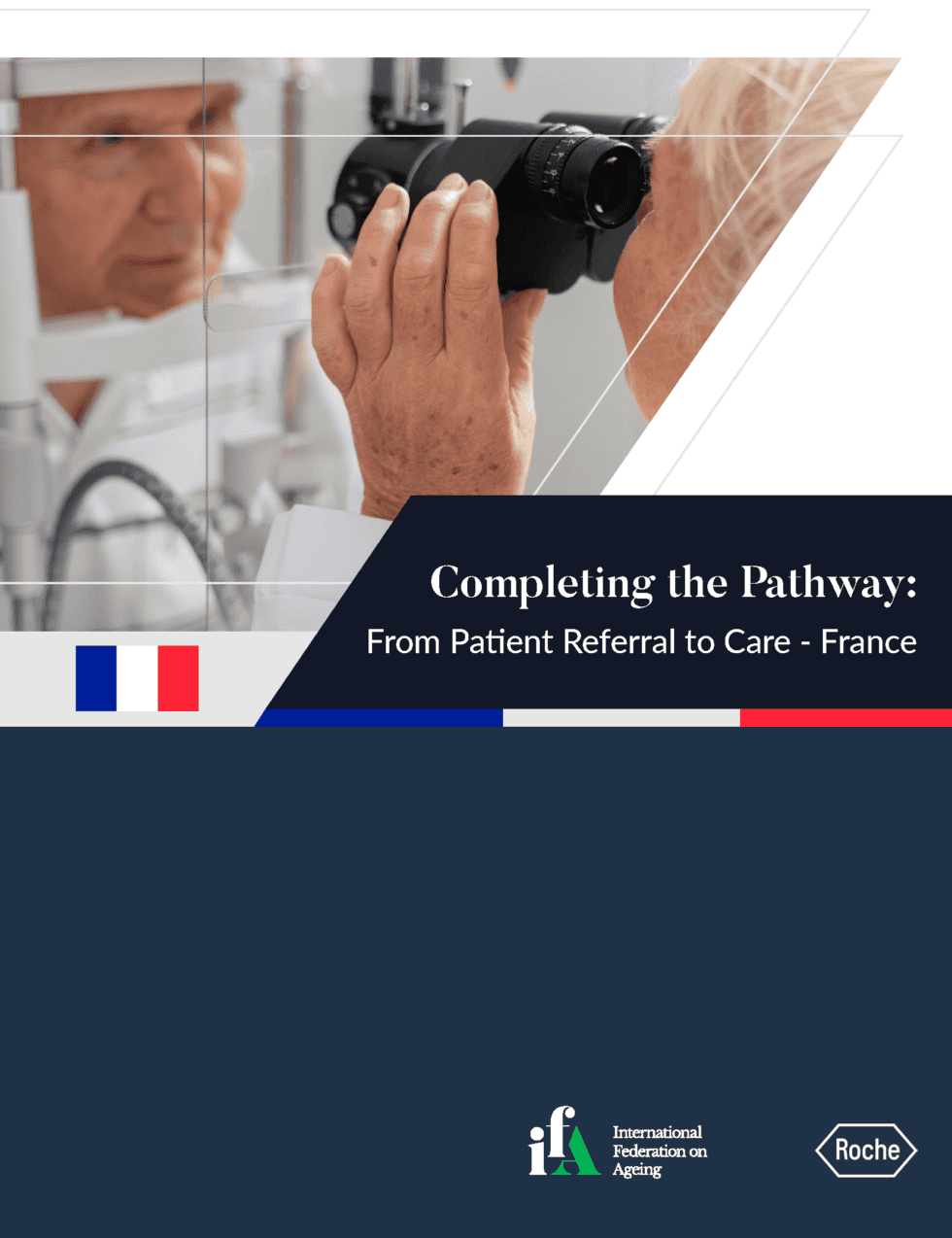
A new IFA analysis, Completing the Pathway: From Patient Referral to Care maps how ageing populations navigate eye health systems across the UK, US, Italy, Spain, France, and Switzerland, revealing persistent gaps in access to timely and coordinated care.
Vision health is central to healthy ageing, impacting mobility, communication, mental health, and independence. However, IFA finds that access to screening, treatment, and continued care remains fragmented in many systems.
| | | |
Across countries, the analysis finds gaps in awareness of age-related eye conditions, initial consultations, and onward referrals to specialists, which can delay diagnosis and disrupt continuity of care.
It highlights issues such as limited screening, long wait times, and unclear referral pathways, contributing to poorer vision outcomes and broader system-level challenges.
The findings offer insights for policymakers and health providers seeking to build more integrated, person-centred vision care systems that better support ageing populations.
| | |
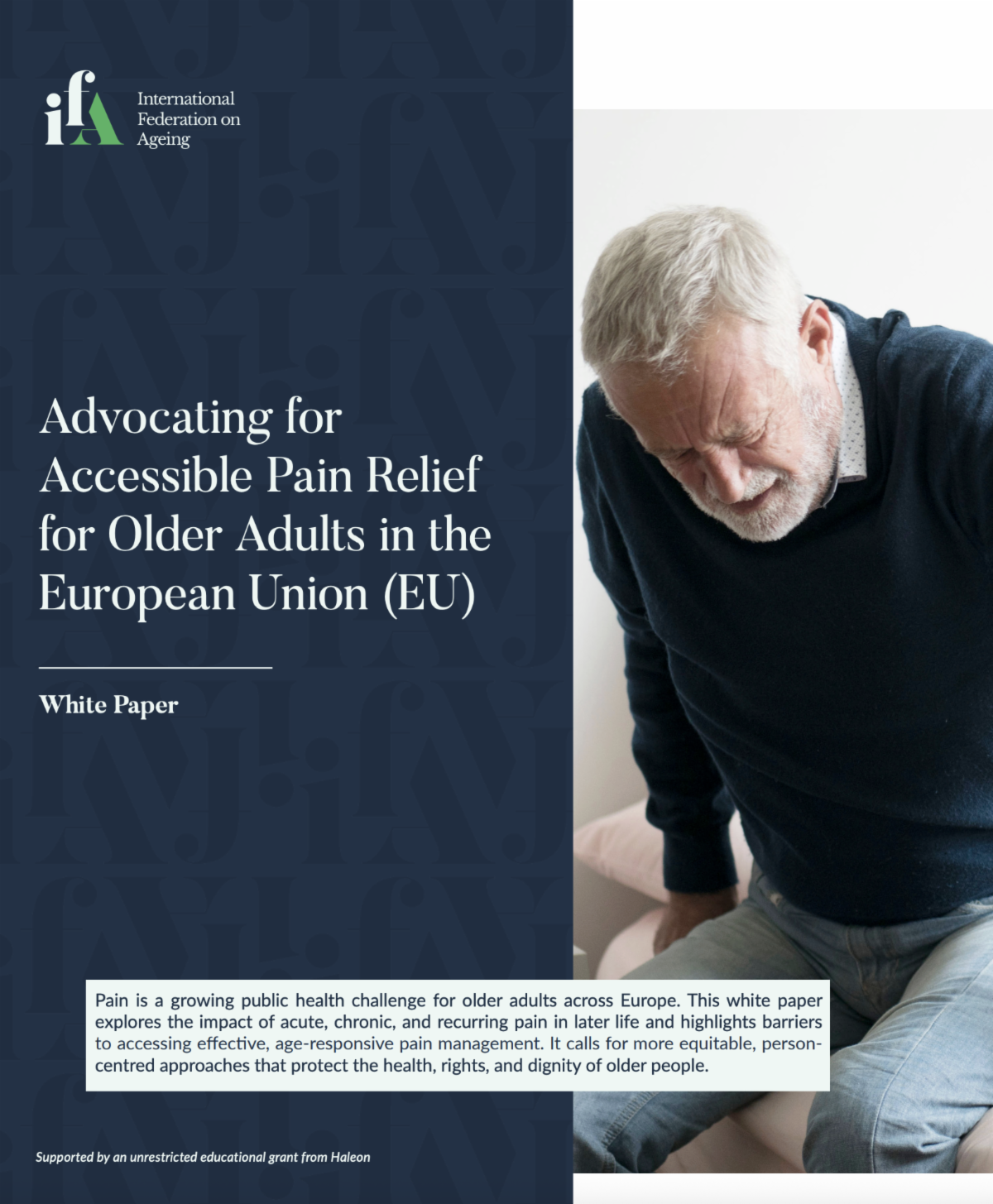
Pain in Later Life: The Hidden System Pressure We Can’t Ignore
Over 1 in 3 older adults in Europe live with pain - yet access to care remains uneven, fragmented, and often out of reach.
Findings from the IFA’s recent initiative Advocating for Accessible Pain Relief for Older Adults in the EU white paper - drawing on 1,811 respondents across 6 countries - highlight a clear reality: pain is not only widespread, it is reshaping how older adults live, function, and participate in society.
Findings show that pain significantly limits daily life for older adults:
| | |
- 72% report reduced mobility
- 24-46% struggle with daily activities
- 54% find that pain impacts their independence
At the same time, access challenges persist, including long wait times for care (30-49%) and affordability barriers (up to 52%), with many relying on self-management through over-the-counter medications and topical treatments.
Addressing pain management in later life requires moving beyond siloed responses and strengthening interdisciplinary, multi-sectoral collaboration - bringing together health and care providers, policymakers, community services, and civil society to better align care pathways and improve access to pain relief, management, and treatment options for older adults.
| | |
Missed Prevention: Adult Flu Vaccination Still Falling Through the Cracks
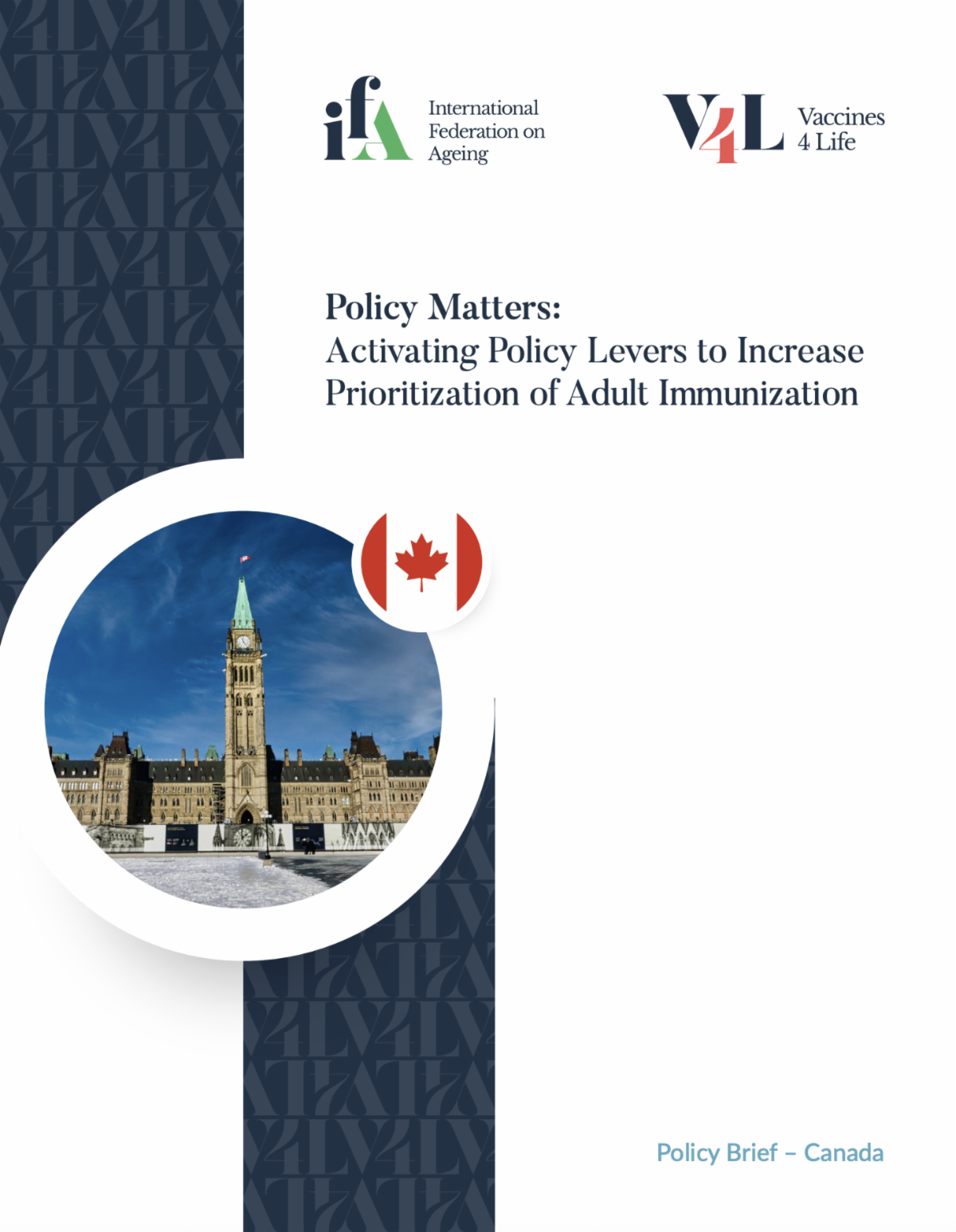
Across Canada, France, Germany, Italy, the UK, and Brazil, adult influenza immunisation is still not prioritised with the same consistency, visibility, or system support as childhood vaccination - leaving older adults and other at-risk groups exposed to avoidable gaps in protection.
IFA's country-level policy examinations Policy Matters: Activating Policy Levers to Increase Prioritisation of Adult Immunisation show a common pattern: while strong technical recommendations exist, delivery is fragmented, integration into routine care is weak, and adult immunisation is still under prioritised with gaps in funding, access, and accountability.
Across the six countries, advancing adult influenza immunisation will require targeted policy action: strengthening National Immunisation Technical Advisory Groups (NITAGs) to support life-course approaches; integrating influenza vaccination into routine care and chronic disease pathways; securing sustainable financing and clearer national prioritisation; expanding access through community-based and convenient delivery points; and improving data, coordination, and accountability across systems.
Without action - gaps will persist.
| | |
Healthy Ageing Starts with Protection: Why Vaccine Access Still Depends on Your Postal Code
As people age, prevention becomes the foundation of healthy longevity. Yet across Canada, access to adult vaccines still depends on where you live - creating avoidable gaps in protection for older adults and those most at risk.
New findings from the Toward Harmonized Adult Vaccination Schedules Across Canada initiative reveal a fragmented landscape, where differences in eligibility, funding, and delivery across provinces and territories continue to shape who gets protected - and when. This results in inequities in access, public confusion, and complicated provider recommendations.
At a time when 73% of adults aged 65+ are living with at least one chronic condition, and vaccine-preventable diseases continue to place pressure on health systems, a more coordinated approach is needed. This World Immunization Week (24-30 April), join IFA in calling for improved access to vaccination through comprehensive policies, clearer access pathways, and coordinated delivery.
| | |
Follow us on social media!
Receive updates on new announcements, upcoming events, and more!
We invite you to join our growing community and engage with us by liking, commenting, and connecting across our platforms. Your participation and feedback are highly valued.
Follow us to stay informed and connected.
| | | | |