|
This month, we continue our exploration of our UU values with equity: the practice of becoming a people. February is, of course, also Black history month, and I find myself thinking of African American history while I ponder, what makes a 'people'?
When Africans were first brought to this land, they came from a continent of disparate geographies, tribes, languages, religions, and ethnicities. While we’re used to lumping them all together as “Africans,” many of them would have seen each other as foreigners - sometimes even as enemies. They almost certainly would not have seen themselves as a people. But over the course of 200 years, and under the most horrible conditions, they became one.
They devised ways of worshiping together. In fact, they devised a whole religion; I would argue that Black Christianity is a very different religion from the European variety they first encountered. Black Christianity is based in liberation. They devised their own ways of communicating: through coded words, through the spirituals, through networks that could relay information between plantations. They trained their own healers, as medical care provided for enslaved people tended to be limited to whatever kept them working. And they built opportunities for joy into their daily lives, times to sing and dance and celebrate together, even in the exhaustion of sometimes 20-hour days, to keep their emotions regulated and their spirits intact. They built a whole culture around affirming Black lives and Black spirits, and that culture was dedicated to the survival of the entire community.
In short, they became a people in response to the harshest conditions and the greatest injustice imaginable. They forged new bonds, accepted responsibility for one another’s needs, because that is what surviving and thriving requires. They brought with them from Africa the cultural idea that the purpose of community is to ensure that each and every person is taken care of. That idea is what sustained them against a system of slavery that chose to value some human lives as worthy of care, and others not. It is that idea that eventually broke the institution of slavery.
Friends, most of us are not (yet) enslaved. But we now all find ourselves confronting the same structures and beliefs that allowed for the system of slavery, that say some people are allowed to live in peace, while others deserve to have their lives, their families, and their livelihoods ripped apart.
Right now, we can look to the people of Minnesota and everyone currently supporting them (physically, financially, emotionally, and spiritually) as a current and powerful lesson in becoming a people. The ones feeding and escorting immigrants. The ones literally blowing whistles to warn of the presence of ICE. The ones recording and publicizing the illegal acts being committed against vulnerable people.
So, why did your ministry team decide to define equity as 'the practice of becoming a people'? Because what we’re really saying is that being a people means rejecting the idea that some of us deserve to be left in the cold for who we are or where we come from. That all of us are a people, or none of us are. That to be a people, we have to be concerned with the needs of each and every one of us, not just the majority. That we cannot be one people unless we embrace all and work for the thriving of every person.
So my questions to you this month are the same ones I’m asking myself: What are our next steps to becoming a people in light of the current injustices? How will we strive to make sure that everyone’s needs are met and that we are all protected?
| | |
Every Day Acts to Build Equity
Debby Bower
My heart radiates with happiness to cross paths with members of our beloved church in the wider world, especially in justice-oriented advocacy. Goodness, do we UUs have some creative signage at protests and engage in meaningful policy and systems change efforts! We are a people of action, committed to justice and motivated by love in a world that needs so much more of both.
This is fabulous and heartening. But how do we make our commitment to justice real between events, or during life chapters with limited involvement in them? How might we align our beliefs and behaviors to manifest a more just world, on a daily basis? Enter this month’s theme of Equity, defined as the practice of becoming a people. More than simply one of our church’s core values and the middle initial in DEI, we can all help grow equity with simple practices that nurture ourselves, each other, and our communities.
Equity is not a destination; it is a continual becoming. Building equity means creating conditions where everyone can thrive by addressing different starting points and removing systemic barriers. It requires adjusting structures so all people can fully participate and distributing resources according to real needs. Equity also demands repairing past and present harms and transforming the systems that created injustice, moving beyond fairness toward lasting change. Thankfully, equity isn’t built only through big structural changes. It grows through small, consistent choices that reshape how we relate to one another. We can practice everyday acts that help move ourselves and our communities at church, work, school, and socially, toward greater equity:
1. Listening with curiosity rather than assumption
Pausing to hear someone’s full story, especially when their experience differs from our own, interrupts bias and builds understanding. It’s a simple practice that shifts conversations from “I already know” to “I’m willing to learn.”
2. Sharing space and voice intentionally
In meetings, classrooms, or social settings, making room for quieter or marginalized voices changes who gets heard and who gets to shape decisions. This can be as simple as saying, “I’d love to hear what others think.”
3. Choosing inclusive language
Using people’s correct names and pronouns, avoiding stereotypes, and speaking in ways that welcome rather than exclude help create environments where everyone feels they belong.
4. Allocating time, support, and resources
This might include supporting local businesses owned by people from underrepresented communities, donating to equity‑focused organizations, or advocating for fair policies at work or school. Small choices create meaningful change.
5. Interrupting bias in the moment
When we hear a harmful comment or notice an unfair pattern, naming it gently but clearly (“That doesn’t sit right with me”) helps shift norms. It signals that equity is everyone’s responsibility, not just the work of those most affected.
We Unitarian Universalists are a people of action, motivated by love, desiring a more just world. And we can help build it together with our neighbors, co-workers, classmates, and others, truly becoming a people who center love and elevate equity. Onward together, friends.
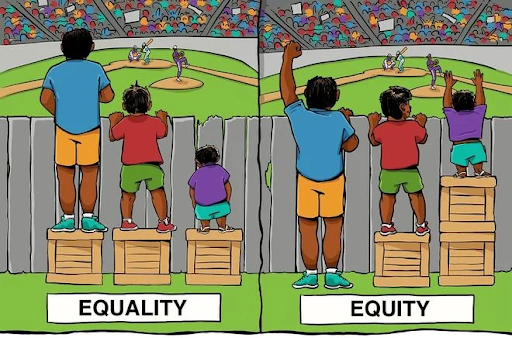
| | When I think about Equity, this image immediately comes to mind: | | | |
These two boxes are showing the stark contrast between equality, where everyone receives the same, and equity, where everyone receives what they need. This image, while helpful, is also troubling. I have so many questions. Why are they outside of the game and not inside? What about those with disabilities? What if a box is taken away? What if the fence was torn down?
The children, youth, and I will look at these questions and find our own answers. I found a tool kit called #the4thBox that will help us navigate the process of understanding what is wrong with this image, and how we can make it better. And, it leads directly into the theme of March: Justice. I am excited for the opportunity to encourage and create social justice warriors one lesson at a time.
Reflecting on this image, I question if our Faith Exploration classes are meeting the needs of our diverse population of children and youth. Are the needs of the families being addressed? Are the needs of the church being met? How do we create an environment where we sustainably grow as Unitarian Universalists? These questions, and hopefully, some answers will be brought up in a discussion with me, Wendy, and our Faith Exploration community on Saturday, February 21 at 1 pm. I encourage you to sign up here. Childcare is provided, and you will be part of a crucial discussion of how we grow and strengthen our faith community.
A prayer for moving forward, by Jo VonRue:
"However thin our resilience may be wearing, we do not give up or give in.
We look around and see our friends and neighbors carrying signs,
moving and marching together, because we must not give up.
We join thousands of people in the streets.
We move for justice
We live for peace
We will not rest until we are heard.
We will not rest until equity is made more real, all around us."
| | |
2025 Donation statements for your tax purposes were emailed (or in some
cases snail-mailed) on Wednesday, January 14. Please check your email to
see that you have it and make sure to keep that for your records. If you
have questions or need something, please let me know by sending me an email or calling me at 303-279-5282 x 708.
Speaking of Donations: You have Alternatives!
Here are the ways to make to pledge payments or other donations to JUC:
-
Electronic Funds Transfer (EFT): most of our pledge payments come in this way, and it's super-convenient for us because we don't have to process any physical checks. Payments are set up to come out on the 5th of each month, and it's a nice predictable stream of income for the church.
-
Check: either through an automated process set up through your bank, (we get a check) or by mailing one or putting it in the plate on Sunday.
-
Qualified Charitable Donation (QCD): for those of you who are taking Required Minimum Distributions from your IRA, you can donate directly to the church with tax advantages. We have quite a few people paying their pledges, or making other donations with this method.
-
Donor Advised Fund (DAF): If you have set up a DAF, we can accept grant recommendations for your pledge or other donations.
-
Appreciated Stock: You can give appreciated stock to JUC and not pay capital gains, and take deduction for the full value of the stock. We can credit these donations to your pledge or any other donation purpose. Check with me for instructions and let me know if you donate so I can watch for the stock to come in.
-
Cash: Yes! We take cash! And did you know that we actually pay the bank to accept cash? Nothing is free anymore!
If you have any questions about any of these methods, please feel free to call me at 303-279-5282 x 708. I can't give tax advice, but I can help you get started!
| | |
I’ve been really taken lately by the Walk for Peace happening across the country. A group of Buddhist monks walking town to town, stopping in small communities and cities, offering nightly talks about mindfulness, compassion, love, and kindness. What’s striking isn’t just the walking. It’s what people are responding to.
Bhikkhu, the monk leading the walk, keeps saying something simple and profound. We may have different skin colors and backgrounds, but the color of our blood is red and our tears are salty. That’s it. That’s the message people are being swept up in. Not Buddhism. Not Christianity. Not doctrine or debate. Just the reminder that we are human together. The heart of this walk is that everyone can practice mindfulness. Everyone can practice compassion. Everyone can practice loving kindness, starting with themselves and extending outward. You don’t have to convert. You don’t have to believe the same things. You just have to be willing to practice being human together.
So many people carry religious baggage. Church can feel scary, loaded, or off limits before you even walk through the door. I hear this all the time. People want meaning and connection, but they’re wary of institutions, labels, and expectations. What so many people are actually longing for is a place that says they belong, and lives it honestly. No matter who you are. No matter your background. No matter how you practice your faith, or if you don’t know what you believe yet. No matter who you love. You are welcome here.
That message lands because it’s not theoretical, it’s practiced. It’s shown in how we greet people, how we make space, how we talk about equity not as a buzzword, but as a commitment to belonging. Equity is the practice of becoming a people who notice one another, who refuse to leave anyone behind, and who understand that none of us can do this alone.
Watching people gather around the monks reminds me that being seen matters. Saying who we are matters. People cannot find what they do not know exists. Inviting someone to church isn’t about convincing them of anything. It’s about saying, you don’t have to carry the world by yourself. There’s a place where we practice compassion and loving kindness together. Step by step. Side by side. And right now, that feels like a pretty powerful thing to offer.
| | UUSC TF Guatemala Partners | | |
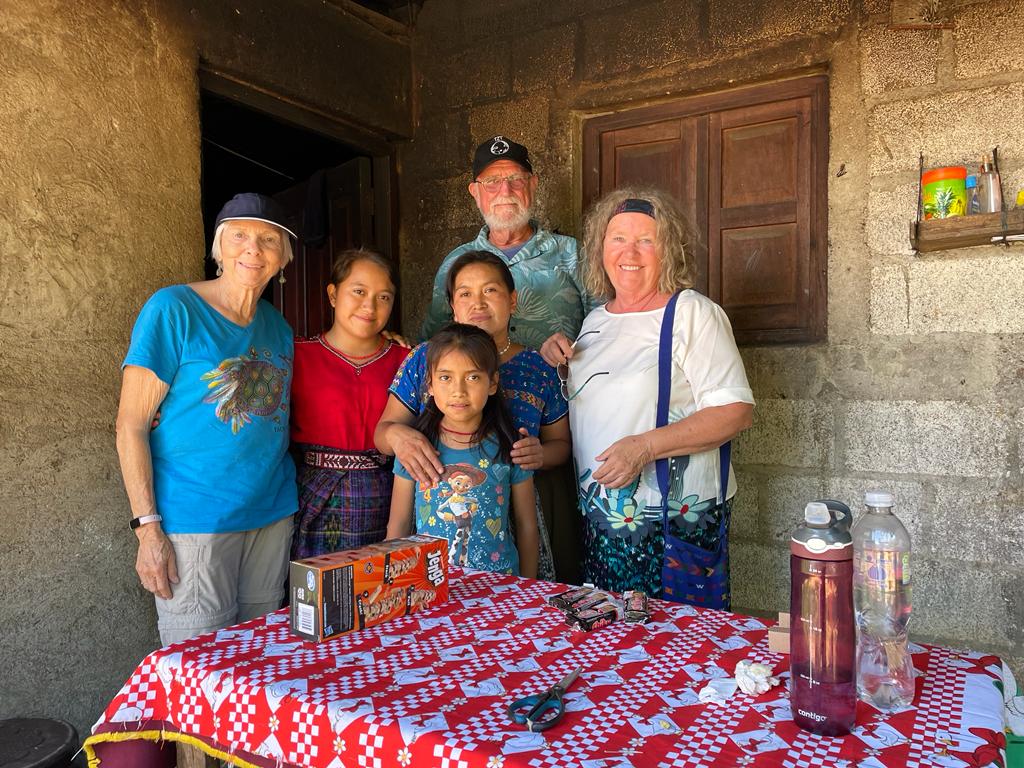
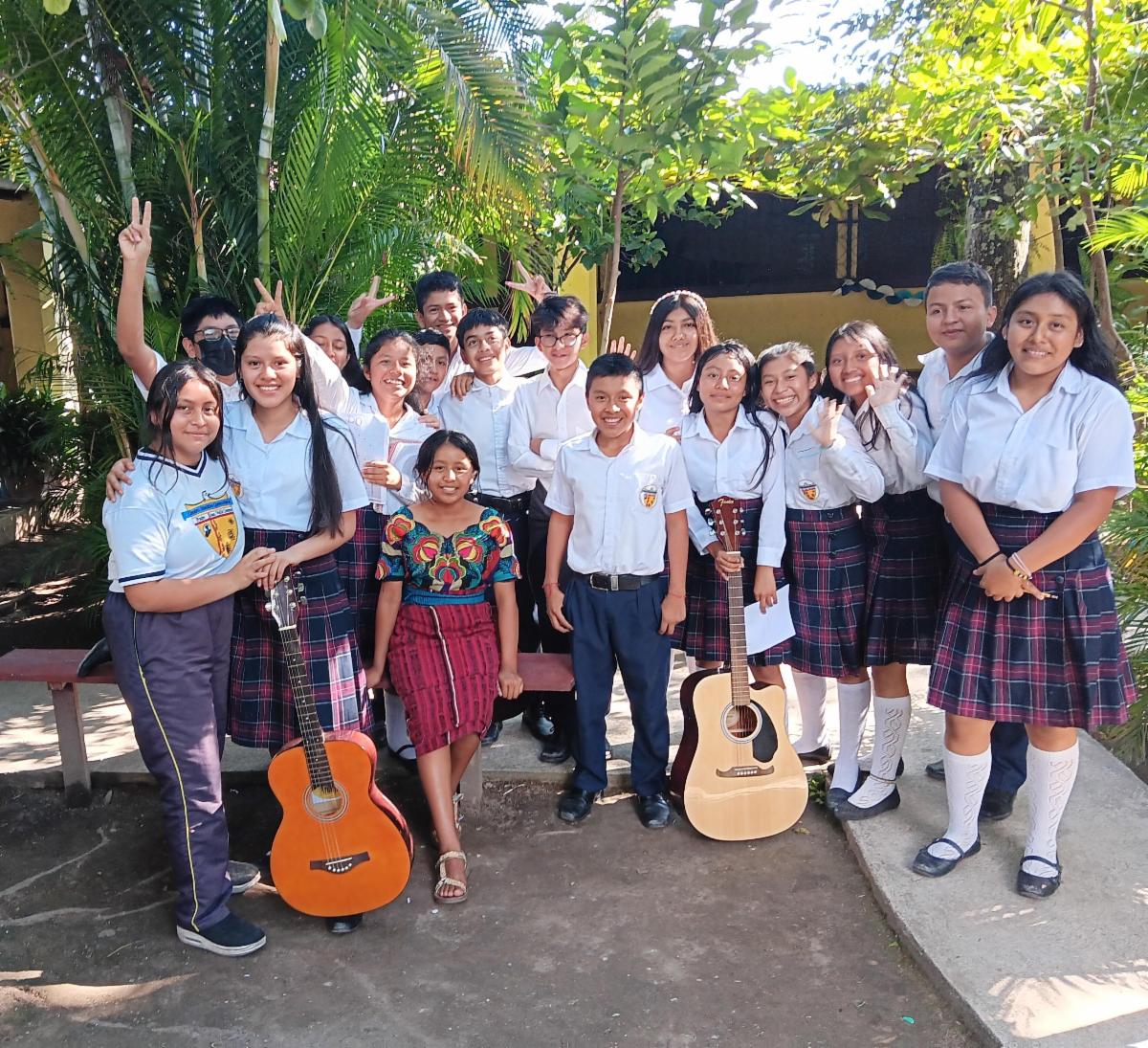
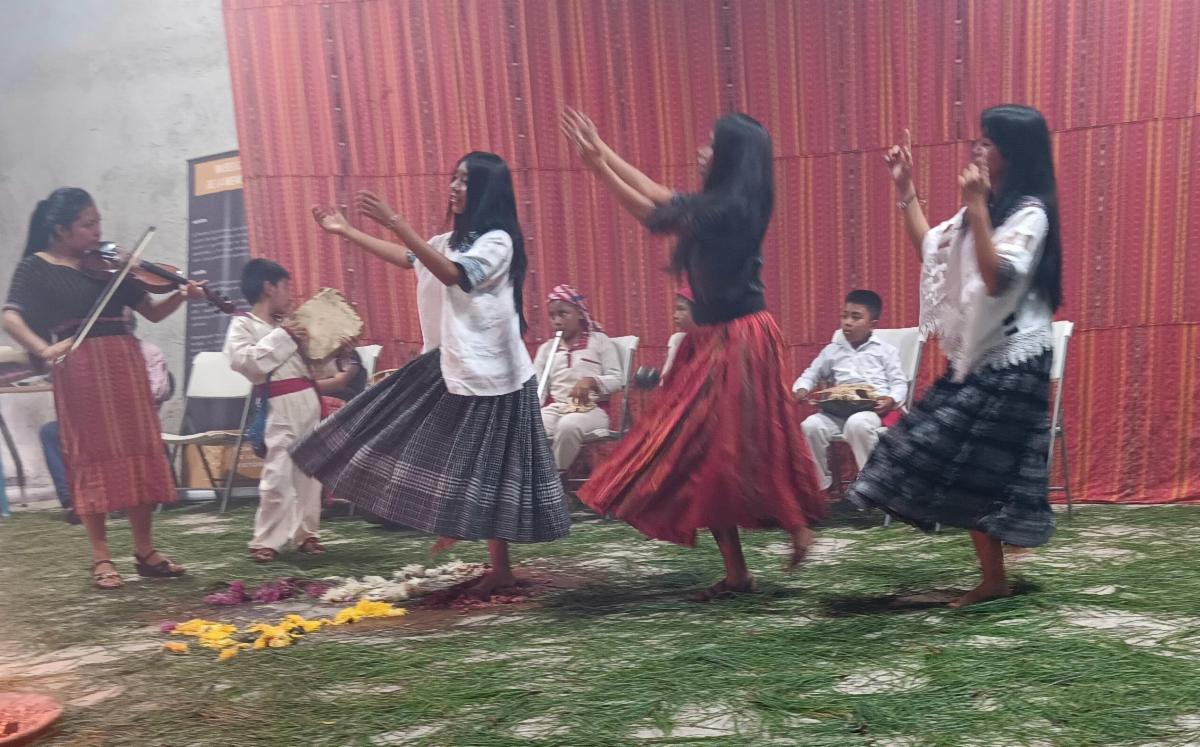
JUC has a long relationship with the Mayan people of the community of Rabinal in Guatemala. Many of the residents were killed or displaced during the civil war in Guatemala in the 1980s. When we asked the survivors how we could help the people rebuild, we learned that we could provide scholarships to the middle and high school students, because their education isn’t free. This would help the community recover. We currently fund about 60 scholarship students.
That is just part of the story. Members of our church have been visiting this community almost every year since 2007. We spend time with the students, their families, and our partner organization, ADIVIMA. We learn about the history of this Mayan region and we connect personally with these amazing people. It is a week of true connection. The time spent there is a transformative experience. The UUSC Task Force at JUC is starting to plan for our next trip, probably this summer or fall. We encourage you to consider going on this wonderful journey. There will be information in the Commons in the coming weeks, and an information meeting coming up on Sunday, February 15 (sign up here). You can contact Gretchen May or June LeCrone if you want to know more about this incredible travel opportunity.
| | | | |