The Institute for Health Equity Research, Evaluation & Policy | | IHE Highlights Black Maternal Health Week | | |
This April the Institute for Health Equity Research, Evaluation, and Policy (IHE) is highlighting Black Maternal Health Week by raising up the work of the Perinatal Data Learning Collaborative (PDLC), an IHE initiative moving from 'good intent' to measurable impact, with regard to maternal health and data.
We interviewed Sue Ghosh, MD, MPH, Director of Women’s Health Initiatives at NeighborHealth and Joe Panerio-Langer, MD, Deputy CEO at Brockton Neighborhood Health Center about their leadership roles in PDLC and the important work of the collaborative.
|
| 4/11-4/17 Black Maternal Health Week | |
Held annually on April 11-17, BMHW is a week-long campaign founded and led by Black Mamas Matter Alliance (BMMA, Inc.) to build awareness, foster activism, and community-building, amplifying the voices, perspectives, and lived experiences of Black birthing people.
The week is intentionally held during National Minority Health Month and begins on April 11th annually to join dozens of global organizations in marking this day as International Day for Maternal Health and Rights - an opportunity to advocate for the elimination of maternal mortality globally.
Learn more via the Perinatal-Neonatal Quality Improvement Network (PNQIN) of Massachusetts.
| 4/6-12 National Public Health Week | |
Public health is more than just health care. It’s about reaching beyond the walls of the exam room to address the non-clinical factors that affect health, such as safe food and water. Community Health Centers do this every day as part of their mission.
Learn more on the National Public Health Week website.
| |
Designing Data Systems for Improving Maternal Health
An interview with Sue Ghosh of NeighborHealth and Joe Panerio-Langer of Brockton Neighborhood Health Center
| | IHE: To provide quality care for people throughout pregnancy, it is essential to have the right data to monitor the quality of care. What was your role as a leader of the Perinatal Data Learning Collaborative, and what goals did your health center set for advancing perinatal data collection? | |
Dr. Sue Ghosh: As a leader in the Perinatal Data Learning Collaborative, my role was to help translate a shared goal—improving maternal outcomes—into practical systems within a community health center.
At NeighborHealth, we started by defining the right metrics for different audiences—quality improvement, population health, and executive leadership—so the data would be meaningful and actionable at every level.
From there, we focused on three core areas:
- Building a perinatal dashboard that provides real-time visibility into our patient population;
- Developing a trending dashboard to understand performance over time; and
- Beginning to create workflows tied to that data, so care teams can act on what they see.
The maternal health dashboard helps bridge the gap between immediate clinical intervention and long-term system change. By tracking specific metrics at both the individual and population level, care teams can move from reacting to crises to proactively managing patient care. This work is evolving, with a clear goal: to move from measurement to data-driven initiatives that improve care.
| |
Dr. Joe Panerio-Langer: Brockton Neighborhood Health Center’s goal was to ensure that the obstetrics team had timely access to the information needed to deliver high-quality perinatal care to pregnant patients in the Brockton community. Prior to this initiative, key clinical information—such as laboratory results, ultrasounds, screening outcomes, and immunizations—was dispersed across multiple locations in the medical record, making it difficult to compile quickly and consistently at the point of care.
Through the collaborative, we developed a pre-visit planning tool that consolidates essential visit information and highlights gaps in care. We also developed a dashboard that helps identify patients at higher risk for adverse outcomes and track expected standards of care, enabling our team to coordinate additional medical, social, and behavioral health supports when needed.
| IHE: What accomplishments are you most proud of? | |
Dr. Ghosh: The accomplishment I’m most proud of is that we built the foundation for a true perinatal dashboard within Epic—something that didn’t previously exist in a scalable way for community health centers. More importantly, we didn’t stop at building reports. We aligned multiple departments around shared perinatal metrics, created both real-time and longitudinal (trending) views of care, and began using data to support care navigation, outreach, and clinical workflows.
At the population level, the dashboard aggregates individual patient data to identify disparities, evaluate program effectiveness, and guide decisions around care delivery and resource allocation.
Through our monthly learning collaborative meetings, both clinical and administrative leaders were able to review this data together and clearly see where the intent to provide equitable care meets the impact of measurable patient outcomes. This work has helped shift our approach—from looking back at data to using it to guide care in real time.
| | |
Dr. Panerio-Langer: We are proud of the multifaceted approach we developed. This approach supports more reliable, patient-centered care and reduces administrative burden for obstetric clinicians, allowing them to focus on the patient in front of them and reduce care gaps.
IHE: What lessons would you share with other health centers and institutions that seek to enhance data collection across the continuum of perinatal health?
Dr. Ghosh: Three key lessons:
- First: start with the right metrics for the right audience. We began by defining which metrics matter for quality teams, population health, and executive leadership so the data is usable at every level.
- Second: build cross-functional teams early. Informatics, clinical leaders, and operations need to design this together.
- Third: think in phases. First define and align on metrics, then build visibility, understand trends, and finally create workflows and initiatives.
| | Dr. Panerio-Langer: There is significant value in bringing together multidisciplinary expertise across organizations to address gaps in perinatal health. At the outset, our team faced challenges organizing patient-level information in a structured way that could also surface population health trends and racial inequities. The Brockton midwives and data experts were clear about the information required to support high-quality care, but extracting and operationalizing those data from Epic was difficult. The Community Technology Cooperative Epic teams met with clinical staff regularly to translate needs into build specifications and iterate on design. IHE and NeighborHealth contributed additional structure and constructive feedback. Through consistent collaborative meetings, we built an electronic platform that enables visualization of real-time health trends by race, ethnicity, and other population-level factors. | IHE: Dr. Ghosh, could you tell us about the March 20th conference, “From Conception to Cradle: Building Maternal Equity”? What are the goals of this conference going forward? | |
Dr. Ghosh: The “From Conception to Cradle: Building Maternal Equity” conference brought together community health centers, public health leaders, and care teams to focus on maternal health across the full continuum—from preconception through postpartum.
The goal was to highlight practical, systems-level approaches to improving maternal outcomes, including building meaningful data infrastructure, designing care navigation models, and strengthening coordination across the care continuum. Going forward, the goal is to continue building a shared learning community where health centers can exchange strategies and scale approaches that work in real-world settings.
| IHE: What’s next for your health center regarding perinatal health data? | | |
Dr. Ghosh: Our next phase is about moving from data visibility to data-driven action at scale. We’ve built both real-time and trending dashboards, and we’re now focused on operationalizing that data. This includes:
- Developing standardized workflows tied to key metrics, so care teams know how to respond when gaps are identified;
- Using our dashboards to identify high-risk patients and care gaps in real time; and
- Designing targeted initiatives based on what the data shows to improve care at both the individual patient level and across our population
Building on this foundation, we are focused on using data not only to identify gaps, but to design and implement solutions that improve outcomes across the perinatal continuum. Ultimately, the goal is to create a system where data doesn’t just describe care, but actively drives outreach, coordination, and quality improvement.
Dr. Panerio-Langer: We view this work as a launchpad for expanding how we use data to advance equity and improve perinatal outcomes, rather than as a finished product. We are actively collecting feedback from staff on how the pre-visit planning tool and dashboard can better support clinical workflows and patient care, and we plan to incorporate this input into a future version. Our ongoing objective is to identify individuals and populations who are not receiving the quality of care they deserve and to adjust our perinatal care delivery based on inequities reflected in the data. In addition, we are in conversation with other Massachusetts health centers that may adopt and adapt these tools.
| IHE: Recognizing that April 11-17 is Black Maternal Health week, could you tell us about how your health center is working to build awareness, foster activism, and amplify the voices, perspectives, and lived experiences of people in Black communities? | | |
Dr. Ghosh: At NeighborHealth, advancing maternal equity starts with listening to and partnering with the communities we serve. Our approach includes: using data to identify disparities and gaps in care; strengthening care models such as care navigation and coordinated outreach that address barriers; and ensuring that our systems are consistent, responsive, and equitable across all patients
Black Maternal Health Week is an important moment to elevate awareness, but for us, this work is ongoing—focused on building systems that support equitable care every day. The goal is not just to measure care, but to build systems where data actively drives better care for every patient, in real time and over time.
| | Dr. Panerio-Langer: In recognition of Black Maternal Health Week, we will spotlight key topics such as breastfeeding, high-risk pregnancy conditions, behavioral health, and substance use disorder during pregnancy. We will also recognize clinic staff whose efforts support and advance work in each of these areas. | |
|
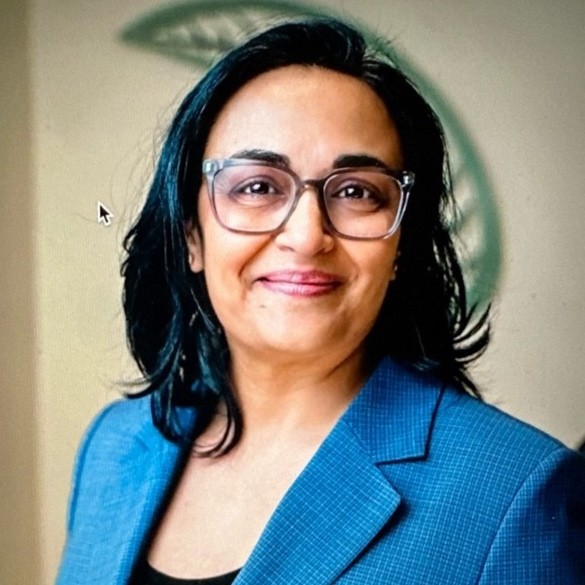
Sue Ghosh, MD, MPH, joined NeighborHealth in 2018 and currently serves as the Director of Women’s Health Initiatives and a practicing gynecologist. She is board certified in OB/GYN and gynecologic oncology. NeighborHealth is the largest federally qualified health center in Massachusetts, and Dr. Ghosh leads cross-departmental efforts to improve workflows, clinical quality, and standards of care in women’s health. Learn more about NeighborHealth.
Dr. Joe Panerio-Langer, MD, joined Brockton Neighborhood Health Center as a Primary Care Physician in 2009, and has served as Deputy CEO since March of 2025. He has assisted with the implementation of the health center’s Patient Centered Medical Home and value-based care initiative. He is passionate about treatment and medical care for people with substance use disorders, maternal health, provider education, and working to dismantle systemic barriers that prevent health equity and access to care. Learn more about Brockton Neighborhood Health Center.
| | |
3/20 NeighborHealth Conference:
From Conception to Cradle:
Embodying Maternal Health Equity
| | |
On March 20th, From Conception to Cradle: Embodying Maternal Health Equity, hosted by NeighborHealth, took place at La Colaborativa in Chelsea, MA.
This community conference, organized by Mimi Gardner, LICSW, MPH, Chief Equity Officer at NeighborHealth and Rosemary Raymundo, MPH, Senior Strategy Implementation Manager at NeighborHealth, aimed to shift the focus from discussing maternal health disparities to embodying solutions. Attendees heard from maternal health leaders from across Massachusetts on topics such as the maternal health workforce including doulas and midwives, mental health, lactation support and more.
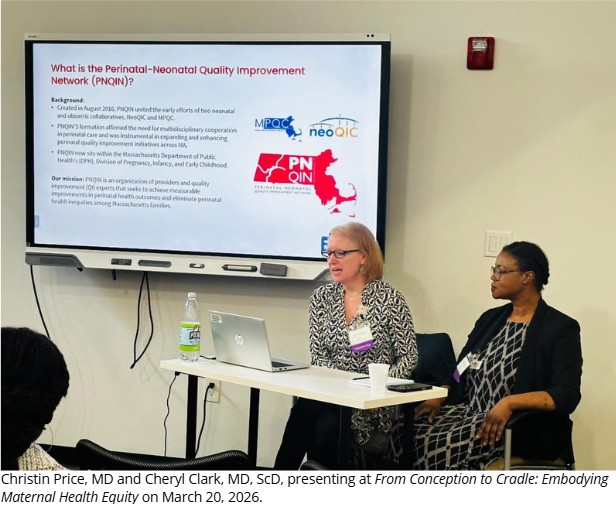
Christin Price, MD, Administrative Director of PNQIN (Perinatal and Neonatal Quality Improvement Network of Massachusetts) and IHE Executive Director and Senior Vice President Cheryl Clark, MD, ScD, presented on using perinatal data to advance equity. They led attendees through a discussion about the Perinatal Dashboard Learning Collaborative and about PNQIN’s 2026 Equity Bundle.
Learn more about the 3/20 conference From Conception to Cradle: Embodying Maternal Health Equity.
| | |
Transgender Day of Visibility 2026: Care, Community, and the Courage to Keep Showing Up
with Fenway Health
| | |
Transgender Day of Visibility 2026 was on Tuesday, March 31st.
According to Fenway Health "TDOV has always been about more than just being seen. It’s about trans and gender diverse people being recognized in our full, unique, and beautiful humanity. It’s about the right to not only survive, but to thrive."
TDOV is also a day to commit, as Fenway Health does, to affirming that "Everyone deserves to live a healthy, authentic life."
Learn more about TDOV from Fenway Health.
| | | | IHE March Newsletter Feature | | |
In March, IHE highlighted oral health and workforce wellbeing awareness.
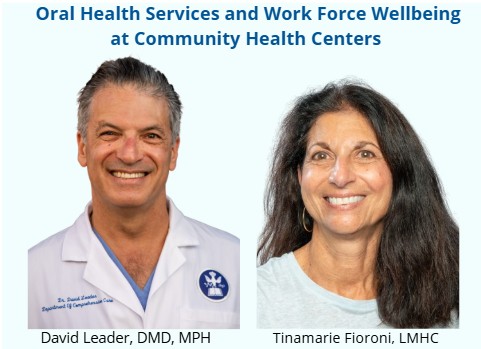
Regarding oral health as part of wellness, we interviewed David Leader, DMD, MPH, Director of Dental Practice and Operations at North Shore Community Health. We spoke with Tinamarie Fioroni, LMHC, Vice President of the Workforce Development and Training Department at the Mass League of Community Health Centers about health workforce wellness in honor of Health Workforce Wellbeing Day of Awareness on March 18.
Read the full newsletter.
| | The Institute for Health Equity Research, Evaluation, and Policy | |
In 2023, The Massachusetts League of Community Health Centers (Mass League) created the Institute for Health Equity Research, Evaluation, and Policy, Inc. (IHE), a 501(c)(3) non-profit organization designed to support Health Center-led Science driven by community health centers.
IHE convenes communities and supports the scientific infrastructure, implementation, program evaluation and training needed to identify and sustain the most effective strategies for attaining equity in health and healthcare, as defined by those with lived experience of health inequities.
Learn more about IHE on our webpage of the Mass League website and on our LinkedIn page.
| | | | |