The Institute for Health Equity Research, Evaluation & Policy | | IHE Celebrates Health Center-led Science | | Learn about chronic disease management 2025 | |
Community health centers are at the forefront of chronic disease management, providing essential care and support. Earlier this month, IHE’s Dr. Cheryl Clark asked Alejandro J. Esparza Perez of Holyoke Health Center, Inc to discuss HHC’s approach to chronic disease management and the vital role community health centers play in improving health outcomes.
Dr. Alejandro Esparza Perez has spent over two decades improving access to quality health care for all. With 25 years of experience supporting populations in Mexico and the U.S., he brings deep knowledge and compassion to his role as CEO of Holyoke Health Center. Dr. Esparza Perez joined the center in 2002, originally serving as a primary care provider and Chief Medical Officer before assuming his current leadership position. Through his clinical work and strategic initiatives, Dr. Esparza Perez champions healthcare as a fundamental right, striving to make quality care accessible to all individuals, regardless of their circumstances.
Their conversation delves into HHC’s innovative strategies for chronic disease management and the pivotal role CHCs play in building healthier communities.
Read the full discussion below.
| |
Addressing Chronic Disease Management with
Dr. Alejandro Esparza Perez of Holyoke Health Center
| Dr. Cheryl Clark: Managing chronic disease is essential for health. What are some of the key programs at Holyoke Health Center? | |
Dr. Alejandro J. Esparza Perez: At Holyoke Health Center, we are committed to delivering high-quality, patient-centered care to address chronic diseases and improve patient outcomes. We’ve developed several key programs to support this mission: Pharmacy Integration, Med Boxing, Quality, Care Management, and Integrated Behavioral Health programs.
In our Pharmacy Integration program, clinical pharmacists co-manage chronic conditions through Medication Therapy Management (MTM) and Collaborative Drug Therapy Management (CDTM). These services have consistently helped patients optimize their medication regimens and quickly bring conditions such as Diabetes, Hypertension, and Asthma under control. Our Pharmacy team also ensures seamless care transitions for patients discharged from hospitals, reducing readmissions and improving long-term outcomes through our Transitions in Care Program.
HHC’s Med Boxing program provides prepackaged medication for patients with chronic diseases such as Diabetes, Hypertension, and Heart and Liver disease. The Med Boxing Program improves medication adherence and enhances our patient's overall quality of life by simplifying the medication management process.
| | |
Our Quality program actively monitors chronic disease metrics, such as blood pressure and Hgb A1c levels, and patient populations with diabetes, hypertension, asthma, and COPD. This ensures that patients remain engaged in their care and receive regular follow-ups. The quality team collaborates with direct care team members to design and implement improvement projects to enhance patient outcomes. These initiatives include team-based, collaborative efforts for managing hypertension and diabetes, involving providers, clinical pharmacists, and team RNs.
With HHC’s Care Management program, we identify patients needing support for Chronic Disease Management and connect them with RN Care Managers and Community Health Workers, who collaborate in tandem to address the patient’s medical, behavioral, and social needs. An individualized care plan specific to the patient’s unique care needs is developed with the goal of assisting and educating the patient on managing their own health conditions and improving health outcomes. Another aspect of this program is that our communication channels are kept open via our internal E.H.R. messaging system, team meetings, and case conferencing so that all necessary team members know the patient’s current status and/or relevant changes to their treatment plan.
Behavioral health clinicians provide counseling for stress, depression, and anxiety, through the Integrated Behavioral Health program, which directly impacts chronic conditions like diabetes and hypertension, improving overall health management. By addressing these mental health factors, our clinicians contribute to the overall well-being of our patients and improve their ability to manage their chronic diseases effectively.
| |
Dr. Clark: Cancer is one of the leading causes of death. How does Holyoke address cancer screening and could you talk about your research in this area?
Dr. Alejandro Esparza Perez: Cancer remains a leading cause of death in the communities we serve, and early detection is key to improving survival rates. At Holyoke Health Center, we prioritize cancer screenings as part of our preventive care efforts by leveraging technology, tracking and monitoring, running a breast cancer awareness campaign, screening for colorectal cancer, and creating partnerships.
| |
We utilize our advanced electronic health record system (EPIC) to ensure that all patients are up to date on their cancer screenings. Our pre-visit planning workflow includes a thorough review of the patient's chart to identify and close any gaps in care, whether through record collection or patient education during visits. We also track and monitor patients who have received Pap smears, ensuring timely follow-ups and continuous care.
We’ve also launched an annual breast cancer awareness campaign to engage patients with gaps in care, providing them with necessary resources and reminders for screenings.
To provide preventative care for colorectal cancer, we implement several quality improvement initiatives to increase colorectal cancer screening rates, ensuring that all eligible patients are screened promptly and effectively.
We also partner with local hospitals to increase access to screenings and educate our patients about the importance of early detection.
As you know, we are currently participating in the Massachusetts Center for Advancing Cancer Control Engaged Research through Transformative Solutions (MA ACCERT) Project. This research project focuses on finding transformational solutions for cancer inequities, and we will be an intervention site. We hope this project will yield valuable data to refine our approach and improve patient outcomes.
Dr. Clark: What opportunities do you see going forward to improve the management of chronic health conditions?
| |
Dr. Alejandro Esparza Perez: Our clinical leadership team is committed to a team-based approach to chronic disease management. We are continuously evaluating opportunities to enhance collaboration and effectiveness across our care teams. Our plans include strengthening panel management, pharmacy team integration, exploring digital tools, collaboration with local organizations, enhancing behavioral health science, and investing in quality care and management.
We will leverage data and optimize workflows among providers, nurses, and clinical pharmacists to improve patient outcomes and elevate care quality for individuals managing chronic conditions. We also plan to further integrate our pharmacy team across care settings to provide seamless, collaborative support for patients with chronic conditions.
We aim to explore remote monitoring tools that will provide valuable data, enabling us to deliver more proactive and personalized care. HHC also pursues partnerships with local organizations, such as the YMCA, to support patients in making lifestyle modifications.
We will expand behavioral health services to support patients with chronic diseases, improving adherence and overall well-being while continuing to invest in our quality program and care management team to ensure patients receive timely, evidence-based interventions.
This comprehensive approach will help us improve the care and outcomes for patients managing chronic conditions.
| |
Dr. Alejandro Esparza Perez exemplifies the innovative, patient-centered approach needed to promote health center-led science and implementation that improves outcomes in all communities. His leadership at Holyoke Health Center highlights the importance of strategic, compassionate care in transforming health narratives and ensuring comprehensive access to healthcare for all.
To learn more about Holyoke Health Center, Inc, please visit: www.hhcinc.org.
|
|
Boston Business Journal's
Innovators in Healthcare 2025
| | |
IHE Executive Director and Senior Vice President Dr. Cheryl Clark was honored at the Boston Business Journal's second annual 2025 Innovators in Healthcare awards ceremony!
Dr. Clark was awarded in the community health category, recognized for her championship of health equity and community health center-led science, a model that empowers CHCs to drive data analysis, scientific discovery, clinical and policy innovation.
| |
The demographics that CHCs serve are largely left out of traditional research models, but by empowering CHCs to perform their own research, we can shift the ownership of data collection and use findings to inform clinical and policy innovation.
IHE will continue to support CHCs as uniquely responsive care providers, champions of CHC-led science, and central pillars in the state’s health system.
Dr. Clark is proud to be awarded alongside the health leaders driving innovation and equity, including CHC leader Mimi Gardner, VP & Chief Equity Officer at NeighborHealth.
CHCs serve all populations. Science led by CHCs can provide critical information to drive clinical and policy innovation.
Read more about the awards here.
| | | IHE to Evaluate CCHERS Project Empowering Home Health Aides as Researchers | | |
IHE had the pleasure of attending the Center for Community Health Education Research and Service (CCHERS) annual meeting and launch event for “A Model of Frontline Care Provider-Led Patient-Centered Research.”
This project aims to empower home health aides and frontline healthcare workers as leaders in driving patient-centered outcomes research to improve care and health outcomes for populations that they serve.
This work is funded by the Patient Centered Outcomes Research Institute (PCORI) and is led by Dr. Donna Bright, PhD, MSPH, of CCHERS.
| | |
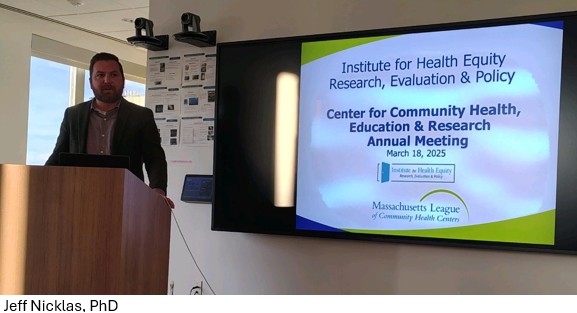
Dr. Jeff Nicklas, IHE's Senior Qualitative Research Scientist spoke about the mission of IHE and his role as lead evaluator for the project. IHE is honored to support the work of CCHERS to support home health aides engage in research.
Learn more about this CCHERs project at bouve.northeastern.edu/news/.
| | March 30th: National Doctors Day | | |
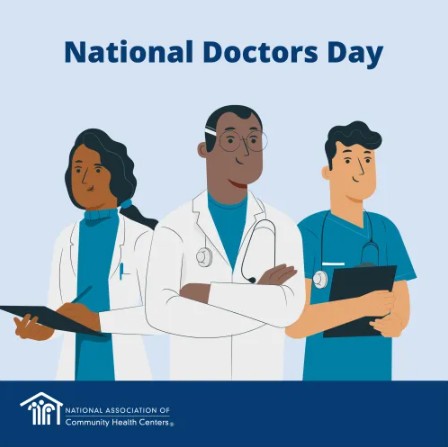
On March 30th, celebrate Community Health Center doctors, who serve 1 in 11 people in urban, rural, frontier, and island communities.
Over the past decade, the number of health center doctors has grown by more than 50%. Health center physicians’ attention to the health and well-being of patients shows their genuine dedication to the community and medical profession.
Visit Massachusetts League of Community Health Centers to find a CHC near you to learn more about your center's doctors.
|
|
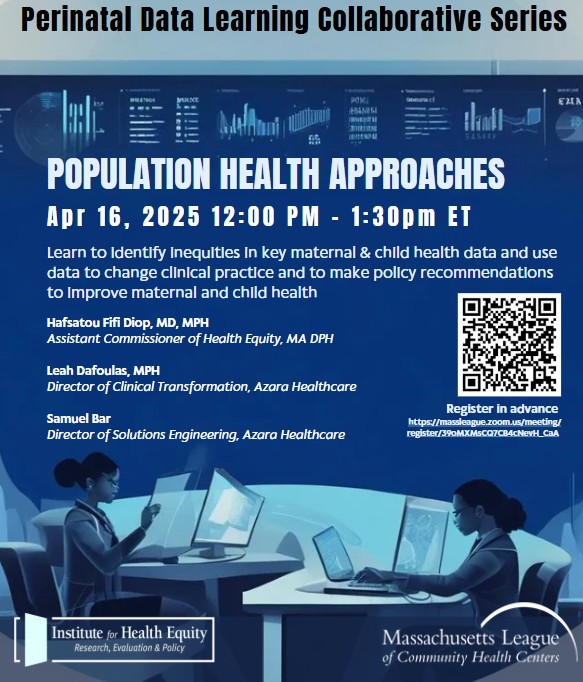
Perinatal Data Learning Collaborative Series
Session1: Population Health Approaches 4.16.25
| |
Please join us on April 16, 2025, at 12pm for Perinatal Data Learning Collaborative Series Session 1: Population Health Approaches where we will address how a population health platform can assist with managing perinatal health data. | |
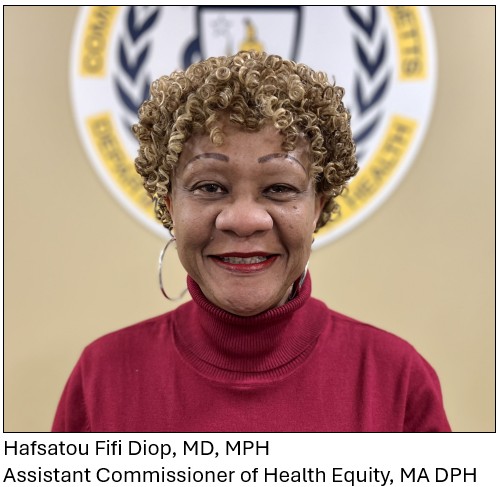
The key note address will be delivered by Hafsatou Fifi Diop, MD, MPH, Assistant Commissioner of Health Equity, MA Department of Public Health.
Leah Defoulas, MPH and Samuel Bar from Azara Healthcare will share tools for improving perinatal data collection within the Azara DRVS platform.
Learn more and register online.
| | | |
IHE February Feature:
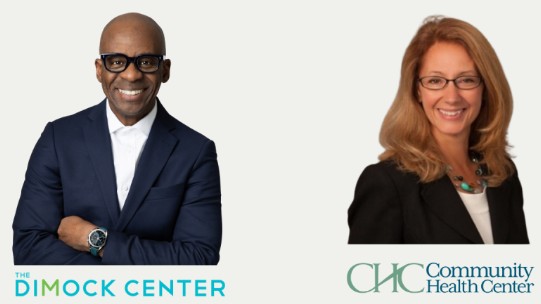
In February, IHE addressed social determinants of health and promoted wellness with Karen Gardner of Community Health Center of Cape Cod and Charles L. Anderson MD of The Dimock Center.
| |
Both health equity leaders exemplify the innovative, solution-oriented approaches necessary to tackle health disparities and promote overall wellness in their communities. Their leadership underscores the power of comprehensive, collaborative efforts in changing health narratives for the better.
Read the full feature.
| | | The Institute for Health Equity Research, Evaluation, and Policy | |
In 2023, The Massachusetts League of Community Health Centers (Mass League) created the Institute for Health Equity Research, Evaluation, and Policy, Inc. (IHE), a 501(c)(3) non-profit organization designed to support Health Center-led Science driven by community health centers.
IHE convenes communities and supports the scientific infrastructure, implementation, program evaluation and training needed to identify and sustain the most effective strategies for attaining equity in health and healthcare, as defined by those with lived experience of health inequities.
Learn more about IHE on our webpage of the Mass League website and on our LinkedIn page.
| | | | |