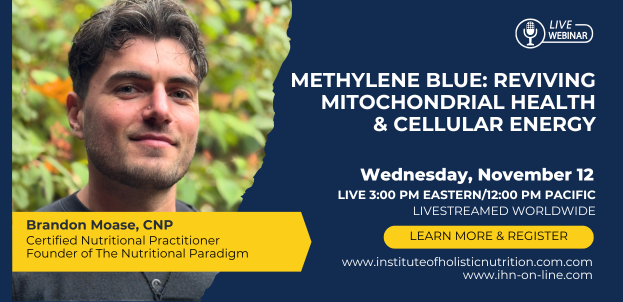
Discover how a century-old compound is transforming modern wellness. | Join us for a 1-hour webinar with Brandon Moase CNP, Founder of The Nutritional Paradigm, as he explores the science and story behind methylene blue, one of the most promising mitochondrial enhancers in modern integrative health. Once used in medicine over 100 years ago, this powerful compound is now being rediscovered for its role in ATP production, cognitive health, and longevity. | Drawing on his clinical background and experience launching his own methylene blue supplement line, Brandon will uncover how this molecule bridges modern science and ancient biochemistry, empowering practitioners and clients to optimize energy from the cell up. | |
• The medical history of methylene blue, from being a blue dye to mitochondrial medicine
• How methylene blue enhances cellular energy (ATP), oxygen utilization, and mitochondrial repair
• Key mechanisms: redox balance, cytochrome c activation, and antioxidant recycling
• Clinical and practical applications in fatigue, cognition, aging, neuroprotection and cancer
• How to guide clients safely in understanding quality, dosage, and sourcing
• Brandon’s journey with Methylene Blue and early lessons from building a supplement brand
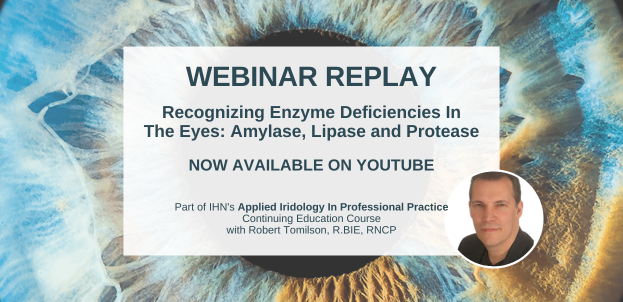
| Two LIVE attendees will win a Bottle of Methylene Blue (Canada only). Winners announced live at the end of the webinar. | All attendees will receive an exclusive 20% discount code for their first purchase. | Brandon is a Certified Nutritional Practitioner and April 2025 graduate of the Institute of Holistic Nutrition, as well as an entrepreneur and founder of The Nutritional Paradigm, a company focused on gut health and mitochondrial optimization. His journey began over 12 years ago with 70 pounds in weight loss, overcoming IBD and burnout through mitochondrial and microbiome therapy, leading him to research and bring a product to the market that bridges holistic nutrition and western medicine. | Through Paradigm, Brandon’s mission is to help practitioners and clients understand how energy metabolism, brain health, and the gut-brain axis form the foundation of healing. He now shares his passion for methylene blue as a modern-day tool for restoring energy and resilience in a stressed, energy-deficient world. | On October 29, Robert Tomilson led a compelling one-hour webinar on Recognizing Enzyme Deficiencies in the Eyes: Amylase, Lipase, and Protease. | Through detailed iris and sclera analysis, Robert demonstrated how specific markings and patterns in the eyes can reveal digestive enzyme deficiencies, offering practitioners a deeper understanding of how systemic imbalances manifest visually. Integrating principles of North American and European Iridology, Sclerology, and Rayid, he guided participants through practical case examples and interpretation methods. | |
• Identify signs of enzyme deficiencies through iris patterns
• Recognize connections between digestive health and visual indicators
• Detect underlying food intolerances and digestive weaknesses
• Interpret emotional and personality patterns expressed in the iris
• Apply iridology insights to enhance clinical assessments and client outcomes
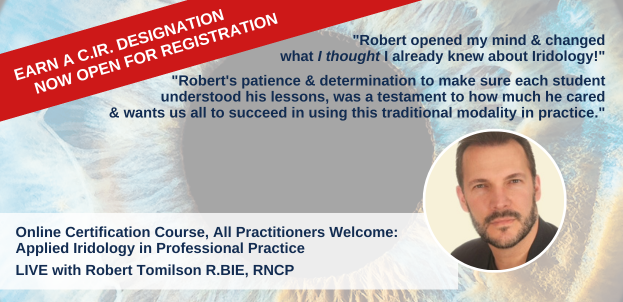
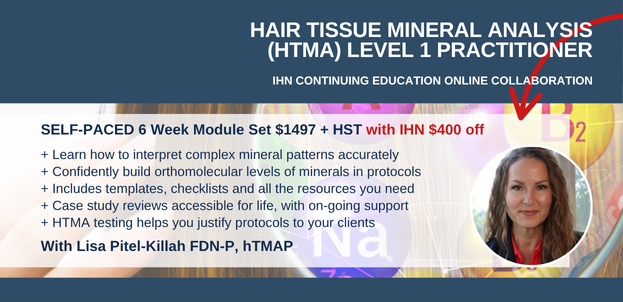
| Watch Robert's Webinar Replay On YouTube: | LIVE Instruction, Weekly, Over 5 Months From February - June 2026 | This dynamic and comprehensive certification course equips practitioners with a powerful tool to assess health through the eyes. Participants will gain hands-on training in iris analysis techniques rooted in both traditional and modern iridology. | “The eyes are the recording screens of the brain. Whatever affects the body affects the eyes.” — Dr. Bernard Jensen, D.C., Ph.D. | The iris offers insight into an individual’s constitution, inherent strengths and weaknesses, and how the body is adapting to stress, lifestyle, and healing. Through the study of the iris, sclera, and pupil, students will learn to identify physical conditions, personality traits, and emotional tendencies with practical application for client care. | Whether you’re new to Iridology or looking to deepen your skills, this course offers the foundational theory and clinical application needed to integrate this time-tested system into your practice. | HTMA Level 1: Foundational Insight for Smarter Protocols | —this program is offered through IHN, but open to practitioners from all nutrition programs! | Take your holistic nutrition practice to the next level with Hair Tissue Mineral Analysis (HTMA)—a powerful, science-backed tool used by private practitioners and clinicians around the world. | With just a small hair sample, HTMA reveals several months of biochemical activity, giving you deep insight into your clients’ mineral status, stress patterns, and metabolic balance. Unlike blood work, which captures only a moment in time, HTMA provides a long-term view of the body’s inner workings—helping you identify root causes and create more personalized protocols. | |
"You can trace every disease and every ailment to a mineral deficiency"
—Dr. Linus Pauling, two-time Nobel Prize winner
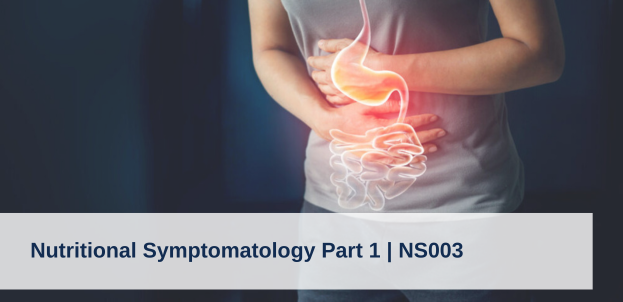
| As course creator Lisa explains, minerals are “the foundation of the home”—and when they’re out of balance, the whole system feels it. By integrating HTMA into your practice, you’ll gain the clarity to strengthen that foundation for every client you support. | This self-paced online course lets you start anytime and learn on your schedule. You’ll have full access to freshly recorded video modules, comprehensive resources, and access to the Advanced HTMA Practitioner Community, with twice weekly case study calls and 24/7 support from the Clinical HTMA team for the first 3 months. It's an active community of natural health practitioners on Lisa’s learning platform so you can engage, be guided, and grow in your expertise alongside others in the field. | Nutritional Symptomatology Part 1 introduces students to the foundations of clinical nutrition by interpreting physiological symptoms and their relationships to nutritional deficiencies, excesses and toxicities. This course introduces the interrelationships of nutrients and the critical role they play in determining optimal health. Students will develop foundational, as well as condition specific, protocols to restore the body’s balance. This course trains students to understand how physiological symptoms reflect and determine an individual’s nutritional status. Concepts taught include the essential principles of biochemical individuality through i.e. genetics, environment, microbiome, to see each client, and themselves, as truly unique. Students are taught to produce, and are evaluated on, the completion of clinical case study sets. | |
• Gain insight into physiological symptoms associated with nutrient deficiency
• Develop professional food, supplement, lifestyle and detox protocols as they relate to specific clinical symptoms
• Learn detailed explanations of underlying causes of disease and their relationship to food from a cellular to systems perspective
• Understand how to develop comprehensive strategies with a focus on natural remedies for resolving common and complex issues
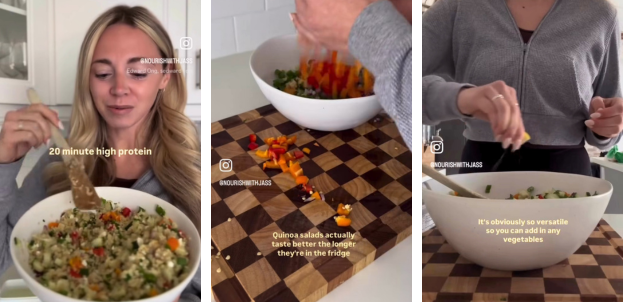
| Nutritional Symptomatology Part 1 explores the process of holding consultations using a variety of practitioner-level assessment tools to move clients towards favourable outcomes. Students learn the critical role that biochemical individuality plays in determining results-based personalized nutrition. | Looking for an easy, protein-packed salad that’s also filled with nourishing ingredients? 🥗 | This 20-minute quinoa salad by our graduate, Jass Stupak, is perfect for meal prep and will keep you feeling energized all week long 🔋⚡ | Quinoa is a complete plant protein, rich in fiber and minerals to keep your blood sugar steady and support hormone health. The mix of colorful veggies like cucumbers, peppers, tomatoes, and onions provides antioxidants, vitamin C, and hydration to keep your body refreshed 🙌 | |
Ingredients:
⠀
• 1 cup cooked quinoa
• 3 cups diced vegetables (cucumbers, peppers, tomatoes, onions, etc.)
• ⅓ cup feta cheese
Dressing:
• 1 tbsp fresh lemon juice
• 3 tbsp extra virgin olive oil
• Salt, pepper, and cumin to taste
| Simply toss everything together and store it in the fridge for up to 3–4 days — it makes the perfect ready-to-go lunch 🕛 For an extra protein boost, add chicken breast or chickpeas! | |