|
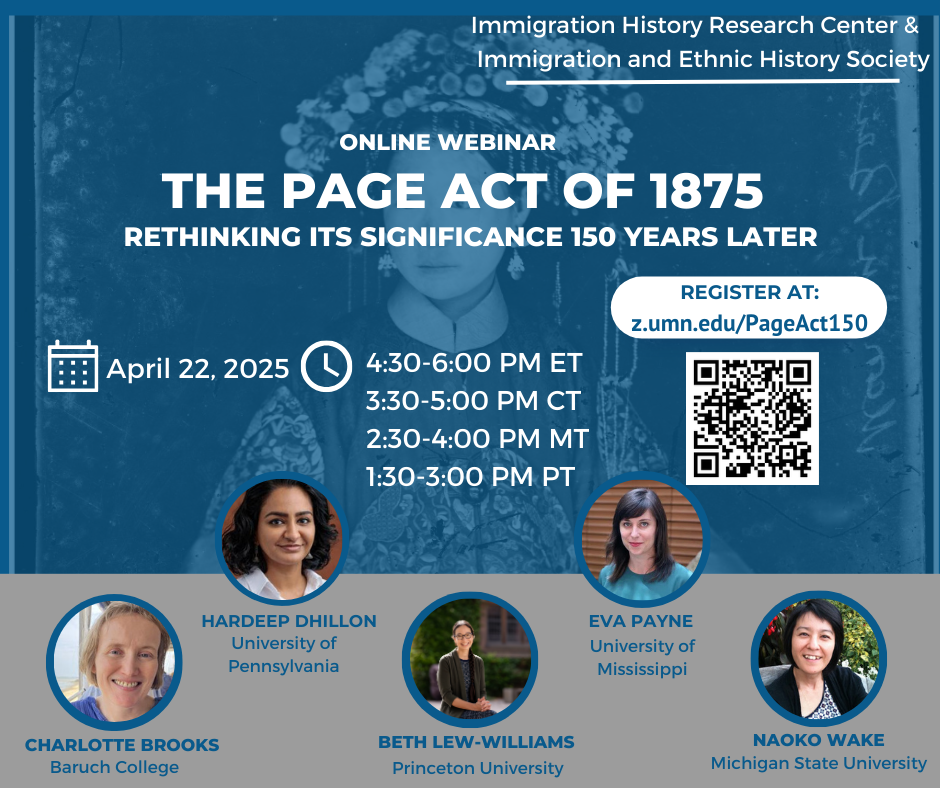
The Page Act of 1875: Rethinking Its Significance 150 Years Later
Webinar
April 22, 3:30-5pm Central
This year marks the 150th anniversary of the Page Act of 1875, which excluded women imported for the purposes of prostitution and convicted criminals and criminalized the importation of forcibly recruited Asian workers. Targeted largely at Chinese migrants, especially women, the law was the federal government’s first direct attempt to limit Asian immigration to the United States. This event uses the anniversary as an opportunity to discuss the significance of the Page Act for US immigration history, Asian American history, and more broadly the politics of race, gender, and class in US history based on the most recent scholarship.
This is a joint event sponsored by the Immigration History Research Center and the Immigration and Ethnic History Society.
| |
Baltic Americans and US Soft Power During the Cold War
Monday, May 5th, 2025
5:00-6:00pm Central
on Zoom
The Immigration History Research Center invites you to join us for a conversation with Vincent Kancans, PhD Candidate in Germanic Studies.
| | | |
This archival project explores the hidden role of post-WWII migrants from the Baltic states and Eastern Europe in shaping US-Soviet relations through soft power. Kancans focuses primarily on cultural ‘proxy battles’ such as international hockey tournaments and political institutions such as the Captive Nations Committee, which often stood in for open military conflict and shaped public opinion in the US.
Vincent Kancans is a PhD Candidate in Germanic Studies with a minor in Moving Image Studies at the University of Minnesota. His dissertation is a media history of magnetic tape's invention, mass adoption, decline, and recent revival. More broadly, he researches the ways that ordinary citizens use technical media to challenge state and corporate power structures. He is the recipient of the 2024-2025 American Latvian Association Fellowship.
This event is co-sponsored by the Immigration History Research Center Archives at the University of Minnesota Libraries.
| | |
Asian American Disability: History, Archives, Methods
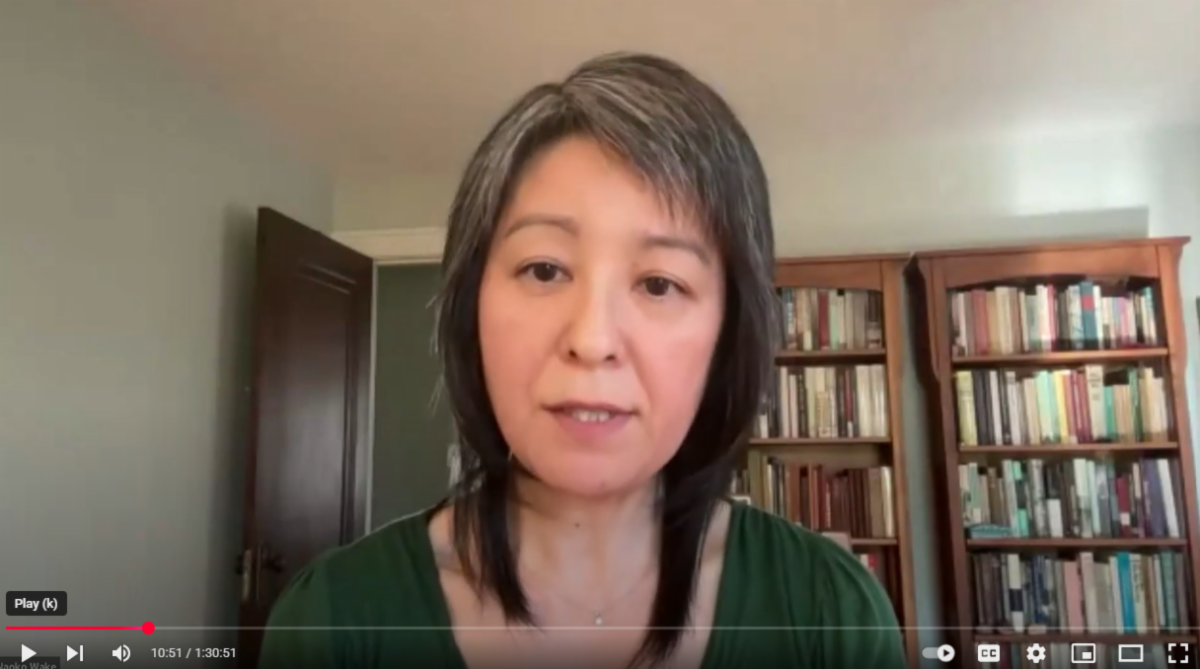
On Wednesday, March 26 the IHRC held a webinar featuring a conversation on the history, archives and methods of Asian American disability featuring the scholars who contributed to a special issue of the Journal of American Ethnic History.
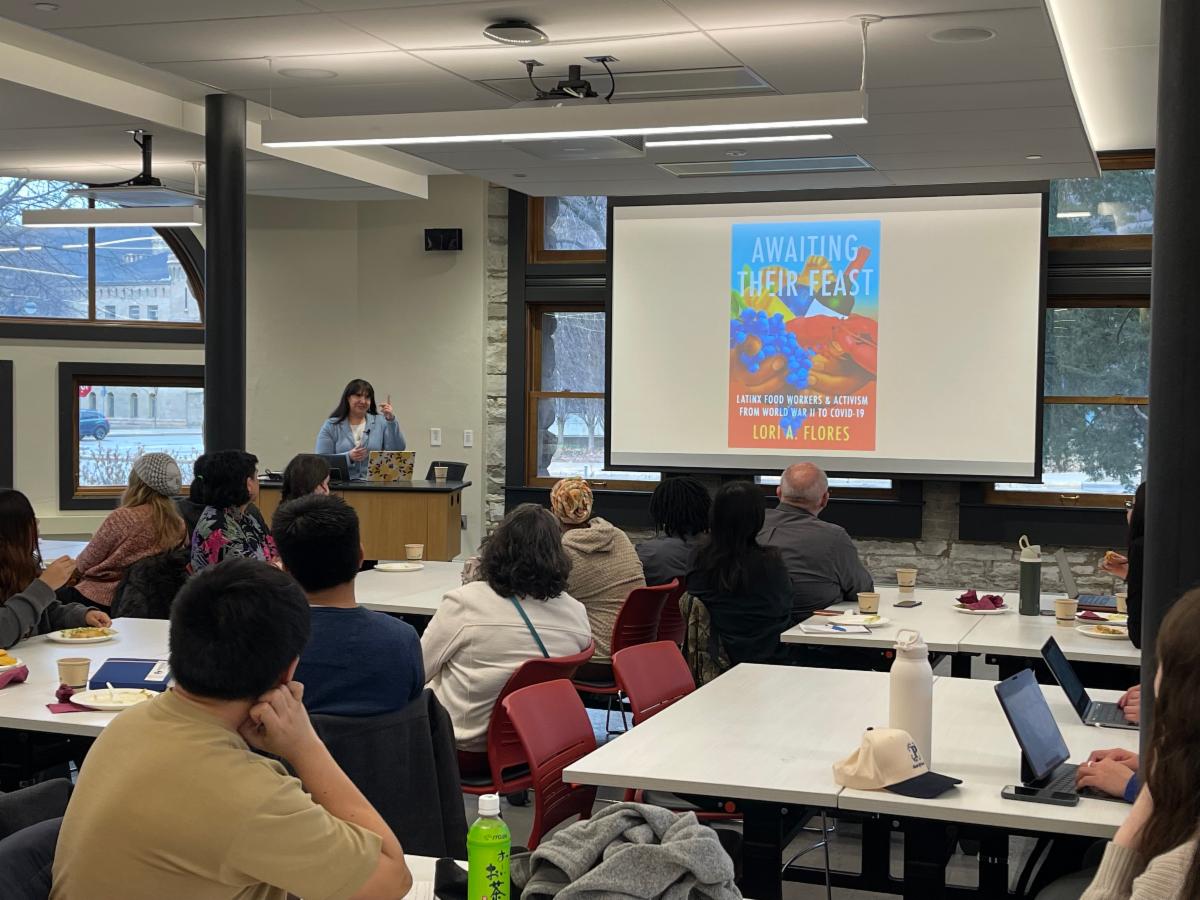
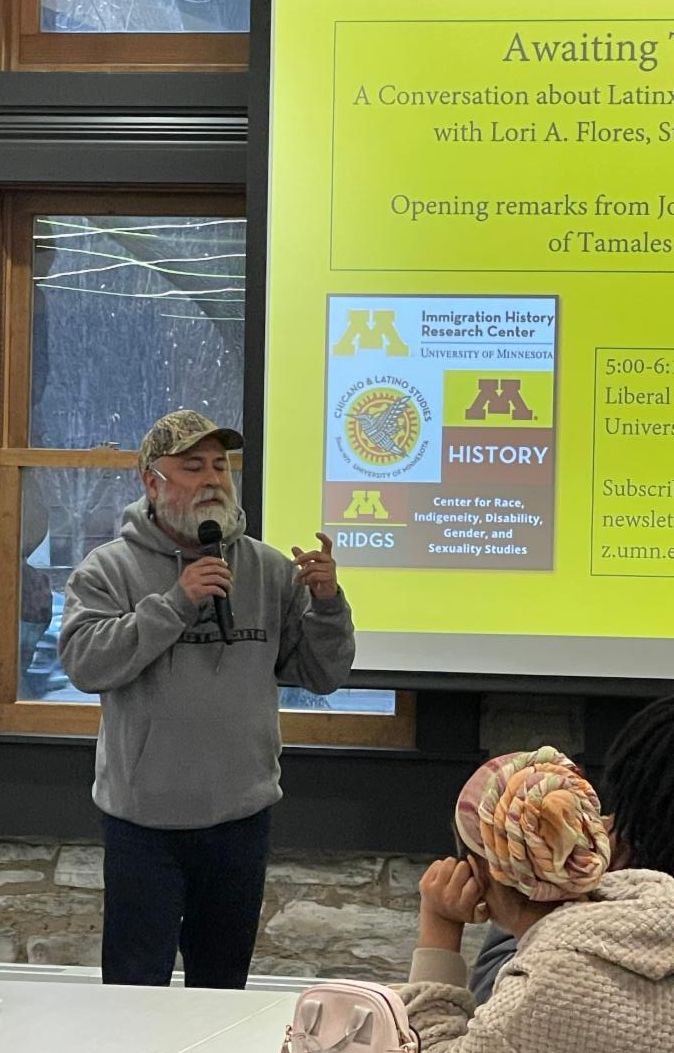
| | | Dr. Flores shared several vignettes documenting the harsh realities farmworkers and food workers face, the ways in which they organize to advocate for themselves, and how US consumers' taste for Latinx food has impacted them. | | |
The Impact of Climate Migration in Finland and the US
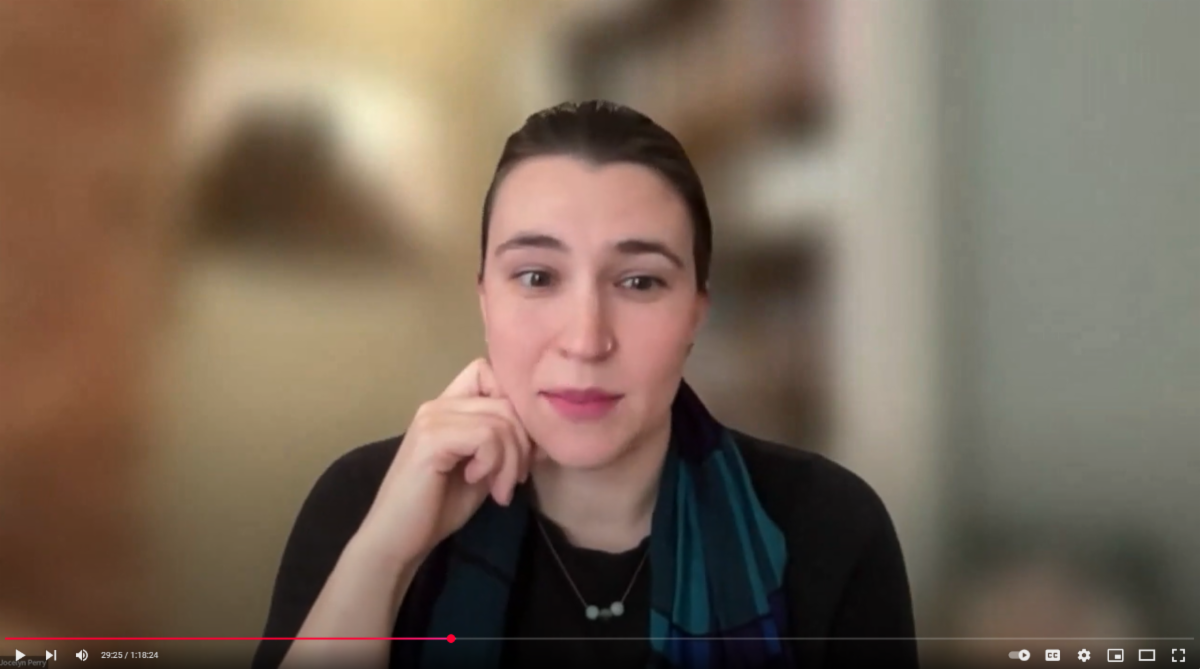
On Thursday, March 6 the IHRC partnered with the Immigration History Research Center Archives and the Migration Institute of Finland to host a webinar on global climate change. Panelists Lawrence Huang of the Migration Policy Institute, Jocelyn Perry of Refugees International, and Eeva-Kaisa Prokkola of the University of Oulu (Finland) explained what climate migration is, how it impacts Finland and the United States, and what governments can do to be better prepared.
Watch the recording on YouTube.
| | Follow the IHRC on Social Media | | Im/migration Graduate Student News | | |
Graduate students from any department or college at UMN with an interest in global migration and/or immigration to the US are encouraged to join IHRC's Im/migration Graduate Student Group. This is an opportunity to network with other young scholars, share your work in progress, attend social events, and receive career development information. Students can contact us at ihrc@umn.edu for more information about the graduate student group.
| | |
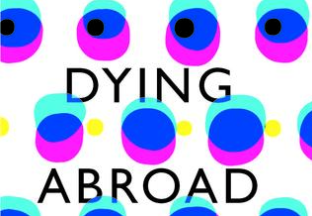
Dying Abroad: The Political Afterlives of Migration in Europe
Featuring Osman Balkan
Friday, April 18, 2025
12-1pm Central
Heller 537 and livestream
| | |
On any given day, the remains of countless deceased migrants are shipped around the world to be buried in ancestral soils. Others are laid to rest in countries of settlement, sometimes in cemeteries established for religious and ethnic minorities, where available. For immigrants and their descendants, perennial questions about the meaning of home and homeland take on a particular gravitas in death. When the boundaries of the nation and its members are contested, burial decisions are political acts. Building on multi-sited fieldwork in Berlin and Istanbul—where the author worked as an undertaker— this talk explores migrants’ end-of-life dilemmas, illustrating how they are connected to ongoing political struggles over the stakes of citizenship, belonging, and collective identity in contemporary Europe.
Osman Balkan is Associate Director of the Huntsman Program in International Studies & Business at the University of Pennsylvania, where he also holds an appointment in the Department of Political Science and in the Lauder Institute of Management and International Studies.
Part of the Interdisciplinary Research Colloquium Series. The livestream link will be available several days prior to the event.
| | The Sahan Journal recently ran a story featuring several local Twin Cities' organizations and their efforts to help immigrant communities preserve their histories. Saengmany Ratsabout, formerly of the IHRC, discussed the Immigrant Stories Project and how his own family's story motivated him to preserve Southeast Asian histories. | | Do you appreciate and enjoy the IHRC's work? Please consider supporting us financially. | | | | |