|
These times of uncertainty leave me grateful for the colleagues and collaborators I have found here at the University of Minnesota and beyond. I am truly looking forward to the upcoming IHRC events, all of which are made possible thanks to partners and co-sponsors: Asian American Studies, Chicano and Latino Studies, Critical Disability Studies, the Center for Race, Indigeneity, Disability, Gender & Sexuality Studies (RIDGS), the Immigration History Research Center Archives (IHRCA), and the History Department here at the U, as well as the Migration Institute of Finland and the Immigration and Ethnic History Society.
These collaborations remind me of the longstanding synergy between immigration history and Ethnic Studies. I believe that the future of immigration history, as a field, is dependent on the vitality of Black Studies, Indigenous Studies, Latinx Studies, Asian American Studies, and other interdisciplinary fields that critically interrogate race and ethnicity. I hope the IHRC can continue to contribute to that vitality.
In gratitude,
Llana Barber
| |
|
Webinar:
The Impact of Climate Migration in Finland and the US
Thursday, March 6, 2025
10-11:30am Central
Global climate change has resulted in global climate-related migration that impacts different countries and regions uniquely. Our experts will explain what climate migration is, how it impacts Finland and the United States, and what governments can do to be better prepared.
Speakers:
This event is co-sponsored by the Immigration History Research Center, the Immigration History Research Center Archives, and the Migration Institute of Finland.
| |
|
Webinar
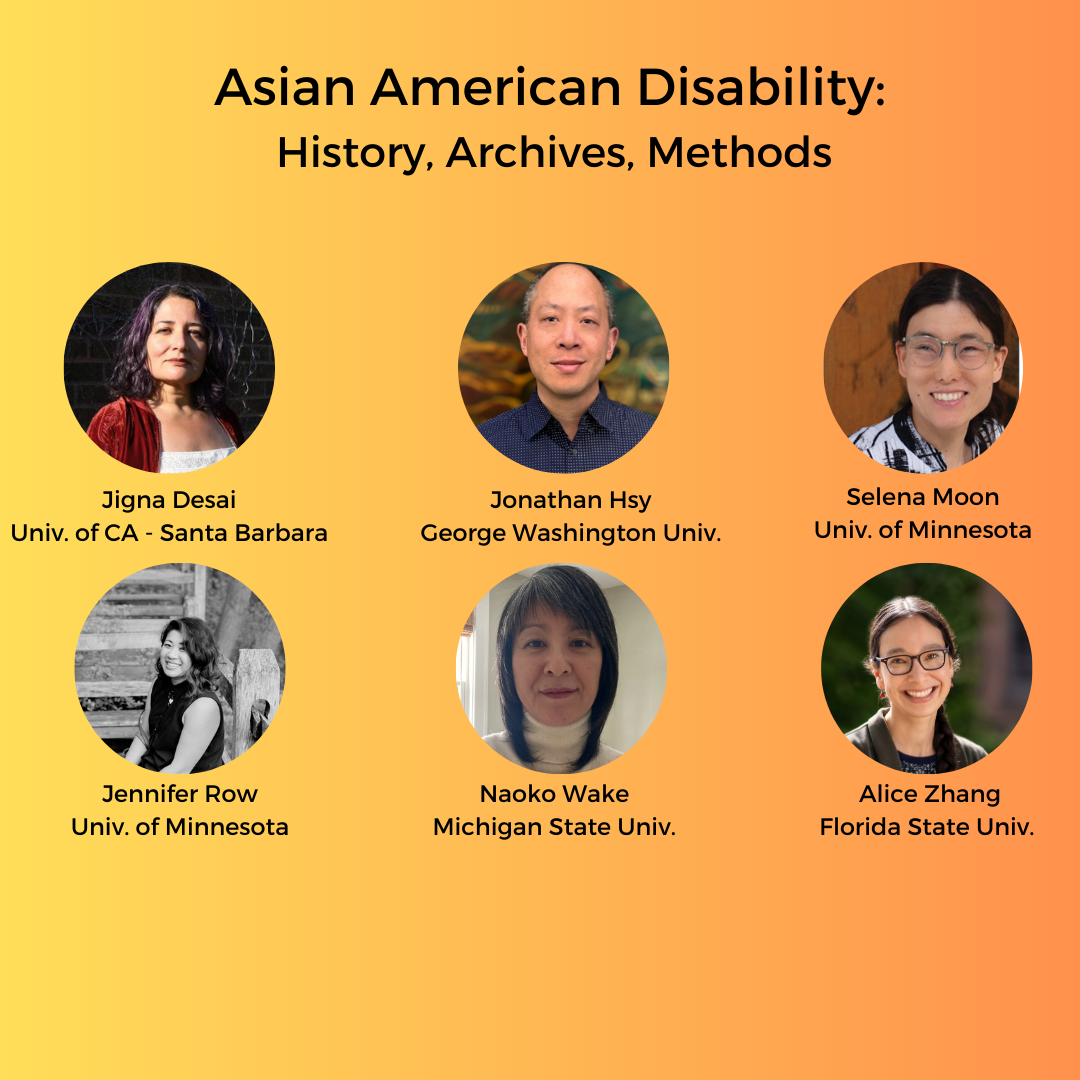
Asian American Disability: History, Archives, Methods
Wednesday, March 26, 2025
4-5:30pm Central
on Zoom
| |
|
In a special issue of the Journal of American Ethnic History, Naoko Wake traced the ways in which “Asian American experiences of disability have been made invisible,” and argued that ableism shaped the experiences of Asian immigrants as profoundly as racism did. This panel will draw together the contributors to the special issue for a conversation on the history, archives, and methods of Asian American disability, with commentary from Feminist Studies and Asian American Studies scholar Jigna Desai. | |
|
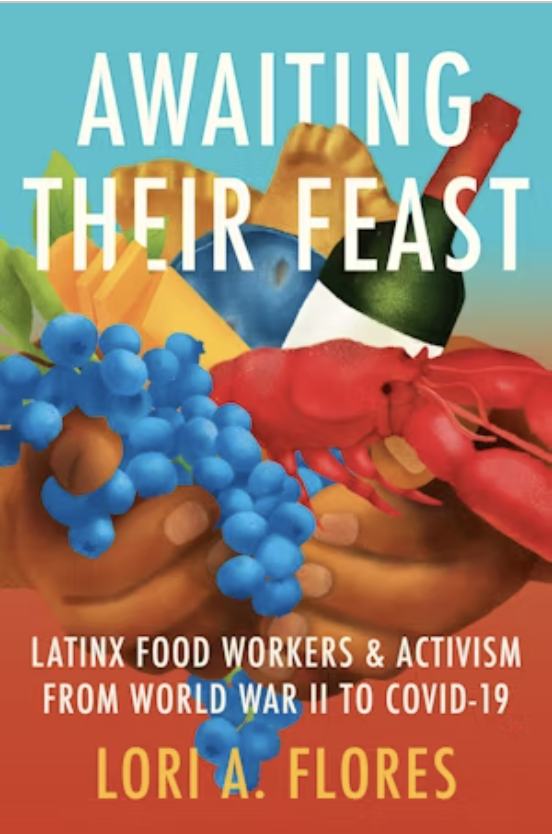
Awaiting Their Feast: A Conversation about Latinx Food Workers and Activism with Lori A. Flores
Tuesday, April 1, 2025
Reception at 4:30
Presentation 5:00-6:15pm
Liberal Arts Engagement Hub, Room 120, Pillsbury Hall, 315 Pillsbury Drive SE
| |
|
|
The IHRC invites you to join us for a conversation with Lori A. Flores about her new book, Awaiting their Feast: Latinx Food Workers and Activism from World War II to COVID-19. With opening remarks by José Luis Villaseñor Rangel, from Tamales y Bicicletas.
Lori A. Flores is Associate Professor of History at Stony Brook University (SUNY), where she teaches courses in U.S., Latinx, labor, immigration, food, and borderlands history. She is the author of Grounds for Dreaming: Mexican Americans, Mexican Immigrants, and the California Farmworker Movement (Yale, 2016) and the new book Awaiting Their Feast: Latinx Food Workers and Activism from World War II to COVID-19 (UNC, 2025). She is also co-editor of The Academic’s Handbook (Duke, 2020) with Jocelyn Olcott. Her research and writing have been supported by institutions including the Russell Sage Foundation and the Rockefeller Foundation’s Bellagio Center in Italy.
José Luis Villaseñor is the son of Mexican immigrant parents and founder of Tamales y Bicicletas. José Luis works on food justice issues within his community of South Minneapolis. José Luis inspires and leans on the use of urban farming and biking as tools for healing to decolonize our bodies, minds, and food systems; as an educator in radical-outdoor pedagogy, he believes that cultural empowerment and the reclaiming of our Indigenous technologies are the pillars that strengthen our families and our communities. José Luis is also a father of three boys and a founding member of South Side Bike Club.
Tamales y Bicicletas is dedicated to strengthening our Latino and immigrant communities through bike projects, green farming, cultural empowerment, and environmental justice.
Co-sponsored by Chicano & Latino Studies, the Department of History, and the Center for Race, Indigeneity, Disability, Gender & Sexuality (RIDGS).
| |
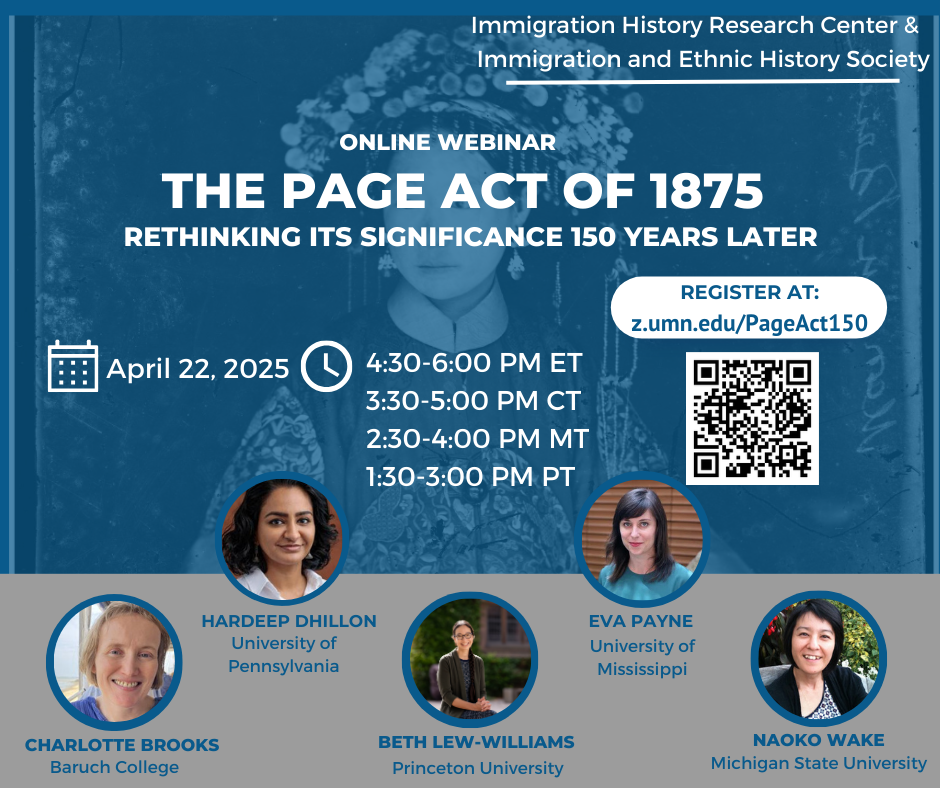
Upcoming IHRC-IEHS Joint Event | |
Forbidden Love: Race, Citizenship and The American Family | |
|
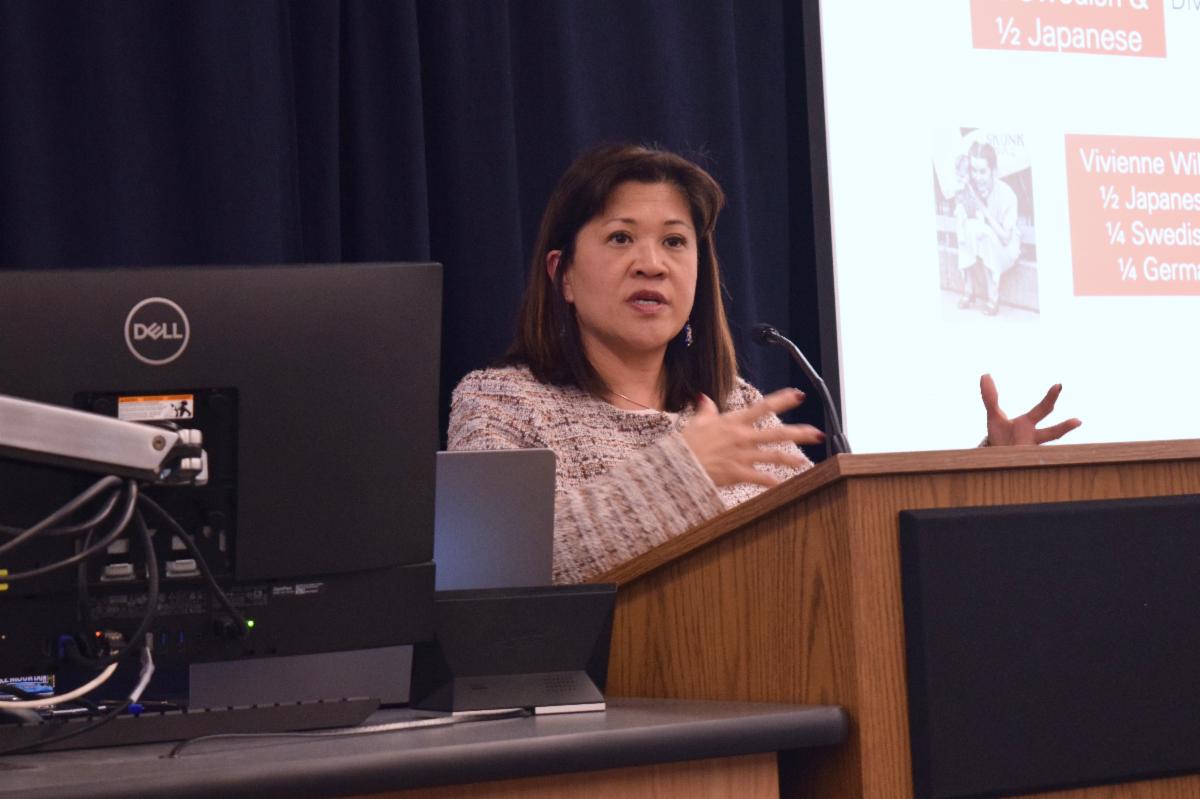
On Wednesday, February 5, 2025 the IHRC hosted a conversation with Rose Cuison-Villazor of Rutgers Law School entitled "Forbidden Love: Race, Citizenship and The American Family."
Through sharing the stories of three women who were born in Japan after World War II but did not have Japanese citizenship, she explored the ways that military, immigration, and other federal officials restricted the ability of Japanese women and American men to marry. Her discussion of U.S. immigration and citizenship laws and military policies came to life as she shared the stories of three generations of women.
On February 6, graduate students had the opportunity to meet informally with Prof. Cuison-Villazor and have a conversation about the inspiration for her research and how it informs current citizenship debates.
This event was co-sponsored by the Binger Center for New Americans, the Department of History, and the Asian American Studies Program at the University of Minnesota.
| |
This article published by the College of Liberal Arts introduces IHRC's new director, Dr. Llana Barber. Learn more about Llana, her background, and her scholarship. | |
Follow the IHRC on Social Media | |
Im/migration Graduate Student News | |
|
This semester, the Im/migration Graduate Student Group is being led by IHRC Graduate Research Assistant Isabel Bethke. Isabel is pursuing a PhD-JD English Literature and Law Dual Degree, and she was an IHRC Summer Fellow in Summer of 2023. Isabel comes to the IHRC with a great deal of experience and many exciting ideas.
On January 29, the graduate student group met virtually to share insights, discuss the current state of immigration, and plan for the semester.
Graduate students from any department or college at UMN with an interest in global migration and/or immigration to the US are encouraged to take advantage of this opportunity to network with other young scholars, share your work in progress, attend social events, and receive career development information. Students can contact us at ihrc@umn.edu for more information about the graduate student group.
| |
Fellowships and Scholarships | |
2025-2026 Academic Year Fellowships
Applications Due March 31, 2025
The Immigration History Research Center graduate student fellowship program supports students working on a broad range of international migration- and US immigration-related research topics. Potential areas of research include global migration, US immigration, and race and ethnicity in the US, as well as refugee resettlement, immigration law and politics, ethnic organizations, identity, arts, folklore, gender, journalism, and literature. Research must also advance the work of the IHRC.
Academic year fellowships are awarded for one or two semesters. They are 50% appointments and provide a stipend of $11,000 per semester, full tuition support for up to 14 credits, and subsidized health insurance.
To be considered for IHRC fellowships, candidates must:
- be admitted to, or currently enrolled in, a Masters or PhD degree program at the University of Minnesota;
- have research interests related to global migration and/or immigration, race, and ethnicity in the US, refugee resettlement, immigration law and politics, ethnic organizations, identity, arts, folklore, gender, journalism, and literature;
- meet additional requirements for specific fellowships.
You can read about previous fellows and learn more about the various available fellowships on the IHRC website.
| | | |
CLA Liberal Arts Engagement Hub Reminder | | |
|
|
Call for Proposals:
2025-2026 Hub Residencies
| |
|
The Liberal Arts Engagement Hub is currently seeking proposals for 2025–2026 Residencies, which run from July 2025 through June 2026. Hub Residencies, our signature program, support community-based collaborative projects that engage a topic of important public interest and involve at least one community partner (individual, group, or organization) and one person (faculty or staff) affiliated with the University of Minnesota’s College of Liberal Arts. Residencies include up to $15,000 in funding; priority access to the Hub space; and access to university resources, depending on the nature of the project.
Community organizations and UMN faculty and staff interested in migration-related residencies are encouraged to apply.
If you have any inquiries or need assistance connecting with a CLA faculty or staff member, contact Amanda Steepleton, Hub Program Manager, at stee0260@umn.edu or 612-624-1811. Deadline: March 7, 2025
| |
|
The Immigration and Ethnic History Society (IEHS) Graduate Student and Early Career Affairs Committee will host a virtual mentoring event on Thursday, February 27, 2025 from 4:00 PM to 5:15 PM EST.
The event is open to graduate students and early career historians working on immigration and ethnicity in North America. The event will include small-group discussions to give participants the opportunity to ask mid-career or senior professionals their most pressing academic and career questions and meet peers with similar research interests.
Questions? Email alison.efford@marquette.edu.
| |
Do you appreciate and enjoy the IHRC's work? Please consider supporting us financially. | | | | |