The Illinois Counties Solid Waste Management Association (ILCSWMA) was established in 1993 as a not-for-profit organization for local level solid waste management officials and other interested parties. The Association is dedicated to providing a forum for networking, training and information exchange. | |
| | |
Hello and Happy Spring!
I hope you all had fun celebrating St. Patrick’s Day and St. Joseph’s Day (my personal favorite). We’re wrapping up our annual membership drive, and I wish to thank all our new and renewing members for supporting ILCSWMA in 2026. To date, we have 27 counties/agencies, 25 affiliate organizations/businesses, and 3 retirees, as well as our long-standing partners. A list is provided below, and if your county or business/organization is not on it, please consider
becoming a 2026 member today; you won’t regret it.
| | | | |
The conference planning committee has begun to meet, and we are putting together an exciting program for October 29 & 30 at Starved Rock Lodge and Conference Center. More information will be shared soon, but for now, hold these dates and book your room by calling the Lodge at 800-868-7625. Ask for the “Illinois Counties Solid Waste Management Conference Room Block, to receive the State rate of $110, plus tax. Also, please reach out to me if you have a session topic to present or a speaker recommendation at padrian@swalco.org.
All the best,
Pete Adrian
| | Thank you to each of our 2026 Members for being part of this important association. Together, we can share information, tackle challenges, and find solutions for best practices of managing solid waste and resources. All of you are a tremendous asset for the longevity of ILCSWMA. Not a member yet, click on the button below for more informaiton and come join us! | |
- Ambraw Valley Solid Waste Management Agency
- Christian County
- City of Urbana
- Cook County
- Coles County
- Ecology Action Center
- DeKalb County
- DuPage County
- Henderson County
- Jackson County
- Jo Daviess & Carroll Solid Waste Agency
- Kane County
- Lake County
- LaSalle County
- Macon County
- Madison County
- McHenry County
- Ogle County
- Perry County
- Rock Island County Waste Management Agency
- St. Clair County
- SWALCO
- SWANCC
- Tazwell County Health Department
- Vermillion County
- Village of Oak Park
- Will County
| |
- Arcwood Environmental
- ARXG
- Champaign County Environmental Stewards
- Circular Services
- Civil & Environmental Consultants, Inc
- COM2 Recycling Solutions
- Foth Infrastructure & Environment, LLC
- Geo-Logic & Associates
- g2rev, LLC
- Greenlight
- Helping Hands
- K & S Tire Recycling, Inc.
- LRS
- National Center for Electronics Recycling
- PaintCare
- Perry Ridge Landfill
- Recycle Coach
- Resource Recycling Systems
- Rumpke Waste and Recycling
- SCS Engineers
- Sibelco Glass North America
- The Battery Network
- University of Illinois at Chicago
- URT Solutions
- WasteNot Compost
| |
- U.S. Environmental Protection Agency, Region 5, Partner
- IL Environmental Protection Agency, Partner
- Chad Braatz, Lifetime Honoree
- Bart Hagston, Lifetime Honoree
| |
Free Battery Recycling is Now Available
Submitted by Marta Keanne, Regional State Stewardship Manager
| |
Battery recycling is now free and easier than ever across Illinois
Thanks to the Portable and Medium Format Battery Stewardship Act, residents, businesses, schools, and local governments can recycle most household batteries at no cost through The Battery Network, selected by the Illinois EPA to operate the statewide program. That means throughout Illinois, safe battery recycling is now within reach.
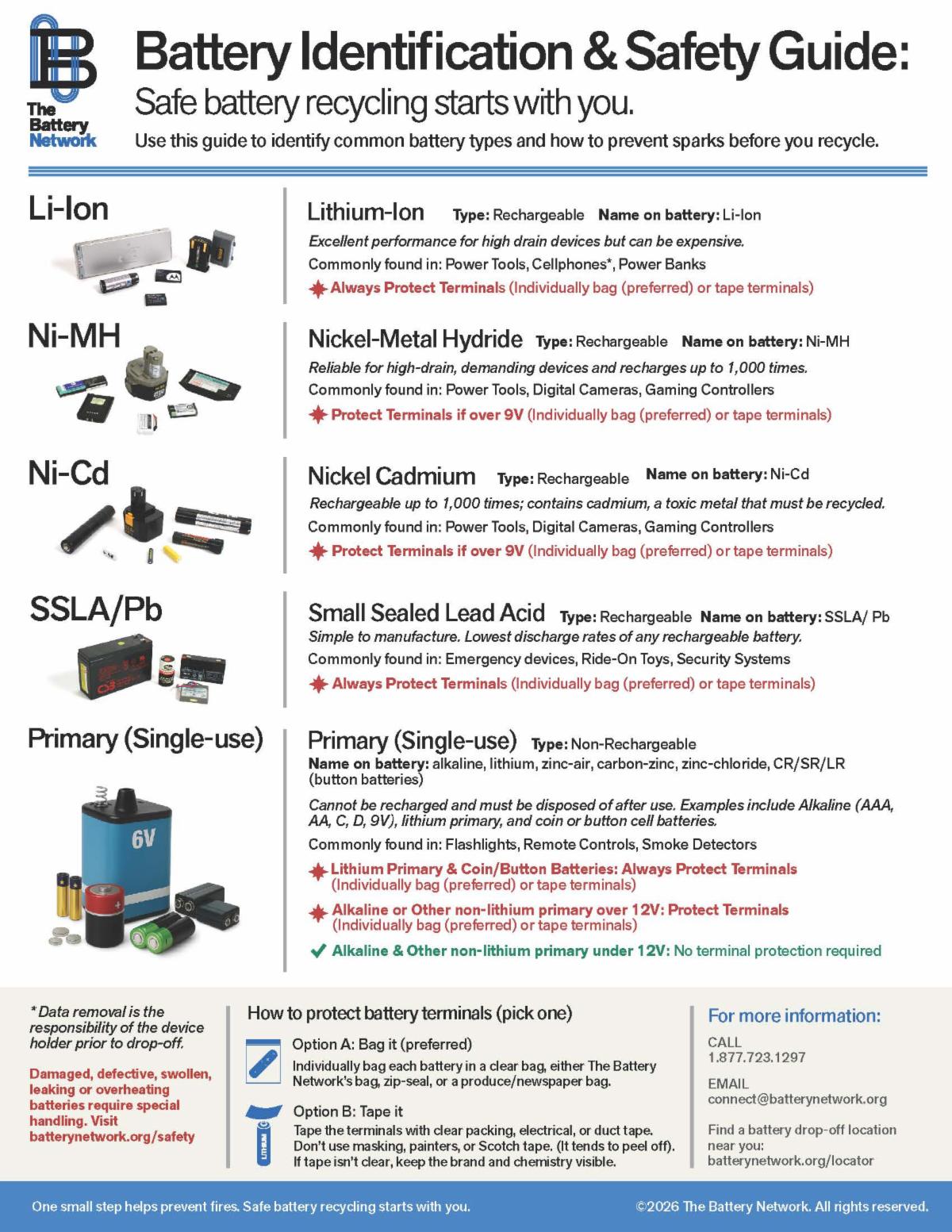
What batteries are covered?: From collection to transport, The Battery Network makes safe battery recycling possible. The program covers three categories of batteries:
- Primary (Single-use) and rechargeable batteries commonly found in homes and businesses, powering remote controls, toys, cordless tools, and more.
- Large rechargeable batteries (up to 25 lbs), such as those used in lawn equipment and e-bikes.
- Damaged or Defective batteries that are no longer safe to use due to physical damage or malfunction such as leaking, cracked, or swollen. These must be taken to designated locations equipped to manage them safely.
Not sure what type of battery you have? Visit batterynetwork.org/battery-basics/what-to-recycle to learn more.
Illinois law now requires acceptance of all covered batteries, including alkaline. While alkaline batteries are not prohibited from landfill disposal until January 1, 2028, they can and should be recycled today.
The law does not include embedded batteries that are not designed to be removed, automotive lead-acid batteries, EV batteries, nor recalled batteries, which remain the responsibility of the manufacturer.
Funded by manufacturers, not taxpayers: This program is funded entirely by battery manufacturers and brands, not taxpayers. Even state oversight is covered through manufacturer fees. That means Illinois residents can recycle covered batteries at no cost.
Safe battery recycling starts with you: Before dropping off lithium batteries, individually bag each battery or tape the terminals to prevent sparks and reduce fire risk during storage and transport. Protecting lithium battery terminals helps reduce the risk of fires in homes, collection trucks, and waste facilities.
Step-by-step terminal protection instructions are available on our safety page:
batterynetwork.org/safety/
Ready to recycle your batteries?: Find a nearby drop-off location using our locator at batterynetwork.org/locator/
Interested in becoming a battery collection site?: Learn how your organization can participate at batterynetwork.org/collection-partners.
If you think you will generate a large volume of batteries, please contact Marta Keane, Regional State Stewardship Manager at The Battery Network, at mkeane@batterynetwork.org to determine your eligibility.
| |
McLean County Reaches 51% Recycling Rate
Submitted by Kelsey Bremner, EAC Program Technician
| | |
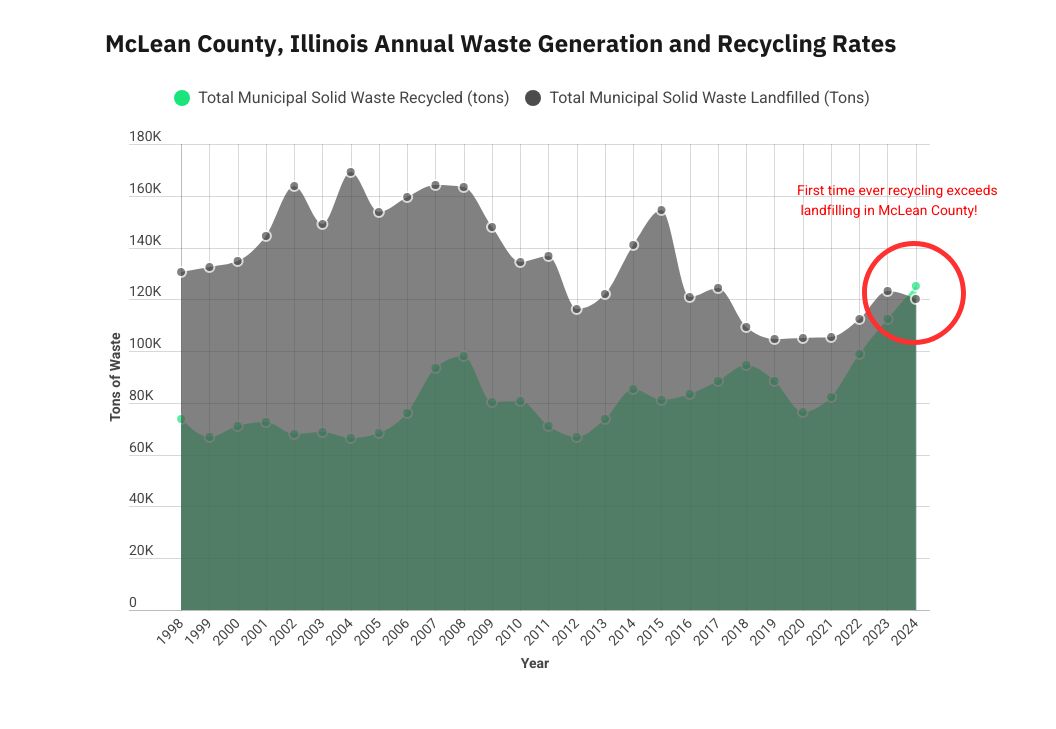
That’s right, you read that correctly! For the first time, since the Ecology Action Center began collecting waste generation and recycling data, McLean County’s recycling rate is over 50%. That means of all the waste generated within the county, more than half of it was recycled in 2024. This is big milestone for them and also one of the major goals in their solid waste management plan.
During 2024, McLean County had a 5% increase of total waste generated. However, less waste was landfilled and almost 15% more waste was recycled than in 2023. The local construction and demolition recycling center, which also handles bulk waste from Bloomington and Normal, had a large uptick in material processing during 2024. More textiles were recycled in 2024 including quilted mattress covers by mattress recycler, Kern Mattress Outlet, who’s working to expand their local recycling efforts through an initiative called Kernovate. Both Bloomington and Normal recycled more brush and leaves last year and the EAC’s Community Composting program collected 57.4 tons of food waste, a 23% increase from 2023.
Some areas of decrease include paper recycling which may partly be due to the overall reduction in
paper waste as print media and classroom materials continue to transition to digital platforms.
Additionally, improved manufacturing quality at large scale facilities has also led to significantly fewer materials, like lithium-ion batteries and glass, from entering the recycling stream. Following market trends, they also saw a decrease in metal material being recycled in 2024 versus 2023. Sometimes, if facilities have space, they will stockpile material if rates are low and wait for them to increase before processing and selling to buyers.
While they report seeing a slight decline in single stream recycling that’s collected from residents and other local businesses, they aren't discouraged. This can likely be attributed to an overall decrease in the weight of products being produced.
The Ecology Action Center has been collecting data and calculating the county’s recycling rate since the 1990’s. The next phase of the solid waste management plan includes an automatic increase of the
recycling rate goal to 60% by 2027.
| |
Solar Panel Recycling Process &
Closed-Loop Plastic Pellet Supply Program
Submitted by Kathelen Fahey, Marketing Lead
| | |
Solar Panel Recycling Process
Overview
COM2 Recycling Solutions operates a fully certified, closed-loop recycling process supported by advanced in-house technologies and strict environmental, health, and quality controls. All materials are processed at our Carol Stream, IL facility using automated disassembly systems engineered for safe, efficient, and high-yield separation of solar components and related electronic materials. Recycled solar glass is transformed into FRIT, a ceramic-grade material that reintroduces manufacturing streams to support real circularity and reduce reliance on primary raw materials.
Both our U.S. and Canada facilities maintain full certification to ISO 14001, ISO 45001, ISO
9001, and R2v3, ensuring consistent environmental protection, worker safety, quality assurance, and transparent material handling across all operations.
Closed-Loop Plastic Pellet Supply Program
Overview
COM2 Recycling Solutions offers a closed-loop recycling program designed for OEMs and retailers seeking sustainable, reliable, and specification-controlled recycled plastic feedstock. We collect and process post-consumer and post-industrial plastics, converting them into high-quality recycled pellets that can be reintegrated into your manufacturing processes.
What We Provide
• Plastic Waste Collection & Processing — Efficient handling of your plastic waste
streams with full traceability.
• High-Quality Recycled Pellets — Consistent, specification-controlled pellets
suitable for use in a wide range of products.
• Closed-Loop Material Supply — We return recycled pellets directly back to your
production lines, supporting circularity goals.
• Compliance & Reporting — R2-certified processes with transparent documentation
and sustainability reporting.
Benefits for OEMs & Retailers
• Reduced Material Costs through recycled feedstock integration.
• Lower Environmental Impact by diverting plastics from landfills and reducing virgin
resin usage.
• Enhanced ESG Performance with measurable circularity metrics.
• Supply Chain Stability via a dependable domestic recycling partner.
Partnership Opportunities
We collaborate with OEMs and retailers to design tailored closed-loop programs that align with product specifications, sustainability targets, and operational needs. To discuss material requirements or explore a customized program, please contact: COM2 Recycling Solutions info@com2recycling.com.
| | |
NRDC Report: Economic Impacts of
Food Waste Diversion in Illinois
| | |
New modeling shows that a food waste diversion policy would have vast economic and climate benefits for Illinois.
Wasted food is not just an environmental or hunger issue; it is a missed economic opportunity.
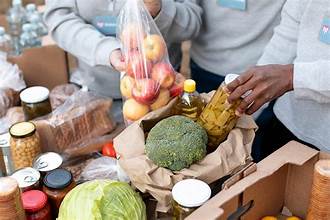
Right now, 2.6 million tons of food are thrown away each year in Illinois. Food waste makes up 20 percent of Illinois’s landfills, where it creates the potent climate pollutant methane as it decomposes. Much of this wasted food could be rescued and redistributed to community members in need of food assistance. What cannot be eaten should be repurposed for animal feed, compost, or other recycling efforts. Policies that divert food waste from landfills can reduce climate pollutants, increase food rescue, and offer a host of economic benefits.
In order to estimate these benefits for Illinois, a new study commissioned by NRDC looks at the potential economic impacts of three food waste diversion policy scenarios, which would be gradually phased in over seven years.
link -
According to the study, upon full implementation, a comprehensive food waste diversion policy in Illinois could lead to:
- 14,000 jobs created across the state
- $3.8 billion in cumulative economic activity
- $172 million in cumulative tax revenue, due to supply chain impacts and economic ripple activity
- 2.2 million tons of food waste diverted from landfills each year
- 9 million metric tons less of carbon dioxide equivalent pollution over the course of 10 years, the same as taking two million cars—approximately one in five cars in Illinois—off the road for a year
|
| |
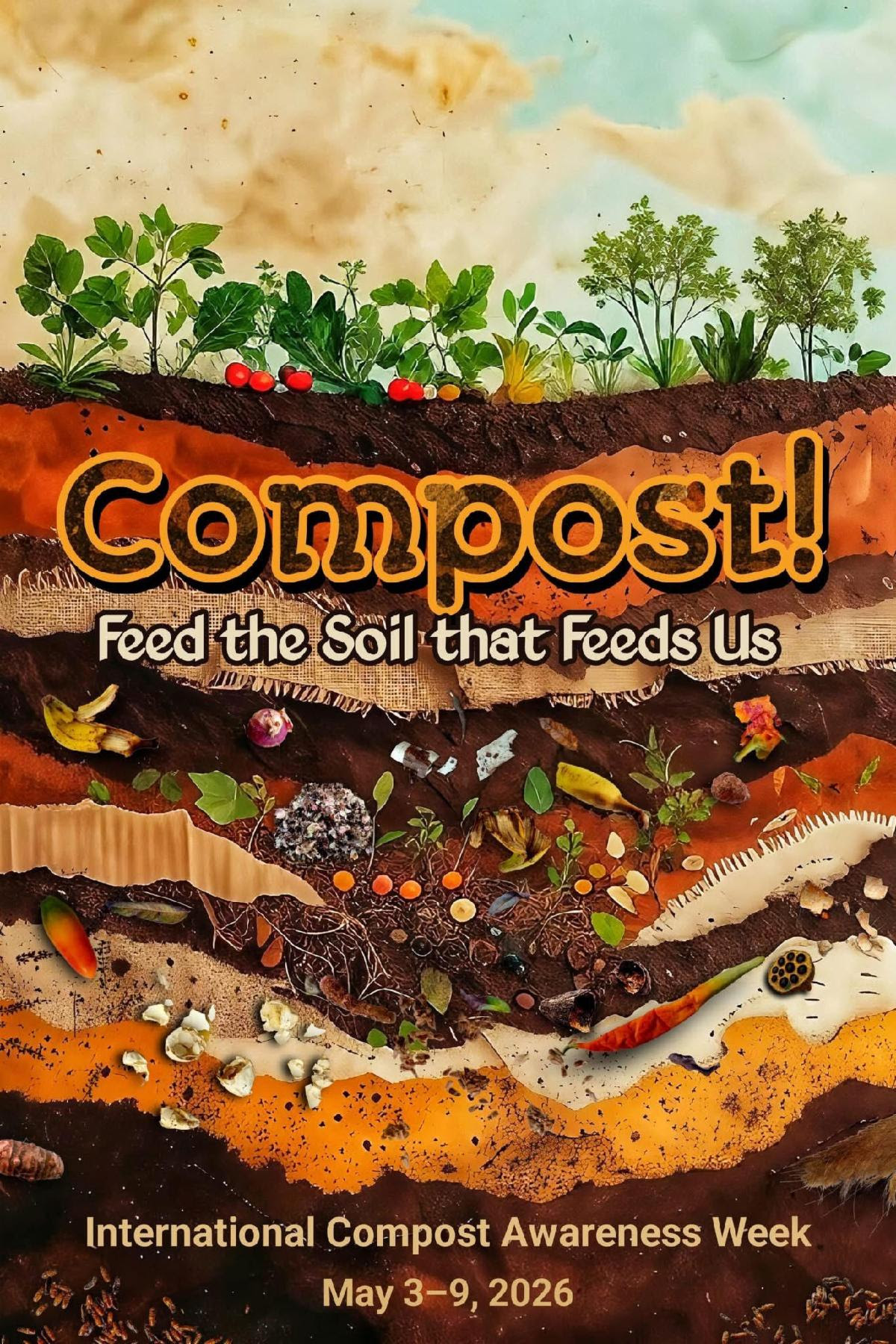
International Compost Awareness Week
May 3 - 9, 2026
| | |
Information provided by the IFSCC
The mission is simple but powerful: bring people together to share the benefits of composting organics and using compost to build healthier soil. ICAW inspires action at every level: communities, schools, governments, and businesses host events to highlight composting.
ICAW shows how everyone can play their part in creating a more sustainable future.
This year’s theme, “Compost! Feed the Soil that Feeds Us,” highlights the vital role compost plays in sustaining life on land. Soil is the foundation of life. It grows the food we eat, filters the water we drink, and sustains the biodiversity that keeps our ecosystems in balance. Yet soil is also one of our most threatened resources, with erosion, topsoil & nutrient depletion, and contamination endangering its health worldwide.
When we apply high quality compost, we are investing in the health of our soil, ensuring it continues to provide the food, clean water, and resilience that all life depends on. This theme ties directly to the United Nations Sustainable Development Goal 15: Life on Land, reinforcing that protecting and restoring soil is a global priority and one of the most impactful ways we can care for the planet.
Please reach out if you’d like to learn how you can get involved. We can help you plan your Adventure in Composting event. We provide a variety of resources for all types of organizations.
| | | Board Members for 2025/2026 | |
- Pete Adrian, President
- Paul Cooney, Vice President
- Keri Gale, Secretary
- Becky Tracy. Treasurer
- Lisa Wooddy, Northern Region Rep
- Melissa Goetze, Central Region Rep
- Aaron Kelley, Southern Region Rep
- Jana Messmore, At Large Rep
- Katie Vogler, At Large Rep
- Mary S. Allen, Administrative Coordinator
| | |
STAY CONNECTED
Please send in information to share with the membership about a new program, data from a collection event, or anything pertaining to successful waste prevention initiatives or enforcement. If you are a full member and have others in your department that would like to receive this newsletter, please send an email request to ILCSWMA's administrative coordinator, Mary S. Allen, at info@ilcswma.org.
| | | | |