|
Dear Friends of ILG,
Happy Public Service Recognition Week! We hope you all take some time to celebrate the essential role public servants play in keeping our communities strong, safe, and resilient. Whether it’s maintaining critical infrastructure, responding to emergencies, or delivering everyday services, your work matters and we are grateful for all that you do.
At ILG, we see this commitment every day, and we strive to carry that spirit of recognition forward throughout the year. One way we do that is through our Beacon Program and our annual Beacon Awards, which honor agencies advancing climate, environmental, and sustainability efforts in meaningful ways. If your agency is doing this important work, apply for a Beacon Award before Tuesday, June 30 at 5 PM!
Recognition also means acknowledging the realities you face. Our recent field survey of local government leaders confirmed a clear theme: agencies are being asked to do more with fewer resources. There is a real capacity squeeze. Agencies are navigating difficult tradeoffs as fiscal constraints, staffing shortages, and increasing demands are stretching capacity in real ways. For more insights on this trend, read our research brief below.
ILG remains focused on supporting you through this moment, with capacity-building services, technical assistance, and resources designed to meet your evolving needs. We are thankful for your continued trust in us, and for the broader network of affiliates and collaborators who help extend the impact of our ongoing work.
Stay tuned for updates on our upcoming webinar schedule for the rest of 2026, and a variety of new and updated resources across all four pillars of our work.
In this newsletter, you’ll find valuable training programs, webinars, conferences, and resources designed to support your work.
With appreciation,
Erica L. Manuel
CEO & Executive Director
| | RESEARCH BRIEF: THE CAPACITY SQEEZE: INSIGHTS FROM ILG'S 2026 PRIORITIES SURVEY | |
California’s local government leaders are facing a pivotal year. Recently, we surveyed cities, counties, and special districts asking them to share the most pressing challenges and priorities for 2026. A singular narrative emerged: agencies are being forced to do fundamentally more with fundamentally less, pushing operational capacity to a breaking point. At ILG, we aren’t just looking at this data — your feedback is directly influencing our upcoming resources, training, and technical assistance to ensure we are meeting you exactly where you are. Read through our analysis of the survey results on our website. More survey-specific insights will be shared in the coming weeks.
| | |
Get the Climate Action Recognition Your Agency Deserves
Does your agency have a fantastic climate, environmental, or sustainability program or project that is making a positive difference in your community? ILG’s annual Beacon Vanguard, Spotlight, and Leadership & Innovation awards recognize the voluntary actions of California local government agencies undertaking climate and sustainability programming. Apply for a Beacon Award online by Tuesday, June 30, 2026 at 5 PM. Last year’s highest honor went to the City of Torrance. Could it be you this year?
All 2026 Beacon Award applications are due Tuesday, June 30 by 5 PM.
| | |
From Policy to Practice: What We Learned from Our National Apprenticeship Week Virtual Panel
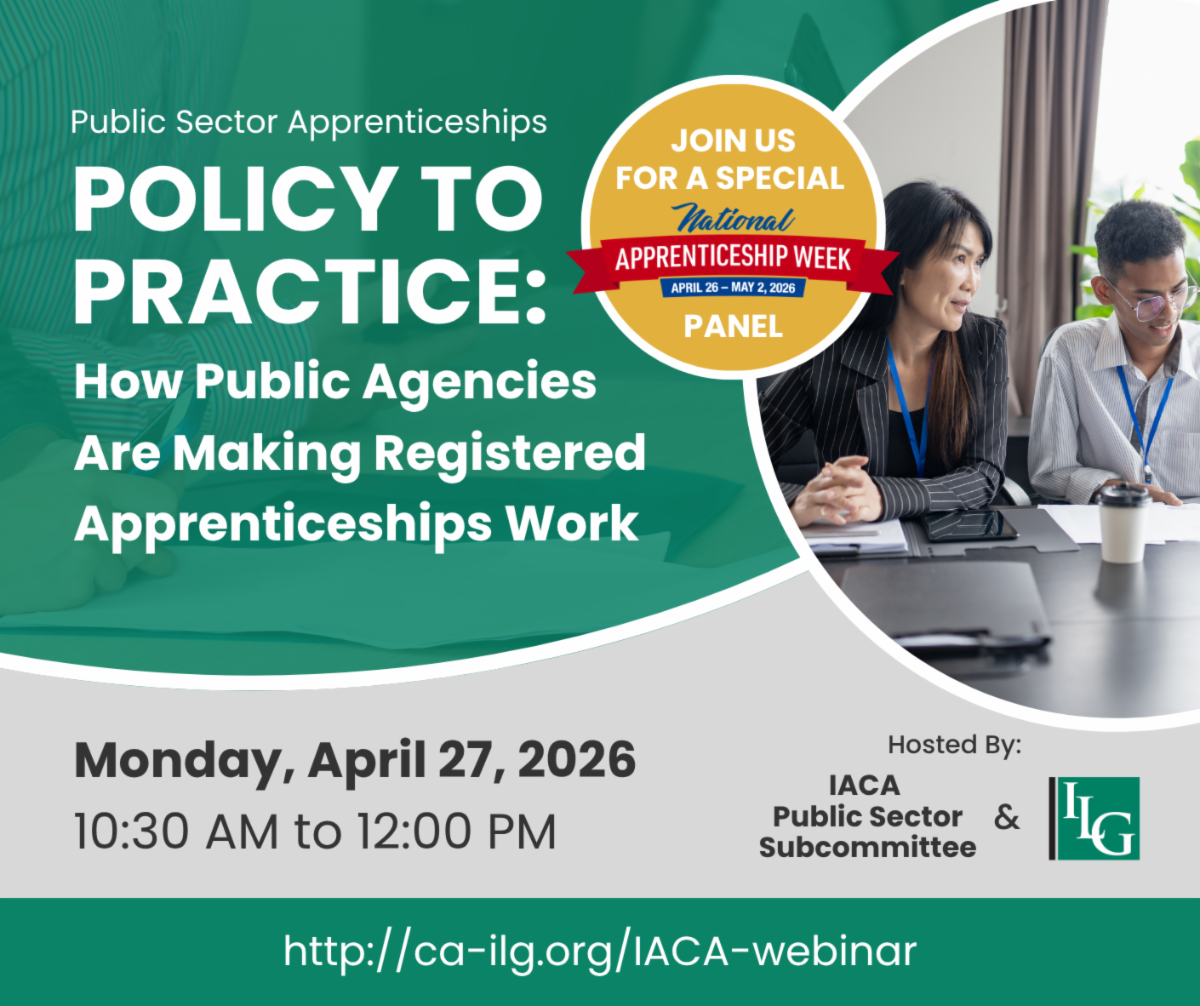
Last week, ILG co-hosted a National Apprenticeship Week panel in partnership with the IACA Public Sector Subcommittee, bringing together public sector leaders, labor representatives, and workforce practitioners for a candid conversation about what it actually takes to build and sustain apprenticeship programs inside government.
The discussion focused on real-world implementation; what’s working, what’s not, and how agencies are navigating civil service systems that weren’t originally designed for this kind of program.
A few clear takeaways emerged:
-
Union engagement is not optional – it’s foundational. Strong labor partnerships build credibility, create alignment, and ensure programs are designed to last, not just launch.
-
Successful programs are built through strong collaboration. Partnerships with training providers, community colleges, and local education agencies are critical to creating accessible, scalable pathways into public service.
-
Agencies are still grappling with how to justify the investment internally. With staff already at capacity, making the case for apprenticeships requires clearly demonstrating return on investment – both in terms of long-term workforce stability and near-term organizational value.
-
And importantly, apprenticeship programs are not limited to new entrants. Incumbent worker models are proving to be a practical and effective option for local governments facing budget constraints and backfill challenges, allowing agencies to invest in and upskill their existing workforce while continuing to deliver critical services.
Perhaps the most important takeaway: these programs can work in the public sector. Not perfectly, and not without effort, but they are working. Agencies across California are finding ways to adapt, build support, and create meaningful pathways into public service. That's especially important as we think about the next generation of public servants and how we'll continue to provide critical services to our communities in the future.
We’re grateful to our panelists for their candor and leadership in sharing what it really takes to move this work forward.
As ILG continues to support local agencies on workforce development, we want to hear directly from you. If your agency is navigating workforce challenges, we invite you to share your perspective through our current workforce field survey. Your input will help shape future resources, partnerships, and solutions grounded in real needs across the state.
| | |
Have You Completed Your Ethics Training Requirement? And Do You Know About the Latest Changes, Per SB 827?
State-mandated ethics training informs local officials about the extensive array of laws that apply to public service, as well as the unique ethical obligations public servants have. Assembly Bill 1234 (AB 1234) requires elected and appointed officials to receive two hours of training in specified ethics laws and principles every two years. As of January 1, 2026, Senate Bill 827 (SB 827) enacted two changes to that training requirement:
-
It expands the ethics training requirement to "department heads or similar administrators of local agencies, including educational agencies."
-
All local agency officials must now complete an ethics training course within six months of being hired or elected versus the previous timeline of 12 months.
ILG offers two, one-hour self-study exercises as an option for local officials to satisfy AB 1234 ethics training requirements. For questions regarding ILG self-study or in-person compliance certificates, please contact ILG at 916-658-8208 or EthicsMailbox@ca-ilg.org.
| | ILG FOUNDER & AFFILIATE UPDATES | | |
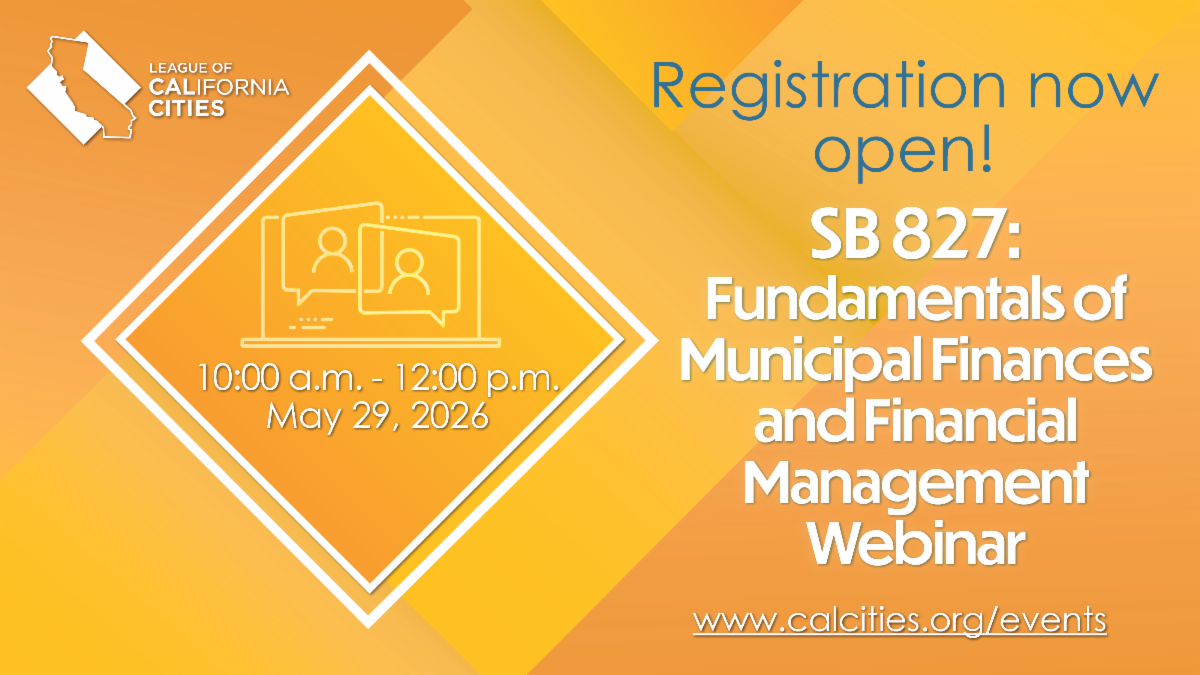
SB 827 Financial Training Now Available Through Cal Cities
Under SB 827 (Gonzalez, 2025), elected and appointed officials, department heads, and other administrative officers must now complete a minimum of two hours of fiscal and financial training every two years. Cal Cities now offers a virtual two-hour training option, with the first event happening on Friday, May 29, 2026 from 10 AM – 12 PM, Registration is limited and must be completed by Thursday, May 28. If you are unable to make this training, there will be another in June, to be announced at a later date.
| | |
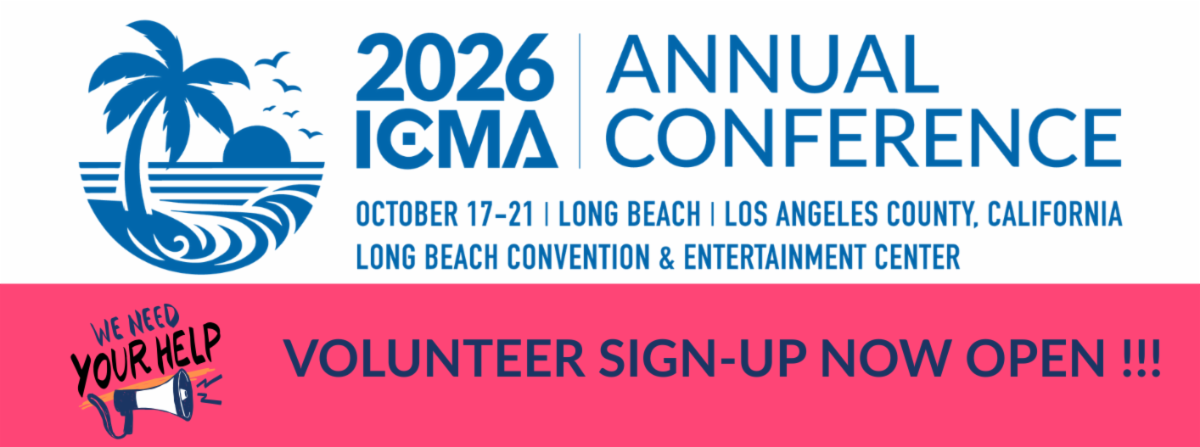
Volunteers Needed for the 2026 ICMA Annual Conference in Long Beach
The 2026 International City/County Management Association (ICMA) Annual Conference is coming to Long Beach from October 17–21. ICMA is looking for enthusiastic volunteers to play a vital role in creating a seamless, welcoming, and inspiring experience for local government professionals from across the country. If you’re passionate about public service and community engagement, this is a fantastic way to get involved. Please complete the volunteer interest form by Friday, July 24.
| | |
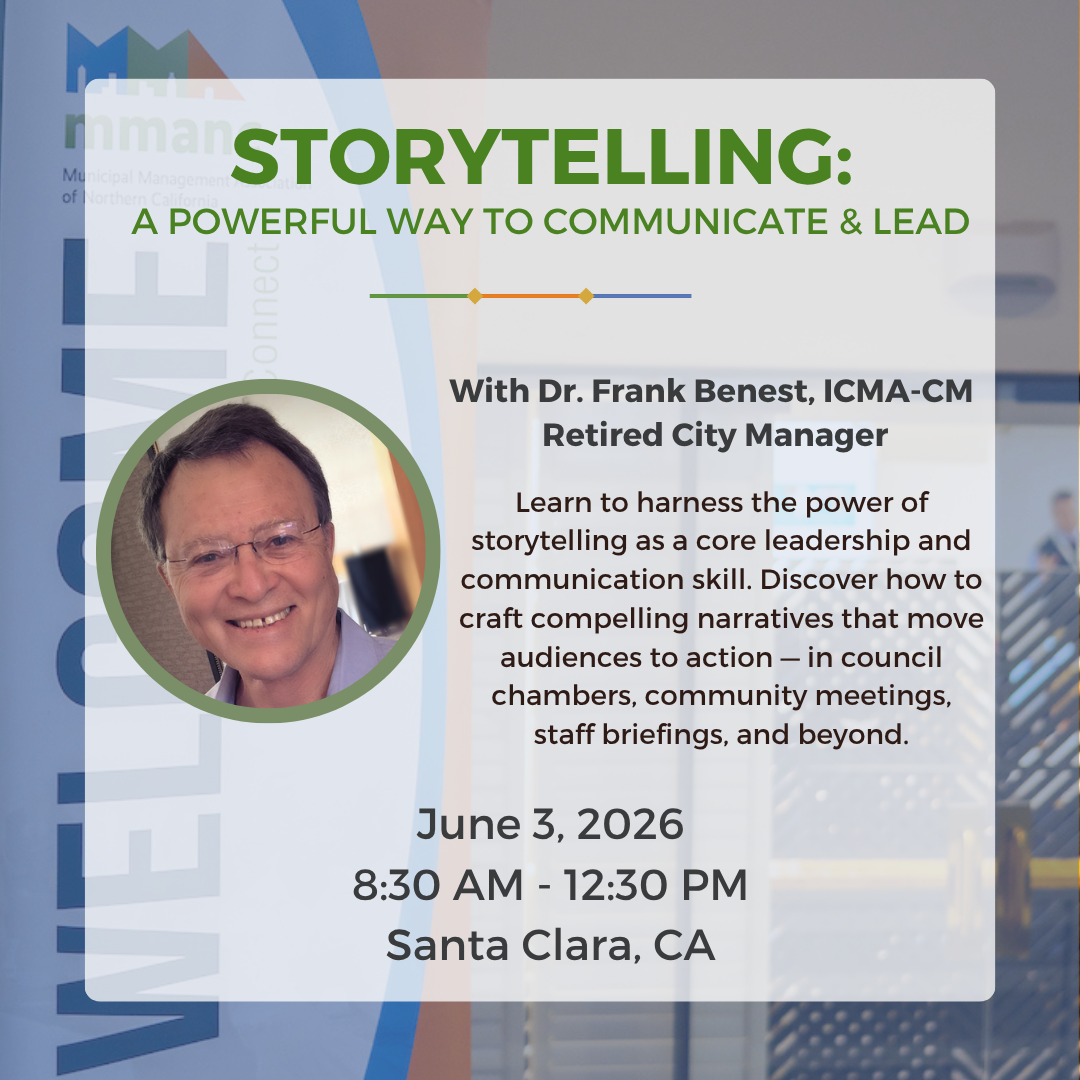
Don’t Miss the First 2026 MMANC CGL Training Session on June 3
MMANC is excited to kick off its 2026 CGL Training Series, "Storytelling: A Powerful Way to Communicate and Lead" with Dr. Frank Benest. The first session will take place on Wednesday, June 3 in Santa Clara from 8:30 am - 12:30 pm. Learn to harness the power of storytelling as a core leadership and communication skill. Discover how to craft compelling narratives that move audiences to action — in council chambers, community meetings, staff briefings, and beyond.
Register online by Wednesday, May 27.
Questions? Contact MMANC Region 1 co-chair Jasmine Ortega at region1@mmanc.org.
| | |
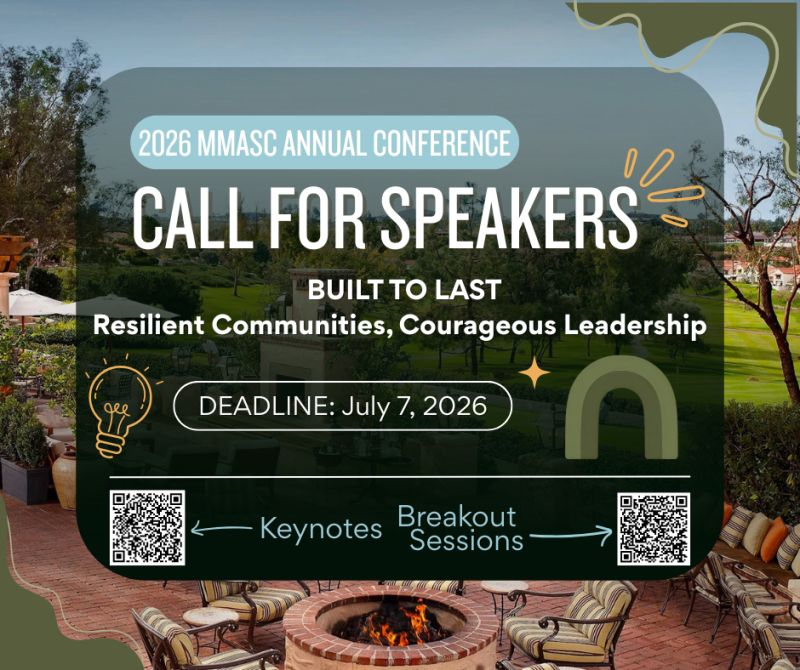
Submit Your MMASC Annual Conference Session Proposals by July 7
The Municipal Management Association of Southern California’s (MMASC) Annual Conference will take place October 28–30 in San Diego. This year’s theme, “Built to Last: Resilient Communities, Courageous Leadership,” will explore how leaders and communities can adapt, innovate, and lead with courage in the face of evolving challenges.
Submit a Keynote Presentation or a Breakout Session through MMASC’s website
by Tuesday, July 7.
| | ILG PARTNER NEWS, UPDATES & EVENTS | | |
Beyond the Bargaining Table: How to Build and Sustain Governing Body Support for Labor Negotiations
For many agencies, negotiations do not collapse because the economics fail. They collapse because governing body support erodes. Any local government executive understands that elected officials rarely evaluate negotiations based solely on data. Governing body members process information through several concurrent lenses: their values, their constituencies, their relationships and sometimes their political futures. Most want to make responsible decisions for their communities, but they do not want to be blindsided. Understanding those dynamics is essential to maintaining governing body alignment when negotiations become difficult. This article from Renne Public Law Group outlines strategies and tips to navigate these realities and build trust throughout the labor negotiations process.
| |
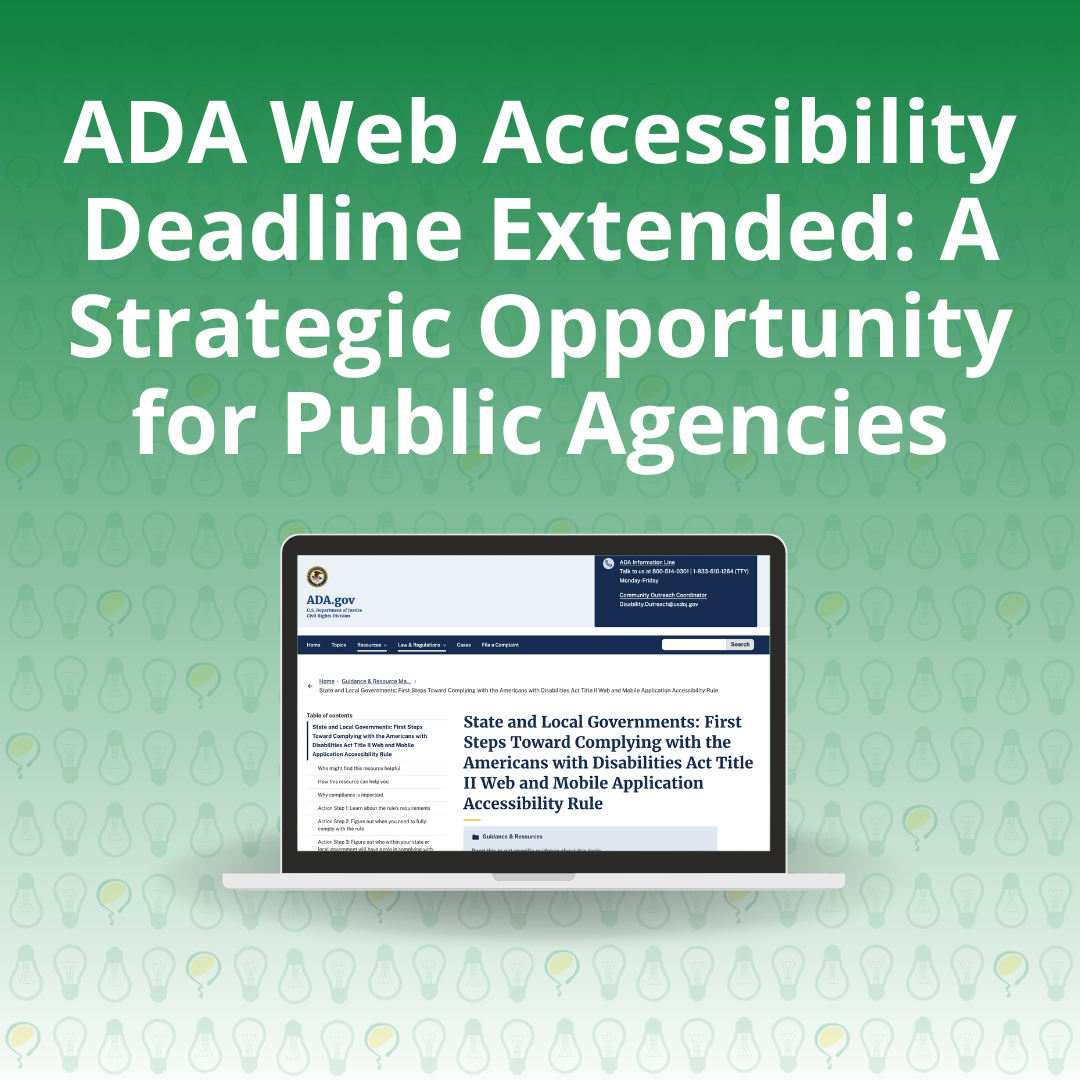
ADA Web Accessibility Deadline Extended: A Strategic Opportunity for Public Agencies
On April 20, 2026, the U.S. Department of Justice (DOJ) announced a shift in compliance deadlines for web accessibility and mobile application standards under Title II of the Americans with Disabilities Act (ADA). For larger public entities with populations of 50,000 or more, the compliance deadline has been extended to April 26, 2027. Smaller agencies with populations under 50,000 — as well as all special district governments — now have until April 26, 2028, to meet the new requirements. This regulatory update provides essential breathing room for cities, counties, and special districts as they navigate the technical complexities of accessibility. This article from Tripepi Smith outlines how to make the most of this extra time.
| | |
BBK Announces Spanish-Language Ethics Training for Public Agencies
Best Best & Krieger LLP (BBK) has been dedicated to supporting public agencies across California with practical ethics training. BKK is pleased to share that their Ethics Training for Public Agencies is now available in Spanish through BBK’s Learning Hub.
This expansion reflects BBK's ongoing commitment to supporting public agencies with practical, accessible guidance that helps officials and staff confidently navigate California’s complex ethics laws. BBK’s Ethics Training satisfies the biannual training requirements established under California Assembly Bills 1234 and 2158 for:
- Public officials
- Officers and employees who file Statements of Economic Interest (SEI or Form 700)
- Members of school district governing boards
- County boards of education members
- Charter school board members
The training provides a comprehensive overview of key ethics topics, including:
- General ethics laws and principles
- Laws governing personal financial interests (Political Reform Act and Government Code section 1090)
- Laws governing personal advantages and perks (limits on gifts, travel, loans, mass mailings, and misuse of public funds)
- Transparency laws (Brown Act and California Public Records Act)
- Fair process requirements (common law conflicts of interest and due process)
Visit BBK’s Learning Hub to learn more and access the training.
| | |
RGS Guides You on How to Comply With AB 2561 (HR Data)
Assembly Bill 2561 (AB 2561) is a law that mandates public agencies conduct a public hearing each fiscal year prior to budget adoption to present information on the status of their job vacancies, recruitment, and retention efforts. RGS held a webinar in March 2025, discussing the components to comply with AB 2561, including guidance on workforce data and a strategic process to support successful outcomes. Visit their AB 2561 webpage for the webinar recording and helpful resources, including a reporting template.
| | | | |