|
Where does rainwater go?
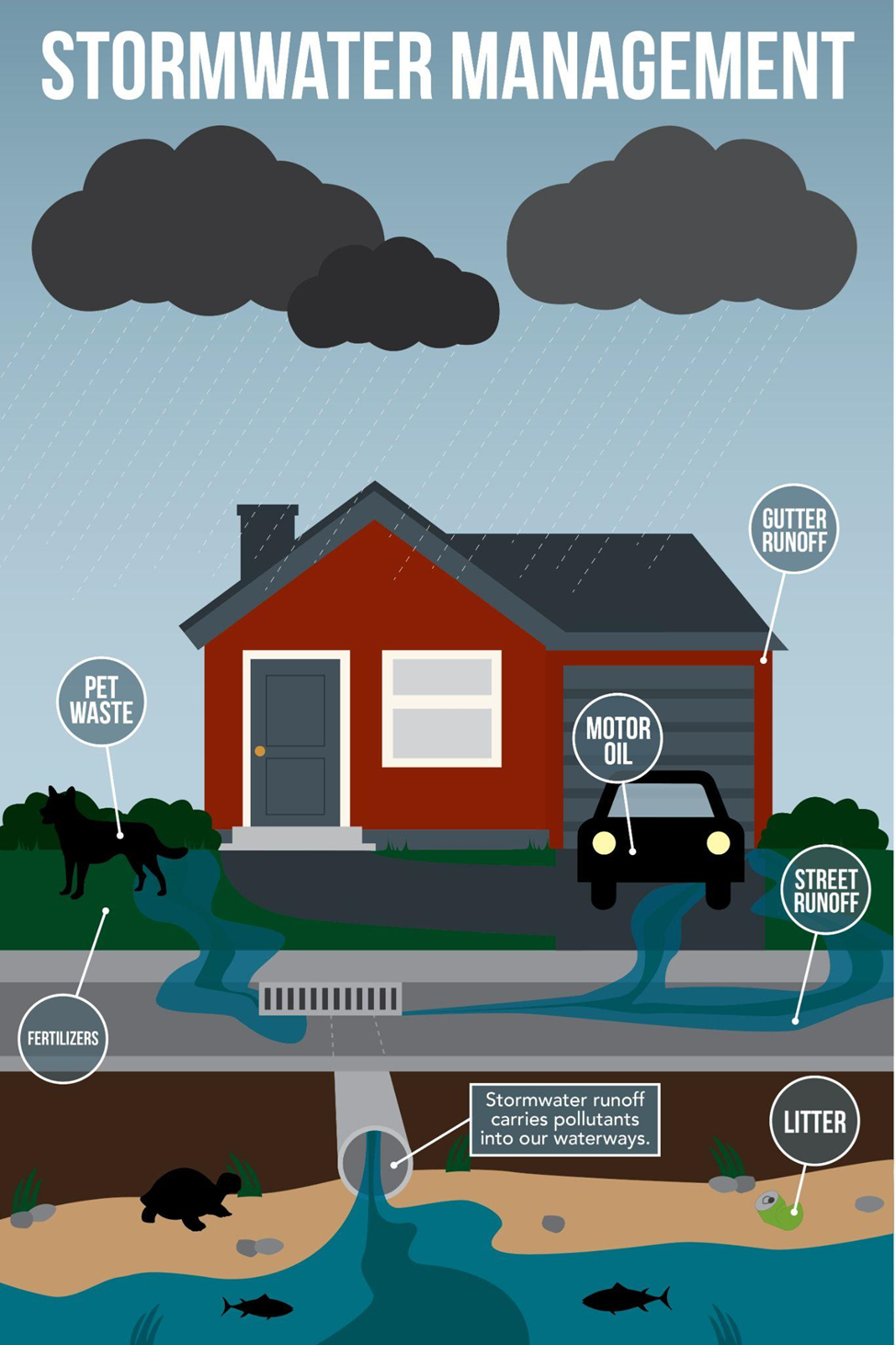
In an urban environment like Worcester, where there are lots of houses, apartments, commercial buildings, asphalt driveways, parking lots, streets and other hard surfaces (also called impervious surfaces) most rainwater ends up in the stormwater system.
Where does the stormwater go?
Stormwater goes into our ponds, lakes and streams through underground pipes. Stormwater is not treated to remove contaminants in most areas of the city. None of the stormwater that flows into Indian Lake and Little Indian Lake is treated. All of the animal waste, fertilizer (a favorite food of cyanobacteria!), motor vehicle oils, cigarette butts, and other debris that ends up in the street, ends up in the stormwater flowing to our ponds, lakes and streams.
Storm Drains and Catch Basins, what is the difference?
Most people use these words interchangeably, but these stormwater structures are different. Storm drains are designed to capture flowing water and quickly move it away from an area through an underground pipe. Catch basins are designed to capture flowing water and to hold a certain amount of that water to allow sediments to settle to the bottom of the basin first. This allows clearer water to flow out of the basin and into the stormwater system. You have probably seen the specialized trucks the city uses to clean out the bottoms of catch basins.
If either of these stormwater structures get clogged with trash or organic debris like sticks and leaves, they will not work properly. This can cause flooding in the street and/or flooding on nearby property.
Do you know where the rainwater that falls on your home goes?
Does your house have rain gutters that flow water onto your yard, or do the gutters flow water into a pipe underground? Where does the rain that falls on your driveway go? Does it flow into the street or onto your lawn?
If your driveway or rain gutters flow water to the street, where does that water go? Is there a catch basin on your street? Where does that water flow?
Is the catch basin clear, or is it blocked with trash, sand, leaves or other debris? If it is blocked, remove what is blocking it and properly dispose of it, or report it to the city using the 311 app. If the catch basin looks broken or like it is sinking into the ground, report it using the 311 app.
Never use a storm drain or catch basin as a trash receptacle. If you see someone doing it, stop them and explain why it is important to keep the structure clear and prevent pollution from getting to our ponds, lakes and streams.
In upcoming Indian Lake Watershed Association newsletters we will talk about ways to reduce the amount of rainwater flowing into the stormwater system. In the meantime, on the next rainy day, put on your rain gear and follow the water from your home to see where it goes . . .
|