Developing and Mentoring In Extremis Leaders: Ensuring Success Amidst Chaos and Crisis
9/11. The wars in Iraq or Afghanistan. Hurricane Katrina. The Boston Marathon Bombing. COVID-19.
In all these situations, ranging from armed conflict to health catastrophe, one's ability to lead in an emergency must be forged well before the emergency is at hand. In other words, as Jack Bovender, then CEO for Hospital Corporation of America, said during the Hurricane Katrina aftermath, "you cannot change yourself in thirty minutes into something you have not been for thirty years."
Leading in high stress and/or dangerous contexts is fundamentally the same, yet qualitatively different, from leading in other contexts. These contexts are known as in extremis, defined by Kolditz (2007) as leading where there is physical danger or where followers believe that leader behavior will influence their well-being and outcomes mean more than success or failure. The unique psychological, social, and organizational demands that arise during in extremis situations is what makes leading, and thusly mentoring, for these contexts markedly different.
Arguably, these contexts produce leaders that are high performing and teams that are high functioning - desirable traits in any field.
Presented by
Chaveso 'Chevy' Cook, Major US Army
|
|
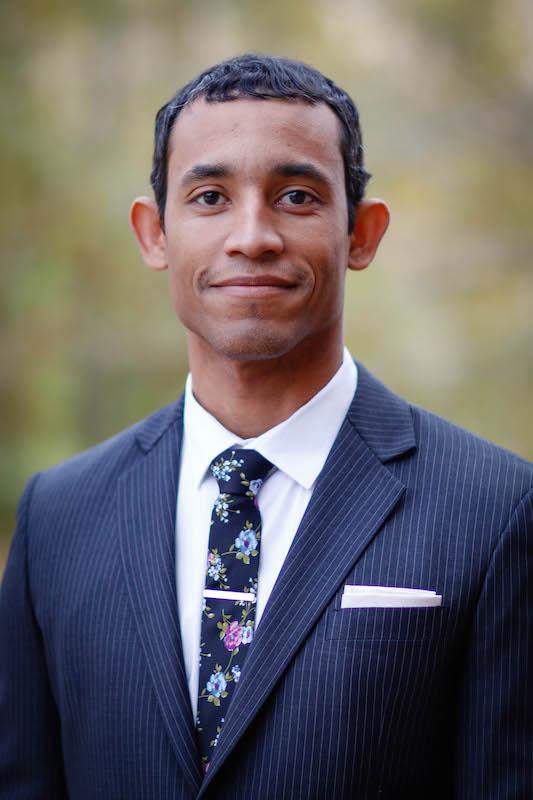
Chaveso "Chevy" Cook
is a Major in the U.S. Army and
co-founder and Executive Director of MilitaryMentors.org which allows him to uniquely serve others outside of the uniform.
His Army career started in the historic 82nd Airborne Division at Fort Bragg, NC. After selection and training for Army Special Operations, he transferred to Psychological Operations. Chevy has also been an instructor in the Department of Behavioral Sciences and Leadership at United States Military Academy (USMA).
During his military career he's deployed during "The Surge", the "Arab Spring", and the fight against ISIS in positions working with a wide variety of American embassies, assisting foreign militaries, and special operations task forces.
Chevy's education includes degrees from USMA (B.S. Psychology), the University of Texas-El Paso (M.A. Leadership Development), and Columbia University (M.A. Organizational Psychology). He is currently a Tufts University doctoral student, focusing his research on Human Development. He has spoken and been widely published on topics of character, leadership, organizational change, diversity, inclusion, innovation, mentorship, and other professional development topics.
Chevy has received many awards and instances of recognition for both his military and private work supporting others!
Meet Chevy Cook at the IMA International Conference 2021!
|
IMA PROFESSIONAL LEARNING SERIES
Monday, July 13, 2020 - 4:00 pm EST
Global Perspectives on Mentoring: Past, Present, and Future
Nathan Avani, Past President, IMA, Riza Kadilar, President, EMCC, Brenda Marina, President, IMA
Tuesday, August 4, 2020 - 11:00 am EST
Mobile Mentoring: Mentors and Mentees Crossing Distance and Time for Quality Support
Marsha Carr, University of NC at Wilmington, Edu-tell, LLC
Wednesday, September 16, 2020 - 11:00 am EST
Mentoring and the Mythological Need for the Other
Kwame Scruggs, Founder and Director, Alchemy, Akron, Ohio
Go to the IMA Website, www.mentoringassociation.org to register
for these future webinars!
Mentor On: Resilience, Rigor and Results
February 22-23, 2021
University of Florida, Gainesville, FL
|
|
|
|
|