May 1, 2026


About Us

Membership

Advocacy

Events

News


In This Issue:


  • IMPAC Board Endorses Candidates in Primary Election
  • AMA Unveils New Mental Health Parity Data Tool
  • CMS-HCC Risk Adjustment Alert!
  • Strategies to Navigate Payor Contracts Webinar - May 13th


IMPAC Board Endorses Candidates in Primary Election


The 2026 Idaho Primary Elections is nearly here! Polls will be open in all 44 Idaho counties from 8:00 am to 8:00 pm on Tuesday, May 19.


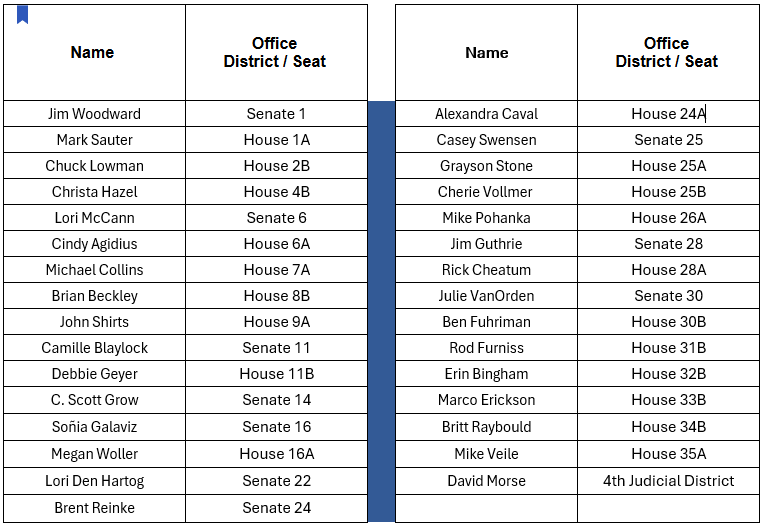
IMPAC, the Idaho Medical Association Political Action Committee, has endorsed candidates in races listed in the charts shown below.


Chaired by Bill Woodhouse, MD, the IMPAC Board determines endorsements based on a thorough review of the candidates' backgrounds and policy positions related to healthcare. For the 2026 primary, IMPAC only considered candidates with contested races.


Candidates who receive IMPAC support are "friends of medicine" and have established voting records or positions supportive of IMA priorities. Special consideration is often given to friendly incumbents and members of legislative committees with jurisdiction over healthcare-related areas.


Most importantly, don't forget to vote! Due to low voter turnout, many legislative races are often decided by a small margin. In 2024, one race was determined by just six votes. Every vote really matters!


To learn how to vote absentee, find a location to vote early, or determine your polling location to vote in person on May 19, click HERE.


AMA Unveils New Mental Health Parity Data Tool


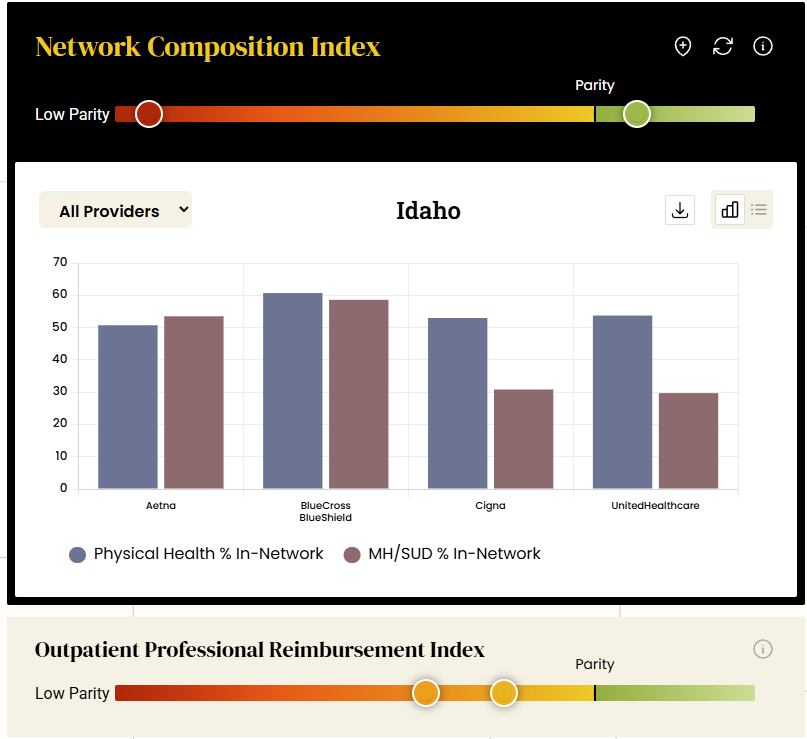
Washington, D.C. ~ A new tool provides the first look at real-time commercial insurer data on mental health and substance use coverage metrics. The Mental Health Parity Index raises the potential of widespread issues for patient access and clinician pay, which can mean longer wait times, higher out-of-pocket costs, and increased reliance on out-of-network care for individual seeking treatment. The Index was launched by The Kennedy Forum in collaboration with Third Horizon, the American Medical Association (AMA), the American Psychological Foundation, and Ballmer Group.


When benchmarked to Medicare payment rates, the majority of clinicians providing mental health and substance use disorder treatment are paid less than clinicians providing physical health treatment, potentially driving lower clinician participation in insurance networks.


  • Across the nation's four largest commercial health insurers, all 50 states have lower payment levels for outpatient mental health care and substance use disorder treatment than for outpatient physical health care.
  • On average, mental health care and substance use disorder treatment is paid between 16% to 59% difference from physical health care nationwide for the four major insurance networks analyzed.


While no insurance company achieves comparable parity metrics nationwide, some commercial networks were found to meet or exceed parity metrics in select states or counties. The data opens an opportunity for an informed and targeted conversation about why metrics differ across the plans and geographies. READ MORE

CMS-HCC Risk Adjustment Alert!


There has been significant and sustained increase in medical record requests to providers from Medicare Advantage (MA) insurers for risk adjustment, aimed at finding additional diagnoses to reflect higher patient "sickness" scores and maximize payments. This practice, often labeled as "chart review" or "chart harvesting," has led to accusations by oversight organizations such as the Office of the Inspector General (OIG) of MA insurers artificially inflating risk scores and, consequently, Medicare payments.


HCC Risk Adjustment is a statistical method used by CMS to adjust capitated payments to MA plans based on the health status and demographic factors (age, sex, etc.) of enrollees. It was designed to predict future healthcare costs, paying more for sicker patients to encourage care access, and was created as a way to help make sure doctors and other health providers are paid fairly for the people they treat by using the CMS-Hierarchical Condition Category (CMS-HCC) model to assign a risk score.


This risk adjustment model was never intended to be used in a way that inflates Medicare payments to MA plans. Oversight organizations such as the OIG are aware of payer noncompliance, as evidenced by reports published across multiple insurance carriers. One such report estimates that Priority Health received at least $4.4 million in net overpayments for 2018 and 2019 due to noncompliance with federal requirements.


The IMA has received inquiries from clinics regarding MA plans requesting different diagnosis codes than what seems appropriate. For example, one clinic received commonly missed HCC codes under "Medications for any patient on chronic: F11.XXX-Opioid use, dependence, or abuse; F13-20 - Anxiolytics, or sedatives (sleep meds); and F15.20-Stimulants (ADHD)." For a patient on long term (current) opioid management, the proper diagnosis is reported with Z79.891 as a medical treatment by a medical provider and not reported as F11.XXX-Opioid use, dependence, or abuse as a behavioral and mental health disorder. Per ICD10 guidelines, "Assign a code from Z79- if the patient is receiving a medication for an extended period as a prophylactic measure or as treatment of a chronic condition or a disease requiring a lengthy course of treatment." Codes in category Z79- are not used "for patients who have addictions to drugs." Similarly, patients on other long term medication management they listed would not be reported as sedative-dependent or stimulant-dependent as these are mental and behavioral health disorders.


We advise clinics to base their coding on the ICD10 guidelines and not to inflate them or misreport based on pressures from Medicare Advantage plans. Some of this pressure not only up-codes diagnoses, but it also labels patients with conditions that were not diagnosed by a provider and do not follow the appropriate ICD10 guidelines for reporting. We urge providers to follow all CMS, AMA, and ICD10 guidelines. Below are some basic ICD10 rules for appropriate diagnosis coding. When in doubt, please reach out to the IMA for guidance.


Diagnoses code selection:

  • Should be based on diagnoses managed and documented
  • Should be coded to the highest specificity
  • Should not be pulled from an active problem list, unless it is being addressed with history, exam, A/P, or indicated in the decision making
  • Should include all documented conditions that coexist at the time of the encounter and require management or affect patient care.
  • Should not include conditions that were previously treated and no longer exist


For more information, see:

Strategies to Navigate Payor Contracts


Join us on May 13th for this session from the 2026 IMA Education Series


This session provides a practical, high-level roadmap to understand and manage payor contracts:


  • Learn how to analyze claims and reimbursement data to pinpoint high-impact CPT codes, identify underpayments, and prioritize the most important areas of your fee schedule for negotiation.
  • Understand benchmarking approaches.
  • Review key "issue spotter" contract provisions.
  • Explore critical contract guardrails.
  • Understand the internal appeal and dispute-resolution process.


Presented by: Jana Weis, Principal, Gill Compliance Solutions and Guest Speaker Cameron McCue, Esq., Holland & Hart LLP

Audience: Coders, auditors, providers, and administrators who manage payor contracts

Date: May 13, 2026

Time: 12:15 - 1:15 (MST)


All registered attendees will earn 1 CEU credit for participation and completion of this education webinar

Facebook  Instagram  LinkedIn