|
The invention of the printing press by Johannes Gutenberg in the mid-15th century is one of the most significant milestones in human history, particularly in the context of storytelling and the dissemination of knowledge.
Johannes Gutenberg and His Invention
Background: Johannes Gutenberg was a German blacksmith, goldsmith, inventor, printer, and publisher. Born around 1400 in Mainz, Germany, he is best known for his development of mechanical movable type printing technology.
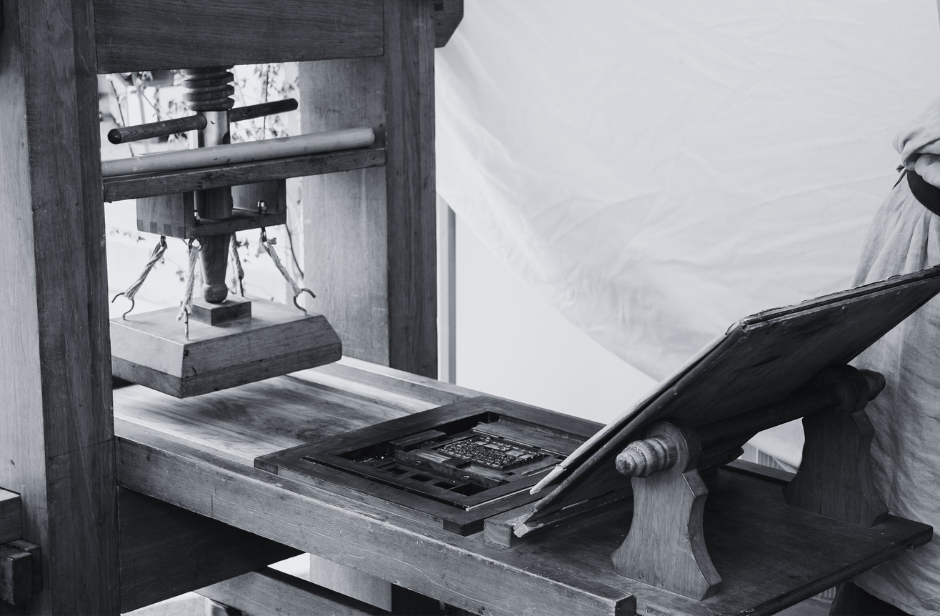
The Printing Press: Around 1440, Gutenberg conceived and developed the first printing press. His key innovation was the use of movable type – individual letters and characters could be arranged to form words and sentences, replacing hand-copying of texts.
The Gutenberg Bible: The first major book printed using mass-produced movable metal type in Europe was the Gutenberg Bible, also known as the 42-line Bible, completed around 1455. It marked the start of the age of the printed book in the west.
Impact of the Printing Press
Accessibility of Books: Prior to the printing press, books were primarily handwritten and extremely expensive. Gutenberg’s invention dramatically reduced the cost of producing books, making them more accessible to a wider audience.
Literacy and Education: The increased availability of books contributed to rising literacy rates and education levels. People from various social classes began to access knowledge that was once reserved for the elite.
Spread of Ideas: The printing press played a crucial role in the dissemination of new ideas and knowledge across Europe and, eventually, the world. It facilitated the spread of scientific, political, and philosophical thought.
The Reformation: Gutenberg's invention had a significant impact on religion, particularly in enabling the Protestant Reformation. Martin Luther’s Ninety-five Theses and other Reformation texts were widely printed and distributed, reaching a vast audience.
Cultural Renaissance: The Renaissance period benefited greatly from the printing press, as it allowed for the reproduction and sharing of classical works and contemporary art and literature.
Standardization of Languages: Printing led to the standardization of various languages as texts became more uniform, influencing the development of modern languages.
Legacy
A Precedent for Mass Media: Gutenberg’s printing press can be seen as the precursor to all modern mass media, from newspapers to digital publications.
Democratization of Knowledge: The invention democratized knowledge, breaking down the monopoly of the literate elite on education and learning.
Historical Significance: The Gutenberg printing press is often cited as one of the most important inventions of the second millennium, revolutionizing the way humans communicate and disseminate information.
Gutenberg’s printing press marks a pivotal point in the history of storytelling, transforming it from an oral and hand-copied tradition to a mass-produced and widely distributed form, thus reshaping the cultural and intellectual landscape of the world.
|