Volume 9, Issue 20│May 23, 2025 | | | The IOA office will be closed Monday, May 26 in observance of Memorial Day. | | |
State Optometry Board Tackles New Treatments, CE Audits, and Licensing Updates
At its recent meeting, the Illinois Optometric Licensing and Disciplinary Board addressed leadership changes, scope-of-practice issues, and preparations for the upcoming sunset of the Illinois Optometric Practice Act, scheduled to expire on January 1, 2027. Dr. Chelsey Moore was named the new board chair, with Dr. Melissa Suckow appointed vice chair; both will officially assume their roles at the next meeting. The board reviewed the use of Acthar Gel, a self-administered subcutaneous injection, and will gather additional information to determine whether it falls within the current optometric scope of practice. A Sunset Subcommittee was formed to draft proposed amendments to the Optometric Practice Act. The Illinois Optometric Association inquired about the vacant Optometric Coordinator position at the Illinois Department of Financial and Professional Regulation, previously held by the late Dr. D.R. Gordon. In addition, the board discussed updating licensure exam requirements to ensure inclusion of all NBEO parts and emphasized the need for more consistent enforcement of continuing education (CE) audits, particularly for licensees who fail to complete the required CE for licensure.
| | Click below for more information or to submit an nomination: | | |
Volunteers Needed for Special Olympics Lions Club International Opening Eyes Program Coming June 20 & 21, ISU Campus Normal, IL! 🚩
Volunteers Needed
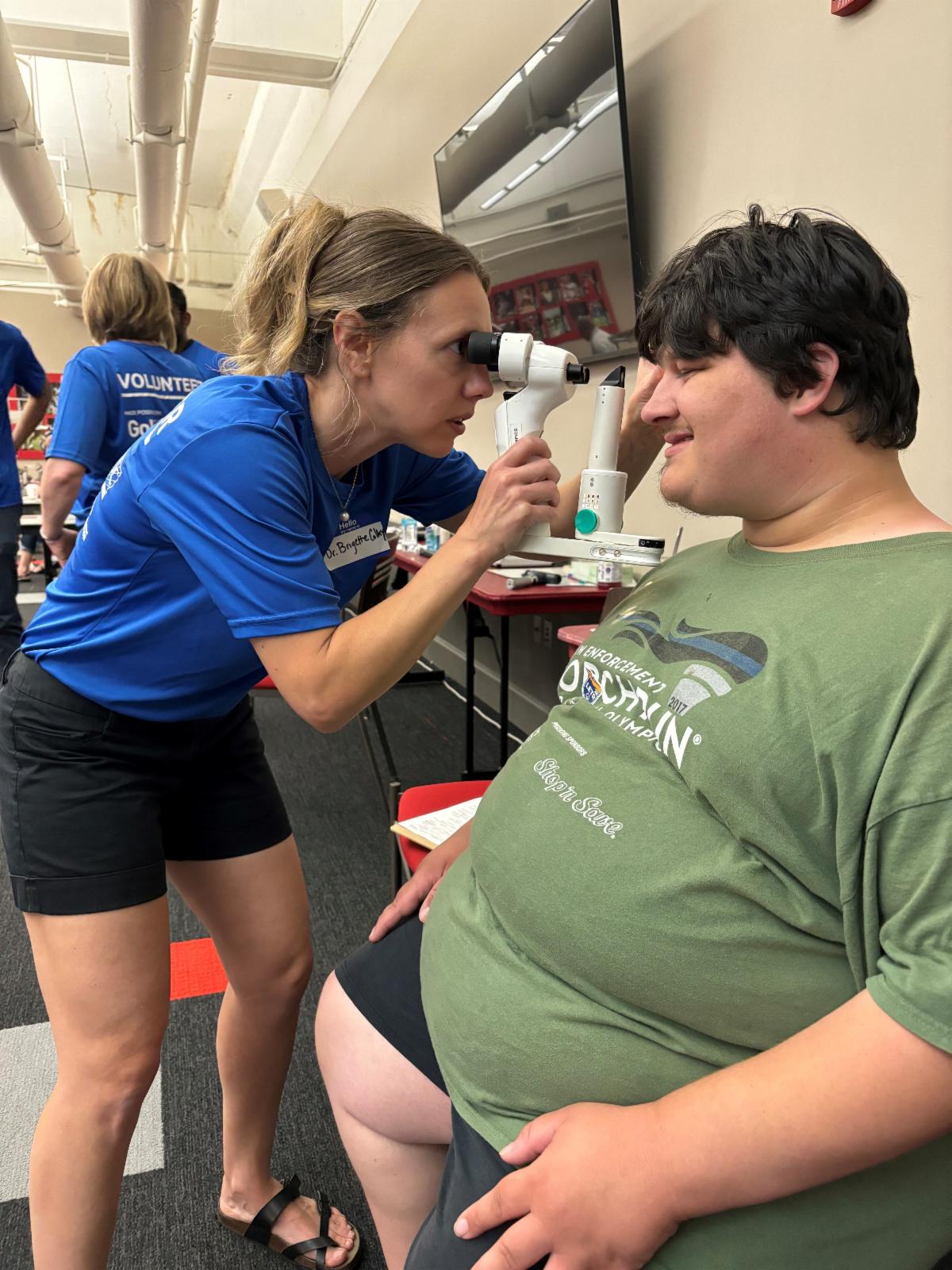
Last year was the twenty-first year that optometry was represented at the Illinois State Special Olympic Games held in Bloomington/Normal in June. 248 athletes were appraised at the event, and 127 pieces of eyewear were prescribed, whether it be an everyday Rx, or a sports goggle. The event was a great success for both the athletes who participated and the volunteers who made it run so smoothly!!
This year we will be doing it again, and we need your help! We had 15 optometrists, 4 opticians/ophthalmic techs, and students from both the Illinois College of Optometry and the Chicago College of Optometry. We also had a great turn-out of LIONS club volunteers along with many friends and family members. This year we need you! Of particular need are volunteers for Saturday, since it is a full day of screening. Bring your family, friends, and staff and make it a group activity!! We are always in need of opticians and optical technicians as well!
This year’s event will take place on the Illinois State College Campus in Bloomington/Normal on Friday, June 20 from 12:00 – 4:00 pm, and Saturday, June 21 from 8:00 am – 4:00 pm. Friends, family, and optometric staff (especially opticians) are encouraged to participate. Please help us in making this year’s SOOE program as successful as the past twenty-one years have been!!
If you have any questions, please contact Christine Allison, O.D. via email at callison@ico.edu
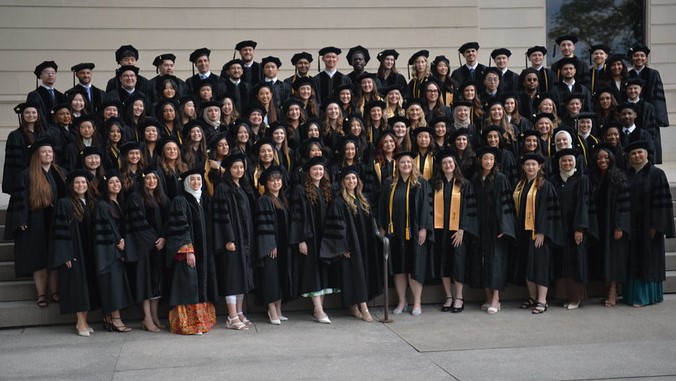
| | CONGRATULATIONS 2025 GRADUATES! 🎉📜 | | Over the weekend ICO held its commencement ceremony where fourth year students officially became Doctors of Optometry. | | SCO also held their commencement ceremony in Memphis where they presented 129 diplomas to the class of 2025. | | Earlier this month, IU School of Optometry proudly celebrated its commencement ceremony for the 2025 graduating class. | | |
NEW MEMBER BENEFIT: ER Triage Course
The ER Triage Courses are offered FREE for IOA Members. The goal is to enhance care for patients across Illinois.
Training Catalogue consists of many topics including:
- Recommended equipment
- Conjunctivitis
- Corneal conditions
- Double vision
- Vision loss
- Flashes & Floaters
| | The Eyes on Tomorrow Fund, previously known as the Legislative Equity Fund, is a dedicated resource created by and for optometrists to support the Illinois Optometric Association’s (IOA) state-level advocacy efforts. This fund directly empowers optometry’s fight for scope expansion, the regulation of Vision Benefits Managers (VBMs), and other legislative battles crucial to protecting the profession and ensuring patient care. Unlike political action committees (PACs), this fund is not used to support candidates but instead provides critical resources for advancing optometry in Illinois. | | | |
Thank you PAC donors!
Caitlyn McHugh-Glab, OD
North Suburban Society
| | |
The PAC (Political Action Committee) is a group organized to promote its members' views on selected issues, usually through raising money that is contributed to the campaign funds of candidates who support the group's position to keep our friends in office. Now more than ever, we need strong, principled leaders who will fight for equal rights, and access to essential services —Will you pitch in today to help us protect our profession and the patients we serve?
Contributions to the IOA PAC can be made as a One-Time Donation or as Recurring Monthly Donation and deducted automatically from donor's bank account or charged to their credit card. Selecting to contribute a set amount on a monthly basis is a painless and effortless way to contribute to and support the IOA PAC. Contributions to the IOA PAC fund are not deductible for federal income tax purposes.
| | |
|
We want to hear from YOU!
Do you have a business question or a dilemma we can answer for you? Others may have the same inquiry. Ask away! We will answer your question in an upcoming issue.
(Don't worry, we won't include your name.)
| | |
Eye care practitioners should report all violations of the FCLCA, including instances in which contact lens sellers fail to comply with the prescription verification provisions of the law.
| | |
Medicaid in Illinois: What Federal Cuts to Medicaid Funding Could Mean for Illinoisians
Civic Fed | By Daniel Vesecky
May 19, 2025
Over 3.4 million Illinois residents were enrolled in Medicaid healthcare coverage in Fiscal Year 2024 (FY2024). Of those, 44% were children, 9% seniors, and 7% adults with disabilities. Of those 3.4 million, over 772,000 (23%) are adults who received coverage through the Affordable Care Act.
Potential Medicaid Cuts Under Consideration
Congress has considered a wide variety of potential cuts to Medicaid since the new federal administration took office in January 2025, including:
- Reducing the FMAP contributions for traditional Medicaid and/or the ACA expansion;
- Instituting work requirements for Medicaid enrollees;
- Instituting per capita limits on reimbursements spending growth;
- Limiting taxes on healthcare providers, which states typically use to generate their share of Medicaid funding.
Any of the above proposed measures would immediately cause a significant number of Illinoisans to lose Medicaid coverage. Of particular concern is the threat of reducing the FMAP contributions for both traditional Medicaid and ACA Medicaid Expansion. Illinois’ “Trigger Law,” passed in 2013, mandates that the State end the Medicaid ACA expansion program if the federal government’s share of funding (FMAP contribution) falls below 90%. This means that reduction to the ACA Medicaid FMAP contribution would result in the shuttering of Illinois’ Affordable Care Act coverage, which insures over 772,000 adults. If, on the other hand, the State repeals this law and then funds the ACA Expansion beneficiaries at the lower traditional Medicaid FMAP (from 90% to 51%), to keep these individuals covered would cost $3.2 billion annually. The State of Illinois presently lacks the revenue stream to meet this additional cost.
The second potential change, work requirements for non-senior adults, would not directly reduce federal Medicaid funding to the state, but it would cause many currently insured people to lose their coverage, either by not meeting the requirement or due to administrative burdens. The Center on Budget and Policy Priorities estimates that up to 1.35 million Illinoisans would be required to fulfill work requirements and could be at risk of losing Medicaid coverage. Previous implementations of work requirements in other states suggest that many of those enrollees who meet the work requirements—meaning enrollees who are actually working—nevertheless lose their coverage simply due to burdensome and confusing administrative requirements.
Turning to potential per capita caps, Congress has discussed proposals to cap federal reimbursements for Medicaid spending growth per enrollee at medical inflation. This would cause states to incur increasing costs over time as spending diverges from the reimbursement caps. Medicaid spending increases during periods of high unemployment or as state policymakers add healthcare benefits that Medicaid will cover. The Illinois Department of Healthcare and Family Services estimates that under such caps, it would lose between $24 and $39 billion in Medicaid funding from 2026 through 2034, which comes to $2.7-$4.3 billion annually. To compensate for funding losses due to these caps, the State would likely be forced to reduce benefits for the most vulnerable beneficiaries of Medicaid, including the disabled, seniors, children, and pregnant women.
Finally, provider taxes, which Congress is considering limiting, currently generate about $4.1 billion in annual revenue for Illinois’ Medicaid program. This revenue comes from taxes on hospitals, nursing facilities, and other healthcare providers. The State then uses this tax revenue to fund Medicaid services, sending payments back to the same institutions it taxed in order to generate additional federal support. Importantly, it also uses the tax revenue, with the federal match, to increase the notoriously low reimbursement rates paid to the taxed healthcare entities, making it more possible for healthcare providers to offer their services to Medicaid beneficiaries. Because of how the FMAP contribution structure works, the $4.1 billion the State receives in tax revenue on providers then generates over $6 billion in additional federal funding. In total, this leads to a maximum of approximately $10.4 billion in Medicaid spending made possible in Illinois by provider tax revenue. If these taxes are restricted or eliminated, the State will not only lose the $4.1 billion in tax revenue, but also the associated federal matching funds—resulting in even more significant cuts to funding.
| | |
Sens. Durbin and Duckworth Question Prime Healthcare After Changes to Illinois Hospitals
Chicago Tribune | By Lisa Schencker
May 20, 2025
Sens. Dick Durbin and Tammy Duckworth are questioning a California-based health system that recently bought eight Illinois hospitals, after cuts to services at several of those locations.
The senators sent a letter to Prime Healthcare founder, chairman and CEO Dr. Prem Reddy on Tuesday expressing concern about the changes and asking him to answer questions about the health system’s plans.
“Prime Healthcare has only operated these eight Illinois hospitals for two months, and there are already profound concerns about patients losing access to care,” the Senate Democrats wrote in their letter.
They also urged Prime “to immediately reconsider these decisions, as the consequences of these reductions hold the potential to strip patients of critical and specialized care, impose additional barriers to accessing care, and exacerbate the existing health care needs in the communities these hospitals serve.”
Prime said in a statement it shares the senators’ goal of ensuring access to quality heathcare.
“Our highest priority is ensuring both quality and access, with low volume services not able to consistently deliver quality while not addressing community needs,” the statement said.
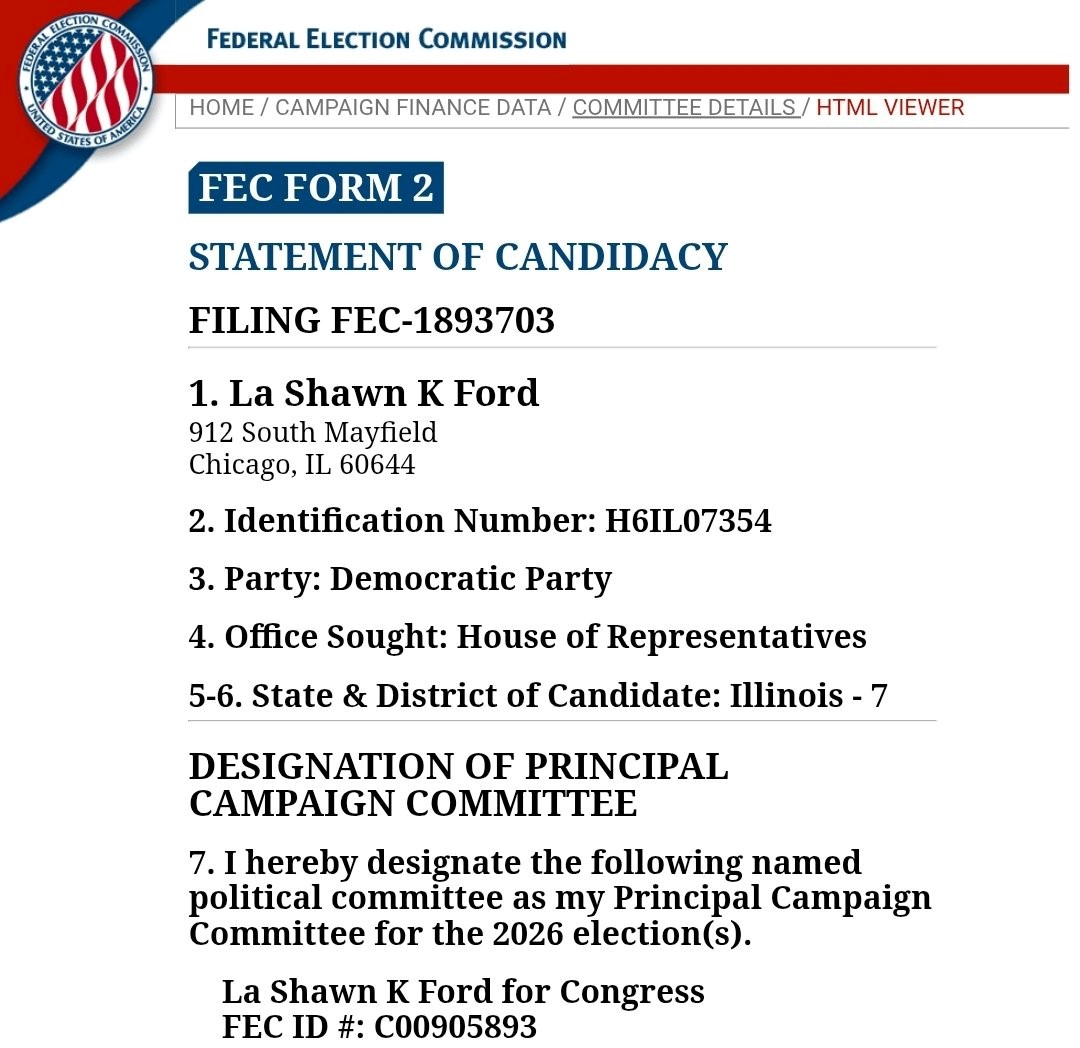
| | State Rep Ford to Run for US Rep Danny Davis’ Seat | | IL State Rep. LaShawn Ford has filed his statement of candidacy to run for Congress. The seat is currently held by U.S. Rep Danny Davis who has not yet announced if he will seek reelection in 2026. | | |
Raoul Rails Against Federal Effort to Restrict State Regulation of AI
Health News Illinois | By Ryan Voyles
May 19, 2025
Illinois Attorney General Kwame Raoul joined dozens of colleagues across the political spectrum last week to urge Congress not to restrict the state’s abilities to regulate artificial intelligence.
The 39 attorneys general called on the four legislative leaders to oppose a provision passed in the House’s Energy and Commerce Committee’s amendment to the budget reconciliation bill that would impose a 10-year prohibition on states from enforcing any state law or regulation addressing artificial intelligence and automated decision-making systems.
The coalition said that the absence of federal leadership has forced state legislatures and attorneys general to be at the “forefront of ensuring AI is not abused and that consumers are protected.” Those state proposals have been developed through stakeholder input from consumers, industry experts and advocates.
“I urge Congress to reject this amendment because states need the flexibility to respond to these new and emerging threats posed by the rapid advancements in AI technology,” Raoul said in a statement.
The federal proposal comes as Illinois lawmakers consider legislation that would regulate how health insurers use artificial intelligence to decide coverage and whether to deny care.
The plan passed the House last month and awaits action in the Senate.
| | |
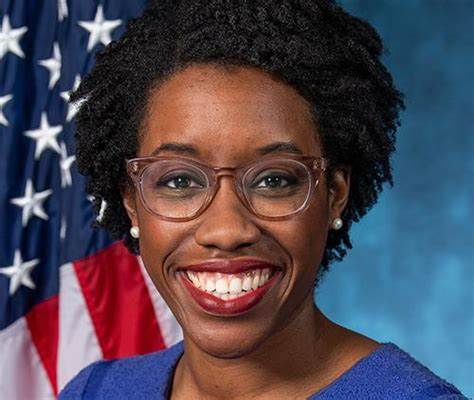
Rep. Lauren Underwood Says She Won't Seek Dick Dubin Senate Seat
— After weeks of speculation, Rep. Lauren Underwood announced Monday she won’t seek Sen. Dick Durbin’s Senate seat and instead will seek reelection to the House.
Chicago Sun Times | By Tina Sfondeles
May 19, 2025
Capping weeks of speculation, Rep. Lauren Underwood on Monday said she won’t seek Sen. Dick Durbin’s Senate seat.
“When I reflected on the way that I could best serve families in Illinois and around the country, I really decided to stay in the House of Representatives and leadership and to help the DCCC (Democratic Congressional Campaign Committee) as we seek to reclaim the majority,” Underwood told CNN’s Kasie Hunt.
Underwood, 38, took office in 2019, representing Illinois’ 14th Congressional District. She serves in House leadership and as a member of the House Appropriations Committee. She also serves as DCCC Recruitment Co-Chair and will play a leading role in helping Democrats try to flip the house in next year’s elections.
Underwood would have joined an already crowded and competitive Democratic primary contest to succeed Durbin, who last month said he wouldn’t seek another term. Reps. Raja Krishnamoorthi and Robin Kelly and Lt. Gov. Juliana Stratton have already declared candidacy.
| |
FDA Officials Detail Plan to Limit COVID Shots
— New policy moves toward a risk-based approach
MedPage Today | By Kristina Fiore
May 20, 2025
FDA officials have outlined their new approach to COVID-19 vaccine approvals, allowing immunogenicity endpoints for high-risk groups, while calling for randomized controlled trials for those at lower risk.
FDA Commissioner Marty Makary, MD, MPH, and Center for Biologics Evaluation and Research Director Vinay Prasad, MD, MPH, detailed the new framework in a "Sounding Board" piece in the New England Journal of Medicine.
The agency will allow immunogenicity data to approve COVID shots for adults ages 65 and up, and for all people 6 months and up who have one or more risk factors for severe disease, Makary and Prasad wrote.
However, randomized controlled trials will be recommended for those ages 6 months to 64 years who are considered healthy. The agency will "encourage" these trials as part of a postmarketing commitment for approvals in high-risk groups.
The ideal population for these trials is 50- to 64-year-olds, as there's "equipoise about yearly boosters" for this group, Makary and Prasad wrote. The preferred primary endpoint will be symptomatic COVID. In addition, controls should receive a saline placebo, people who've had COVID in the last year shouldn't be excluded, and trials should run for 6 months, they noted. Secondary endpoints will include severe disease, hospitalization, and death.
During an FDA livestream on Tuesday afternoon, Prasad clarified that people who've had COVID in the last 3 months could be excluded, "but they do need to include people who've had COVID 8 or 9 months ago."
He also called for at least a 30% reduction in the primary outcome of symptomatic illness because "we want to have some confidence" that the vaccines change this in "a meaningful way."
In addition, he noted that regulators won't ask manufacturers "to power the study for those [severe disease secondary] endpoints, because that will make the study very, very large. But we are looking at those endpoints, and I think when we get the results of this study, doctors could look at it and interpret it as they see fit."
Makary and Prasad noted that the pathway ensures timely access to a broad population, since the list of comorbid conditions is long, with an estimated 100 to 200 million Americans having access to COVID shots.
| | |
Trump's Big Tax Bill Has Passed the House. Here's What's Inside It.
NY Times | By Margot Sanger-Katz, Andrew Duehren, Brad Plumer, Tony Romm, and Catie Edmondson
May 22, 2025
Scaling back Medicaid
The bottom line: The bill makes major changes to reduce the cost of the health insurance program for the poor and disabled. The centerpiece of those efforts is a strict work requirement for childless adults without disabilities, which would require beneficiaries to document 80 hours of monthly work, or prove they qualified for an exception, or else risk losing their benefits. Those new rules would have to take effect by the end of 2026, after the next midterm election, though states could opt to adopt them sooner.
House leaders moved up the implementation date, originally slated for 2029, at the behest of fiscal hawks who demanded larger cuts. But the new timetable may be hard for some states to hit.
More immediately, the legislation would make it easier for states to cancel people’s coverage by allowing them to increase paperwork requirements and drop those who don’t respond to requests to verify their income or residency. It also would require states to impose co-payments for a wide array of medical services for adults on Medicaid who live above the poverty line, a policy some Democrats described as a “sick tax.”
Another provision would reduce Medicaid funding to states that use their own tax revenues to provide health coverage to undocumented immigrants, a change that could affect financing for 12 mostly Democratic-controlled states. The legislation would bar Medicaid from providing funding to Planned Parenthood as long as the organization continued to provide abortions, and would bar Medicaid from covering gender affirming health care to any beneficiaries. And the bill would limit strategies that states have developed to tax medical providers and pay them higher prices for Medicaid services.
Before the last-minute changes, the Congressional Budget Office estimated that the Medicaid changes would cause 7.6 million more Americans to be uninsured at the end of a decade, while reducing federal spending on health care by more than $800 billion. That estimate will be updated as the office continues to analyze the final bill text.
Changes to Obamacare
The bottom line: The law makes numerous changes to the functioning of the Obamacare marketplaces and the financing of tax credits that help people who use it buy insurance. Those changes will save the government more than $100 billion, but will result in millions of Americans becoming uninsured if they fail to adhere to new paperwork requirements or can no longer afford insurance premiums. Because the budget office score is not final and does not include last-minute changes, the precise effects have not been calculated.
Last-minute revisions to the bill also would fund a canceled set of Obamacare payments for insurers known as cost-sharing reductions. The change will lower the value of subsidies and make insurance more expensive for many purchasers, reducing federal spending overall. It also prevents health plans that receive the funding from offering coverage for abortions, which could change benefit packages and conflict with laws in numerous states.
Cutting taxes
The bottom line: The heart of the bill is a roughly $4 trillion tax cut that would lock in many of the tax cuts Republicans passed in 2017, including lower marginal income rates, a larger standard deduction and a higher threshold for the estate tax, with some tweaks.
The measure also includes several new, temporary tax cuts that Mr. Trump campaigned on, including his promises not to tax tips or overtime. His pitch not to tax Social Security benefits takes the form of a bonus $4,000 deduction available to Americans 65 and older, with the benefit shrinking at higher income levels. Americans would also be able to deduct interest on car loans from their taxable income, though the car has to be made in the United States.
The reductions would last only through 2028, as would a $1,000 addition to the standard deduction and a $500 bonus to the child tax credit, which now maxes out at $2,000. Children born between Jan., 1, 2025, and Jan. 1, 2029 would receive $1,000 deposited in a so-called “Trump account” that is invested in the stock market.
Businesses would receive several tax cuts, including valuable deductions for research and investment spending, as well as a new tax break for building factories. A deduction available to the owners of many businesses would become slightly more generous and be extended indefinitely.
The bill also would hike taxes on universities, as well as some noncitizens and their families. A tax on the investment income that university endowments earn would rise substantially, from 1.4 percent to as high as 21 percent. Immigrants authorized to live in the United States — but who are not citizens or green card holders — would be barred from receiving tax credits covering the cost of health insurance premiums. And tighter eligibility rules for the child tax credit would take the benefit away from roughly 2 million children.
The sticking points: The biggest problem for the tax plan in the House was the state and local tax deduction. Under pressure from Republicans from high-tax states like New York, who demanded a higher cap, the final bill would quadruple the current $10,000 limit to $40,000. The cap would shrink for people making more than $500,000.
| |
House Bill And Student Loans: How Trump’s Policy Plan Could Disqualify Some and Increase Payments
Forbes | By Alison Durkee
May 22, 2025
Key Facts
-
The domestic policy bill—referred to as the president’s “One Big Beautiful Bill”—passed the House in a 215-214 vote early Thursday morning following overnight debate on the sweeping legislation.
- The bill—which could still change in the Senate—would extend the 2017 tax cuts passed in Trump’s first term and direct billions of dollars toward major priorities of the president’s policy agenda, like renewing funding for a border wall between the U.S. and Mexico.
- As a way to offset its tax cuts and Trump-friendly spending, the bill also includes controversial cuts to Medicaid and food assistance—and broadly overhauls federal student loan programs, affecting both people who take out loans and those still paying off loans.
-
The bill abolishes most loan repayment plans and only gives borrowers—including current borrowers—two options for paying their loans off, either through a standard repayment plan (paying the same amount every month) or a new plan based on annual income.
- It also imposes limits and restrictions on new loans and Pell Grants.
Student borrower advocates have strongly decried the bill’s provisions, with the Student Borrower Protection Center (SBPC) projecting it would disqualify many borrowers who now receive Pell Grants, force more borrowers to take out private loans due to the new federal limits, and increase monthly payments for many existing borrowers who are paying down their loans.
Trump’s Bill Changes How Student Loan Amounts Are Calculated
The bill proposes changing the formula for how much the federal government grants borrowers. Loans would now be calculated based on the median cost of all similar college programs, rather than the cost to attend the specific school or program the student is attending. (It is unclear how that number will be calculated.) That means students attending higher-priced schools will receive less money, because the rate will take into account other schools that are less expensive.
Trump’s Bill Imposes New Maximum Borrowing Limits
The bill places new caps on the amount of federal student loans that both parents and students can take out, limiting it to $50,000 in total undergraduate loans that a student can take out and $100,000 or $150,000 for graduate and professional programs, based on the type of program. Parents are also limited to only taking out $50,000 total in federal loans to pay for their children’s education, which applies even if parents are taking out loans for multiple children. Students and their parents cannot borrow more than $200,000 in total—including both undergraduate and graduate loans—under the bill, with those limits set to take effect in July 2026.
The Plan Cuts Some Loan Eligibility
Lawmakers propose limiting some federal loans, including restricting graduate students and parents from receiving Federal Direct PLUS Loans starting in July 2026.
Trump’s Policy Bill Gets Rid Of Most Student Loan Payment Plans
If passed, the bill would abolish most of the current options that borrowers have to repay their student loans, instead giving borrowers—including those who have already been paying off loans—the choice of only a standard repayment plan or a new Repayment Assistance Plan (RAP) based on annual income. The standard repayment plan means borrowers will pay back their loan at a fixed rate each month. Loans of up to $25,000 will be paid over the course of 10 years, loans of up to $50,000 will be paid over 15 years, loans of up to $100,000 will be paid over 20 years and loans over that amount will be spread out over 25 years. RAP replaces existing income-driven repayment plans, but still allows borrowers to make their monthly payments based on income. Borrowers pay rates based on their annual income, which range from $120 per year for those making less than $10,000 (divided up into $10 monthly payments) to 10% of gross annual income for those making over $100,000. Unlike previous income-based plans, RAP allows borrowers’ remaining loans to be forgiven after 30 years of making payments—up from 20 or 25 years under current plans—and has a minimum payment of $10 each month, while low-income borrowers can now qualify for $0 repayments.
Trump’s Bill Changes Forbearance And Deferring Payments On Student Loans
Trump’s policy bill gets rid of current rules that allow borrowers to temporarily have their loan payments deferred due to unemployment or economic hardship, which will apply to borrowers who take out loans starting in July 2025. It also places new limits on forbearance—a temporary pause on loan payments—which states loans can’t be in forbearance for more than 9 months during any 24-month period. The bill does help borrowers by allowing them to now rehabilitate their loans twice, rather than once. That refers to when borrowers can get out of being in default on their loans by making a certain number of on-time payments under a rehabilitation agreement.
Who Will The Changes To Student Loan Payment Affect?
The new provisions on loan repayments will apply to all borrowers who are still repaying their debt, though existing borrowers can still defer payments due to economic hardship, and count those months in which payments were deferred toward their 30 years of payments before loans are forgiven. The bill text states RAP would take effect on July 1, 2026, though it also directs the Secretary of Education to start transitioning to the new payment policies within nine months of the bill being enacted into law.
Potential Impacts Of The Trump Policy Bill
The restrictions on new federal student loans could force more students and parents to turn to private lenders, which currently make up less than 10% of all student loans issued. Private loans have many disadvantages as compared with federal ones, as they typically have higher interest rates, are not eligible for income-based repayment plans and don’t offer forgiveness programs. SBPC also projects RAP will broadly increase borrowers’ payments as compared with previous Biden-era income-based payment plans designed to help borrowers make lower payments. The average borrower with a college degree will pay $2,928 more per year than under the Biden-era SAVE plan, SBPC estimates, and the bill also means borrowers will spend longer paying off their loans than they would under current rules.
Trump’s Policy Bill Adds Restrictions For Pell Grants
The policy bill states students can’t receive Pell Grants if they’re enrolled in school less than half time and raises the necessary number of credits taken per year from 24 to 30. It also disqualifies students from Pell Grants if their student aid index—a number demonstrating a student’s financial need, based on their families’ financial resources and expenses—is at least twice the maximum Pell Grant given that year. These changes could mean more than 61% of recipients could lose their grants or have them reduced, according to SBPC, noting that it will affect many low-income students who are attending school in their spare time, and families that might have a high aid index, but have higher expenses from putting multiple children through school. The bill also establishes a new Pell Grant program for short workforce training programs, which must be less than 15 weeks long and either lead to a postsecondary certification or is recognized by a state’s governor as aligning with a “high-skill, high-wage” or “in-demand” job or industry.
Big Number
42.5 million. That’s the number of borrowers with outstanding federal student loan debt as of the second quarter of 2025, according to the Department of Education.
Key Background
Student loan debt has become a key political issue over the past few years, as Democrats have fought for loan forgiveness and the Biden administration sought to provide sweeping debt relief, only to have Republicans challenge it in court and the Supreme Court strike it down. While the Biden administration still made numerous piecemeal moves to forgive Americans’ debt, the Trump administration has not followed suit, with Education Secretary Linda McMahon saying in April that “American taxpayers will no longer be forced to serve as collateral for irresponsible student loan policies.” Trump has ordered the student loan portfolio to move under the Small Business Administration as he seeks to abolish the Department of Education, and he has also sought to restrict loan forgiveness for public servants so that it excludes employees working at organizations that are opposed to his policy agenda. Most notably, the Trump administration resumed debt collections May 5 for borrowers who have defaulted on their student loans, after collections had previously been on pause since the COVID-19 pandemic. The move is expected to impact millions of borrowers who haven’t paid their loans for approximately nine months, and the Trump administration intends to garnish a portion of workers’ wages if their loans remain unpaid.
| | |
DOJ Suit Against Medicare Plans, Brokers Leaves Consumers Unsure
Bloomberg Law | By Tony Pugh
May 20, 2025
Allegations that Medicare managed care plans paid hundreds of millions of dollars in illegal kickbacks to insurance brokers that help enroll people into coverage have renewed concerns about whether the intermediaries act in the best interests of beneficiaries and new enrollees as required by federal law.
A recent Justice Department lawsuit claims that from 2016 to 2021, leading Medicare Advantage insurers CVS Health Corp., Elevance Health Inc., and Humana Inc. illegally paid insurance brokers eHealth Inc., GoHealth Inc., and SelectQuote Inc. to steer beneficiaries into their respective plans.
The government action comes amid a legal battle to scrap court-delayed provisions of a 2024 US Department of Health and Human Services rule that capped and restricted MA plan payments to agents, brokers, and third-party marketing organizations. The rule (RINs 0938-AV24 and 0938-AU96) was designed to thwart the kind of improper payments alleged in the DOJ complaint.
“Brokers repeatedly directed Medicare beneficiaries to the plans offered by insurers that paid them the most money, regardless of the quality or suitability of the insurers’ plans,” said the DOJ suit, which was initiated by a whistleblower. “They incentivized their agents to sell those plans,” and “at times ‘shut off,’ or refused to sell, plans of insurers who did not pay or did not pay enough in kickbacks.”
In press releases and statements, the defendant MA insurers and brokers have disputed the allegations and said they intend to fight them in court.
| | |
Check out the newest IOA classifieds here!
ODs Wanted:
Northern IL:
Small, Private Practice in Morris, IL seeking Part-Time OD (Read more)
OD Needed for Summer Maternity Leave (Read more)
Pediatric Optometrist Wanted, Full or Part-time (Read more)
Part time OD Needed at Medically Based Practice (Read more)
Chicago:
Optometrist Needed for Maternity Leave Coverage (Read more)
Permanent Part-Time Associate OD Needed (Read more)
In Focus Eyecare Part Time, 1-4 Permanent Days or Fill in (Read more)
Optometrist - Part-Time/Full-Time, Private Practice - Chicago Heights (Read more)
Part-time OD Needed at Small Private Practice (Read more)
Full- Time OD Needed Burbank & Willowbrook, IL (Read more)
Part-Time OD Needed in Oak Park (Read more)
Full-Time optometrist Needed at Morrison Eyecare in Chicagoland (Read more)
OD Needed at Northwest Eye Center (Read more)
Looking for extra $$$, OD needed 1-2 days a week (Read more)
Looking for 2 optometrists in Buffalo Grove & Schaumburg offices (Read more)
Central IL:
Mobile OD Needed for Senior Living Facilities (Read more)
Mobile Optometrist Needed (Read more)
Part-Time Optometrist Opportunity with Full-Time Potential – Private Practice (Read more)
OD needed in Decatur & Mt. Zion offices (Read more)
Springfield Clinic is seeking additional Optometrists to join its Eye Institute (Read more)
Southern IL:
Mobile OD Needed for Senior Living Facilites (Read more)
Part-Time to Full-Time Opportunity at Metro Eye Care (Read more)
Full Time Opening in Swansea IL, Metro East 20 minutes from St. Louis (Read more)
Optometrist Needed in Olney, IL (Read more)
OD Needed in Terre Haute (Read more)
Out of State:
FT Optometrist Needed in Kenosha, Wisconsin (Read more)
OD Needed in Door County, Wisconsin (Read more)
Associate OD in Thriving Michigan Practice (Read more)
Immediate Opening for OD in Wisconsin (Read more)
Practices for Sale:
Practice for Sale on the Fox River (Read more)
Practice for Sale in Oak Park (Read more)
Practice for Sale in Rock Island County (Read more)
Northwest Suburb of Chicago Practice for Sale (Read more)
Equipment for Sale:
Selling equipment that is in great condition (Read more)
| | THANK YOU TO OUR INDUSTRY PARTNERS! | |
Illinois Optometric Association
217-525-8012
| | | | | |