|
IPAC Uplink Newsletter
December 2025
| | |
I was happy to start as the new Executive Director in late May of 2025, and I thank George Helou and the IPAC staff for making IPAC so valuable to the community and such a great place to work. The 2026 federal budget uncertainties have given us challenges, and I'm confident we are up to the task of making good progress nevertheless.
IPAC celebrated many successes over the past year. The SPHEREx NASA MIDEX mission launched and the Euclid Q1 data were released in March. SPHEREx has gone on to map the entire sky, over 20 TB of Euclid data were downloaded from the Euclid NASA Science Center at IPAC (ENSCI), and we operated the ZTF data system for another year in 2025. We also supported the release of the first Rubin Observatory images with our Firefly Science User Interface and Tools for the Rubin Science Platform. We are also developing science operations components and data reduction pipelines for the upcoming Roman Space Telescope (2026 launch) and NEO Surveyor (2027 launch) missions, all the while adding data and improving services of IRSA, NED, and NExScI.
Read more.
| | | | George Helou stepped down from his role as Executive Director after 25 years in the position and transitioned to being a Senior Science Advisor. George led and grew IPAC tremendously while he was Executive Director, and all in all served IPAC for over four decades. Chas Beichman also stepped down as the NExScI Executive Director in December but remains on the NExScI staff. David Ciardi stepped up to be the acting NExScI Executive Director. George and Chas have been exceptional leaders and contributors at IPAC, and this is truly the end of an era. Former IPAC Deputy Director Roc Cutri and several other long-time IPACers also retired. Since the beginning of July we have filled nine positions with people who either joined IPAC afresh or with existing staff who transitioned to new roles. | | IPAC at the 247th Meeting of the American Astronomical Society in Phoenix, Arizona, January 4–8, 2026 | | |
The Sixth Lyot Conference: The Spirit of Lyot
February 2–6, 2026 • Pasadena, CA
| | |
This conference will address recent advances in the field of exoplanet research and will feature instrumentalists whose innovations push the field forward, together with the scientists who utilize those capabilities to better understand exoplanets, circumstellar disks, stellar outflows, and AGN. Topics will include high-contrast imaging space missions, mission concepts, instrumentation and technology developments, exoplanet imaging and spectroscopy, circumstellar disk imaging, theory and modeling, exoplanet atmosphere modeling and biosignatures, and image processing, with a special emphasis on the capabilities offered by JWST, and future observatories such as Roman, ground-based ELTs, and the HWO.
Registration deadlines: in-person January 16, 2026, virtual January 30, 2026
| | |
RAPID Response:
Hot-wiring the Next Generation of Time-Domain Science
March 23–27, 2026 • Hameetman Auditorium, Caltech
| | |
This meeting, hosted by the RAPID Project Infrastructure Team at Caltech, will be both science- and infrastructure-focused. The goal is to discuss the software infrastructure needed to pursue breakthrough science enabled by low-latency alerts, multi-wavelength/messenger discovery, machine learning, and science platforms/alert brokers/marshals. The science topics in the meeting will focus on relativistic explosions, stellar variables, supermassive black hole transients, IR/"gap" transients, and supernovae.
Abstract deadline for contributed presentations and posters: January 14, 2026
Registration deadline (in-person and virtual): March 22, 2026
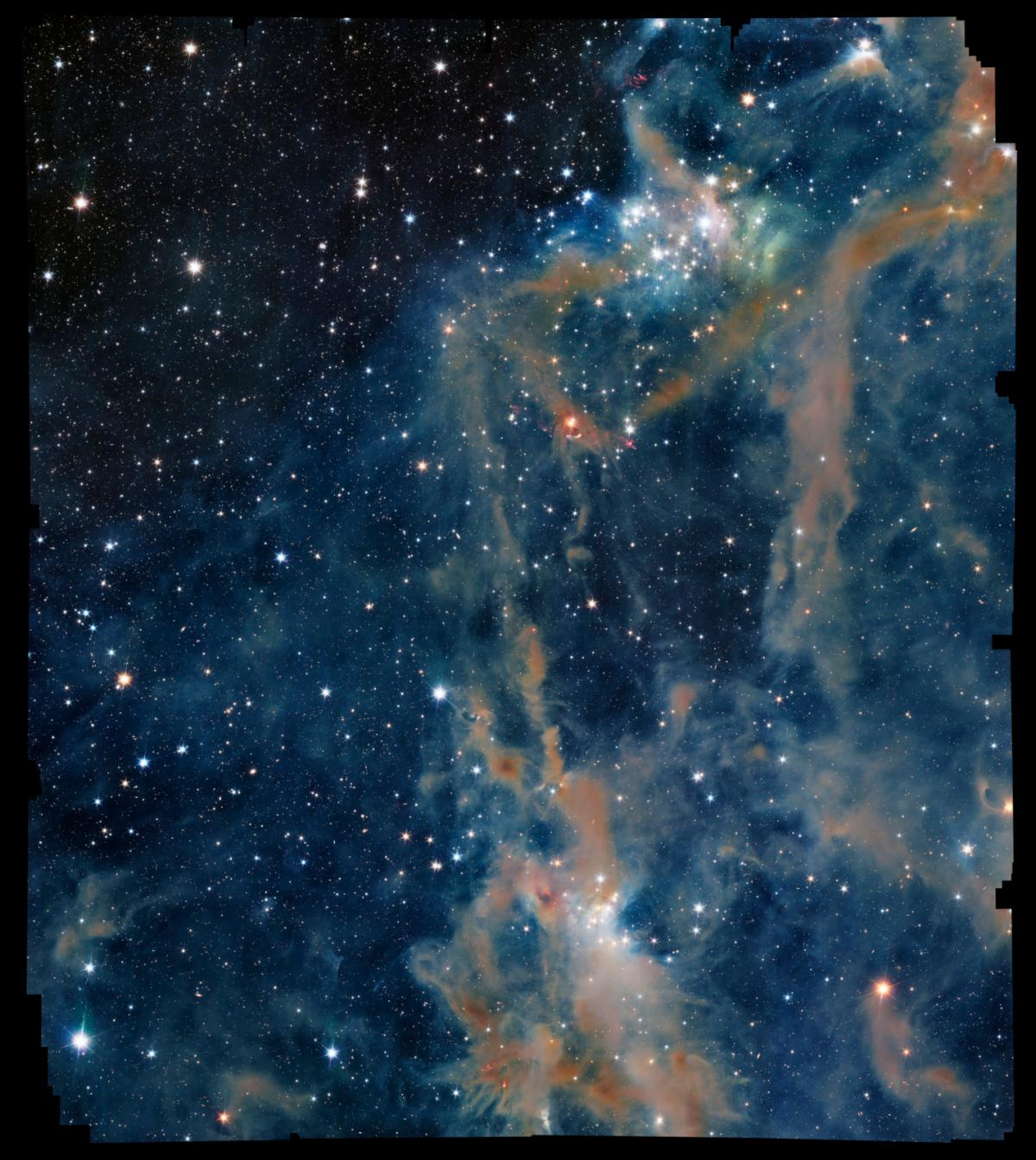
| | Euclid NASA Science Center at IPAC (ENSCI) | | Featured Euclid Science Image | | Euclid offers a dramatic infrared look into LDN 1641, a dark cloud in Orion that appears almost empty in visible light. Through NISP's infrared eyes, the dust becomes translucent, revealing a crowded field of stars, newborn stellar outflows in magenta, and distant background galaxies emerging beyond the cloud. Credit: ESA/Euclid/Euclid Consortium/NASA. Image processing by M. Schirmer (MPIA, Heidelberg). | | NASA Euclid Funding Opportunity | | |
The Euclid Wide Survey has now mapped more than 4,000 square degrees of the extragalactic sky as it continues its journey to chart the dark universe.
| | |
Heading to Phoenix in January? Visit Euclid's sessions at the 247th AAS meeting (January 4–8, 2026).
Euclid Quick Release 1 (Q1) Data Access & Exploration Workshop: Sunday, January 4, 2–4 PM MT. Hands-on guidance for accessing and exploring the Q1 products. To sign up for this workshop: (1) Click "Register for AAS 247'' at https://aas.org/meetings/aas247/registration, and sign in. (2) Scroll down to "Workshops," choose this workshop from the list, and click "Add'' and then click "Proceed to Checkout.'' The (late) online registration for the workshop is open until January 2.
Special Session: The Euclid Mission—Science with Q1 and Future Plans—featuring contributed talks (Thursday, January 8, 2026, 10–11:30 AM MT, Room 225B) and a poster session (Wednesday, January 7, 2026, 5:30 PM–6:30 PM MT, Exhibit Hall B/C/D).
| | Stay Connected with ENSCI | | Near-Earth Object Surveyor (NEOS) | |
Progress on Survey Data System
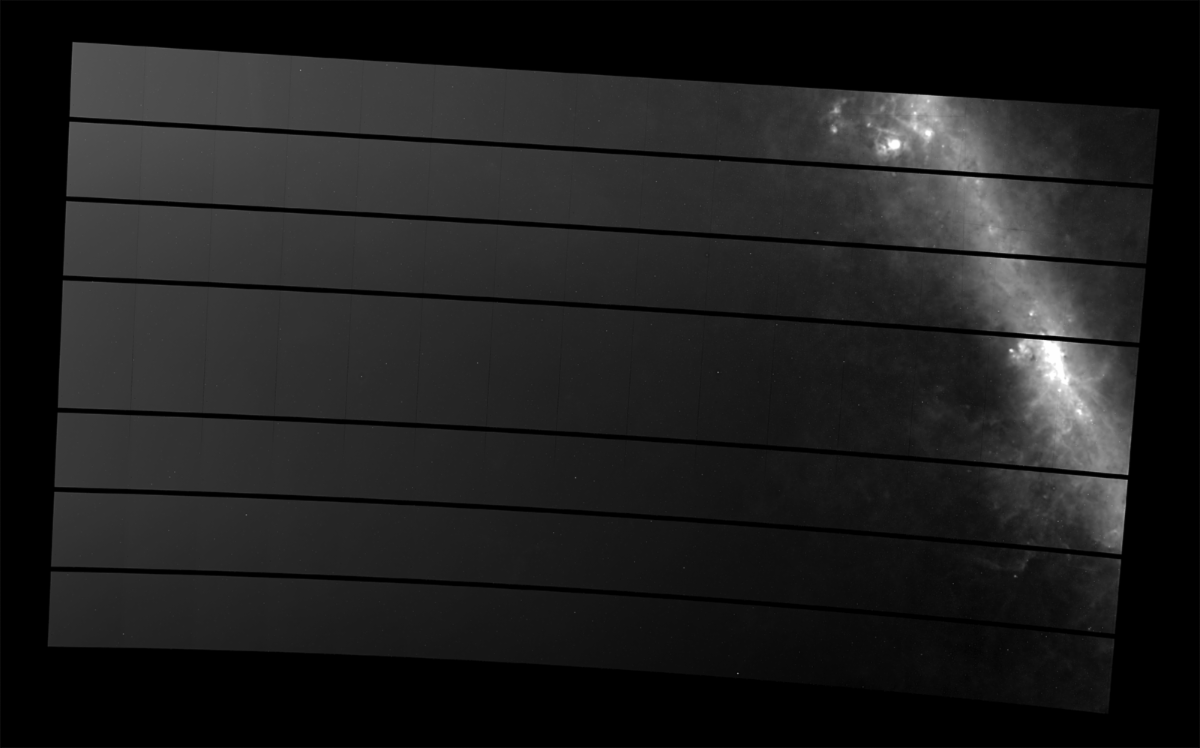
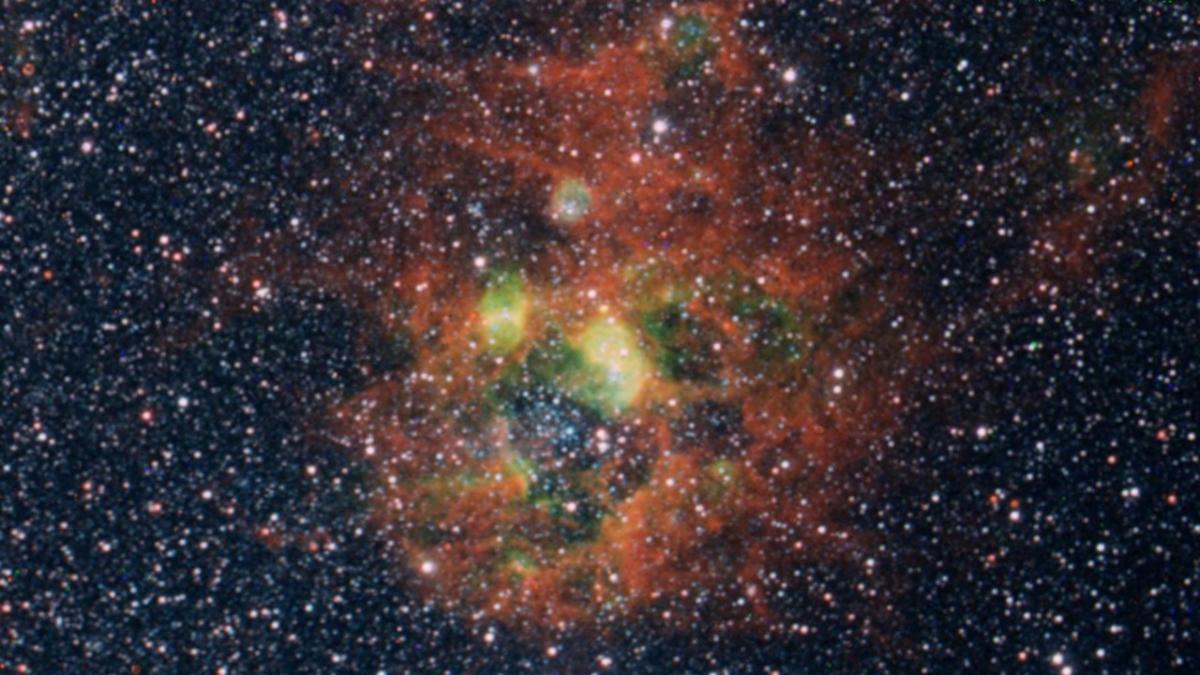
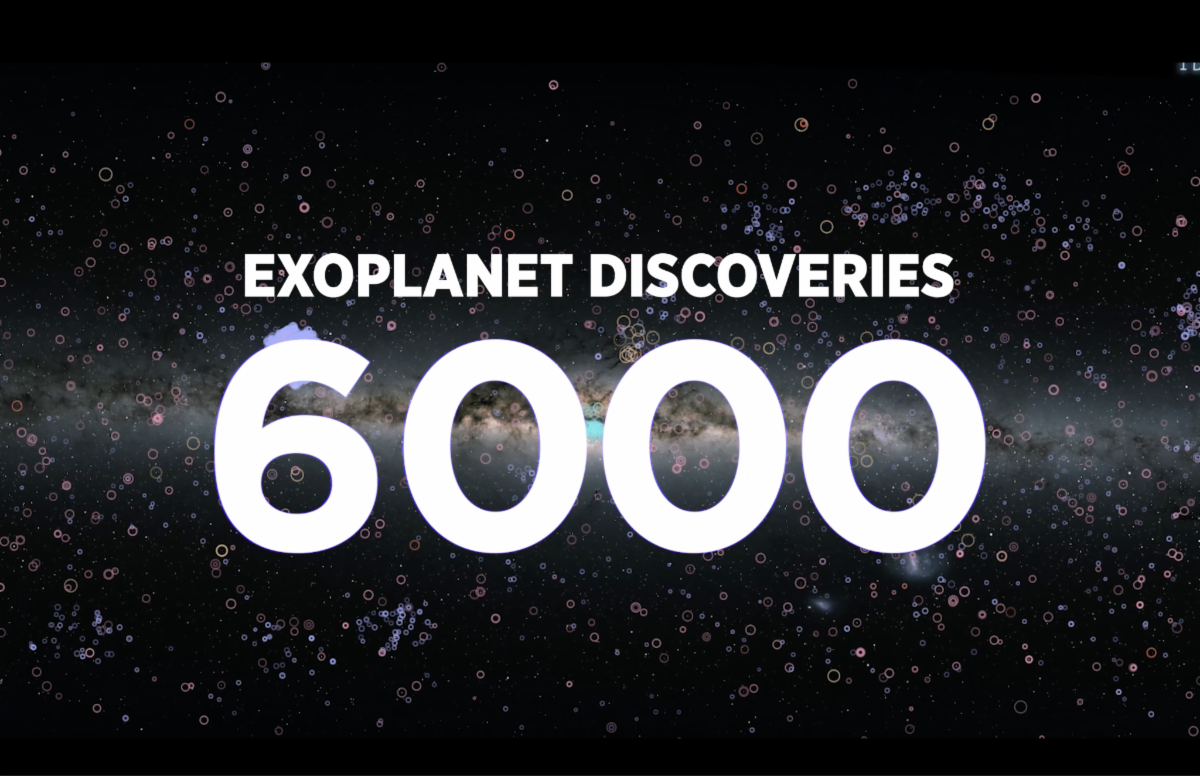
| | The NEO Surveyor Survey Data Center (NSDC) has internally released Version 7 of the Image Simulation software used to create flight-like synthetic data for NSDC development and testing. This simulation software creates images with asteroids, comets, stars, galaxies, and dust lanes as well as the cosmic rays, noise, and detector artifacts we expect to see in-flight. | | Mosaic of simulated images of the infrared sky near the Galactic plane in NEO Surveyor’s 6–10 micron band. This image was made by combining 30 simulated visits totaling approximately two hours of survey time and covering over 300 square degrees. The black bars show the gaps between detectors in the NEO Surveyor field of view. | | Progress on Quality Assurance Subsystem | | Development also continues on the Quality Assurance (QA) subsystem that will enable the QA team to quickly and efficiently evaluate the quality of the NEO Surveyor images and tracklets, and provide trending analysis for evaluating the instrument health and performance. A complete version of one of the major QA components, the Moving Object QA, was released and tested on a simulated Quad (one of the primary units of sky in NEOS observations, approximately 14x24 deg, four times, spanning eight hours of time) of data, allowing the team to test and assess the QA process that will be used in flight. | | Three-color mosaic of SPHEREx images from channels centered at 0.98 microns (blue), 0.96 microns (green) and 3.29 microns (red). The green areas show ionization regions near a cluster of young stars in blue, traced out in the doubly ionized sulfur line, while red traces emission from the surrounding dusty Polycyclic Aromatic Hydrocarbons (PAHs). Image courtesy NASA/JPL-Caltech. | | SPHEREx started its all-sky science survey on May 1, 2025 and the SPHEREx Science Data Center at IPAC has been operating the science product pipeline. Calibrated spectral images produced by the pipeline have been available to the community via IRSA since July and are updated roughly weekly. Users can search, visualize and download data using standard IRSA capabilities both at IPAC and in the NASA cloud. Additionally, IRSA hosts custom tools for SPHEREx data, including spectrophotometry and cutout tools. | | SPHEREx at the 247th AAS Meeting | | Join us at the SPHEREx splinter session at the January AAS meeting to hear about instrument performance and early science results (Monday, January 5, 1–3 PM MT, Room 126 C). | | NASA Exoplanet Science Institute (NExScI) | | 26th Sagan Summer Workshop | | The 2026 Sagan Summer Workshop will be held July 20–24, 2026, both on the Caltech campus in Pasadena and online. The topic is "Exoplanets with Roman Surveys: Microlensing and Transits." The workshop includes talks, hands-on tutorials and projects, poster sessions, and many networking opportunities between attendees and experts in the field. There is no registration fee to attend, but attendees are asked to register once registration opens in February. By that time more information on the workshop's agenda will be available. | | NExScI at the 247th AAS Meeting | | NExScI will be at the IPAC/NExScI Exhibit booth at the January 2026 AAS meeting in Phoenix, Arizona. Anyone with questions about NExScI or interested in finding out what opportunities we have for the community regarding observing time, meetings, workshops, tools, and data access is welcome to come by and visit us. | | New Archive Milestone: 6,000 Planets! | | The archive’s confirmed planet count surpassed 6,000 in September—a news story that was picked up by national media and featured on NASA’s home page. This milestone comes 30 years after the first exoplanet, 51 Pegasi b, was discovered in 1995. | | New Service: Published Data Upload | | |
Authors and journals can now submit published planetary and stellar parameters to the archive, where staff scientists will evaluate them for possible inclusion. The Published Data Upload service does not guarantee the data will be added to the archive, but it does ensure the data will be considered as quickly as possible.
To get started, go to the Published Data Upload page to download the template and review the submission requirements. Users must have an Exoplanet Archive user account, which is free and takes just a few minutes to set up.
| | ExoFOP Now Supporting Community Candidates | | The Exoplanet Follow-up Observing Program (ExoFOP) has expanded its capabilities to support planet and planet candidate data from missions and projects beyond TESS, Kepler, and K2. Users can now specify the discovery data source for any candidate, assign an optional new candidate name, and view these Community Candidates in a dedicated table that includes both Community TESS Objects of Interest (CTOIs) and non-TESS discoveries. In addition, ExoFOP now accepts follow-up observations and derived parameters not only for TOIs and CTOIs, but for any submitted planet candidate and all confirmed planets listed in the NASA Exoplanet Archive. More details are provided in July 31, 2025 ExoFOP news. | | Acknowledging the Archive with Christiansen et al. (2025) | | NASA's Roman Space Telescope | | Nancy Grace Roman Space Telescope Cycle 1 Call for Proposals | | |
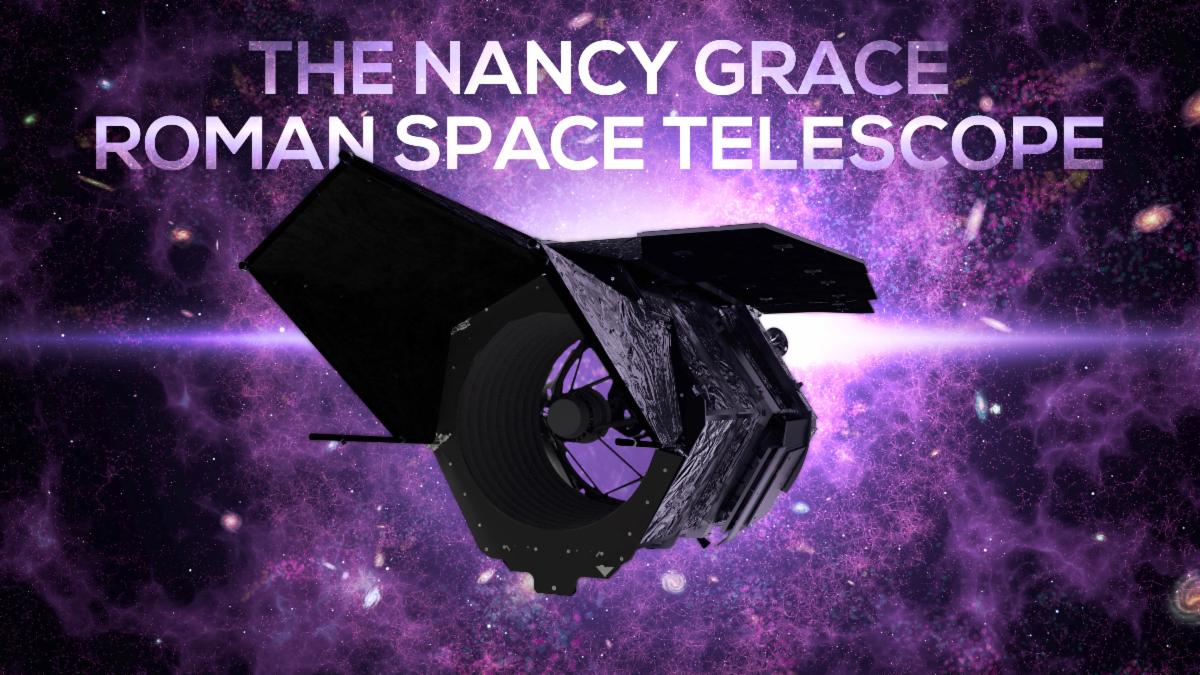
The Nancy Grace Roman Space Telescope Project is pleased to announce that the Cycle 1 Call for Proposals is open. The Cycle 1 Call for Proposals marks the first opportunity to submit proposals to conduct scientific investigations with Roman's Wide Field Instrument (WFI).
Read the Call for Proposals for more information on how to prepare and submit your proposal(s). Due date March 17, 2026 at 5 PM PT.
| |
- AAS meeting 247, Phoenix, AZ, January 4–8, 2026. Consider attending
-
Roman Space Telescope Proposal and Science Planning Splinter session.
-
Roman Events at AAS 247.
-
RAPID Response, "Hot-wiring the Next Generation of Time-Domain Science," Caltech, Pasadena, CA, March 23-27, 2026 (see the separate announcement near the top of this newsletter).
-
The Spirit of Lyot conference (Coronagraph Instrument; see the separate announcement near the top of this newsletter).
| | 2026 Roman Science Symposium at Caltech | | The 2026 Roman Science Symposium "Shifting Landscapes in Astrophysics: New Frontiers to Explore with Roman," will be held at Caltech/IPAC, Pasadena, CA, July 13–17, 2026. The goal of this four-day symposium is to bring members of the community together to focus on the new exciting landscapes poised for potential breakthroughs using the Roman surveys with the Wide Field Instrument, as well as with the Coronagraph Instrument. | | Ready, Set, Roman! Training Series: The Science Operations and Support Centers have been running a series of webinars to introduce Roman users to the many tools available to prepare for and analyze Roman data and plan observations. These webinars are available on the Roman YouTube channel. See the Training Series webpage for more information. | | RAPID Roman Project Infrastructure Team | | |
RAPID is the Roman Project Infrastructure Team for time-domain pipeline and products (including prompt alerts for follow-up). The pipeline is currently under development and will be in place by launch.
There will be a Special Session related to Roman time-domain science at the AAS 247th meeting: "Preparing for Time Domain Science with the Roman Space Telescope" on Thursday, January 8, at 10 AM.
| |
-
Roman Help Desk: Ask questions about Roman instruments, simulation tools, proposal process, observation preparation, grants, data archive and analysis.
-
Visit the numerous resources at our Roman SSC website.
-
To learn more about Roman science resources that could help you with, e.g., Roman proposal planning, visit our Roman documentation web pages ("RDox").
-
Subscribe to our Roman SSC mailing list.
-
Roman Science Forum: Join to stay actively engaged and up to date about technical and mission level updates.
-
Roman Science Collaboration: Start new science collaborations and draw on the expertise of researchers with complementary interests.
-
Roman Working Groups: Sign up to discuss and advise the Roman Project and its partners on WFI data and operations.
-
Follow us on social media @NancyRomanSci with X, Bluesky, Instagram, and Facebook.
| | NASA/IPAC Infrared Science Archive (IRSA) | | IRSA at the 247th AAS Meeting | | IRSA staff members will be available to answer questions and demonstrate IRSA services at the IPAC booth. For a longer list of IRSA presentations at the AAS, see the IPAC AAS webpage. | | SPHEREx Quick Release 2 Data and SPHEREx Tools | | |
IRSA is now distributing SPHEREx spectral image data processed with substantially improved calibrations. This new processing, referred to as QR2, includes reprocessed versions of all spectral image data acquired since the start of the mission. Future quick releases will also use the improved QR2 pipeline.
New SPHEREx Spectrophotometry and Cutout tools are now also available to analyze SPHEREx data.
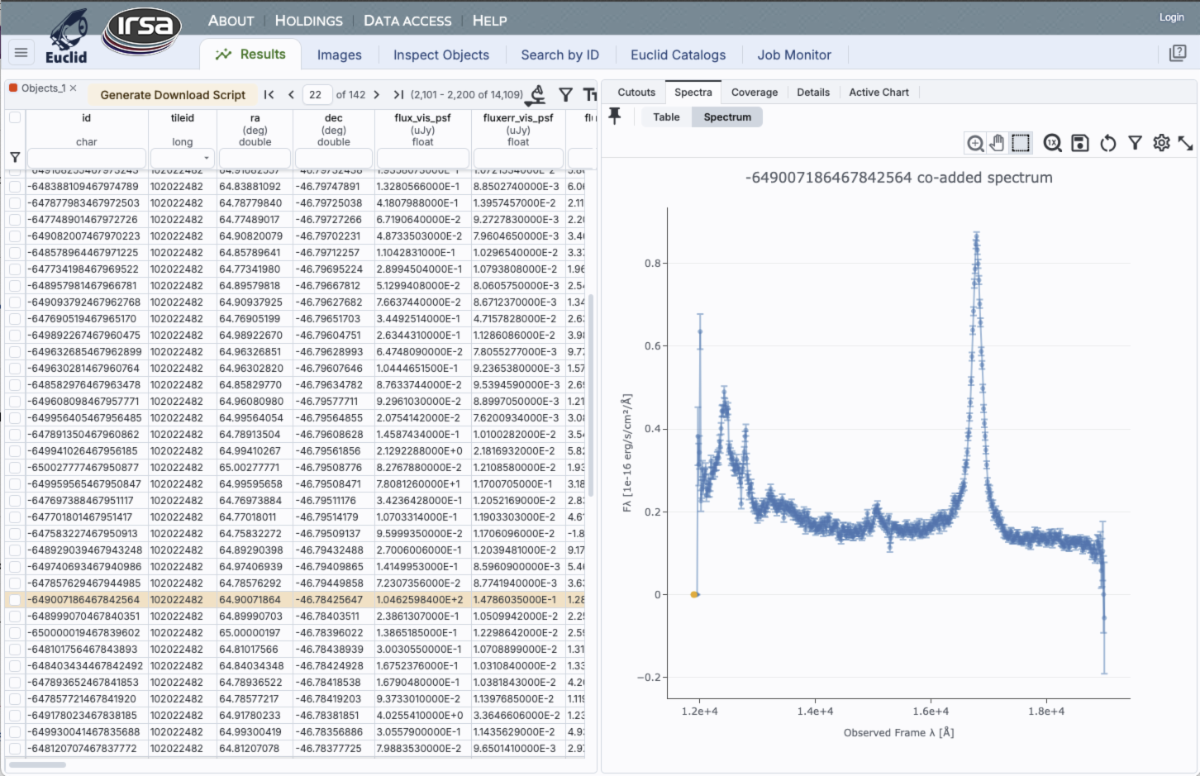
| | New Firefly Functionality | | Firefly is an actively maintained, open-source, web-based toolkit for interactive astronomical data visualization. It is used in many mission data portals at IRSA, as well as by NED, the NASA Exoplanet Archive, the Rubin Science Platform and the Canadian Astronomy Data Centre (CADC). Since June 2025, Firefly has continued to evolve with active maintenance and regular updates, including added S3 support, support for additional FITS WCS projections, enhanced visualization of spectra, improvements to the Job Monitor, packaging, and downloads, and improved support for IVOA protocols (DataLink, MOC, TAP). | | An example of new visualization capabilities can be found in the interactive visualization of Euclid spectra through the Euclid Data Explorer web application. | | Keep up with Developments at IRSA | | |
There are several ways for you to keep up with developments at IRSA:
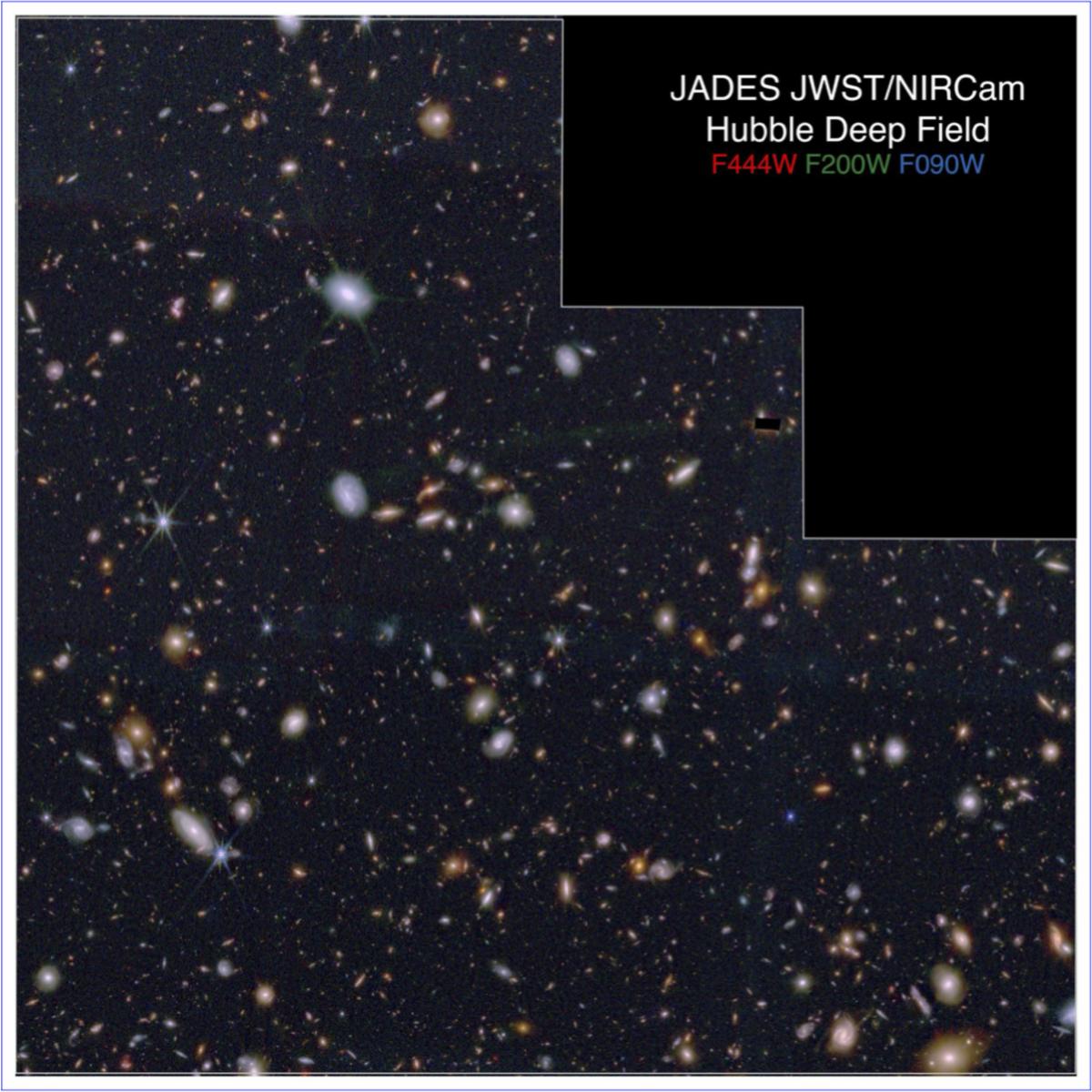
| | NASA/IPAC Extragalactic Database (NED) | | NED's latest release provides the results of cross-matching nearly 368K sources from 1,633 recent astrophysics journal articles. This incorporates 316K cross-identifications with prior NED objects and 52K new objects including galaxies, quasars, clusters of galaxies, supernovae, globular clusters as well as unidentified radio, visual, infrared, X-ray, and gamma-ray sources. Among the larger data sets recently assimilated into the database are 76K satellites and background objects with spectroscopic redshifts around nearby galaxies from the Satellites Around Galactic Analogs (SAGA; Mao et al. 2024) survey, and 11K new galaxies at intermediate to high redshifts from HST (WISP; Battisti et al. 2024) and JWST (JADES; D'Eugenio et al. 2025). The number of objects with redshifts in NED has increased by 104K, now totaling over 11.1M. | | High-redshift objects ranging from z = 0.5 up to z = 13 from the JADES Data Release 3: NIRSpec/Microshutter Assembly Spectroscopy for 4000 Galaxies in the GOODS Fields, recently integrated into NED. Credit: Figure 13 from D'Eugenio et al. 2025 ApJS, 277, 4D. | | System and Software Updates | |
- The most recent round in the development of NED’s data system has been completed, including updates to the database structure, query software, and user interface.
- The Object Type field in NED is now separated into Physical Types (e.g., G, GPair, QSO), where available, and a new EM Region field (e.g., Vis, Xray).
| |
-
The Gravitational Wave Follow-up service responded to LIGO/Virgo/Kagra GW event S251112cm by 3D cross-matching with galaxies in the NED Local Volume Sample. The compact binary merger event is significant since the objects likely contain a sub-solar-mass component and the event was relatively nearby at ~95 Mpc. The list of top 20 host galaxy candidates in the 90% probability volume was rapidly published on the NASA GCN (Circular 42653, Circular 42693), which were utilized for follow-up searches by teams using DECAM at Cerro Tololo Inter-American Observatory (Hall et al., GCN 42691), Rubin Observatory (MacBride et al., GCN 42707), and Einstein Probe (Wu et al., GCN 42714).
- IPAC hosted a hybrid meeting of the NED Users Committee (NUC) on November 6. The group reviewed and discussed recent accomplishments, work in progress, and plans for future data integrations and functionality improvements. The NUC provided very positive feedback and recommendations, and they will provide a written report to be posted on the public NED website.
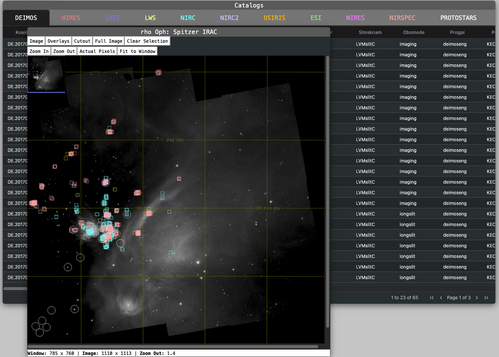
| | We are seeking new members of the NED Users Committee. If you would like to help shape the future of NED, please contact us at ned@ipac.caltech.edu. For more information, please visit the NED website. | | Keck Observatory Archive (KOA) | | KOA Releases New Data Search Tools | | Image created in the KOA notebook: KOA observations of Rho Oph and protostars acquired from CDS Vizier (CDS), superposed on a Spitzer IRAC image (IRSA). | | |
KOA has released in beta a new web-based service and a new Jupyter
notebook that perform spatial and temporal searches of the archive in seconds, and enable data exploration, visualization and download of the search results. The notebook also enables interoperability of KOA and remote archives. User comments are welcome. Video tutorials are also available.
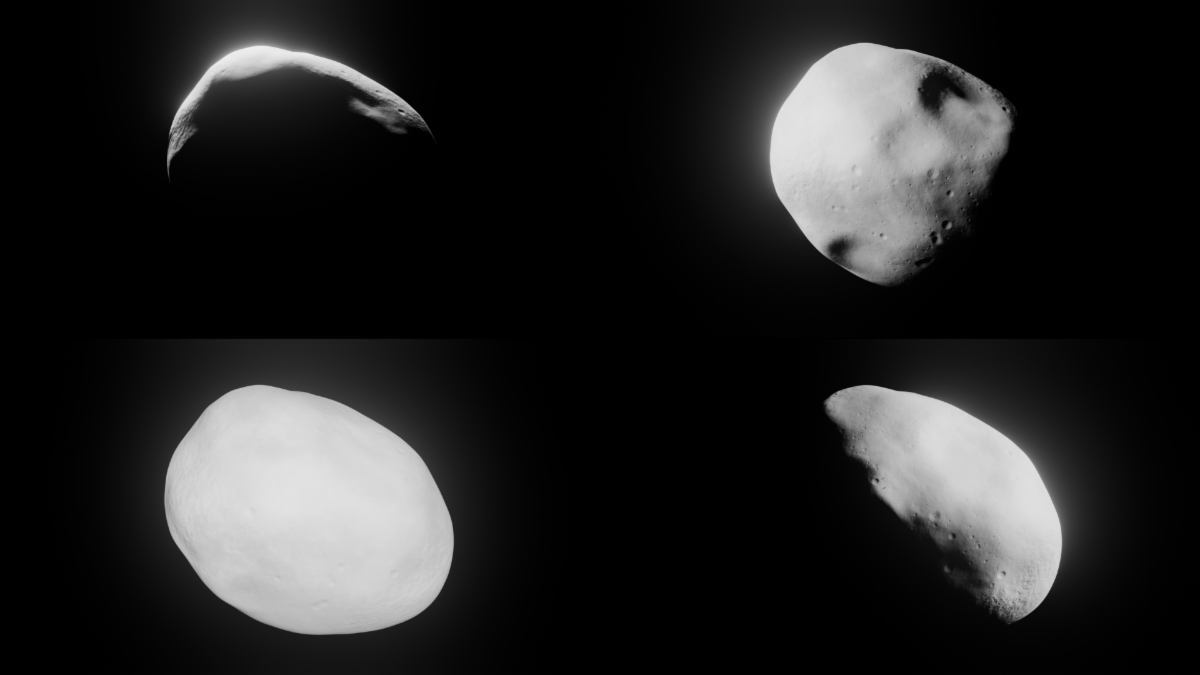
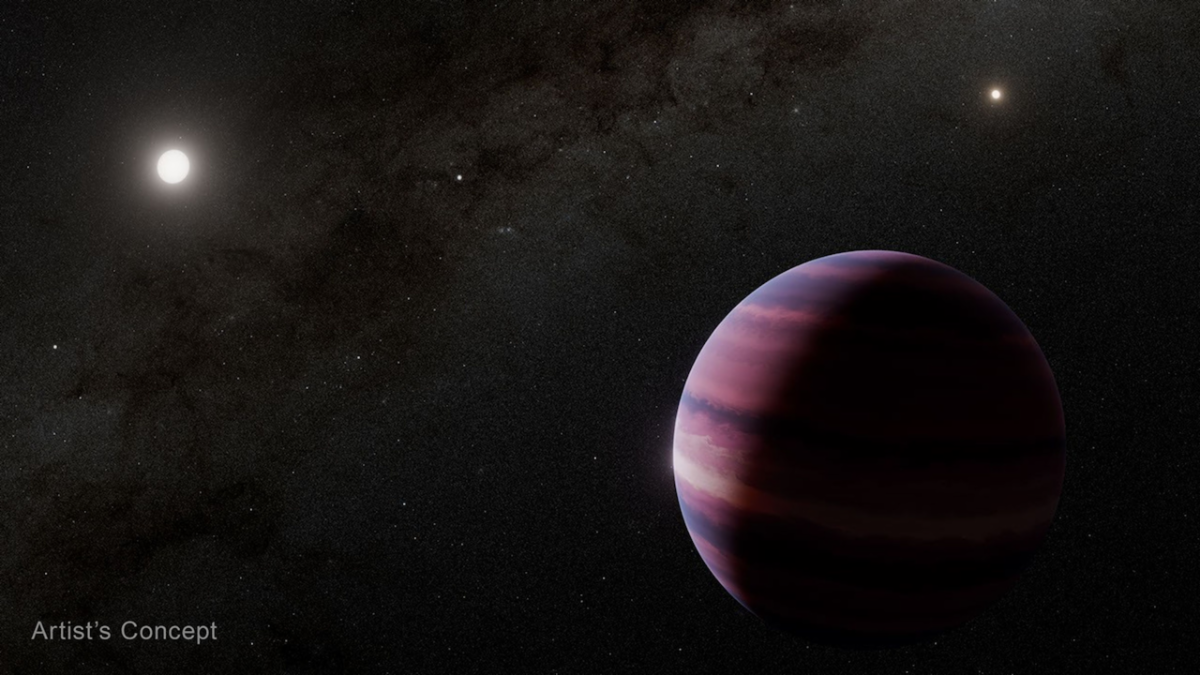
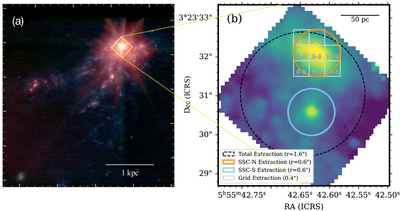
| | NITARP Program Is 20 Years Old | | The NASA/IPAC Teacher Archive Research Program (NITARP) is celebrating 20 years of high school teachers and students doing astronomy research at IPAC. The teams are made up of teachers, students, and astronomers carrying out a year-long research project using the data and analysis tools available at IRSA, the NASA/IPAC Infrared Science Archive. They also get a chance to present their results at the American Astronomical Society's annual gatherings. NITARP applicants come from all over the country, and since 2012, the program has received four times more applicants than there are available spots each year, typically six to eight teachers per year. | | PRobe far-Infrared Mission for Astrophysics (PRIMA) | | JATIS Special Issue on PRIMA | | The Journal of Astronomical Telescopes, Instruments and System (JATIS) Special Issue on PRIMA is focused on the PRIMA mission concept and features authors from the PRIMA team and wider scientific community covering an overview of the mission, its instruments and its key scientific goals. It also includes about 30 papers contributed by the PRIMA community. | | Special Session on the PRIMA Mission Concept at the AAS 247th Meeting | | There will be a special session on the PRIMA Mission Concept at the AAS 247th meeting in Phoenix on Wednesday, January 7, 2–3:30 PM MT in Phoenix Convention Center, Room 224 B. It includes talks on the mission overview, science overview, general observer science and on several possible science applications. | | IPAC-Sponsored AAS Exhibit Hall Theater Presentation on PRIMA | | There will be an IPAC-sponsored Exhibit Hall Theater presentation on PRIMA entitled "Seeing the Hidden Universe with PRIMA (PRobe Infrared Mission for Astrophysics)" at the 247th AAS meeting in Phoenix. | | IPAC is home to about 70 scientists and postdocs who have collectively contributed to more than 300 refereed journal articles this year, covering topics from near-Earth objects and exoplanets to galaxy formation and cosmology. | | Please click on the images above to find out more about each featured science result. They are also summarized below. | | A newly published paper, led by IPAC scientist Joe Masiero, provides evidence that two kinds of asteroids likely formed in the same regions during the beginning of our solar system. | | Charles Beichman, former NASA Exoplanet Science Institute (NExScI) Executive Director at IPAC, and Aniket Sanghi, a Ph.D. student at Caltech, are co-first authors of a new paper with strong evidence of a giant planet orbiting a star in the Alpha Centauri triple star system. | | IPAC scientist Thomas Lai used JWST observations to lead one of the first spatially-resolved studies of polycyclic aromatic hydrocarbon emission from dust grains in a low-metallicity galaxy environment. IPAC co-authors include Lee Armus and Laura Lenkic. | | Check out our Meet the Scientists series for a more personal glimpse into what it’s like to be a scientist at IPAC. Please click on the images below to see full articles on the recently featured IPAC scientists. | | Science Engagement Lab at IPAC | | |
The Science Engagement Lab, or SELab (pronounced "see lab") at IPAC provides bespoke, science-informed connections with the audiences that matter to you. From start-to-finish strategic communications, to science visualizations and Nature covers, to viral videos, we've done it all. We work with projects at all scales, from individual researchers to flagship missions.
Want to increase the impact of your science? Contact us!
| | | | |