|
IPAC Uplink Newsletter
June 2025
| | |
Near-field Science with the Roman High Latitude Wide Area Survey
August 13–15, 2025 • Pasadena, CA
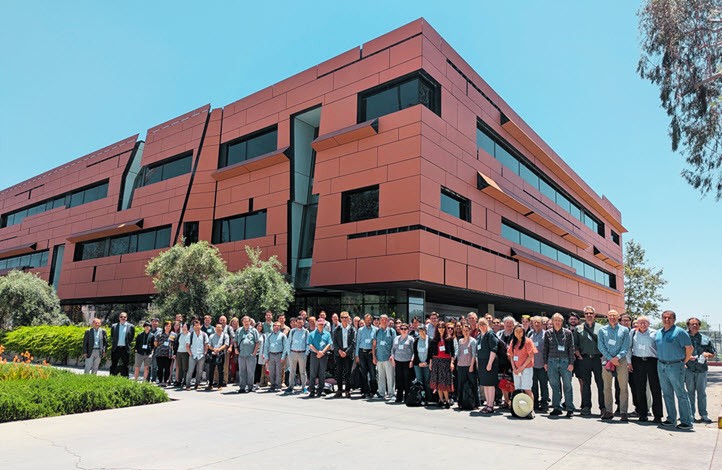
| | The Nancy Grace Roman Space Telescope, planned to launch in late 2026, has three approved Core Community Surveys. One of these is a 5000 square degree survey covering areas away from the Galactic Plane (HLWAS). This wide area, high-resolution survey, reaching depths of mAB ~ 26.5, will be available to the public as the data are taken. This depth will provide precise photometric and astrometric measurements for large samples of stars in the Galactic halo, many galaxies in the Local Group and Local Volume, and more. This workshop will focus on potential General Astrophysics projects that can use the HLWAS to study the Local Group, nearby galaxies and the Galactic halo. | | |
Infrared Spectroscopy from Space: New Frontiers from Exoplanets to the Early Universe
October 6–8, 2025 • Pasadena, CA
| | |
This conference will bring together experts and enthusiasts of infrared spectroscopy to discuss the vast scientific potential unlocked by space-based infrared observations. The aim of the conference is to highlight the scientific breakthroughs enabled by missions such as JWST, Euclid, SPHEREx, Roman, Ariel, and Pandora, and explore synergies across distinct fields, from cosmology to planetary science, through shared methodologies or multi-purpose data sets. It will also strive to address the community's research and collaboration needs, especially regarding large and complex data sets, while promoting the use of advanced data analysis techniques.
Important Dates:
Abstract deadline: July 1, 2025
Registration deadline (in-person, virtual): August 1, 2025
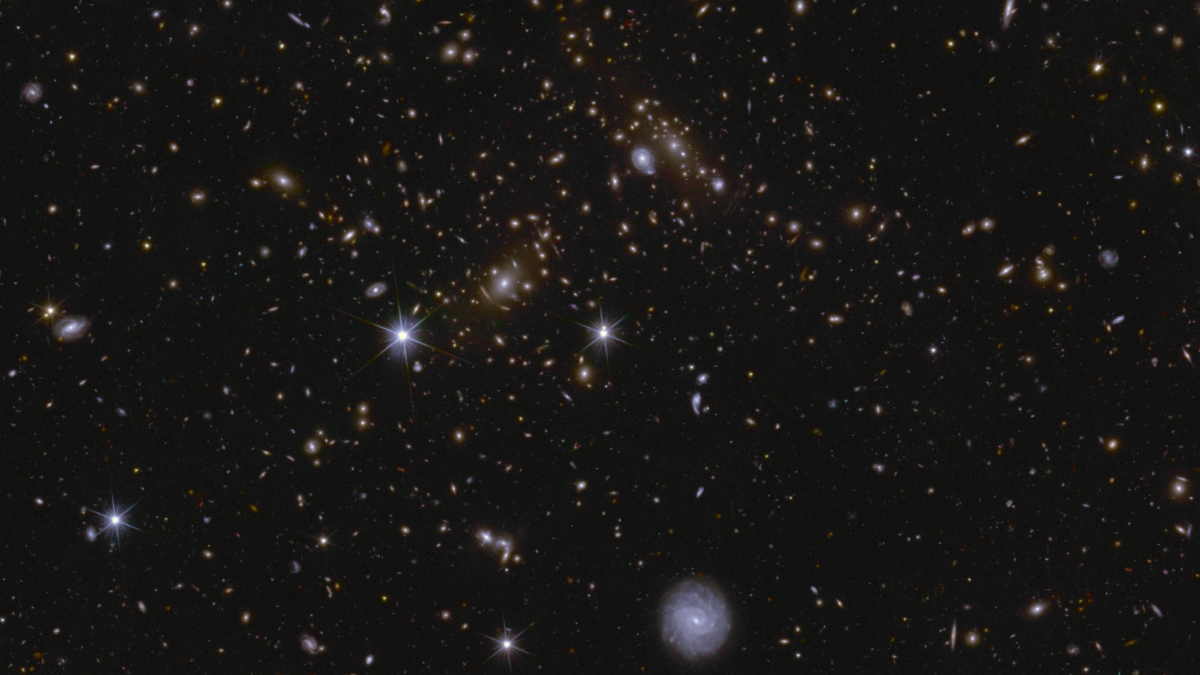
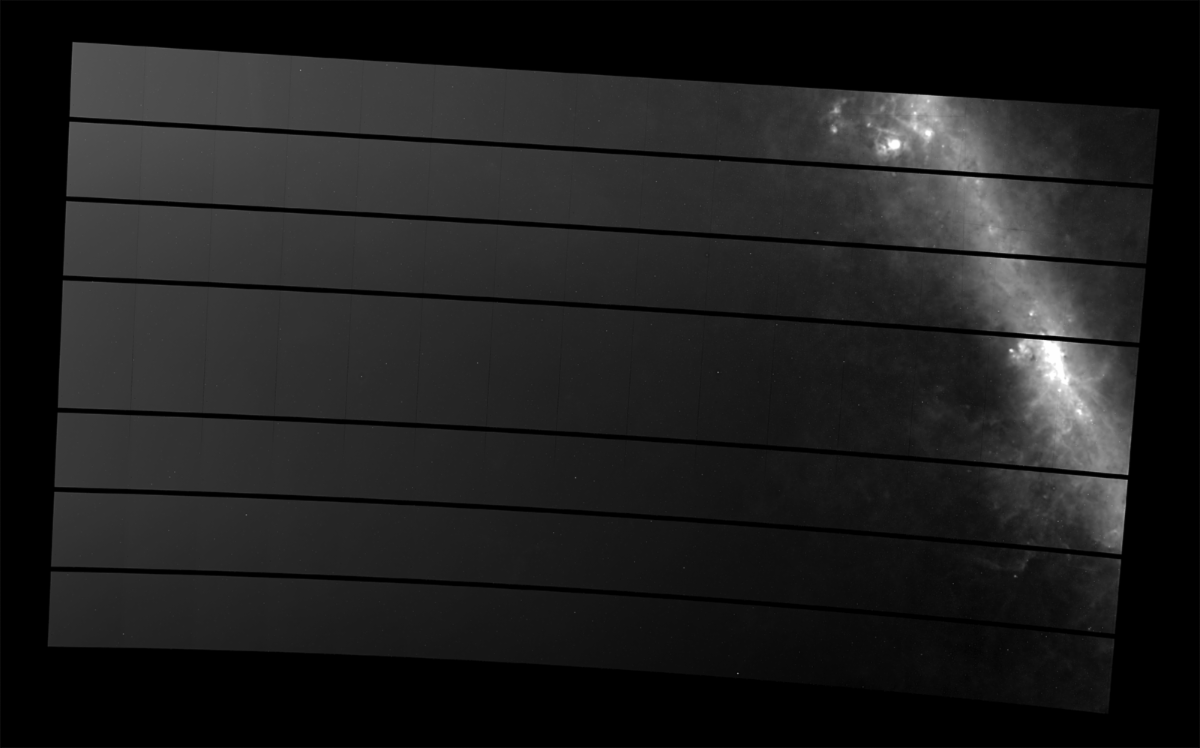
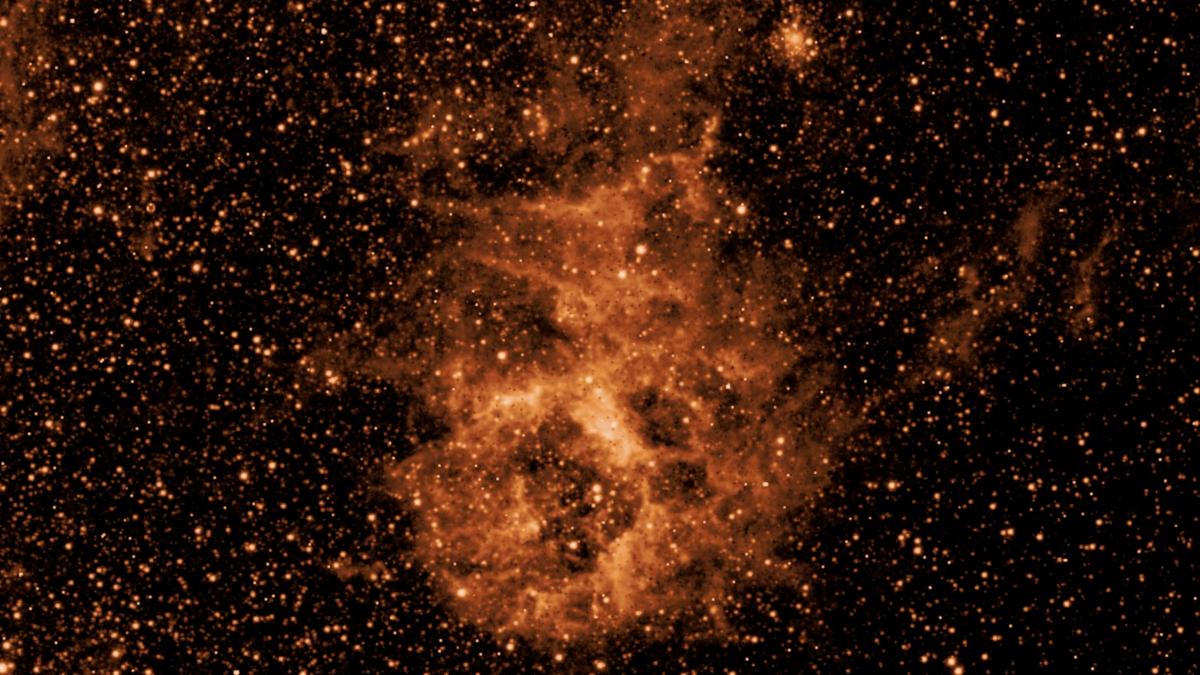
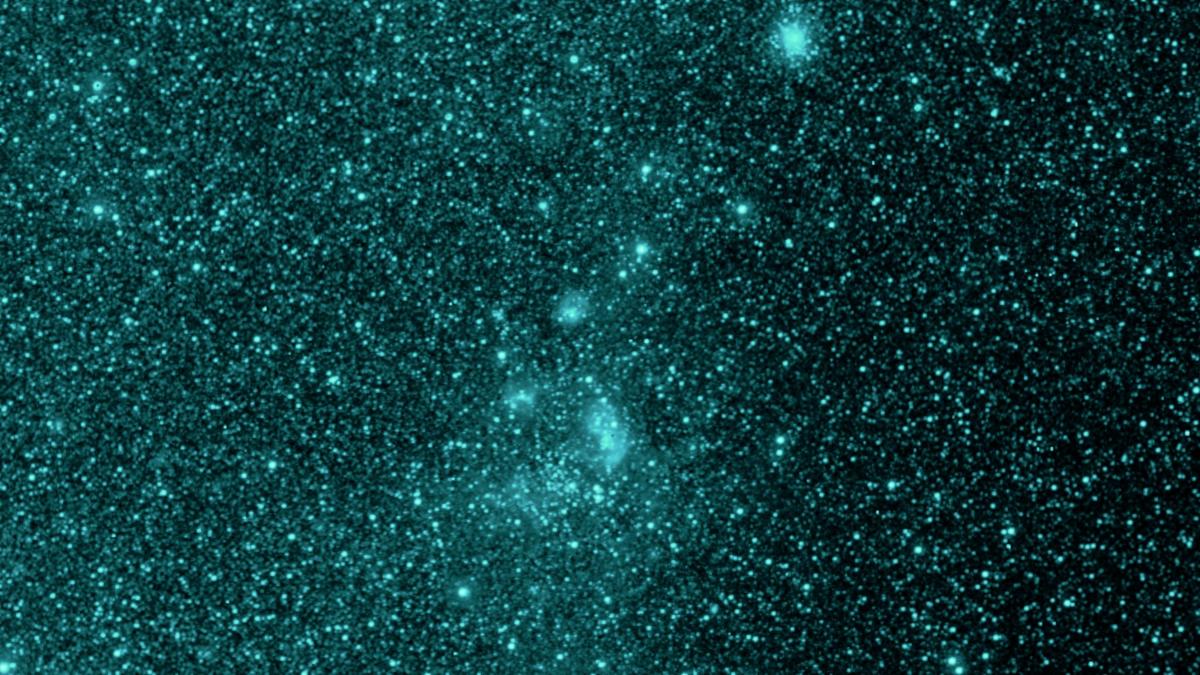
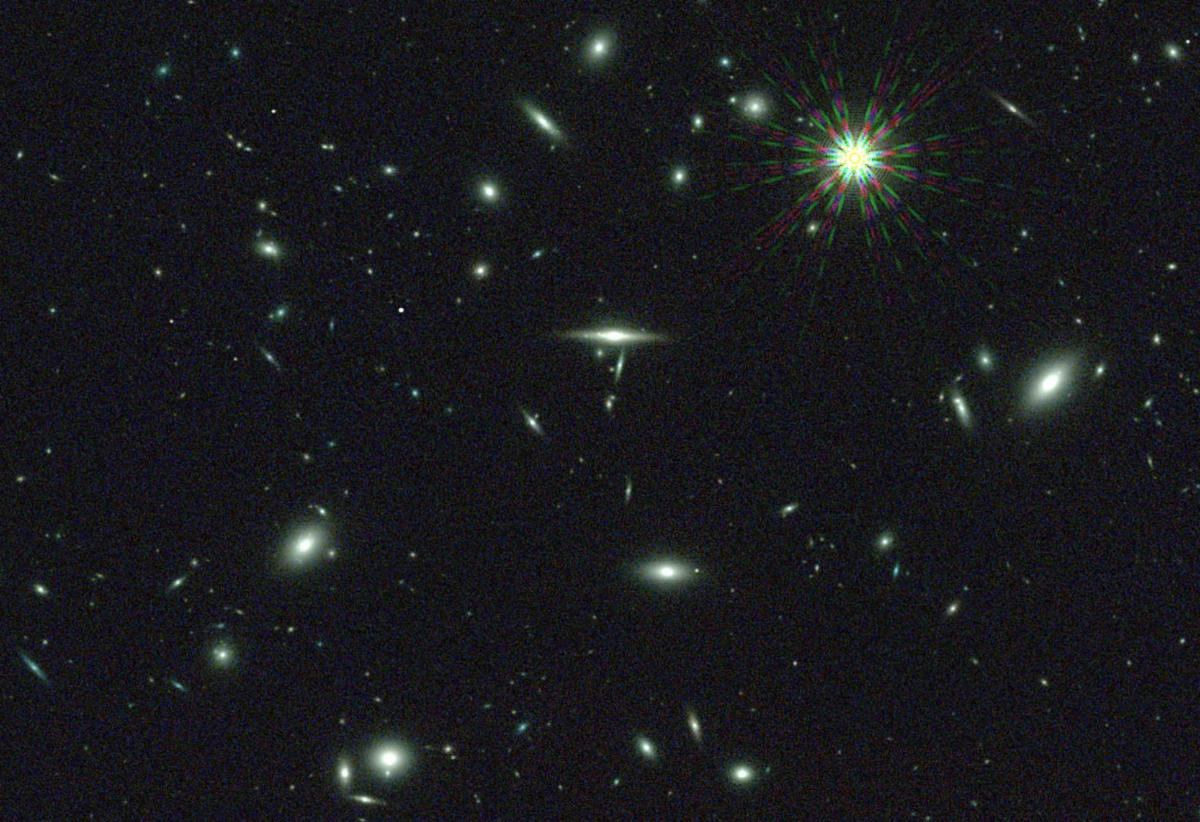
| | Euclid NASA Science Center at IPAC (ENSCI) | | ENSCI'S Role in Euclid Consortium | | ENSCI is part of the Euclid Consortium’s Science Ground Segment, providing algorithm and software development, participating in data quality assurance, performing data processing, and supporting the US research community by providing expert insight into the Euclid surveys, data processes, calibration, and products. | | Mosaic Showing Euclid's Deep Field South | | An area of Euclid's Deep Field South at 70x zoom: The cluster near the center is called J041110.98-481939.3, and is located almost 6 billion light-years away. (Credit: ESA/Euclid/Euclid Consortium/NASA). | | The Euclid survey began in February 2024, and over the course of 6 years will observe billions of galaxies across 10 billion years of cosmic history. You can follow the Euclid Survey progress from the mission status daily updates. More than 3000 square degrees of the sky has been covered so far. | | Euclid Quick Release 1 (Q1) data were released on March 19, 2025, by the ESA Euclid science archive as well as the complementary archive at the NASA/IPAC Infrared Science Archive (IRSA). The release includes data from a single visit (the Euclid Wide Survey depth) over the Euclid Deep Fields (EDFs): EDF North (~20 deg2), EDF Fornax (~10 deg2), and EDF South (~23 deg2). The EDFs will be visited multiple times during the mission. You can learn more about the Q1 data, resources, and frequently asked questions on the ENSCI website. | | Near-Earth Object Surveyor (NEOS) | | Changes in NEOS Project Leadership at IPAC | | NEOS Progress Towards Launch | | NEO Surveyor continues to make excellent progress toward launch in Sept 2027. The flight detectors have been selected and have been shipped to the Space Dynamics Laboratory in Utah for integration, along with the instrument enclosure and telescope. These components are undergoing thermal and vacuum testing, and calibration data are in the process of being obtained. | | Recent Developments at NEO Surveyor Data Center at IPAC | | Mosaic of simulated images of the infrared sky near the Galactic plane in NEO Surveyor’s 6-10 micron band. This image was made by combining 30 simulated visits totaling approximately two hours of survey time and covering over 300 square degrees. The black bars show the gaps between detectors in the NEO Surveyor field of view. | | At IPAC, the NEO Surveyor Survey Data Center continues to develop the software and hardware system that will ingest the raw mission data for processing and calibration, to generate image products, source lists, and asteroid and comet tracklets (chains of position-time pairs of individual objects). As part of this development, the NEO Surveyor Team at IPAC is building an advanced Image Simulator to provide test data that is as close to the real sky as possible. An example of the Image Simulator output is provided in the figure above, which shows a co-addition of 34 NEO Surveyor Visit images, representing about two hours of survey time and covering over 300 square degrees of sky near the Galactic plane. | | SPHEREx In-Orbit-Checkout and Start of Science Survey | | Example images from the press release clearly show spectral features in the Large Magellanic Cloud, showcasing SPHEREx's spectroscopic abilities. Image courtesy NASA/JPL-Caltech. | | SPHEREx successfully completed In-orbit-checkout and started the science survey on May 1. The SPHEREx Science Data Center at IPAC has derived initial calibrations from the data and is working to provide quick release calibrated spectral images for the archive at IRSA. | | SPHEREx's Data Availability | | |
Calibrated images will be available for the community starting in early July at IRSA. Users will be able to search for, visualize and download data.
A tool allowing users to extract photometry for sources of their choosing will be released at IRSA later.
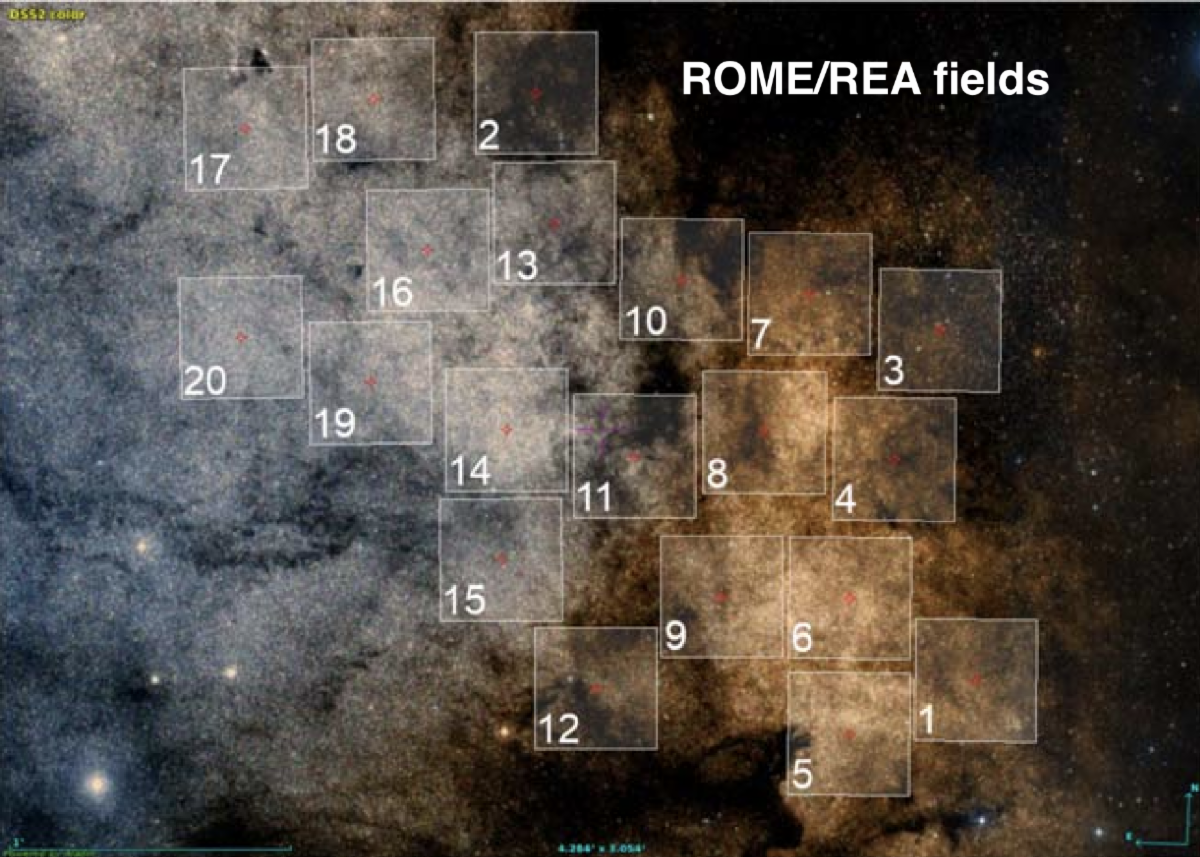
| | Zwicky Transient Facility (ZTF) | | Zwicky Forced Photometry Service (ZFPS) | | As of April 3, 2025, the Zwicky Transient Facility (ZTF) Forced Photometry Service (ZFPS) has processed over 3 million unique sky positions via batch submissions. Developed and operated by the ZTF Science Data System team at IPAC/Caltech, ZFPS has been publicly available since its launch in early 2020. In 2023, the service was enhanced to support batch requests (Masci et al. 2023), allowing users to retrieve forced photometry light curves for up to 1,500 sky positions per web application submission. Today, ZFPS is widely used by researchers around the world, supporting both U.S.-based and international scientific communities. | | NASA Exoplanet Science Institute (NExScI) | | Two New Contributed Datasets in the NASA Exoplanet Archive | | Galactic bulge with the ROME fields overlaid. | | |
1. The Robotic Observations of Microlensing Events/Reactive Event Assessment (ROME/REA) dataset, published in Street et al. (2024). The dataset consists of ~8 million light curves in three optical passbands from 20 fields in the Galactic bulge, taken over a three-year period, with a limiting magnitude of i~18. The data have a typical cadence of 10-15 hours while the fields were visible to the Las Cumbres Observatory network of telescopes. The data contain thousands of microlensing events, eclipsing binaries, and RR Lyrae and longer-period variable stars, and can be used as a training set for classification of objects in future surveys, such as the Vera Rubin Legacy Survey of Space and Time, starting this year.
The ROME/REA data are served from the archive through our interactive Firely-based service. To get started, click the Data pull-down menu in our site navigation and select ROME/REA Microlensing Survey in the Other section, or use this direct link.)
2. One of the teams from the 2018 FDL Astrobiology challenge has published a paper on their FDL/INARA set of over 3 million synthetic rocky planet spectra, all of which are available on the NASA Exoplanet Archive. The spectra are modeled after initial Habitable Worlds Observatory-like design criteria, and provide a training set for machine-learning algorithms to efficiently perform atmospheric retrievals on real-life spectral data. The dataset joins the FDL/PyATMOS dataset, a grid of model atmospheres produced by a second team from the same FDL challenge.
Access the INARA data by selecting Frontier Development Labs Datasets from our website's Data pull-down menu, or use this direct link.
| | ExoFOP: Over One Million Files Uploaded by the Community | | The ExoFOP team is excited to announce that ExoFOP has officially surpassed one million files uploaded by the community! This achievement highlights the collaboration of the exoplanet community, with hundreds of astronomers, including citizen scientists, from around the world sharing data and insights to further our understanding of exoplanets and planetary systems, and maximizing the science output of NASA's exoplanet missions. ExoFOP serves as a central hub for astronomers engaged in the search for and characterization of exoplanets, supporting missions such as TESS and the now-retired Kepler and K2 missions, as well as supporting precursor and preparatory observations for future missions, such as Ariel/CASE, and the Habitable Worlds Observatory. Thank you to everyone who has supported ExoFOP over the last 15 years, and we look forward to the next million files! | | 25th Sagan Summer Workshop | | |
The Silver Jubilee of the Sagan Summer Workshop on the topic of "Exoplanet Demographics" will be held July 21-25, 2025 in hybrid format, both at Caltech in Pasadena, CA, and online. Attendees will learn about the contribution of each of the major planet-finding techniques to our overall knowledge of the architecture of exoplanetary systems and also about the importance of deriving a full demographic picture. The workshop will also explore gaps in our knowledge and how future missions will address them. In addition to the presentations, hands-on sessions will allow attendees to work on exercises and group projects related to exoplanet occurrence rate calculations and studying distant giant planets with astrometry and other techniques.
The Sagan Summer Workshop is free, but participants are asked to register.
As we celebrate 25 years of Sagan Summer Workshops, we are asking anyone who attended past workshops to fill out a survey so we can get insights on the impact the workshop has had on participants over the years.
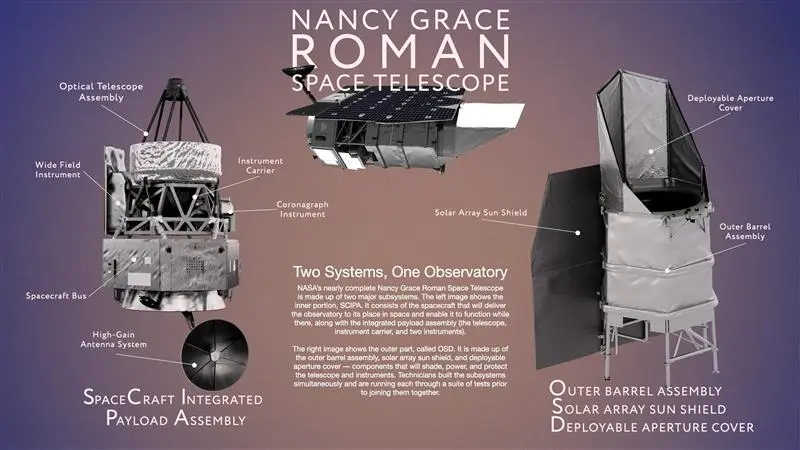
| | NASA's Roman Space Telescope | | Roman Assembly and Vacuum Testing | | This infographic shows the two major subsystems that make up NASA’s Nancy Grace Roman Space Telescope. The subsystems are each undergoing testing prior to being joined together this fall. Credit: NASA’s Goddard Space Flight Center. | | |
Technicians have integrated Roman’s deployable aperture cover, a visor-like sunshade, to the outer barrel assembly, which will house the telescope and instruments. They then added test solar panels to this construction, and put this whole structure through a vacuum test that simulated a space environment.
Meanwhile, Roman’s other major portion—the spacecraft and integrated payload assembly, which consists of the telescope, instrument carrier, and two instruments—will undergo its own shake test, along with additional assessments, including a space-like vacuum test.
Read more about Roman assembly and vacuum testing.
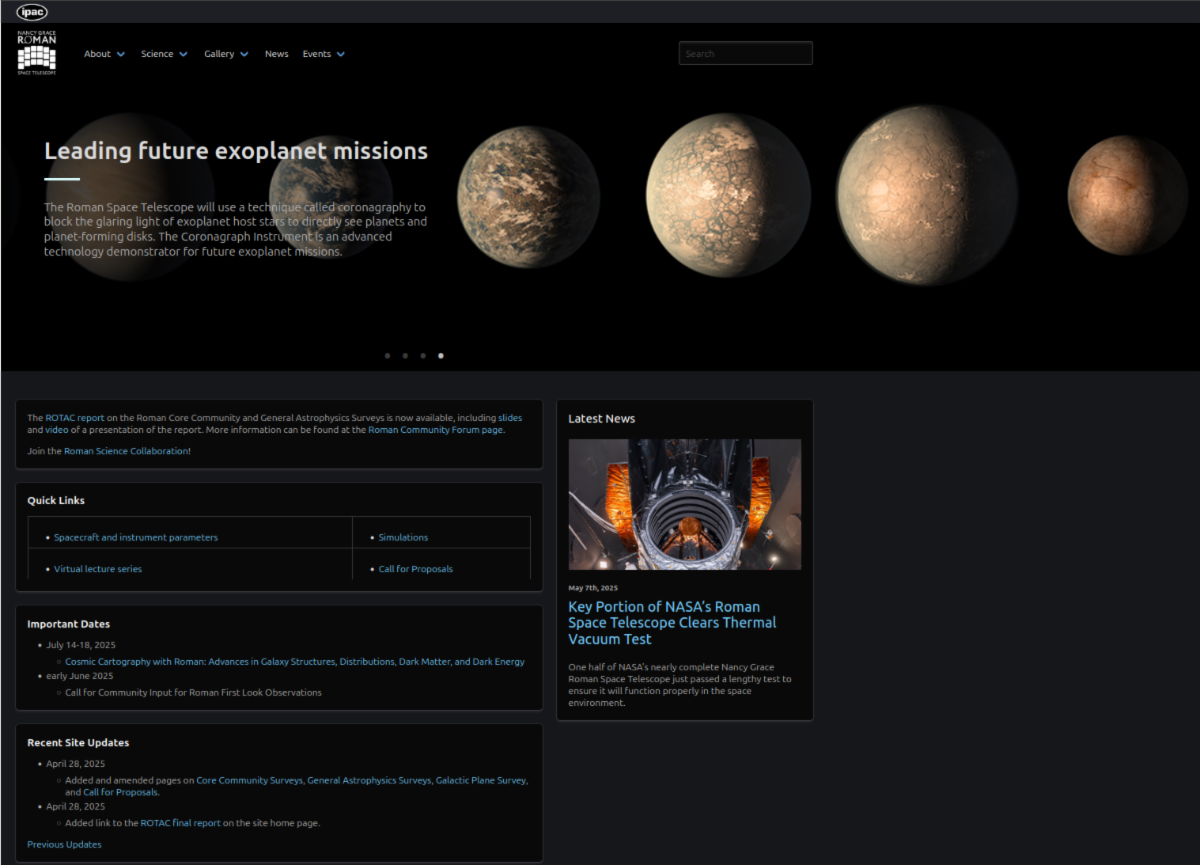
| | The Roman SSC Website at IPAC Has A New Look & Feel! | | When you next visit the website of the Roman Science Support Center (SSC) at IPAC, you'll notice that it has a new look and feel! The new design streamlines navigation and functionality, via an improved menu and page structure, putting information about Roman and the SSC at your fingertips faster. Quick Links on the front page also direct you to spacecraft and instrument parameters, simulations, the Roman Virtual Lecture Series, and the Call for Proposals (after it has been released). Note that saved bookmarks to pages on our old site will no longer work, but you will be able to more easily locate the pages and information that you are trying to find. Explore the resources you need to prepare for Roman science! | | Call for Community Input for Roman WFI First Look Observations | | |
The Roman Project welcomes the collective expertise of the astronomical community and invites suggestions for First Look Observations using the Wide Field Instrument (WFI). These observations should showcase key capabilities of the WFI and provide compelling demonstrations of its observing modes.
Click here for more information.
| | Roman Coronagraph Instrument Call for White Papers | | |
NASA has created the Community Participation Program (CPP) to prepare and execute Roman Coronagraph observations. In order to engage the coronagraph / exoplanet communities in the definition of this observing program, the CPP is sponsoring a call for White Papers to collect concepts for technology demonstration and scientific exploration observations with the Coronagraph, with a submission deadline of August 7th. Note that Coronagraph observations are not planned to be part of the Roman General Investigator Program, so this white paper call is intended to provide the main avenue for the community to influence observational priorities.
Click here for more information.
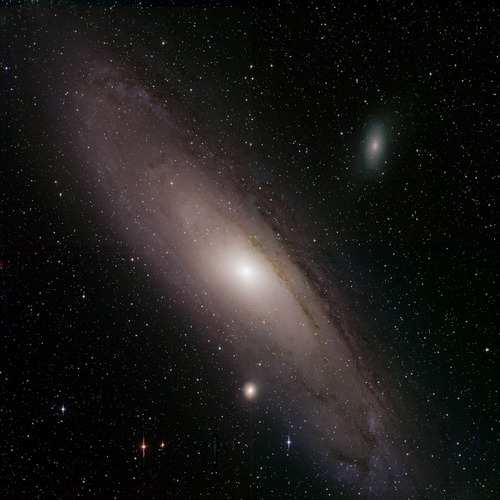
| | Roman Social Media for Scientists | | The Roman Science Centers have recently created social media profiles to communicate updates about Roman to the astronomy community. These pages will keep researchers informed about opportunities for preparing for and participating in Roman Science. Follow us on @NancyRomanSci on X, Bluesky, Facebook, and Instagram for the most up-to-date information related to doing science with Roman! | | Consolidated Roman Help Desk | | The Roman project has consolidated the Help Desks. From now on, please connect to the consolidated Roman Help Desk at https://stsci.service-now.com/roman for all your Roman related questions (you will need to have an STScI MyST account). | | Vera C. Rubin Observatory | | Vera C. Rubin Observatory Publishes First Images | | NSF-DOE Vera C. Rubin Observatory, funded by the U.S. National Science Foundation and the U.S. Department of Energy’s Office of Science, has achieved a major milestone with the first image release. IPAC is a partner in the Rubin Observatory and is building state-of-the-art Science User Interface and Tools (SUIT) components for the Rubin LSST Science Platform, allowing the community to access, interact with, evaluate, and process the Rubin LSST data. | | NASA/IPAC Infrared Science Archive (IRSA) | | Euclid Quick Release 1 (Q1) | | Credit: ESA/Euclid/Euclid Consortium/NASA, image processing by J.-C. Cuillandre, E. Bertin, G. Anselmi. | | Euclid Quick Release 1 (Q1) has been released at IRSA. This data set consists of approximately 30 TB of imaging, spectroscopy, and catalogs covering four non-contiguous fields: Euclid Deep Field North, Euclid Deep Field Fornax, Euclid Deep Field South, and LDN1641. Users can access the data on-premises at IPAC or in the cloud. More information on data access services is provided at https://irsa.ipac.caltech.edu/Missions/euclid.html. | | A composite ZTF image of the Andromeda galaxy made by combining three bands of visible light. The image covers 2.9 square degrees, which is one-sixteenth of ZTF's full field of view. Credit: ZTF/D. Goldstein and R. Hurt (Caltech). | | |
ZTF Data Release 23 has been released at IRSA. This data set includes approximately 61.3 million images, 937 billion source detections extracted from these images, and 4.97 billion light curves. Information on data access services is provided at:
https://irsa.ipac.caltech.edu/Missions/ztf.html.
| | |
The OpenUniverse2024 simulated Roman and Rubin dataset has been released at IRSA. OpenUniverse2024 is a project to simulate spatially overlapping imaging surveys to be carried out by the Nancy Grace Roman Telescope and the Vera C. Rubin Observatory. The simulations were carried out on Argonne's Theta cluster and consist of:
- The LSST ELAIS-S1 Deep Drilling Field (DDF)
- The Roman Time-Domain Survey (TDS) shifted to overlap the ELAIS region and LSST DDF
- Overlapping LSST Wide-Fast-Deep (WFD) survey (with rolling cadence)
- Overlapping Roman Wide-Area Survey (WAS) in the same region
- A deep-field calibration region of the Roman WAS in the same region
OpenUniverse2024 data can be accessed at:
https://irsa.ipac.caltech.edu/data/theory/openuniverse2024/overview.html
| | Keep up with Developments at IRSA | | |
There are several ways for you to keep up with developments at IRSA:
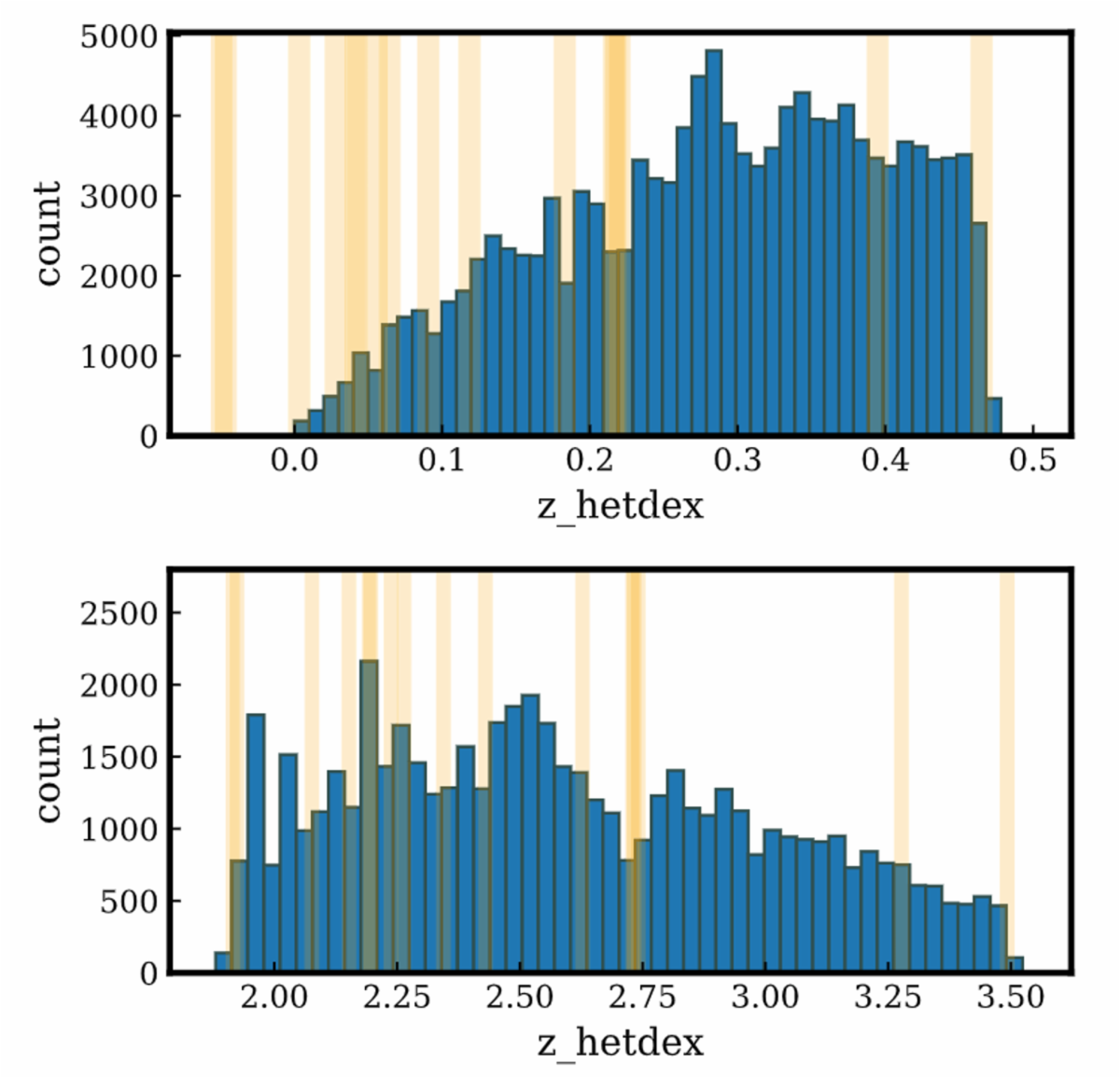
| | NASA/IPAC Extragalactic Database (NED) | | NED released an update providing new data integrated from recent astrophysics literature. The process of cross-matching nearly 900K sources from 1,547 journal articles resulted in about 800K cross-identifications with prior NED objects and 100K new objects. New spectroscopic redshifts from large area surveys such as HETDEX and HectoMAP have increased the number of objects with redshifts in NED by 300K, now totaling over 11M. This release also features new data for 16K local galaxies from The 50 Mpc Galaxy Catalog, and galaxies with some of the highest spectroscopic redshifts measured to date, including the JWST Deep Extragalactic Survey (JADES). For more information, see the release news. | | Redshift distribution of the HETDEX survey first data release recently integrated into NED. Credit: Figure 10 from HETDEX Public Source Catalog 1 (Cooper et al. 2023). | |
-
An update to the NED Local Volume Sample (LVS) includes new objects recently ingested by NED and the removal of newly identified non-galaxy contaminants. NED-LVS now contains over 2M objects, an increase of 203K (10%) over the previous version, where 85% of newly ingested data originate from the Dark Energy Spectroscopic Instrument Early Data Release (DESI Collaboration 2024). The NED gravitational wave follow-up (NED-GWF) service now utilizes the updated NED-LVS.
- Reworking of the NED data system enabled new capabilities for the user interface: photometry (SED) and spectral line data are now presented in separate tables; the default SED now plots flux (nuF_nu) rather than flux density (F_nu) on the Y axis; the cone search screen includes support for IAU style inputs and redshift constraints; and a new version of the IPAC Firefly UI framework provides a modernized look and supports dark mode for interactive tables and graphics.
-
Vision and Mission statements for NED have been updated and published on the website at Information >> Overview.
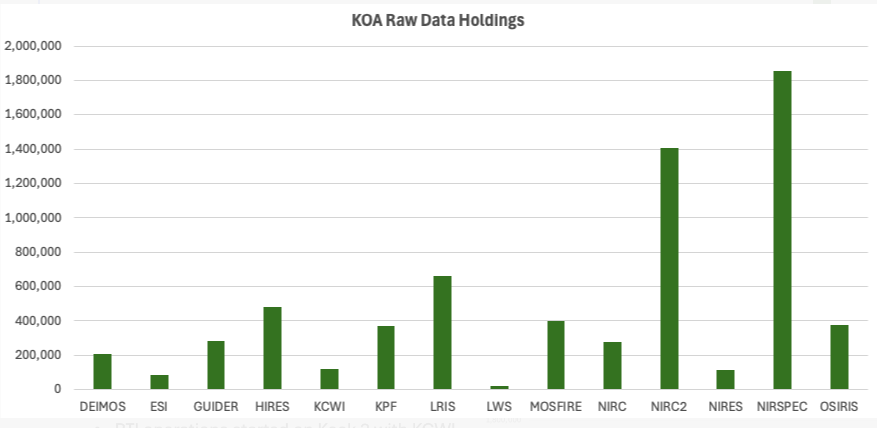
| | Seeking New Members of the NED Users Committee | | We are seeking new members of the NED Users Committee. If you would like to help shape the future of NED, please contact us at ned@ipac.caltech.edu. | | Keck Observatory Archive (KOA) | | KOA Adds More Keck Observatory Data To Archive | | The number of raw science and calibration files ingested per instrument for real-time (post Feb 2022) and Legacy (2004-2022) ingestions. | | Since newer real-time ingestion began in 2022, KOA has ingested 1 million FITS files acquired at the Keck 2 telescope, and 765,000 FITS files acquired at Keck 1. | | KOA ingests level 2 (pipeline-processed) data products for the KPF and NIRES instruments, and it now has DEIMOS slit-mask tables in the query return pages. | | PRobe far-Infrared Mission for Astrophysics (PRIMA) | | PRIMA Working Meeting at Caltech, May 19-21, 2025 | | The PRIMA Working Meeting was held at Caltech/IPAC on May 19-21, 2025 to discuss the exciting range of far-infrared science with the PRIMA mission, as well as to provide an opportunity for scientists to ask questions about the mission capabilities. The working meeting was a great success: more than 350 people participated in person and online, and discussed their passion for the far-infrared science with PRIMA. PRIMA is a NASA probe-class mission currently in the Phase A study period. IPAC is providing the Science Data Center for PRIMA. | | IPAC Science Staff Observing Programs and Publications | | COSMOS-Web Data Release 1 | | The COSMOS-Web Data Release 1 unveils the largest contiguously surveyed area of the deep universe. Andreas Faisst, an Associate Scientist at IPAC, was heavily involved in the initiation of the COSMOS-Web JWST survey and helped finalize and share the data with the astronomical community. Faisst was able to analyze the internal structure of galaxies. The data will be available in IRSA at IPAC. | | Unusually Low Star Formation Rate in the Center of the Milky Way | | IPAC Staff Scientist Wanggi Lim was a co-lead for a paper about unusually low star formation rates near the center of our Milky Way galaxy. He presented the results in a press conference at the recent American Astronomical Society's 246th meeting in Anchorage, AK. Their study suggests that the star forming material near the center of our galaxy is interacting with older stars and possibly with other material falling toward the supermassive black hole in Milky Way's center, slowing down star formation and preventing star-forming clouds from staying together long enough for continued future star formation. | | |
Six IPAC scientists were selected as PI’s of almost 150 hours of JWST observations in Cycle 4, including:
- Lee Armus - “A JWST Survey of Compton Thick AGN” - 61 hours
- Patrick Morris -“Unveiling Eta Carinae's Eruptive Mass-Loss History with JWST” - 36.5 hours
- Roberta Paladini - “Dust Evolution in Molecular Cores” - 24.2 hours
In addition, fourteen IPAC scientists and three postdocs were co-investigators on other selected observing programs, one archival program, and one survey program. These additional programs were awarded a combined total of over 750 hours.
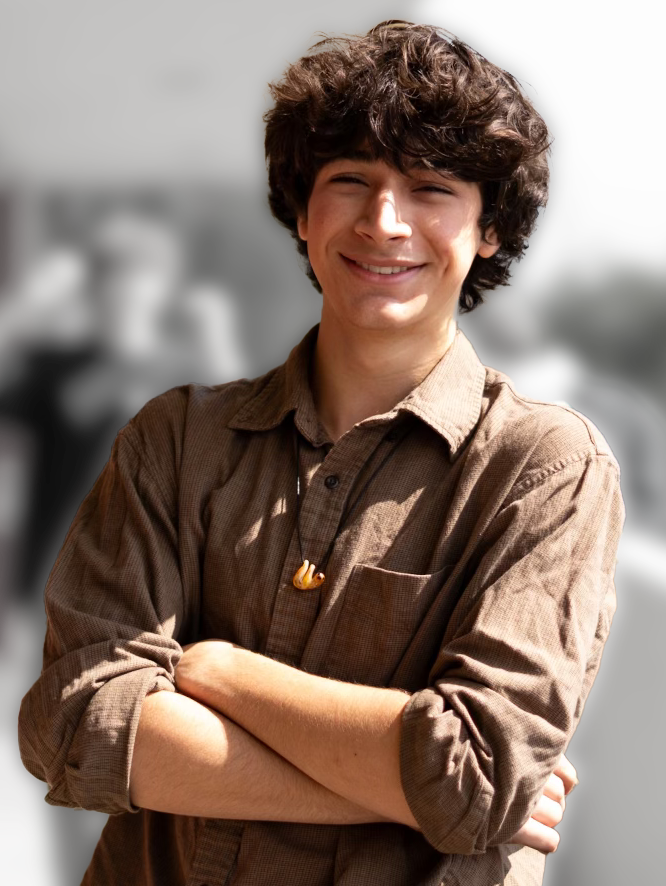
| | Matthew Paz (credit Min Seon). | | |
Matthew "Matteo" Paz, a Pasadena High School senior, won first place and $250,000 for designing machine-learning algorithms to efficiently comb through 200 billion entries of raw NEOWISE infrared full-sky data. By analyzing tiny changes in infrared radiation, the AI sorted the objects into 10 classes. He found 1.5 million new potential objects.
Paz was mentored by IPAC scientist Davy Kirkpatrick.
| | IPAC Announces New Executive Director, Tom Greene | | |
Thomas (Tom) Greene, astrophysicist and former Director of the NASA Ames Center for Exoplanet Studies and Chief of the NASA Ames Astrophysics Branch, joined IPAC as its new Executive Director on May 27. Greene brings years of experience as a scientist, having led numerous studies of protostars and exoplanets, for example, but also over 20 years of experience at the leadership level of major scientific undertakings, such as serving as a co-investigator on the JWST NIRCam and MIRI instruments. As Executive Director, Greene said there will be many opportunities to leverage IPAC’s expertise and strengthen our relationships within the scientific community.
Greene succeeds George Helou, who has served as IPAC Executive Director for 25 years and as an IPAC scientist for more than 40 years. Helou, who has made significant advances in the fields of galaxy evolution and star formation, will stay on at Caltech as a Research Professor of Physics, a role he has maintained since 1998.
| | | | There were many changes in the IPAC team in the first half of 2025. We filled 16 positions with people who either joined IPAC afresh or with existing staff who transitioned to new roles. We also had a few leadership changes, including the new IPAC Executive Director Tom Greene, and we said goodbye to three retiring IPACers. | | | | |