Pest Management Solutions for Specialty Crops and Specialty Uses | | Vision-Guided Spraying Technology Targets Problem Weeds | | |
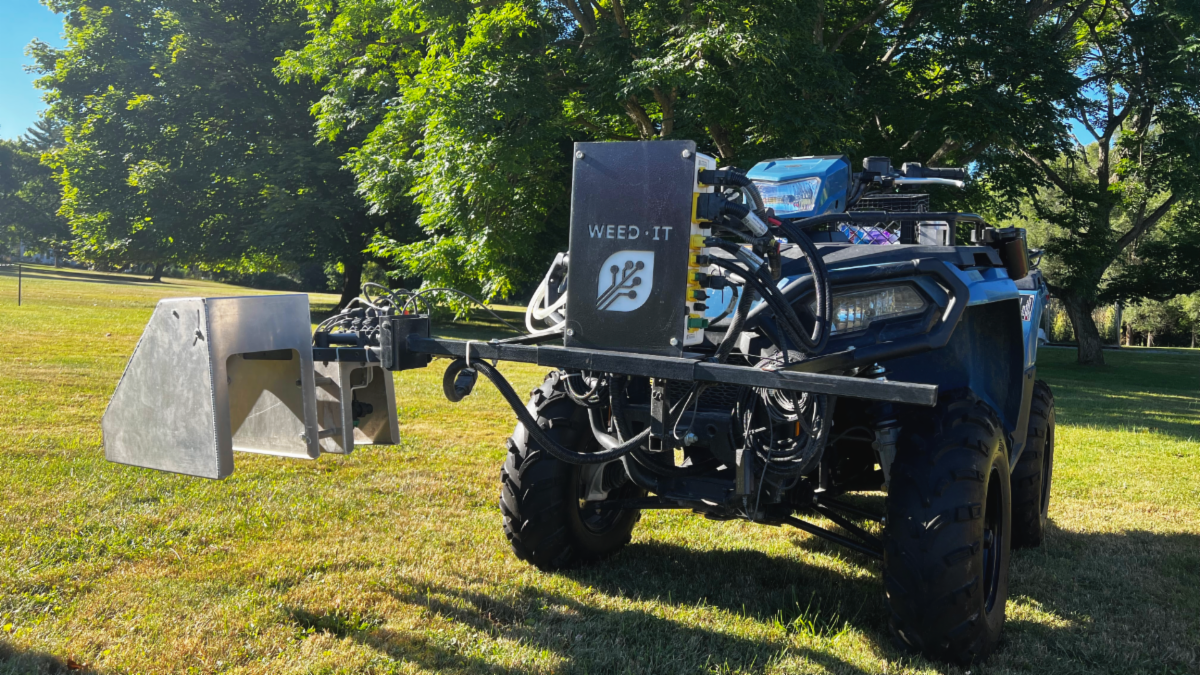
What to apply, when to apply, and how to apply are key considerations when it comes to herbicides—particularly for weed control on perennial crops. Two IR-4 research collaborators are working on the “how” part with a brand-new precision-spraying technology. Lynn Sosnoskie, Assistant Professor of Weed Ecology and Management in specialty crops at Cornell University, and Thierry Besançon, Associate Professor and Extension Weed Specialist for specialty crops at Rutgers University, have been searching for new herbicides to use safely on perennial crops, with a focus on increasing efficacy, managing crop injury, and reducing the total amounts of product applied.
The trend toward reducing the use of herbicides and other pesticides due to various factors—including environmental concerns, the development of resistance, and regulatory pressures—led Besançon and Sosnoskie to investigate precision spraying, which ultimately uses less herbicide in the field. The project was funded under IR-4’s Integrated Solutions platform.
“It was Lynn’s idea to use a vision-guided sprayer that can detect the green color—the chlorophyll—of the weed,” Besançon says. “So instead of doing a broadcast or banded application where you’re covering the entire surface of the soil with herbicide, you’re just targeting the weeds. It has two benefits: potentially reducing the amount of herbicide we are using, and possibly allowing us to use herbicides not currently listed for that crop since we can use it more safely (because we are only targeting the weeds).”
Read the rest of this story by Robin Siktberg on our website!
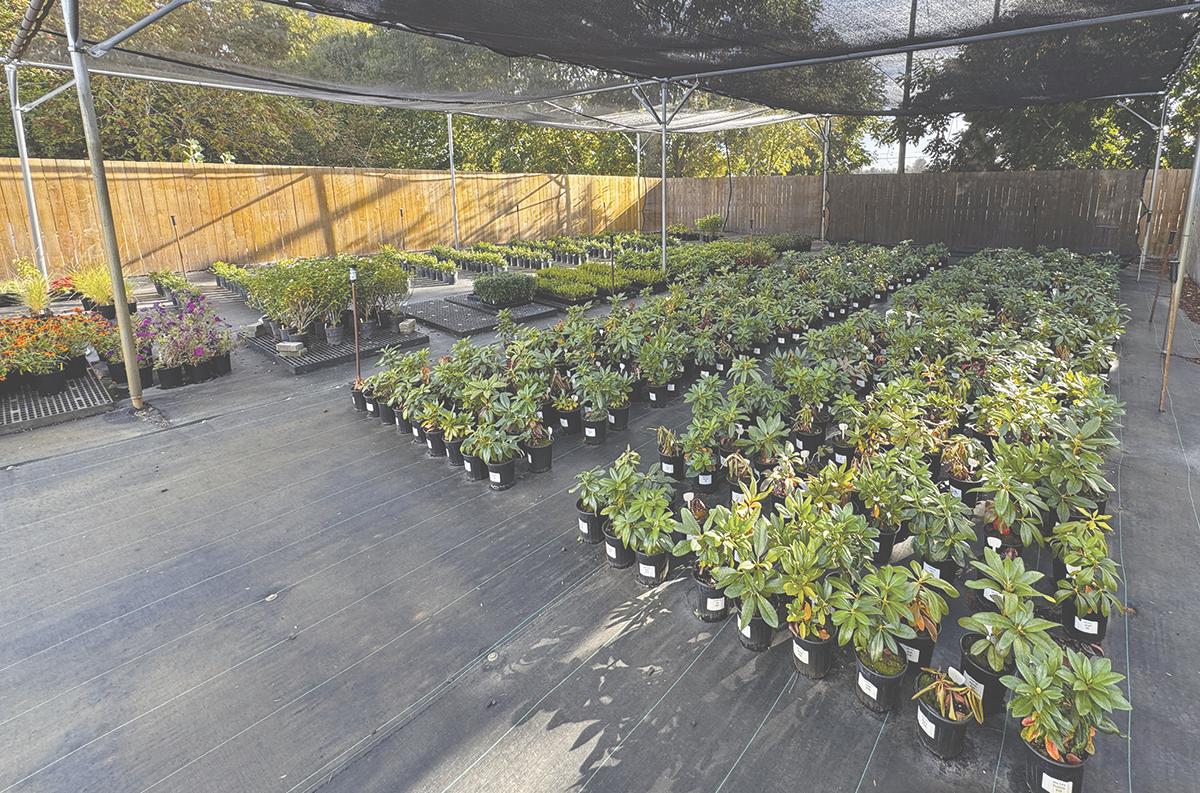
| | Digger Magazine Features IR-4 | In the latest issue of Digger Magazine, Jerry Weiland of USDA ARS paints a picture of the nursery and greenhouse industry in Oregon, and the pivotal role IR-4 plays to help support this hub of horticulture. | | Regions Host SLR Meetings | | |
Over March and April, IR-4's regional teams hosted their annual State Liaison Representative meetings. These meetings are a fantastic opportunity to connect across states, learn about one another's pest management challenges, and begin to think about this year's priorities. IR-4 applauds our Regional Field Coordinator teams for their hard work in bringing these meetings to fruition!
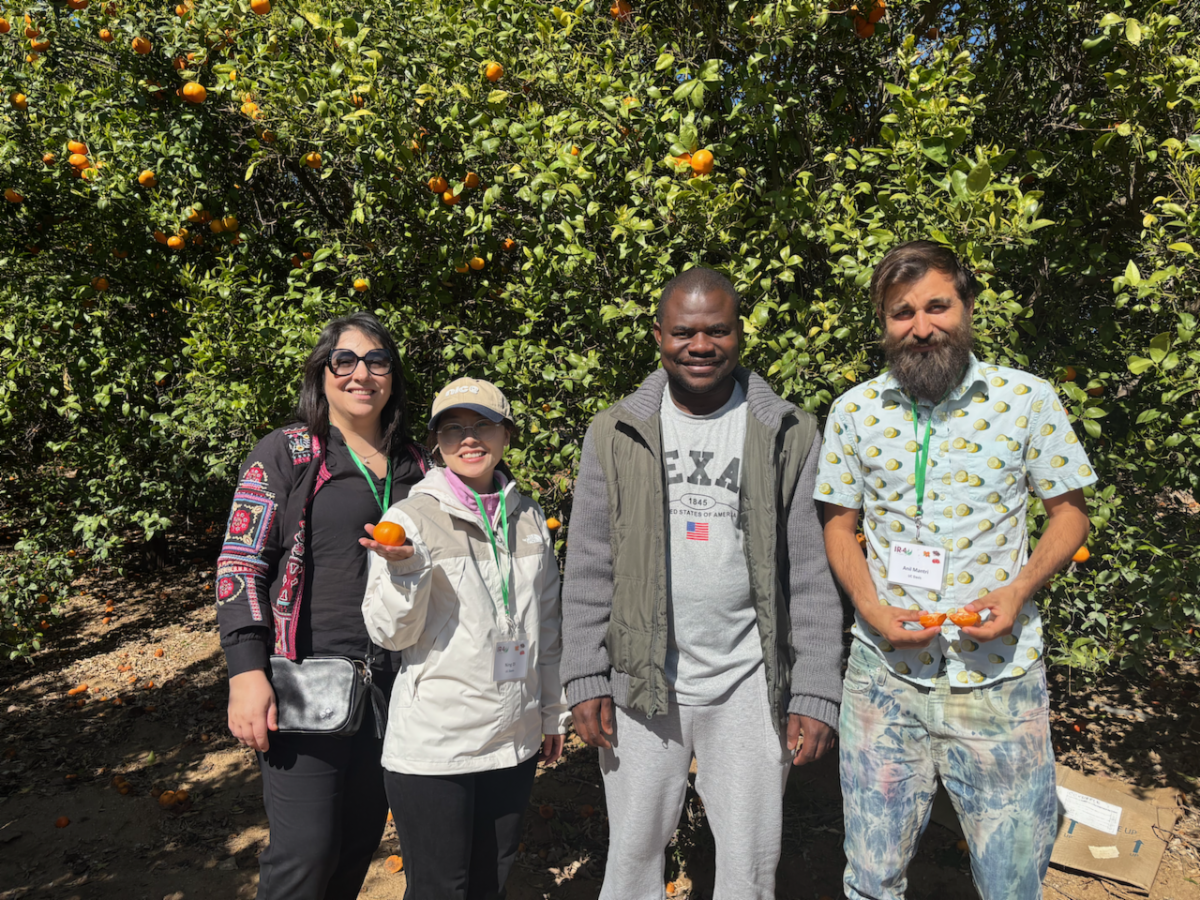
The Western Region's meeting included a tour of Coachella Valley, California farms and research facilities. The tour helped illuminate the challenges and opportunities of growing specialty crops in the desert. The group saw date palms, citrus, cut flowers, and vegetables in production. From salty soils to emerging pests to extreme weather conditions, desert-based growers face formidable challenges, but they can grow an incredible range of specialty crops due to their long season. The IR-4 team at UC Riverside Coachella Valley Research Station are on the cutting edge of exploring tools to help specialty crop growers thrive.
Special thanks to our State Liaison Representatives for sharing IR-4's story state-by-state, and bringing local growers' needs to the iR-4 team! The dedication and advocacy of IR-4's SLRs and regional teams is vital to our stakeholder-driven research cycle.
| | |
Western Region SLRs and researchers tour (and taste) citrus in the Coachella Valley.
Image shared by the UC Davis team.
| | Save the Date: 2025 Food Use Workshop | | |
The 2025 Food Use Workshop will take place September 9-11 in Denver, Colorado. Research priorities for residue, product performance, and integrated solutions studies for 2026 will be identified during this workshop. A virtual attendance option will be available.
We will update the Food Use Workshop web page continually as the event approaches, so we recommend bookmarking it for future reference. We'll send reminders via newsletter, too, so please encourage your colleagues to sign up for these announcements. Registration, hotel booking, and a tentative agenda are coming soon.
July 1 is the deadline for submitting Project Clearance Requests to be considered at the Food Use Workshop.
We hope to see you in Denver (or virtually) in September!
| | Save the Date: 2025 Environmental Horticulture Workshop | | |
We look forward to gathering in Kansas City, Missouri, October 7-8, 2025 for the next Environmental Horticulture Workshop. At this event, stakeholders involved in the Environmental Horticulture Program will collaborate to set national and regional research priorities for the next two-year cycle.
August 29 is the deadline for submitting Project Clearance Requests and Grower Survey responses to be considered at the Environmental Horticulture Workshop.
Please bookmark the new event web page. We will update this page continually as the event approaches. Registration, hotel booking info, and a tentative agenda will be posted soon! We hope to see you in Kansas City!
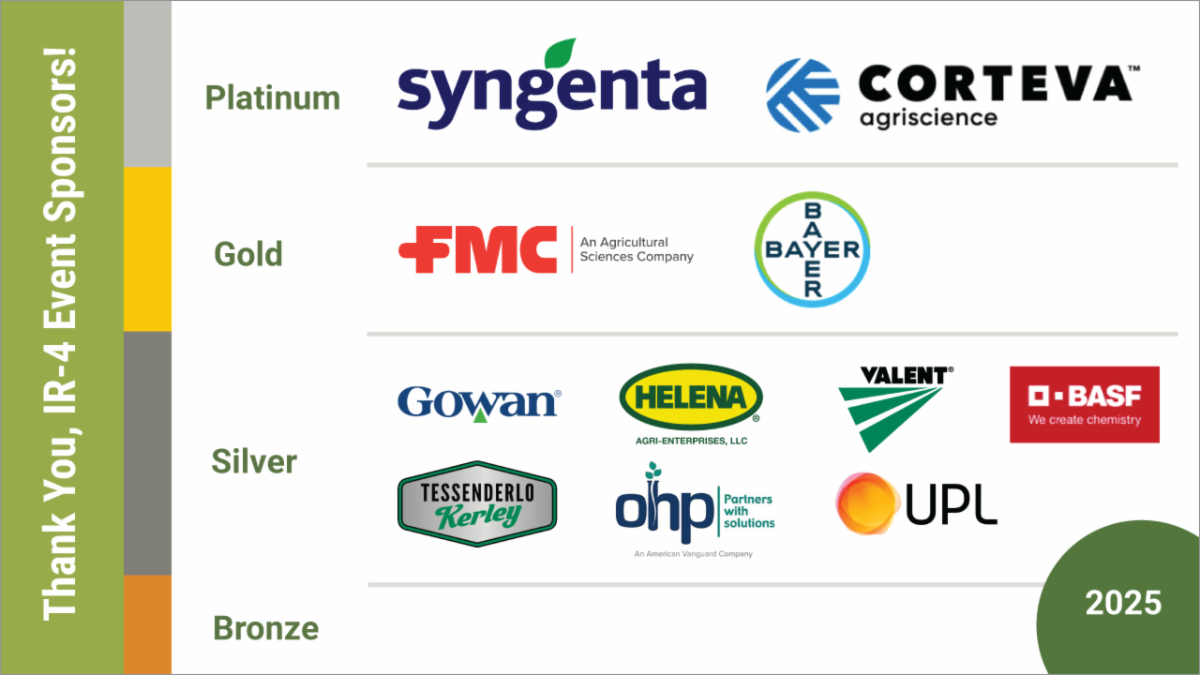
| | Presentations Online from 2025 Industry Technology Session | | Thanks to our fantastic presenters and attendees, we hosted another successful Industry Technology Session on February 20. Recorded presentations from the event have now been posted to the event web page, including presenter contact information. We encourage you to reach out to presenters or IR-4 HQ with any questions. | | Join Us as a 2025 Event Sponsor | | Sponsors make IR-4's events possible and help us deliver on our grower-focused mission. Are you interested in joining IR-4 as an event sponsor for 2025? We welcome your partnership! With events spanning new technology, food crops and ornamental crops, 2025 is an opportune time to join us as a sponsor and reach a variety of specialty crop stakeholders. Please reach out to ir-4_project@ncsu.edu for more information. | | |
The following tolerance success was added to the IR-4 website in February (none were added in March). Find other tolerance successes under Food Crop Successes & Stories.
| | Environmental Horticulture | | |
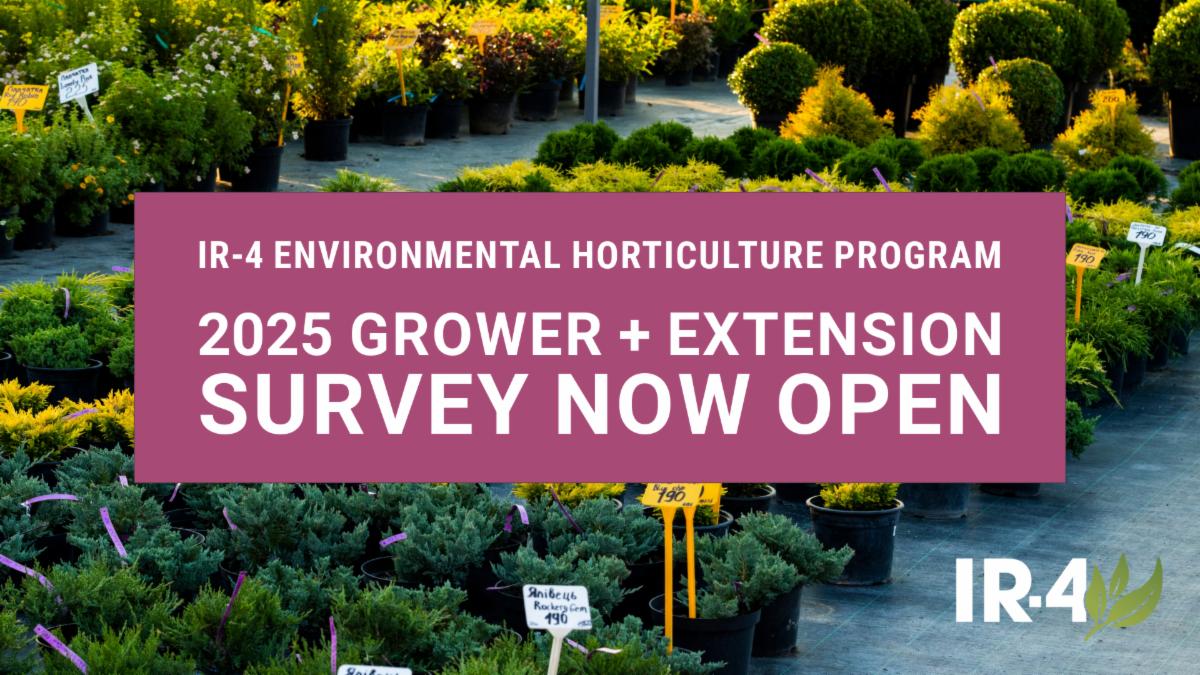
In preparation for the 2025 Environmental Horticulture Workshop, the 2025 Environmental Horticulture Program Grower & Extension Survey is now available to collect your input.
The Grower & Extension Survey is the best way to tell us which pest problems you have difficulty managing due to insufficient tools. Your input helps shape discussions at the biennial Environmental Horticulture Workshop and helps our team understand the needs of growers in this vital sector. As of fall 2024, we have transitioned the survey to a Google form. You may complete and submit the form here (or find it linked on the EH Grower Needs page).
The deadline for submitting a survey for 2026/2027 research is August 29, 2025. Thank you for your important input—we look forward to securing tools that will help you grow your healthiest crops yet.
| | — Stay tuned for more in May — | | Follow us on social media! | | This work is supported by project award no. 2022-79111-38469, from the U.S. Department of Agriculture’s National Institute of Food and Agriculture, with substantial cooperation and support from the State Agricultural Experiment Stations, USDA-ARS and USDA-FAS. Any opinions, findings, conclusions, or recommendations expressed in this publication are those of the author(s) and should not be construed to represent any official USDA or U.S. Government determination or policy. In accordance with Federal Law and U.S. Department of Agriculture policy, this institution is prohibited from discriminating on the basis of race, color, national origin, sex, age or disability. | | | | |