October 30, 2025

Pest Management Solutions for Specialty Crops and Specialty Uses

LATEST NEWS

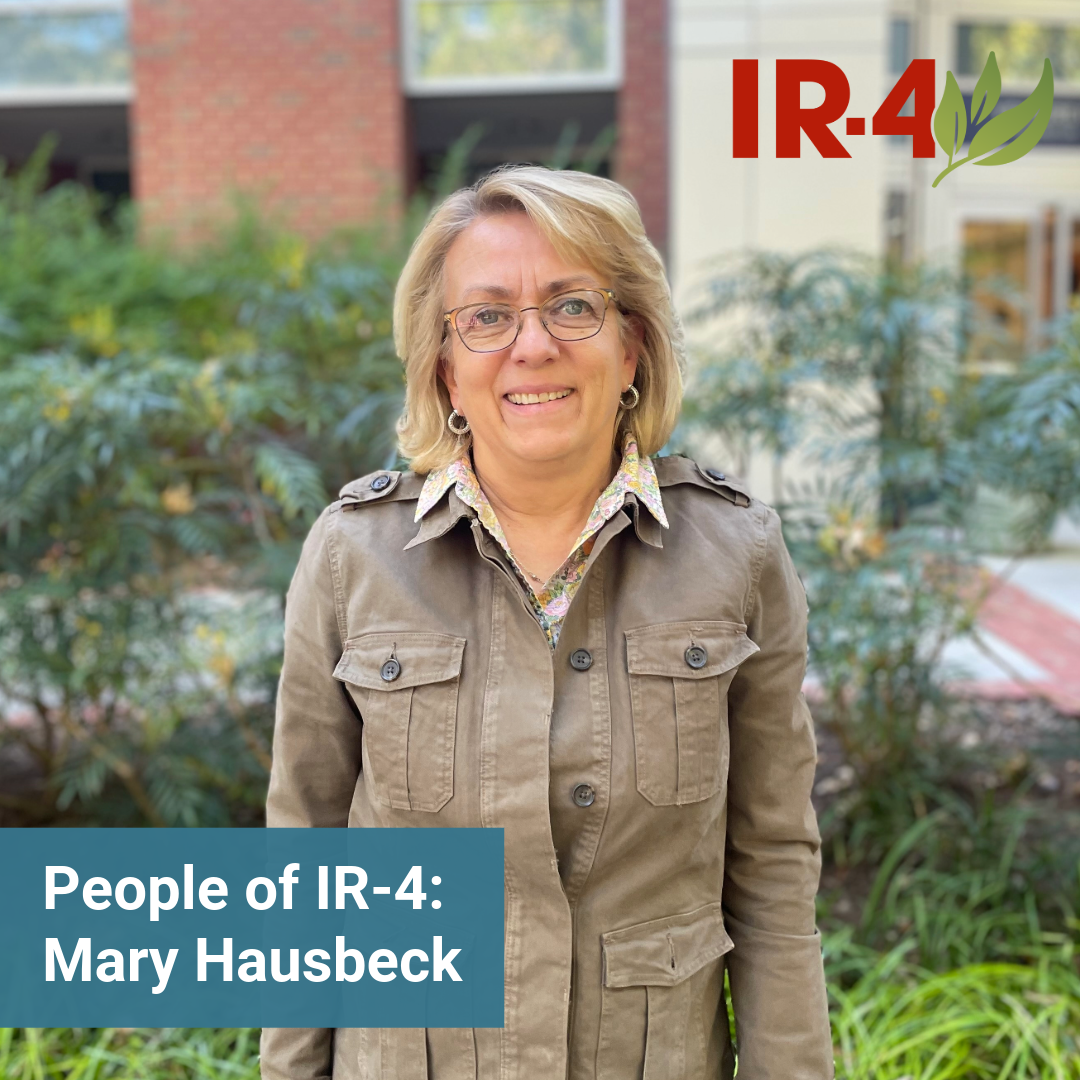
People of IR-4: Mary Hausbeck

In our latest People of IR-4 story by Raven E. Baez, get to know Mary Hausbeck, North Central Regional Director for IR-4, and University Distinguished Professor, plant pathologist, and Extension specialist at Michigan State University. Here, Mary shares her background with plants and experiences working with IR-4, from her family pickle business roots to her role on the Project Management Committee.

IR-4 PMC Decisions Impacting Integrated Solutions: A Letter from Jerry Baron

IR-4 Executive Director Jerry Baron wrote a letter this month outlining significant decisions made by the IR-4 Project Management Committee at their recent meeting, October 8-10, in Kansas City, MO. These decisions, announced during the October Town Hall meeting, will have a considerable impact on IR-4's Integrated Solutions Platform and Food Crop Program research. These decisions were made to address IR-4’s analytical laboratory backlog and rebuild our core program capacity during times of funding uncertainty. While these decisions may be disappointing to our stakeholders, they have been made in the spirit of stewarding our mission and providing a high level of service to the specialty crop community moving forward. Read the letter on our website.

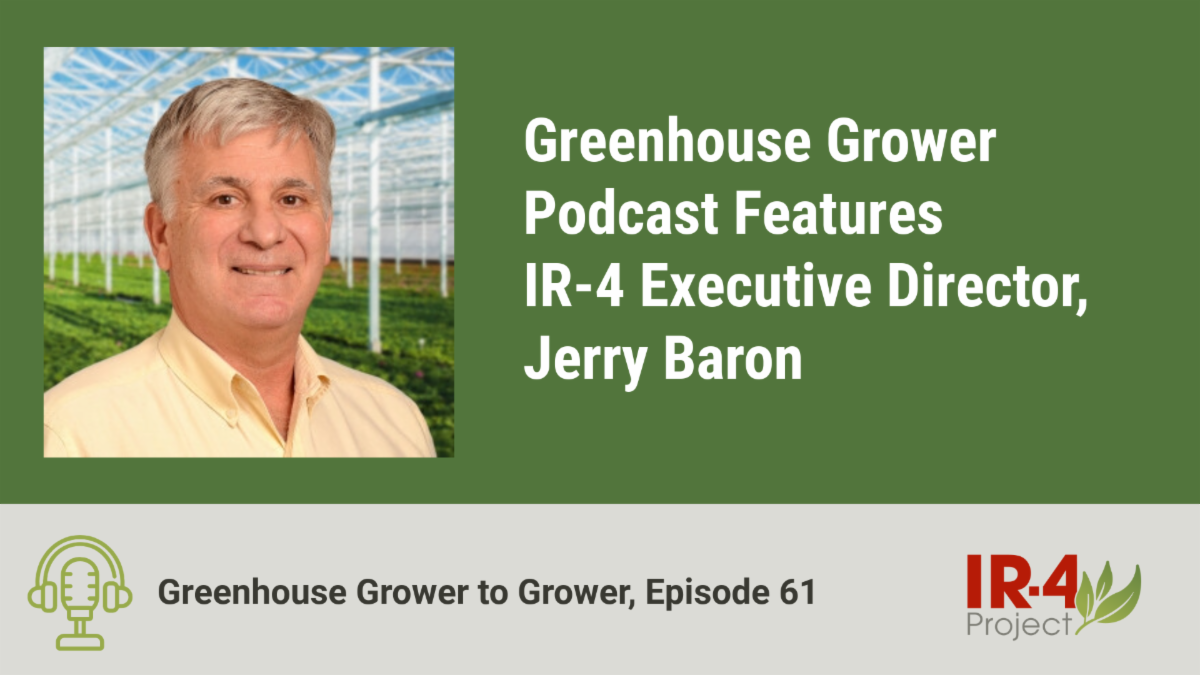
Greenhouse Grower Podcast Features Jerry Baron

IR-4 Executive Director Jerry Baron was featured on a recent episode of Greenhouse Grower to Grower Podcast, hosted by Brian Sparks. They discuss Jerry's 40-year career with IR-4 and his thoughts on the evolving crop protection industry.

EVENT UPDATES

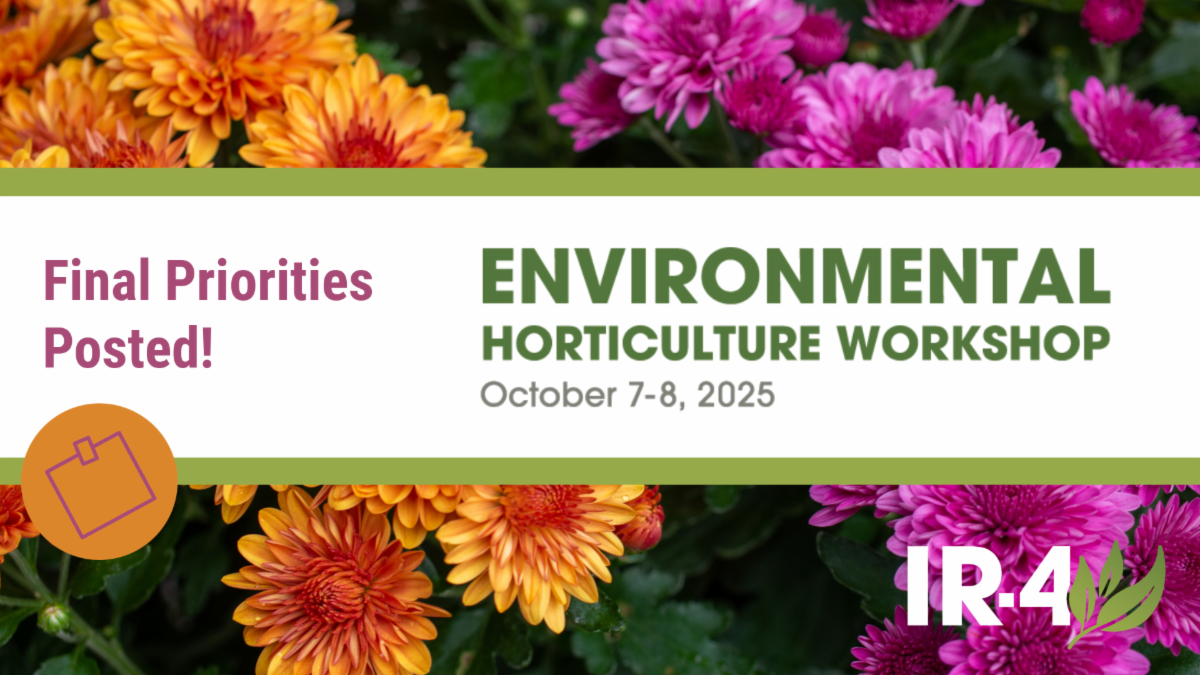
Final Priorities Posted from Environmental Horticulture Workshop

Final priorities are now available from this month's Environmental Horticulture Workshop.


Thank you to our stakeholders and sponsors for making this event possible! It is always inspiring to see how the IR-4 community comes together to advocate for the needs of specialty crop growers. National and regional research priorities for the next two-year cycle of the Environmental Horticulture Program were set at the workshop. View the final priority lists (as well as workshop recordings and slides) on the event page under "Workshop Materials."

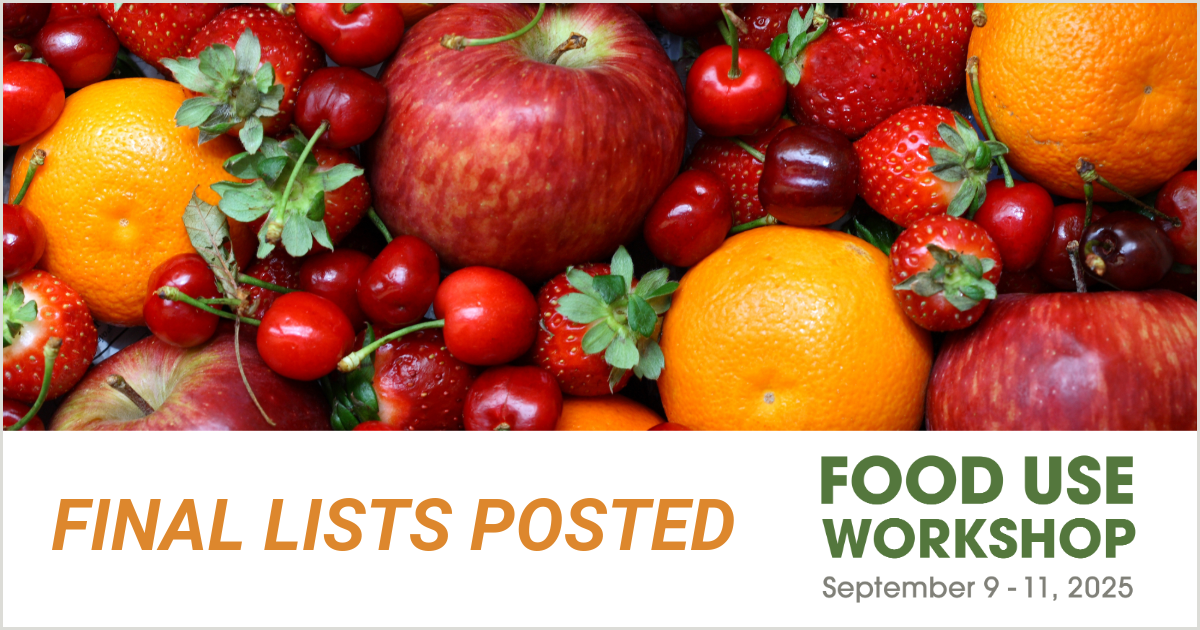
Final Lists Posted from the 2025 Food Use Workshop

Following September's 2025 Food Use Workshop, final prioritization lists were posted on the event web page under "Workshop Materials." Daily recordings and presentations are available on this page as well.


We applaud our sponsors and stakeholders for helping to make this event possible and successful. Thank you for supporting our mission and coming together to refine a long list of important nominations down to a fundable number of projects. We are optimistic about the new pest management options this work will generate for specialty crop growers across the country!

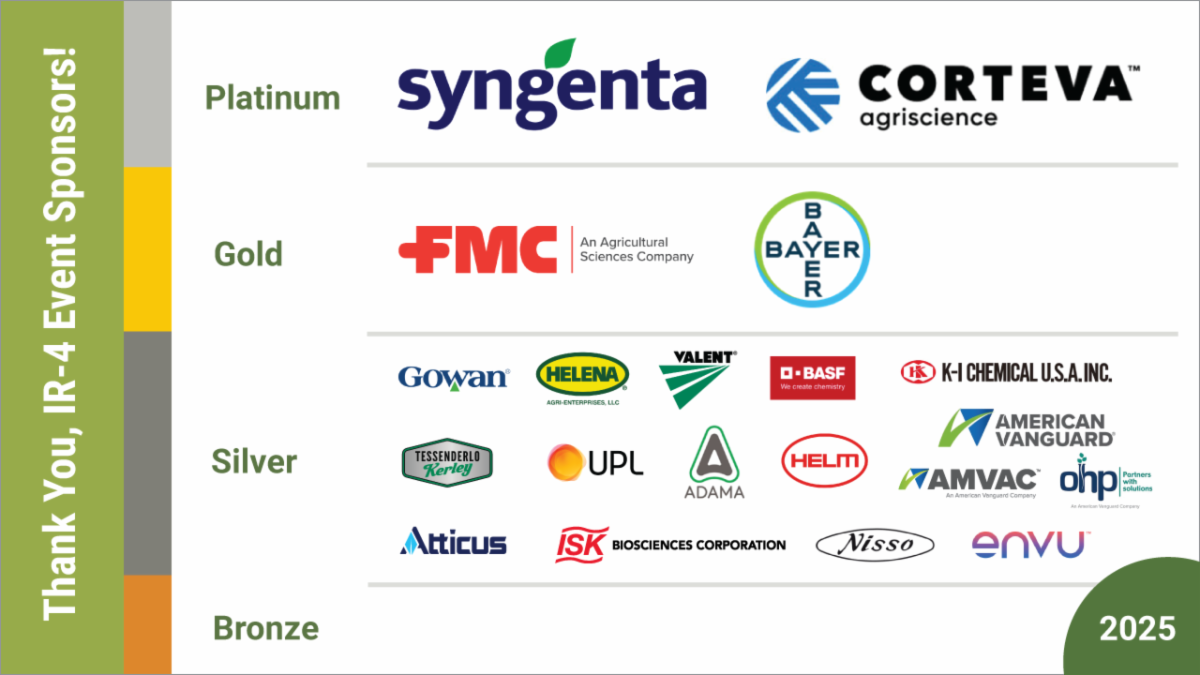
Thank you, 2025 Event Sponsors!

Sponsors make IR-4's events possible and help us deliver on our grower-focused mission. It's been a fantastic year for IR-4 events, and our sponsors have been vital to this success.


Are you interested in joining IR-4 as an event sponsor for 2026? We welcome your partnership! Please reach out to ir-4_project@ncsu.edu for more information.

RESEARCH UPDATES

Food Crops

The latest tolerance success was added to the IR-4 website in August. Find other tolerance successes under Food Crop Successes & Stories.


Environmental Horticulture

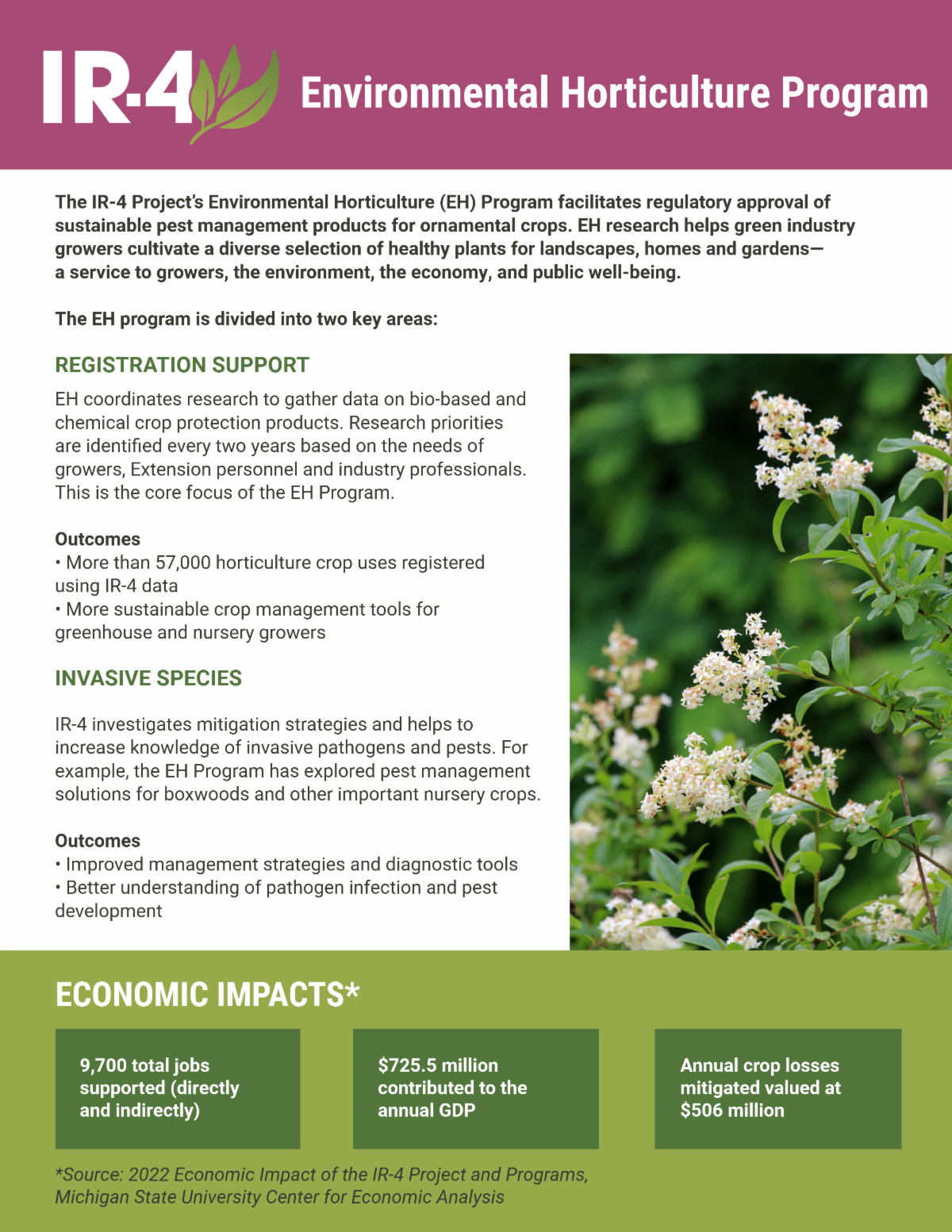
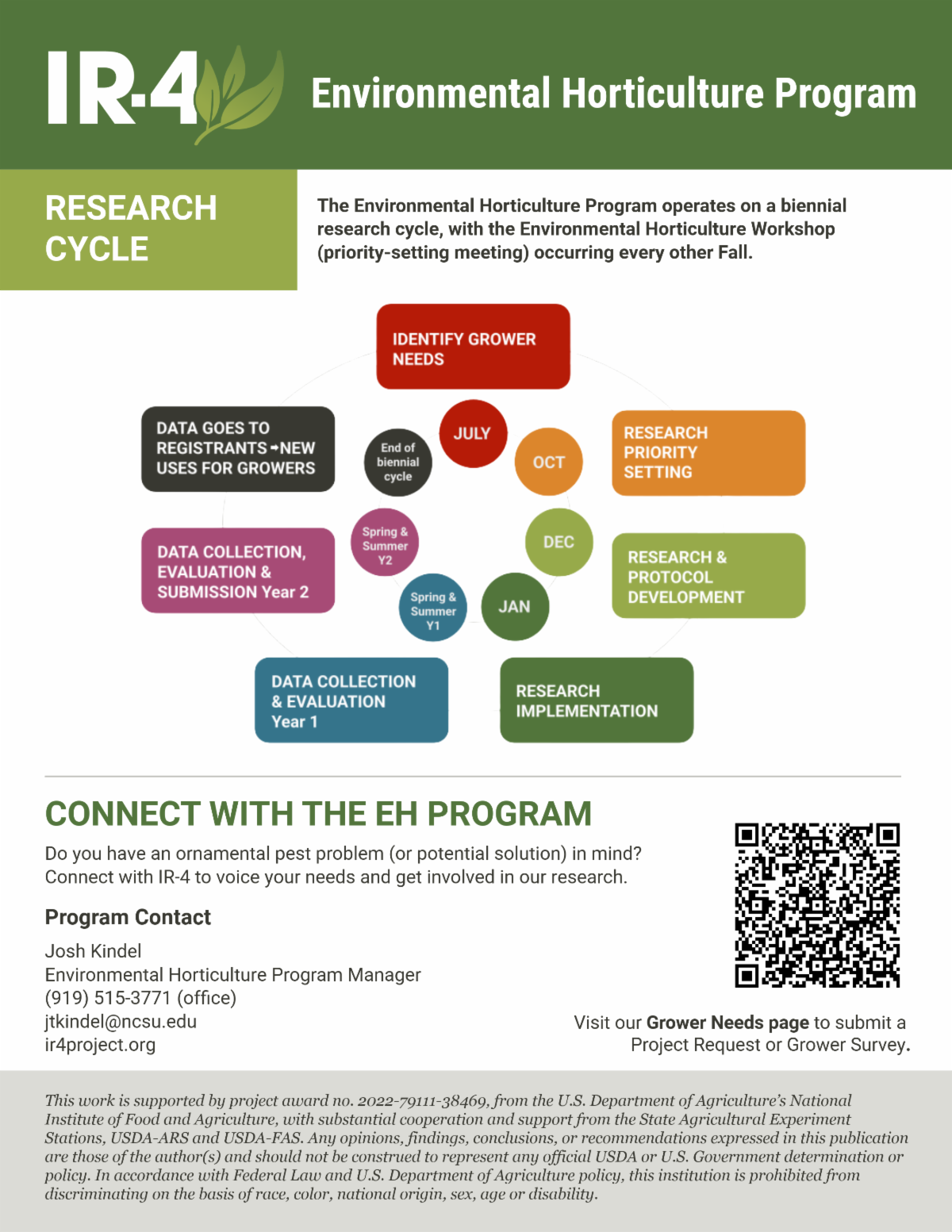
The Environmental Horticulture Program has an updated program one-pager. We encourage our ornamental research stakeholders to save this updated document, which outlines the work of this program, shows how the biennial research cycle works, and includes contact information. The one-pager (pictured above, front and back) can be found on the program web page and the EH Workshop event page (as well as the intranet for internal team members).

— Stay tuned for more in November —

Follow us on social media!

Facebook  X  Youtube  Linkedin  Instagram

This work is supported by project award nos. 2025-79111-45234 and 2022-79111-38469, from the U.S. Department of Agriculture’s National Institute of Food and Agriculture, with substantial cooperation and support from the State Agricultural Experiment Stations, USDA-ARS and USDA-FAS. Any opinions, findings, conclusions, or recommendations expressed in this publication are those of the author(s) and should not be construed to represent any official USDA or U.S. Government determination or policy. In accordance with Federal Law and U.S. Department of Agriculture policy, this institution is prohibited from discriminating on the basis of race, color, national origin, sex, age or disability.