 |
Iron & Steel Preservation
|
|

.
|
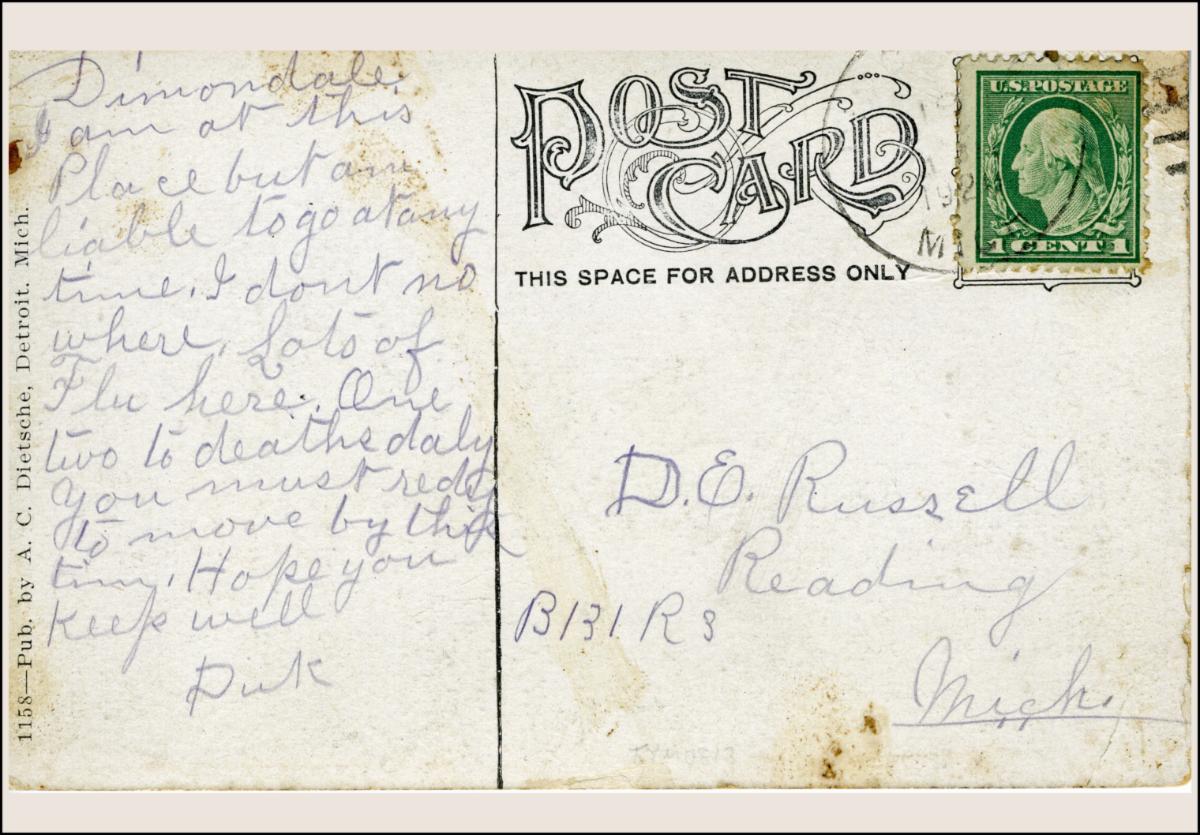
"I am at this place but am liable to go at any time. I don't know where. Lots of Flu here. One to two deaths daily. You must ready to move by this time." Was this written by someone today under a stay-at-home order? No, this was the message on the back of a 1920 postcard picture of an iron truss bridge in Dimondale, Michigan (view the postcard at the end of this newsletter). A deadly influenza pandemic lasting from 1918 through 1920 infected millions and spread throughout the country, including the small rural village of Dimondale. It's difficult to comprehend where we are today with all our societal advances, struggling a hundred years later with a deadly and vicious virus.
In the early days of our 2020 pandemic, my wife and I decided to explore the area where the Dimondale photo was taken, and we discovered an event fifty years before the postcard was mailed, an event that gave the citizens of this village a reason for celebration. Across the Grand River a new railroad bridge was being built that would provide economic and social benefits for the community for over a half century.
Vern Mesler
Iron & Steel Preservation
|
A Discovery Drive Leads to a Historic Record
|
A late afternoon "discovery drive" led us to Dimondale, Michigan, to explore where a wrought iron truss bridge once stood. As we drove across a concrete bridge that now spans the Grand River where the iron bridge used to be, I noticed in the distance two massive and finely crafted stone piers. They obviously were constructed for a bridge, but there were no visible signs of a bridge except for a short lane named Trestle Lane at the south end of the piers. Later I posted a request on Facebook for information about the stone piers. I received "likes" and comments that it was for a railroad bridge, but the most valuable historic record came by Facebook email from Cole Osborn. Osborn is a welding student at Lansing Community College and Lab Tech for the welding lab, and he sent me a January 6, 2018, Facebook posting by Chad Frost with a link to selected photographs of Dimondale from a collection of 160.
"Compiled by the Windsor Township Community Club in 1975 as a bicentennial project. The dates of the photographs may range from 1837 - 1975. Photographs were reproduced by Wayne Caruss and Charles Lawrence from old tintypes, newspapers, photos, and postcards. Compiled by Mrs. Thelma Caruss. The full 160 photo collection was submitted to the State of Michigan Archives."
|
Building the Lake Shore Railroad Bridge over the Grand River in 1872
|
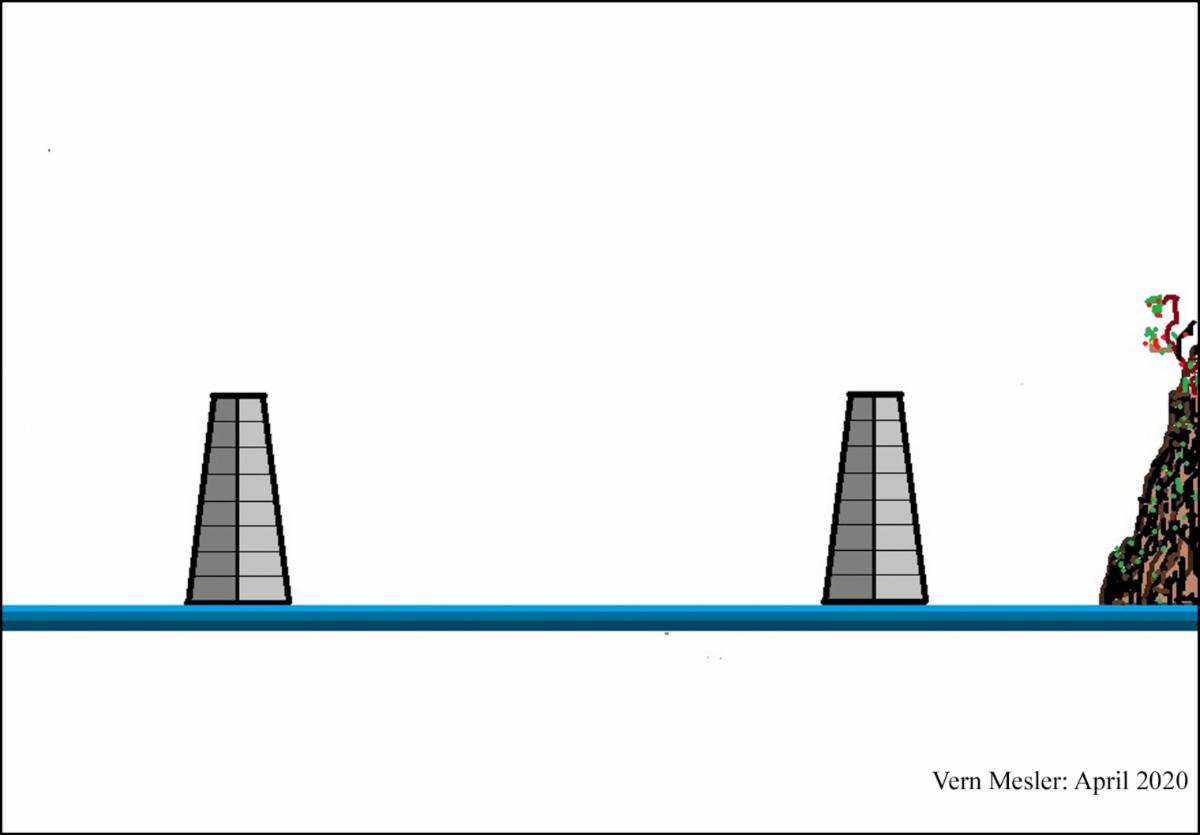
These finely crafted stone piers stand today in Michigan's Grand River within Dimondale's village limits. They are the subject of many canoeists' and kayakers' cell phone cameras. In 1872 they were built for a new wrought iron railroad bridge. [Pier photo enhanced from image posted by Laith Shubbar, July 2018, accessible in Google Maps.]
|
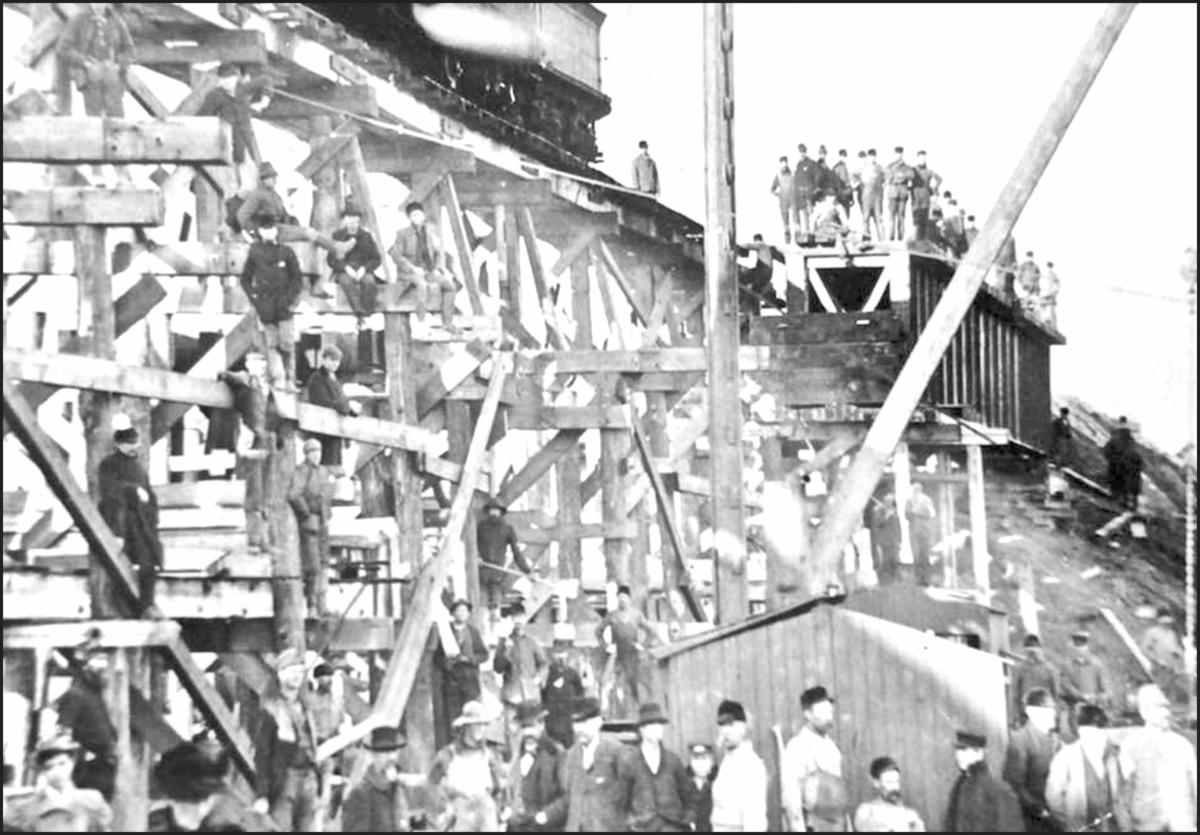
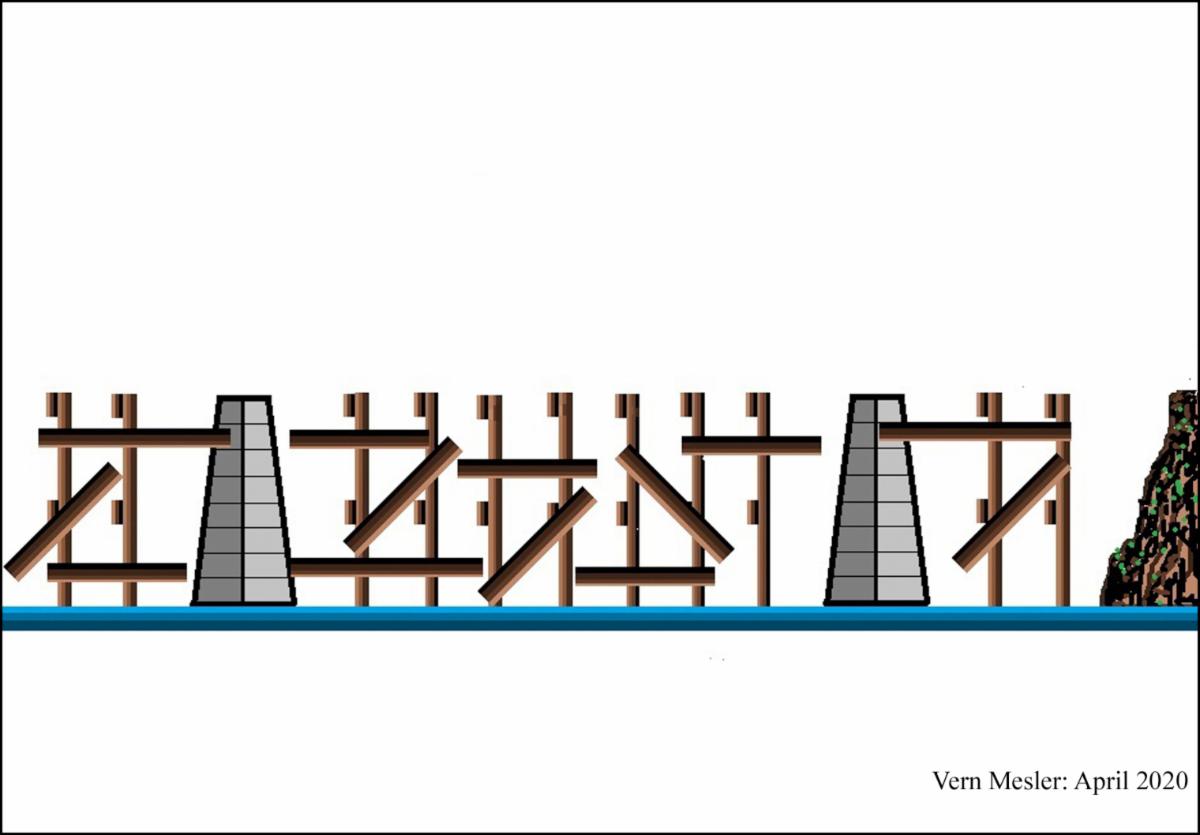
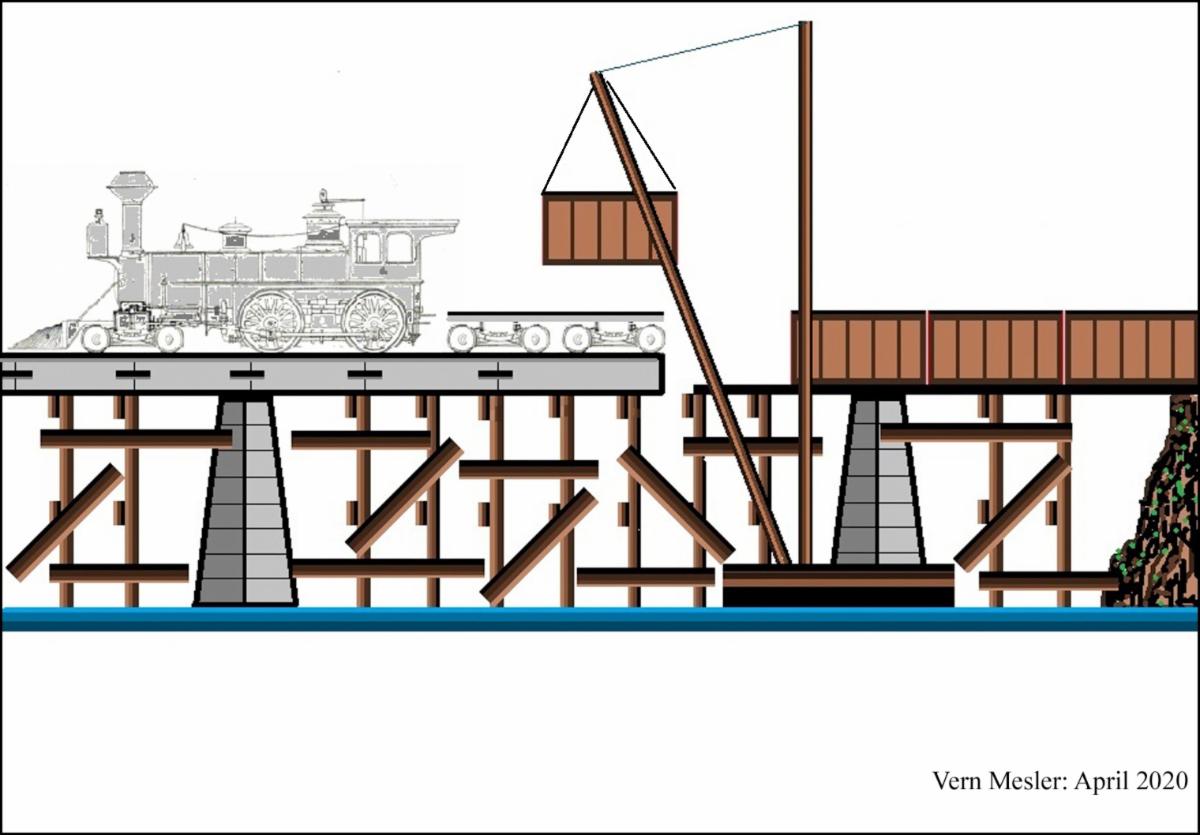
An abundance of local timber provided cribbing material for erecting the Dimondale railroad bridge, typical for 19th century bridge construction. Along the top of the plate girder, and standing amid the heavy timber cribbing, are local citizens. This is not a Point-and-Shoot photograph. It required planning, scheduling, and setup, and everyone had to remain still for an extended length of time. Although some in the photograph may have been residents of Dimondale, many were craftsmen erecting the bridge. Erecting a 19th century bridge required hard manual labor, no labor-saving hydraulic devices on these job sites.
|
In the photograph above, the two long timbers form a gin pole, the primary method for hoisting bridge members into position in 19th and early 20th century bridge construction. Near the upper left hand corner appears a steam engine tender. Transporting fabricated bridge sections by steam locomotive from the fabrication shop to the bridge site was a standard shipping method. Sections of the riveted plate girders have been set in place. These were most likely wrought iron, field-bolted in place. (Field riveting of fabricated shop-riveted sections became standard practice later, after development of the Boyer field rivet hammer.*)
* Simmons, D. A. (1997). "The Continuous Clatter": Practical Field Riveting. IA, The Journal of the Society for Industrial Archeology, 5-20.
|
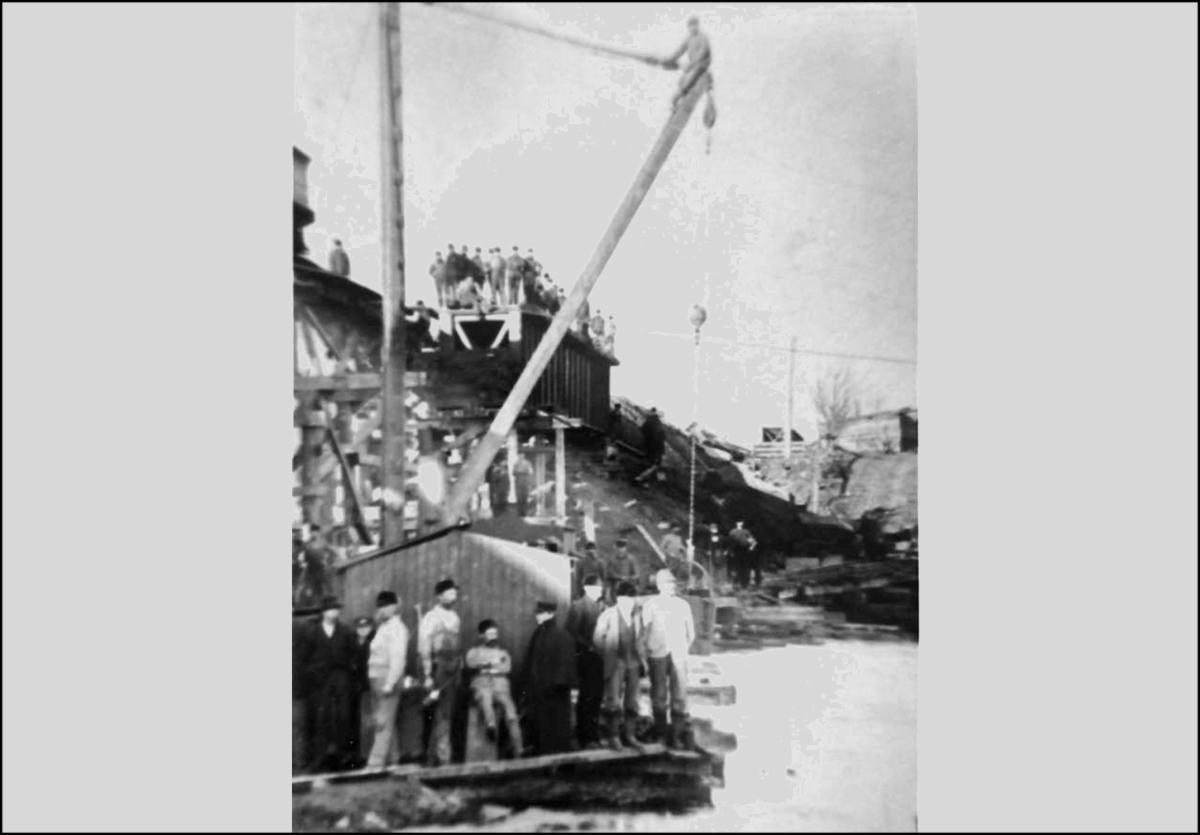
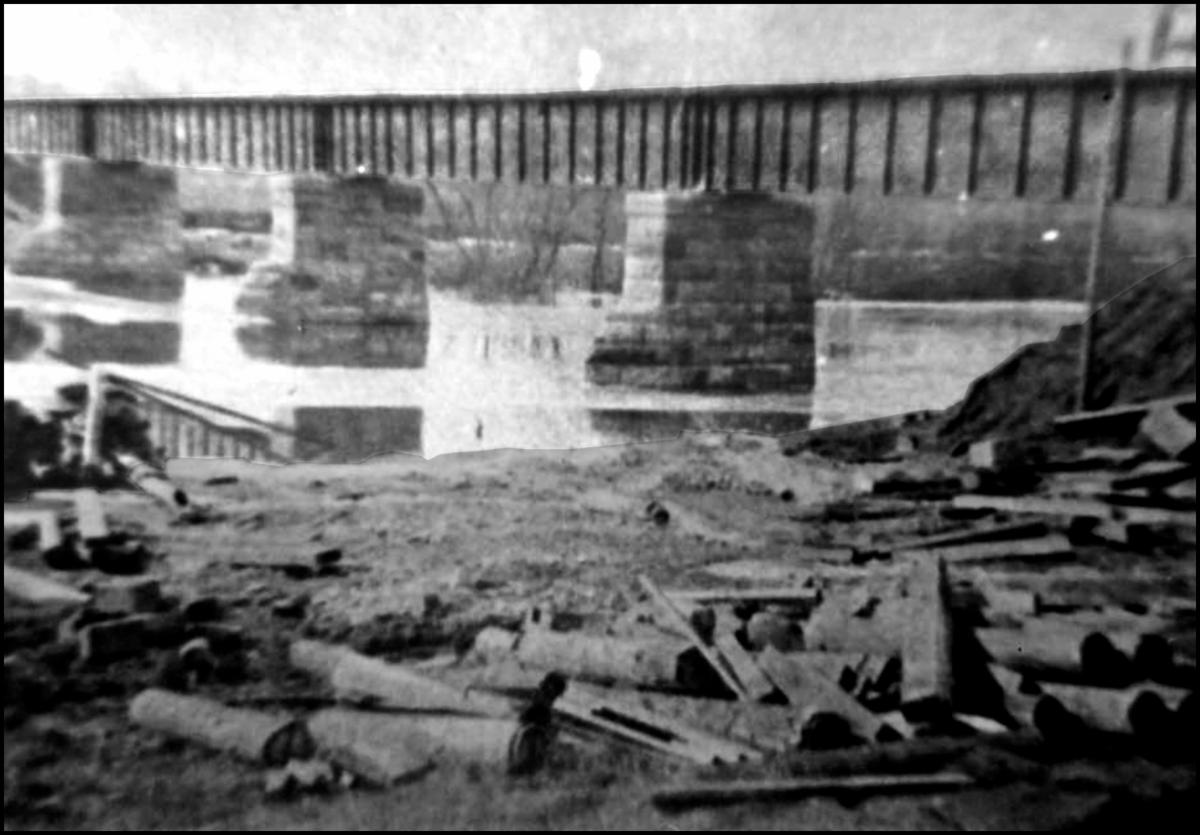
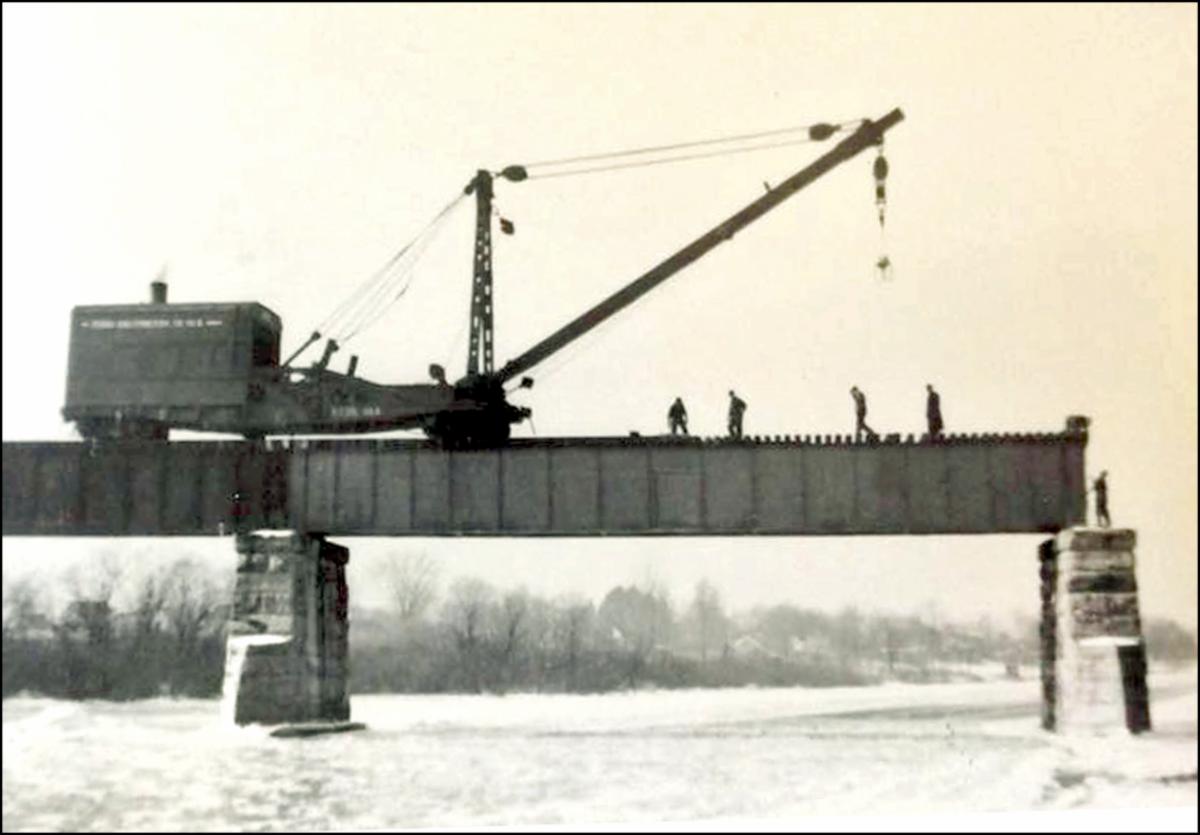
In the photograph (left) is the newly erected Dimondale bridge. Scattered along the shoreline are the remnants of the heavy timber cribbing used in the erection of the bridge. Dismantling the bridge began in 1941 (right), bringing to an end nearly seventy years of improved passenger and commercial service for the citizens of Dimondale.
|
Communicating during a flu pandemic 100 years ago
|
This photo of Dimondale, Michigan, with the old iron truss bridge in the center, was taken looking north across the Grand River, the steeple of a church visible in the distance. The railroad bridge described above would have crossed the river out of sight to the right.
|
|
Program Fund
Please consider contributing to the Iron and Steel Preservation Program Fund. This fund was established to support projects, research, conferences and scholarships related to the repair, rehabilitation, and restoration of metals. The Lansing Community College Foundation is a nonprofit 501(c)(3) corporation.
Donate Here
|
|
|
|
Past Iron & Steel Preservation Newsletters
|
September 2019 ISP Newsletter
Thank you to all our donors!
We appreciate the many contributions to the Iron and Steel Preservation Program Fund during the past year.
|
|
|
|
Sponsor
|
Want to become a sponsor?
|
|
Lansing Community College
5708 Cornerstone Drive
PO Box 40010
, MC 4100W
Lansing, MI 48917
|
|
|
|
|
Copyright © 2020. All Rights Reserved.
|
|
|
|