 |
Iron & Steel Preservation
|
|

.
|

Historical artifacts are valuable assets to a community. Especially for a younger generation, these assets are an educational opportunity to be observed, and explored. Young and old can be inspired by an earlier generation's ideas and tools that led to our technologies today. Knight Foundry and a craftsman with a camera work to keep communities' historical artifacts from disappearing. I hope you enjoy reading about them in this issue of the newsletter.
Vern Mesler
Iron & Steel Preservation Coordinator
Lansing Community College
|
As with wrought iron, historic cast iron used in structural elements is another metal where there is a lack of knowledge on how it's produced and the procedures for repairing irreplaceable damaged cast iron. I developed a greater appreciation for cast iron and the process for producing cast iron parts when in June, 1994, my wife Nan Jackson and I had an opportunity to attend a three-day Industrial Living History Workshop at
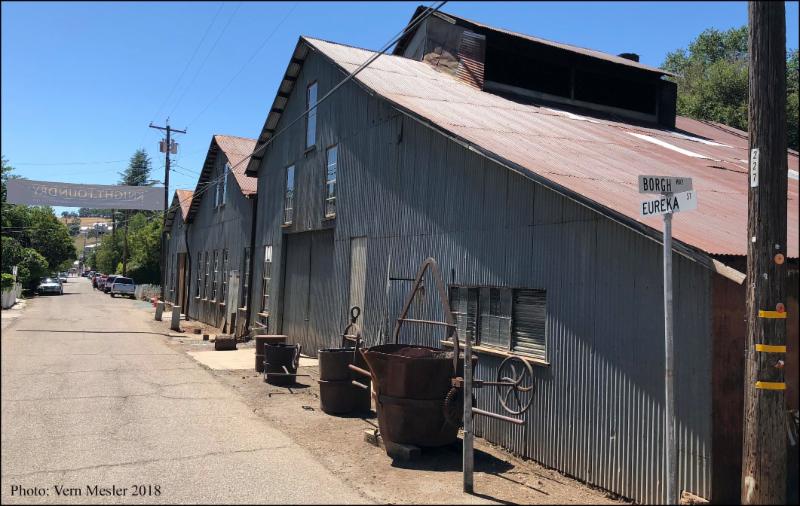
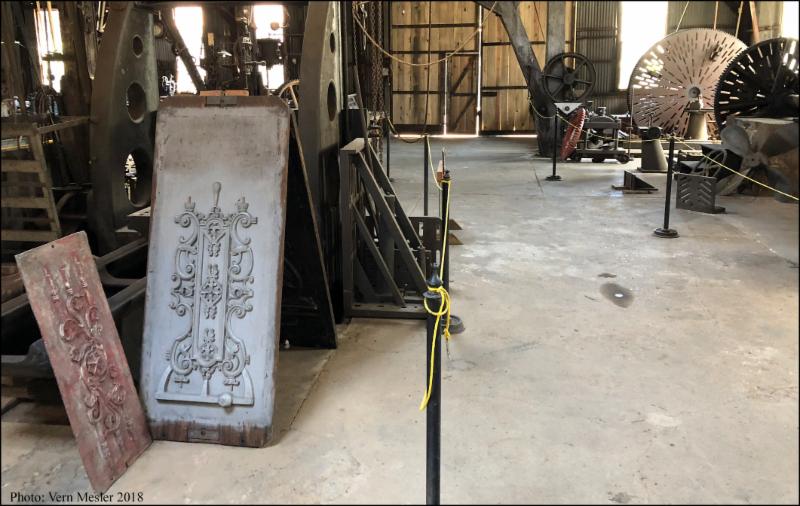
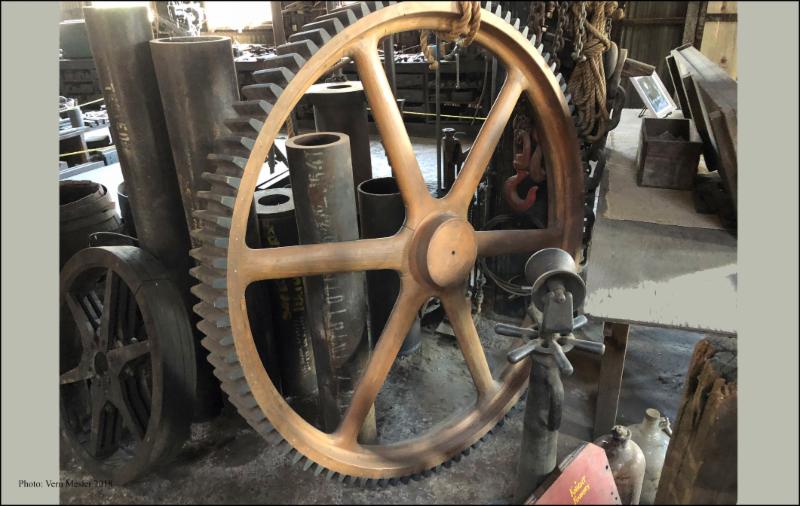
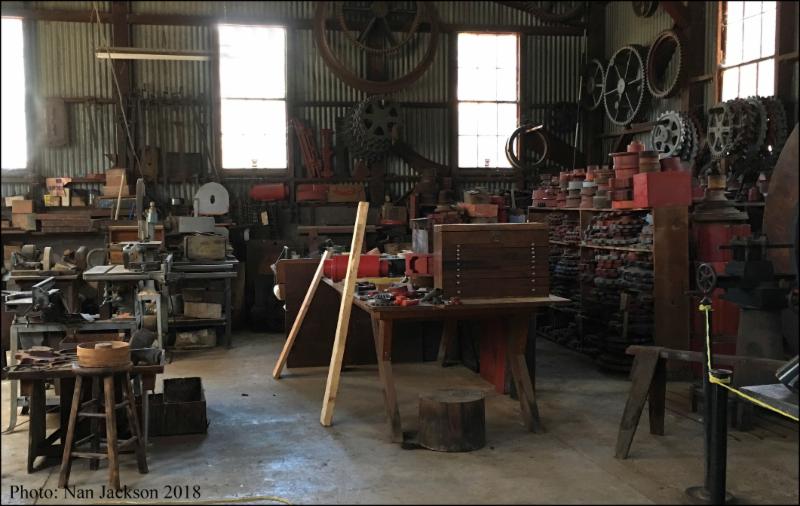
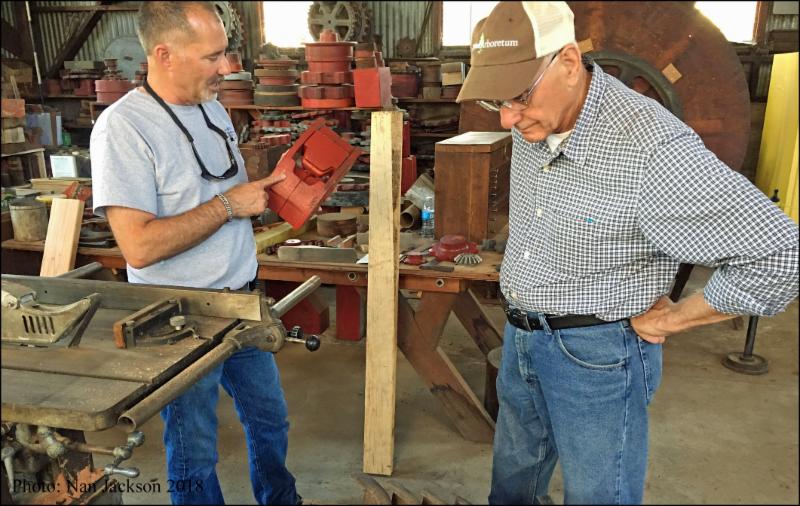
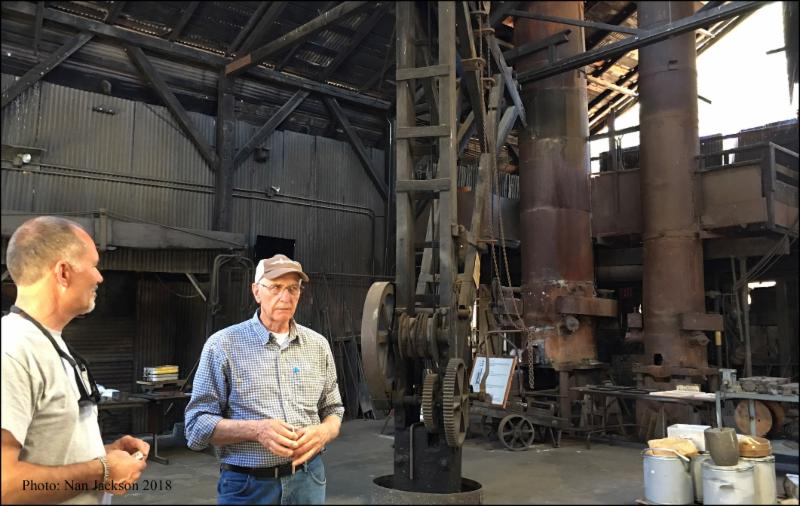
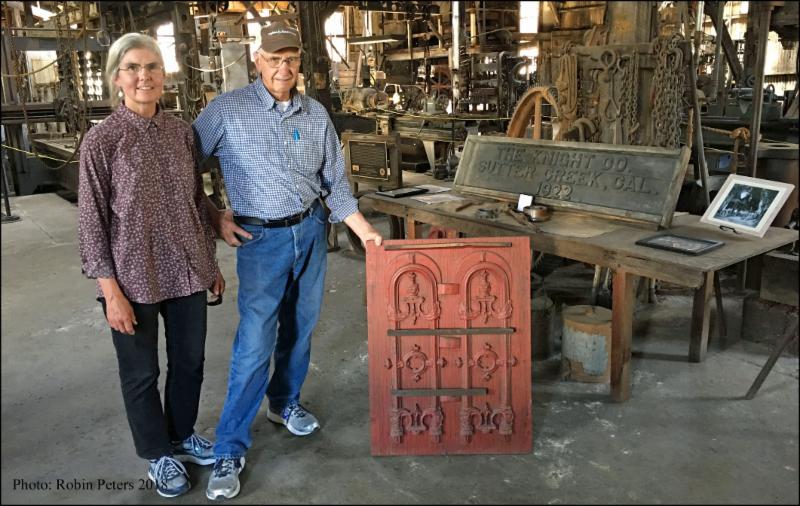
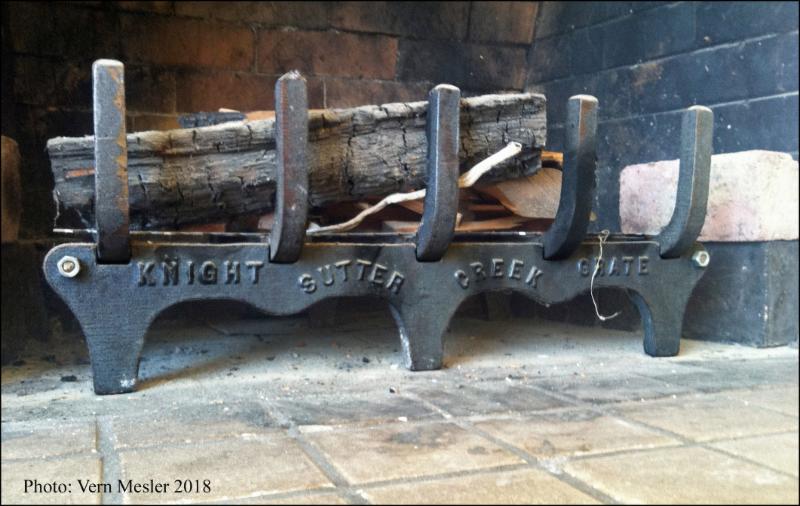
Knight Foundry: Historic Water-Powered Foundry and Machine Shop, Sutter Creek in northern California. Knight Foundry was established in 1873 by inventor Samuel Knight who supplied mining equipment to the local gold mines. The need for tools and machinery in the mining industry kept skilled craftsmen employed at the foundry. Knight Foundry held several U.S. patents; the premier products were Knight's patented water wheels and water control accessories. Wood, sand, iron, and tools in the hands of skilled craftsmen produced cast iron in shapes for both practical and decorative elements. Wherever the cast iron ends up, whether in mining equipment or a building or a bridge, the process begins with a wood pattern. These wood patterns were crafted by skilled artisans whose works were as fine-crafted as those of a cabinet maker. Sand of just the right grain sizes would be packed around the wood pattern; when withdrawn, the pattern leaves the correct shape for the desired cast iron part. Once the sand molds are finished, a shaft furnace called a cupola is charged with alternate layers of scrap iron and coke, then ignited. With tuyeres at the bottom of the furnace, hot blasts of air are blown through the iron charge to consume the coke and melt the iron. During the final stage, molten iron is poured into the sand cavity and every detail from the wood pattern is replicated in cast iron. During the Living History Workshop, we were introduced to all these processes, from making the pattern to watching "the pour."
During our 2018 cross-country trip exploring historic metal structures, we traveled back to Sutter Creek to visit Knight Foundry and to see what changes have taken place since 1994. Knight Foundry experienced some difficult times, with its future sometimes in doubt. But thanks to a dedicated group of determined craftsmen, this Historic Industrial Landmark will continue as an educational resource for industrial craftsmen, educators and metal preservationists. Our guide for this visit was Robin Peters, Chair of Knight Foundry Alliance. Peters has a long association with Knight Foundry and was one of our instructors at the 1994 Industrial Living History Workshop. Peters was generous with his Saturday afternoon time, providing us with a description of the struggle to obtain ownership of Knight Foundry and their success in doing so. Knight Foundry Alliance will continue their Industrial Living History Workshops; we would encourage anyone with an interest in industrial history to visit the website and consider attending one of
Knight Foundry workshops.
From The History Channel:
|
Cast Iron in Historic Bridges
|
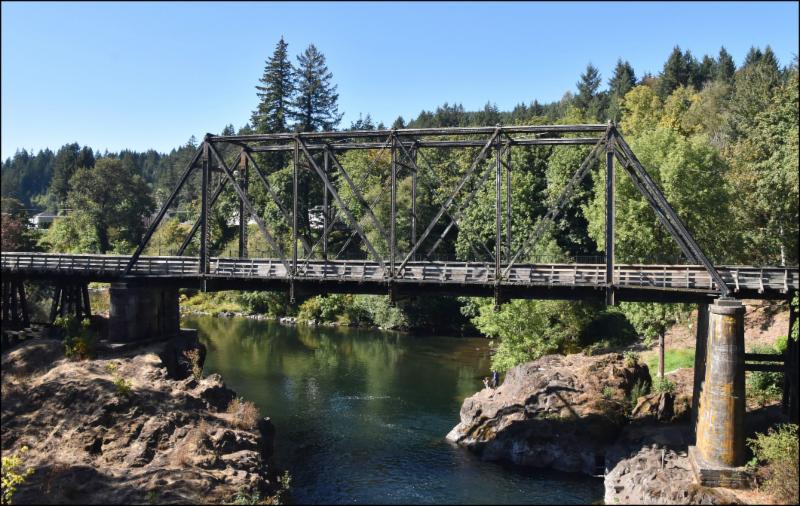
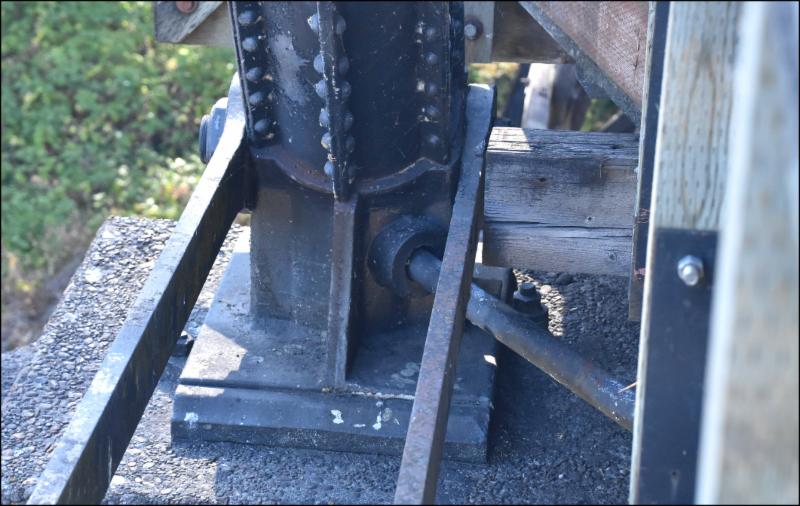
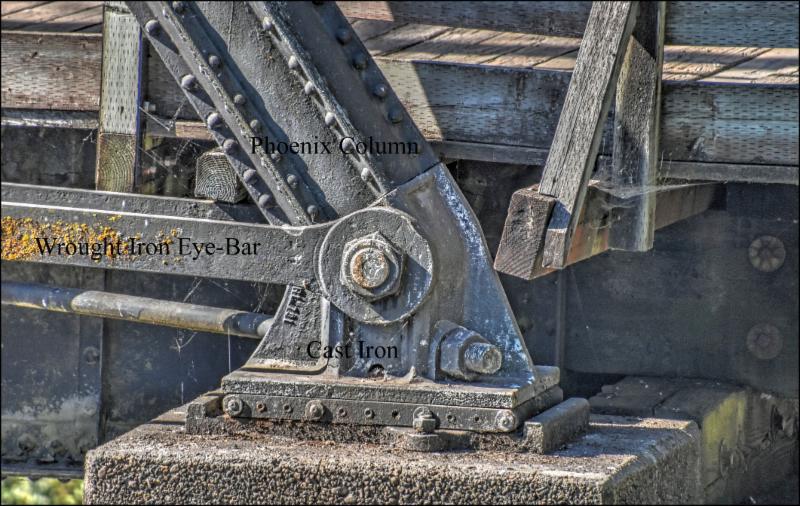
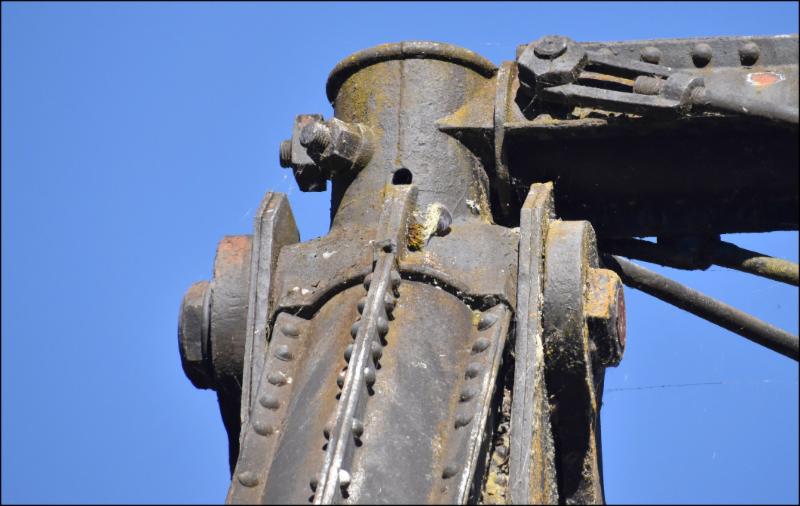
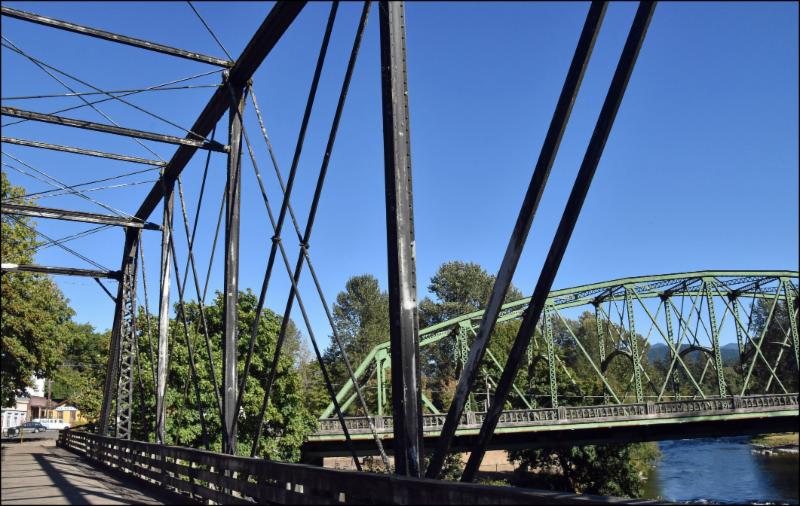
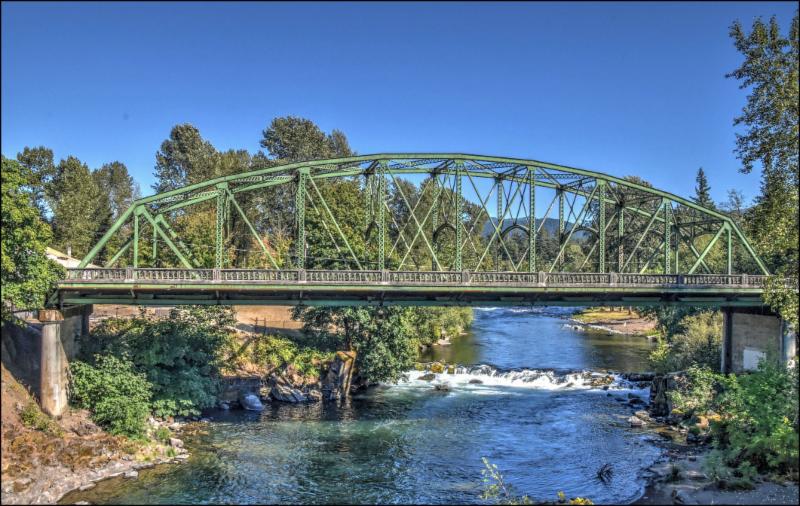
Cast iron was widely used on nineteenth century metal truss bridges, both as decorative and structural elements, and the Mill City Railroad (Rails-to-Trails) Bridge over the Santian River, Oregon, has excellent examples of both decorative and structural cast iron sections. Nathan Holth of HistoricBridges.org on a recent trip to Oregon produced some outstanding photographic documentation of the cast iron sections on the
Mill City Railroad Bridge.
|
A Craftsman With a Camera
|
|
|
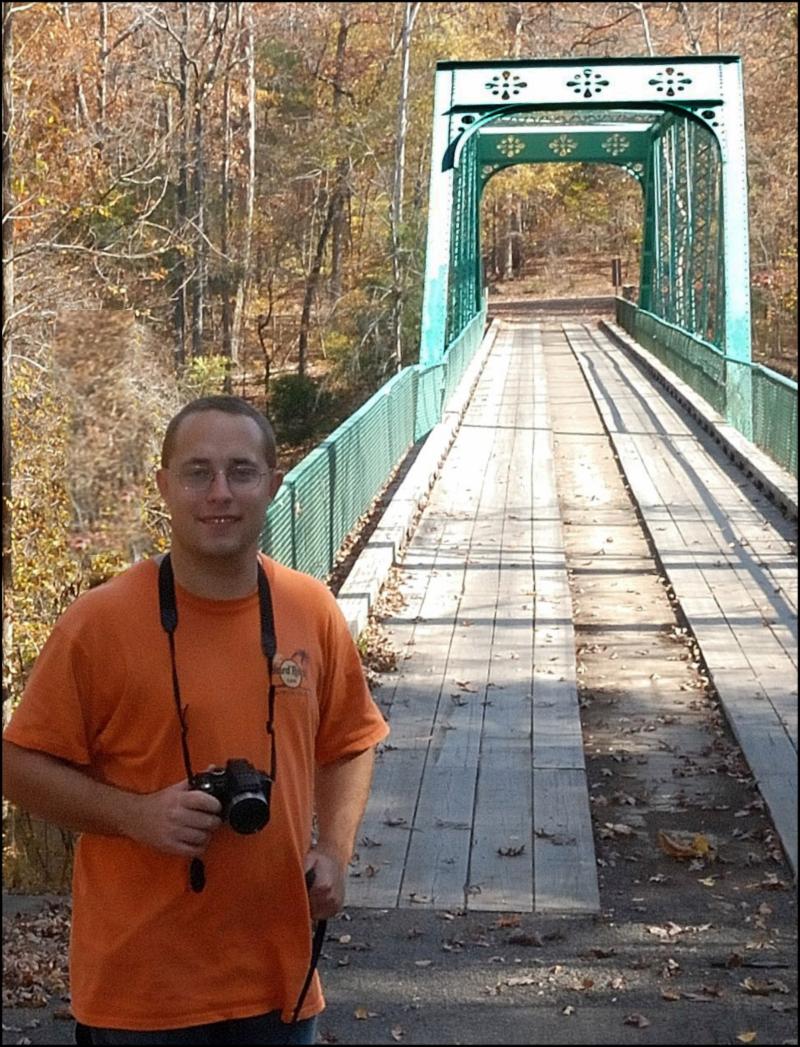
Nathan Holth photographing the
|
|
|
|
|
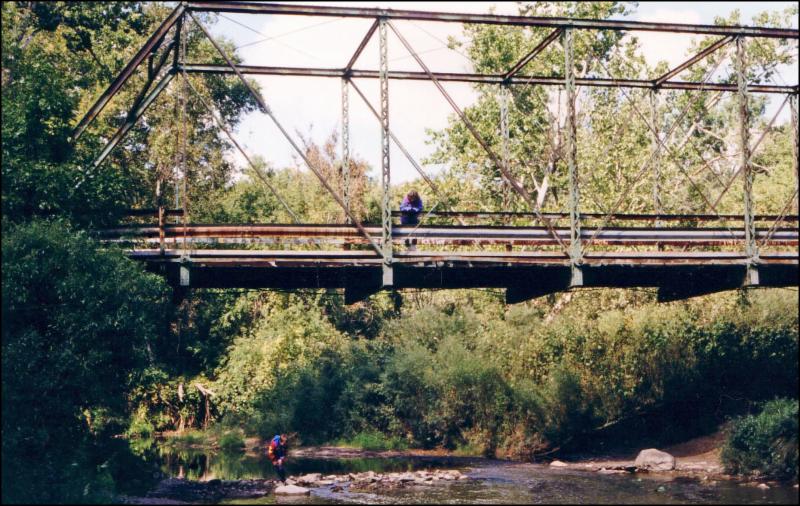
Old Iron Bridge: Nathan Holth and his mother explored the Ford Road Bridge in 1995.
|
|
|
Approaching Port Huron, Michigan, from the west you can see the tops of two massive steel structures just above the tree line. Two bridges span the St Clair River there, connecting the United States and Canada. Fabricated and erected decades apart during the twentieth century, these two spans are impressive, especially for a young man who, as a five-year-old boy living nearby, saw these structures as "beautiful". Nathan Holth grew up in Port Huron, a city where the Blue Water Bridge dominates the city's shoreline, spanning high over the St Clair River allowing clearance for the large Michigan Lake Boats sailing on the Great Lakes. These were not the only bridges he saw in his hometown: along the Black River in downtown Port Huron four lift bridges allow boats access to the St Clair River and the Great Lakes. One of the lift bridges was the historic Military Street Bridge, and what attracted the young Holth was the ornate hand railing, repeating patterns of curved metal made in arches, diagonals, verticals, and cross designs, lines and shapes seen in Holth's photographic website of historic bridge images. This historic bascule bridge of the Strauss trunnion type was replaced in the 1990's. Having admired this bridge from childhood, Holth was "not happy with the replacement, my first loss of a historic bridge".
"Old Iron Bridge" is another historic bridge Holth remembers from his life in Port Huron. "Old iron bridge" is a name often used by locals to identify an abandoned bridge whose history is lost in memories, its records in forgotten files or destroyed. Old Iron Bridge led Holth on an internet search to answer the question "are there any other bridges out there like this bridge?" His search led to the discovery of the real name of Old Iron Bridge, the Ford Road Bridge, and his quest of discovery and documentation developed into a personal website
and eventually a professional website.
HistoricBridges.org is a photographic inventory of metal truss bridges, a website designed from one person's passion to educate and record about historic metal truss bridges seen by some as beautiful and some as a blight on the landscape. This website has attracted a national and international audience of preservationists, engineers, educators, and those curious about an abandoned historic metal truss bridge in their own city.
"In addition to being extensive and informative, HistoricBridges.org is searchable by location so a user can learn about a found bridge or plan a bridge tour. For a trip to the Windy City, Nathan's book Chicago's Bridges is the perfect guide. Bridge enthusiasts owe him a big THANK YOU." (Dr. Frank Hatfield, Professor Emeritus of the Department of Civil & Environmental Engineering, Michigan State University)
Holth purchased his first digital camera in 2003 while in high school. At first his intent was to capture the grace and beauty of historic truss bridges, structures anchored in the ground and spanning over expanses of water and terrain, but as his network of preservationists and metal fabricators grew, he began to focus on the individual parts that make up a metal truss bridge. HistoricBridges.org provides extensive photographic and historic detail of metal truss bridges, useful for accurate restoration and replication of historic structures.
"Nathan's website is a very important tool to us in what we do here. His attention to detail on bridges in his photos has helped us in how and why certain things need restoration and how to price them. His knowledge of these structures is spot-on the best." (Nels Raynor, Owner, Bach Structural Steel)
Holth's cameras have grown in sophistication over the years, and, with a desire to record structural details accurately, he has the latest digital apps on his mobile phone to bring from the shadows historical features of a bridge's connections and other important details. A satellite map-view helps Holth to decide the best approach to a historic bridge for a good photograph, regardless of obstacles, mud, bristles, insects, and hastily welded metal barriers that might need to be traversed. As he says:
"The best photo takes the most work."
As a craftsman with a camera, Nathan Holth will continue to travel across the United States, Europe and Asia to record details of the well-known historic bridges and to seek out those abandoned bridges hidden from the public view. With his ongoing work to photographically record structural details that have never been documented of the engineer's design and the craftsmen's fabrication,
HistoricBridges.org will continue to grow.
"It's said that photography is the art of observation. Nathan's photographs 'observe' the engineering and craftsmanship of bridges and explain their history in ways we cannot express with words." (Kitty Henderson, Executive Director, Historic Bridge Foundation)
Vern Mesler 2019
|
Cast Iron or Terra-Cotta?
(by guest writer Nan Jackson)
|
The question "cast iron or terra-cotta?" may strike knowledgeable people in iron and steel preservation as a little ridiculous. Readers may have seen articles in earlier issues of this newsletter addressing the question "wrought iron or steel?" as a reasonable query given how often these materials of common ancestry are not distinguished one from the other in casual descriptions of historic metal bridges and buildings. Unless clued into the distinguishing characteristics of each of these two different metals or the eras in which they were produced and used in various types of construction, it's easy to file all metal bridges into a folder labelled "iron bridges" or all metal buildings under the heading "steel skyscrapers."
Cast iron or terra-cotta? How could "fired earth" be mistaken for the iron-carbon alloy we know in our iron skillets and garden furniture?
|
******** Save the Date ********
2019 Iron & Steel Preservation Conference/Workshop
October 18th and 19th
|
Lansing Community College Iron & Steel Preservation (ISP) Conference/Workshops have provided one of the leading experiences for hands-on participation, demonstrations and technical papers in the preservation of metal structures. A major topic for the 2019 conference/workshop is the
Cut River Bridge rehabilitation as an example worthy of attention at a national level, with a focus on the shop-riveted bridge members, the on-site riveting of connections with the field rivet hammer, and the removal of pack rust.
Registration details will be available in May 2019. Look for them in the ISP Newsletter.
|
Lansing Community College Foundation
|
|
A fund has been established at Lansing Community College Foundation to support projects, research and conferences related to the rehabilitation of historic iron and steel. From this fund scholarships have been awarded to students in engineering, preservation, and industrial arts to attend previous Iron and Steel Preservation Conferences. Please consider donating to support ISP scholarships for the 2019 Iron & Steel Preservation Conference/Workshop.
The Lansing Community College Foundation is a nonprofit 501(c)(3) corporation. Your contributions make a big difference.
Thanks,
Vern Mesler
|
 |
|
|
Program Fund
Please consider contributing to the Iron and Steel Preservation Program Fund. This fund was established to support projects, research, conferences and scholarships related to the repair, rehabilitation, and restoration of metals. The Lansing Community College Foundation is a nonprofit 501(c)(3) corporation.
Donate Here
|
|
|
|
Past Iron & Steel Preservation Newsletters
|
December 2018 ISP Newsletter
Thank you to our 2018 donors!
We appreciate the many contributions to the Iron and Steel Preservation Program Fund during the past year.
|
|
|
|
Sponsor
|
Want to become a sponsor?
|
|
Lansing Community College
5708 Cornerstone Drive
PO Box 40010
, MC 4100W
Lansing, MI 48917
|
|
|
|
|
Copyright © 2019. All Rights Reserved.
|
|
|
|