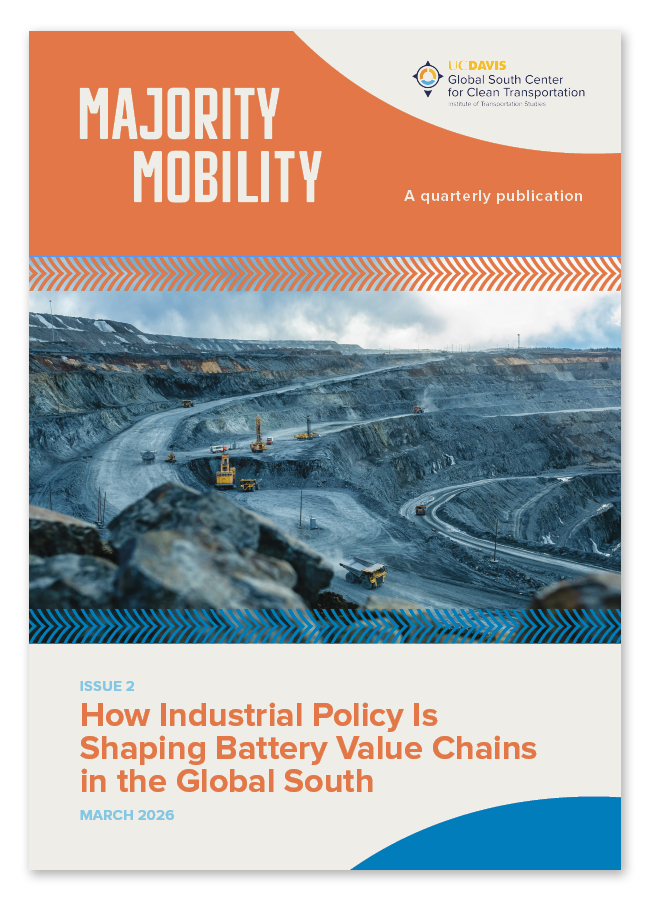
ITS-Davis Launches a New Research Publication! | | | | The Global South Center for Clean Transportation launched Majority Mobility, a quarterly publication focused on how Global South countries are developing innovative, context-specific solutions to navigate evolving transportation and its use of resources. The publication, named for the majority of the world’s population that lives in the Global South, will elevate the creativity, rigor, and practical experience shaping transitions in the region towards a cleaner, safer, and more inclusive transportation. Two issues have been released, check them out here. | | |
April 23, 2026
UC Davis Activities and Recreation Center (ARC)
| | |
April 23, 2025
The Exploratorium, Pier 15, San Francisco
| | |
May 5-6, 2026
UC Davis Activities and Recreation Center (ARC)
| | | |
Mobility 10x Summit: Accelerating Transportation Innovation Across California
February 2026
This was the capstone event of the Resilient and Innovative Mobility Initiative (RIMI)—a four-year research effort launched in 2021 by the University of California Institute of Transportation Studies (UC ITS), the umbrella organization of ITS-Davis. Over 200 people from academia, government, industry, and other sectors gathered in Sacramento to drive improvements in transportation outcomes, by policy impact, emissions reduction, and system performance. The summit focused on ten critical topics at the intersection of climate-neutral mobility, resilience, equity, safety, and innovation. More information in the RIMI 10X Magazine.
| | | |
Sustainable Transportation Energy Pathways (STEPS+) - Fall Symposium
November 2025
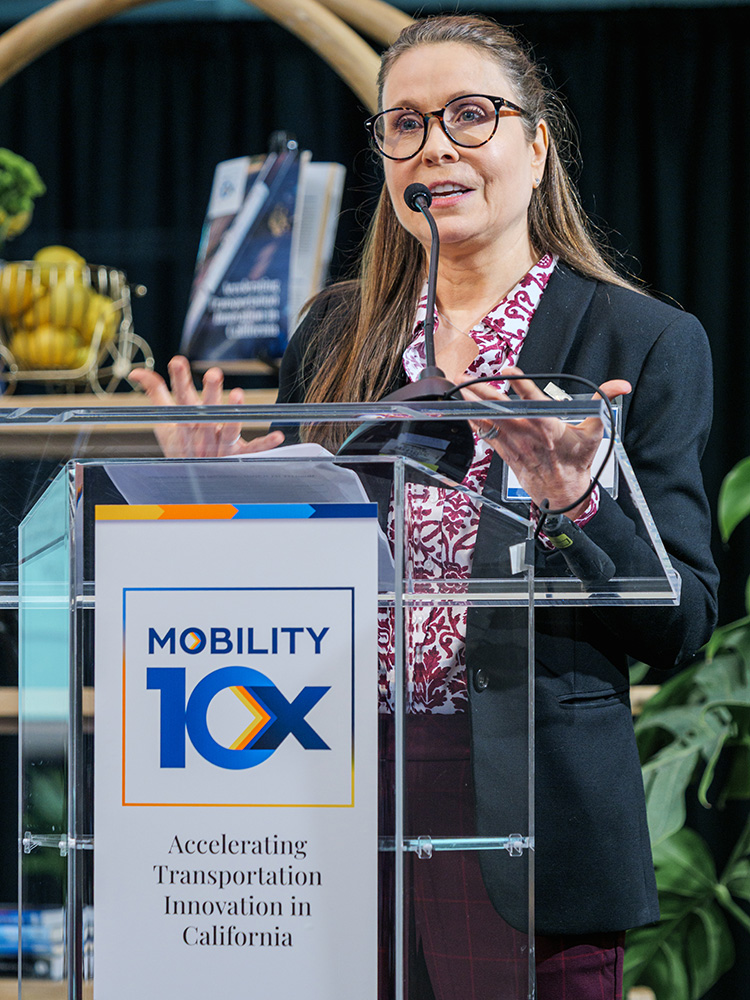
The STEPS+ Symposium had 121 attendees and featured presentations and discussions on charging infrastructure, the used EV market, autonomous vehicles and decarbonization, supply chains for zero-emission trucks, and indirect land use change, among other topics. Assemblywoman Lori Wilson, Chair of the Transportation Committee California State Assembly delivered the keynote speech, and graduate students presented their research in a poster session.
| | | |
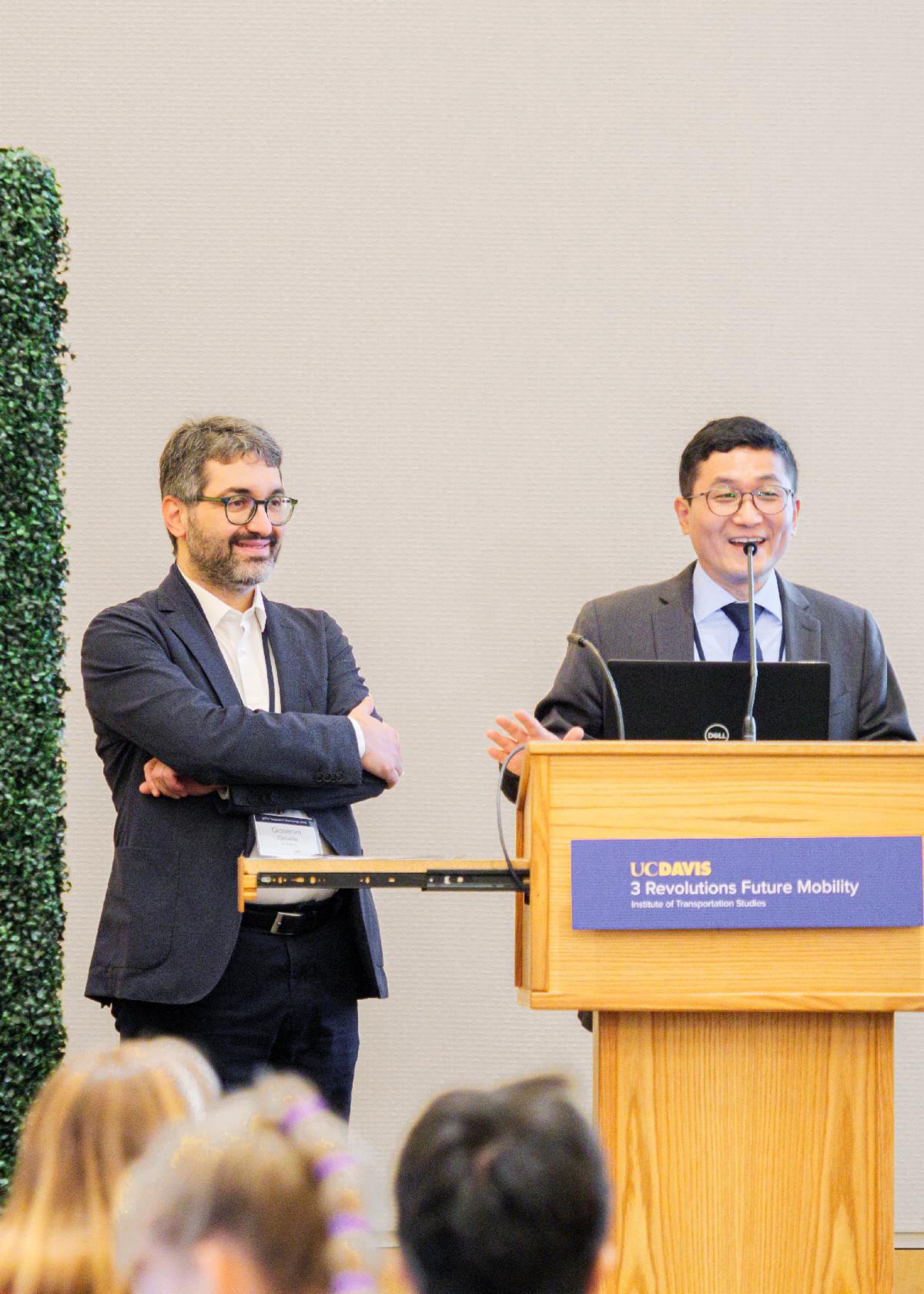
3 Revolutions Future Mobility Research Workshop
November 2025
In this workshop participants from academia, industry, and government agencies discussed new developments and policy related to self-driving vehicles in transit, urban last-mile deliveries, efficiency in ridehailing, and post-pandemic travel behavior. Attendees learned about the research that members of the 3 Revolutions team are doing and the perspectives of professionals working in the industry and the public sector.
| | | | |
Workshop: Strategies to Decarbonize US Post-Sale Passenger Vehicles
November 2025
ITS-Davis held a workshop with the goal of better informing policymaking through improved knowledge, increased stakeholder coordination, and development of innovative policy frameworks. The objective of the workshop was to assess the most promising strategies to accelerate the decarbonization of the U.S. on-road passenger vehicle stock, focusing on post-sale vehicles. The strategies discussed covered accelerated scrappage, retrofitting vehicles to zero-emission powertrains, and fueling internal combusion engine vehicles with low-greenhouse gas “drop in” liquid fuels. More info here.
| | | |
Active Transportation Program Symposium and Workshop
October 2025
This symposium brought together 400 local, regional, state, and Tribal governments to share knowledge and network with other agency staff, planners, engineers, public health professionals, and active transportation champions implementing multiple projects. An additional one-day research workshop convened 29 active transportation researchers and state policy makers to generate new ideas about research needs, funding mechanisms, and addressing institutional barriers for active transportation that can cause rapid change.
| | |
Electrifying Ridehail in India: Actions for Industry, Government, and Utilities
Das Banerjee, Ramji, Hazelton, Morrison
Building Certainty in Critical Minerals: A Strategic Framework for India’s Lithium Sourcing
Shivani, Khan, Ramji, Das Banerjee
Novel Methodology to Identify Factors Causing Heterogeneity in Travel Demand during and after the Pandemic
Gulhare, Giller, Behara, Bunch, Circella
Identifying e-scooter rider profiles in the United States: A latent class cluster analysis
Aurojeet, Ozbilen, Kothawala, Lee, Wang, Saridakis, Wadud, Yang, Grant-Muller, Castellanos, Circella
Paths of progress: Forecasting global electric vehicle demand amidst demographic and economic growth
Chandra, Busch, Parés Olguín, Tal
Regulate reality in vehicle emission policy
Plötz, Tal
State Preemption in Theory and Practice: The Case of Parking Requirements. Urban Affairs Review
Lee, Millard-Ball, Manville
Incorporating Infrastructure and Vehicle Technology Requirements, Changes in Demand, and Decarbonization Policies in Freight Planning
Jaller, Valencia-Cardenas
Youth Cruz Free: Fare Free Bus and Ridership Behavior among Santa Cruz County Teens
Pike, Affolter, Smith, Lipatova
Developing an e-scooter level of service model for shared spaces: Insights from Davis, California
Kazemzadeh, Bansal, Fitch-Polse
More publications available through our searchable database.
| | | | PhD student Maria Carolina LeCompte received the Beato Leadership Legacy Graduate Scholarship ($5,000) from the Sacramento division of Women in Transportation. The award is given to women who “demonstrate leadership in bringing ideas, innovation, and innovative approaches to transportation challenges.” LeCompte’s doctoral research focuses on disparities in non-commute travel and how gender and other individual and houeshold characteristics affect mobility and access to transportation. | | | | Yanlin Qi was named the Pacific Southwest Region (PSR) University Transportation Center Doctoral Student of the Year for 2025. The PSR is a consortium of seven universities funded by the US Department of Transportation. In her PhD research, Qi is developing AI-enabled methods that integrate diverse safety data and research evidence to support more effective roadway safety decision-making. | | | | Roland Hwang was appointed co-director of the Sustainable Freight Center within ITS-Davis. While he retains his position as the Policy Director for ITS-Davis, this new role will allow him to focus more time on advancing policies to promote sustainable freight strategies. Some of the projects Hwang is working on include incentives for zero-emission trucks, electric vehicle–grid integration, battery circularity, and transportation electrification in the Global South. | | | | Patrick Loa completed his postdoc with our 3 Revolutions Future Mobility Program and started as an assistant professor at Toronto Metropolitan University. His research will focus on exploring how advanced digital technologies can help people meet their mobility needs. | | | |
Joel Löfving
Joel Löfving just completed a six-month stint at ITS-Davis on a Fulbright scholarship. He contributed to one of our key activities: starting conversations and collaborative, real-world projects—among researchers, policymakers, and industry actors—to advance sustainable transportation. He focused on expanding our work on sustainable freight and hydrogen trucking.
| | |
Löfving completed an undergraduate degree in mechatronics engineering—a combination of mechanical engineering and electronics. He then shifted to transportation and energy systems for his current PhD work at Chalmers University of Technology in Gothenburg, Sweden. He explained this transition: “I wanted to see how technology applied in society more than developing technology itself, and I wanted to contribute to impacting global challenges.”
Löfving’s work at ITS-Davis focused on understanding and advancing the transition from diesel- to hydrogen-powered trucking. He, Lew Fulton, and others conducted 46 interviews and a 2-day workshop with key players in the field: fleet operators, hydrogen producers, refueling station builders, truck manufacturers, policymakers, and researchers. A key insight from these discussions was that the oft-cited chicken-egg dilemma—who will act first when there are simultaneous needs for trucks and infrastructure—is not really the main problem. Löfving explained, “The people who are building hydrogen refueling stations are eager to do so, and they are already building them, even though there are not that many trucks out there.” The hydrogen producers are also “on top of their game, and when they see uptake they are ready to increase capacity.” So the main problem, in Sweden and California, is getting more trucks out there. Nonetheless, coordination of industries is key to lowering the risks of the large capital investment needed.
One new strategy that came out of the workshop is to have each of many manufacturers produce and provide about 10-50 hydrogen-powered trucks for use in demonstration projects, rather than asking one company to make 300 trucks. Löfving and Fulton are planning to support such demonstrations in Sweden and California, funded in part by a grant they won from the Swedish Innovation Agency.
Löfving enjoyed his work here and especially how the interviews and workshops differ from, but also help inform, models for the transition to hydrogen trucking. He said, “With models we have to work with generalizations, while talking to people brings out the specificities of problems. And the anecdotes paint a more vivid picture of what is happening.”
On his way back to Sweden, Löfving stopped in Napa to run a half-marathon and in Chicago and Cambridge to meet with researchers at Northwestern University and MIT. Thank you, Joel, for all of your good work here and abroad!
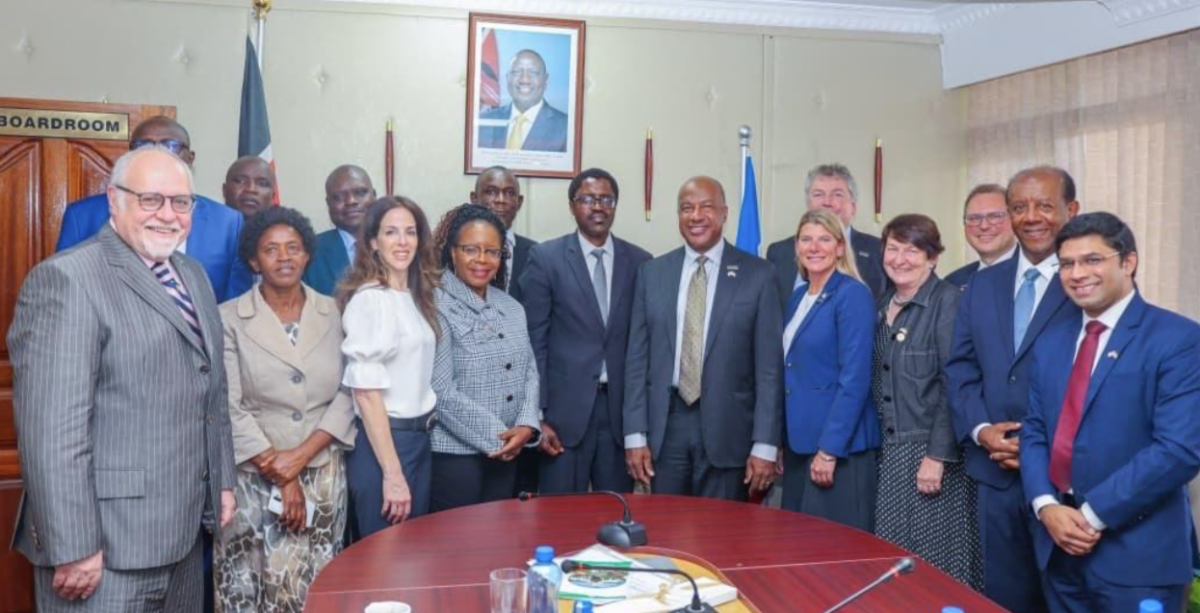
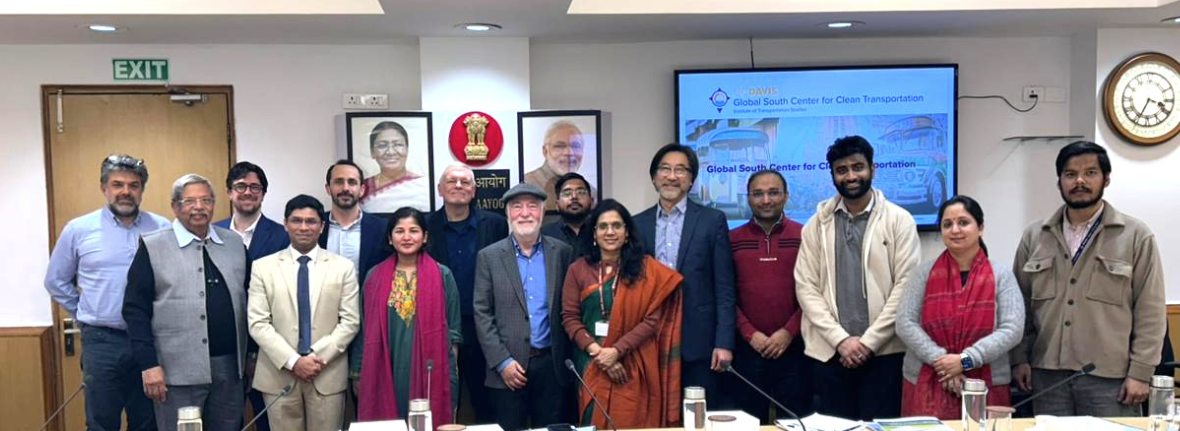
| | In November 2025, UC Davis Chancellor Gary S. May led a delegation to Kenya to advance a landmark partnership between the State of California and the Government of Kenya focused on climate action, clean transportation, climate-smart agriculture, public health, and innovation. The delegation included ITS-Davis Director Alissa Kendall and Global South Center for Clean Transportation Director Aditya Ramji. The delegation advanced plans for Africa’s first Center of Excellence for Sustainable Transport, to be based in Nairobi and led by the Global South Center for Clean Transportation. The Center will develop research, training, and technical guidance tailored to African contexts, supporting governments as they design climate-resilient and low-carbon transportation systems. | The Global South Center for Clean Transportation team, led by Aditya Ramji and Dan Sperling, met in January 2026 with the Program Director of NITI Ayog (a policy think tank of government of India), in New Delhi, to identify opportunities for collaboration to support the government’s increased focus on EV financing, charging infrastructure, and battery technology. | In December 2025, Francisco Pares Olguin, deputy director of the Global South Center for Clean Transportation, attended the VI Festival Internacional de Cine Animal y Ambiental (FICAA) in Mexico City, where his film “Border Chocolate: The Second Life Economy of Cars” was awarded Best Environmental Short Documentary. The film is covered in our recent blog and can be viewed here. | | |
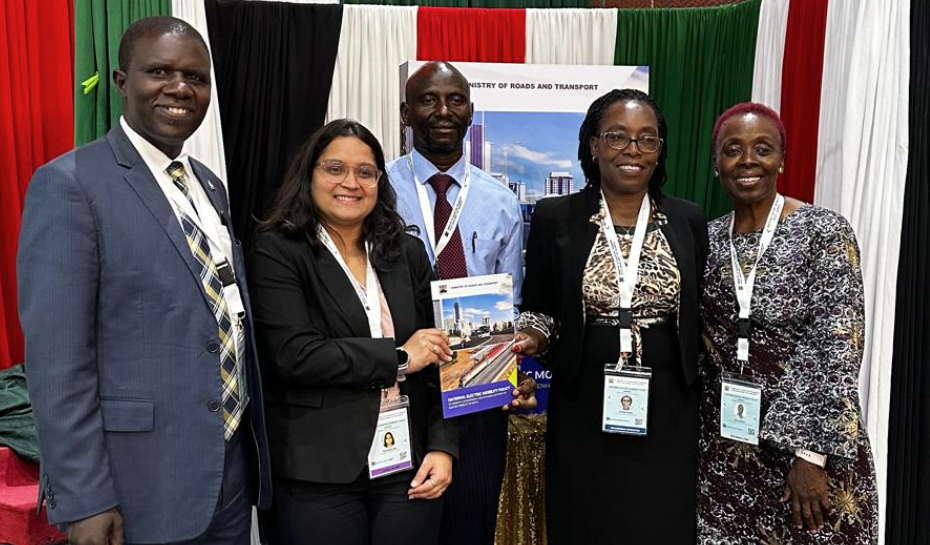
The National E-mobility policy of Kenya was launched on February 2, 2026 with approval from the President. The Minister of Transport, Mr. Chirchir, thanked key partners including UC Davis, in his remarks on behalf of the President of Kenya. Dr. Aakansha Jain attended the event on behalf of ITS-Davis. More details can be found here.
....................................
Anannya Das Banerjee of the Global South Center participated in the South-South Intergovernmental Dialogue on "Unlocking Equitable Mineral Value Addition" in Bali, Indonesia in December 2025. The dialogue hosted by NRGI, National Economic Council of Indonesia, and Viriya ENB saw participation from key officials from 20 countries in the Global South.
....................................
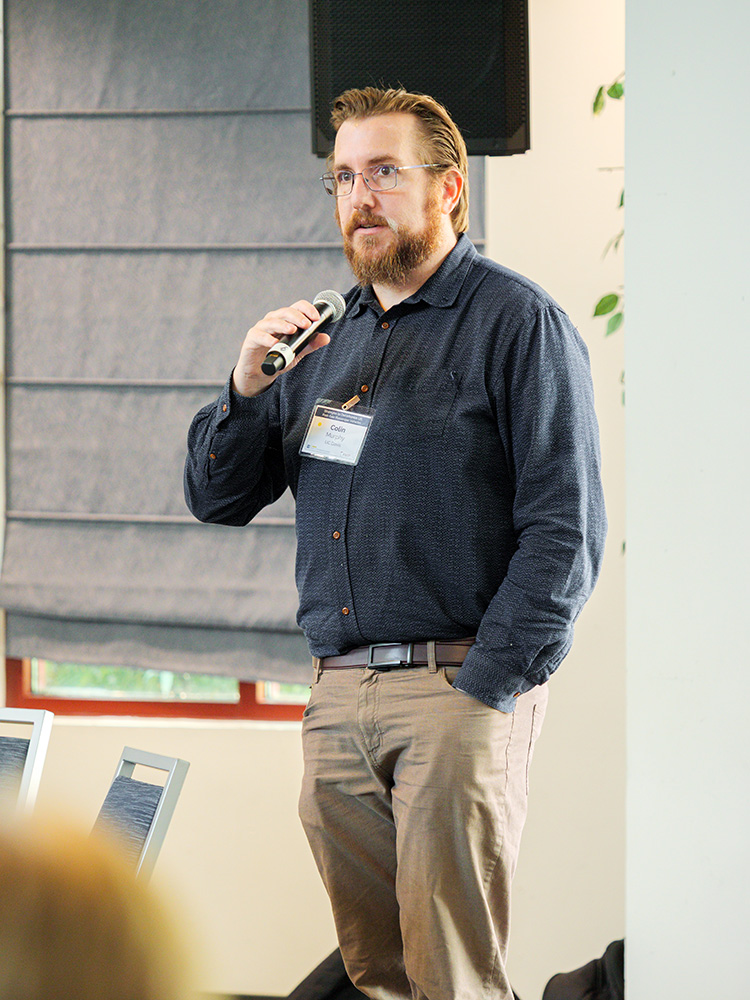
Colin Murphy, co-director of the Low Carbon Fuel Policy Research Initiative and assistant director of the Energy Futures Research Program, traveled to Brazil to kick off a multi-year effort by the new Biofuel Land Use Change program to evaluate new approaches to assessing and mitigating indirect land use change risk.
....................................
Representatives from our various international centers presented and moderated at international workshops, conferences, and trainings in Mexico, Sengal, and India.
| | |
Colin Murphy testified at the New Mexico's Environmental Improvement Board at a hearing related to the Clean Transportation Fuel Program. He shared ITS-Davis' years of experience with the Low Carbon Fuel Standard (LCFS) and related policies. The New Mexico program was approved by the Board to take effect in April. (More information)
....................................
Colin Murphy’s work was cited by the California Governor’s Office in an FAQ on gas prices, which led to extensive media coverage that also cited the work.
....................................
ITS-Davis researchers participated in several UC-ITS briefings in Sacramento with state legislature staffers—on induced travel, zero-emission trucks, electric vehicle charger reliability, and battery recycling.
....................................
ITS-Davis continued work with the California Air Resources Board and the California Public Utilities Commission on a project to understand the impacts of the Clean Miles Standard on ridehailing drivers in California. The ITS-Davis team presented findings and a draft report on barriers and opportunities to electrify transportation networking companies.
....................................
| | |
ITS-Davis researchers traveled to Los Angeles to meet with staff from LA Metro, LADOT, and other partner organizations to discuss the LA Mobility Wallet project and plan for the upcoming expansion of the pilot, which has provided ~3,000 income-qualified Los Angeles residents with $1,800 each to spend on transportation. ITS-Davis has worked with Metro and LADOT for several years, helping to design and evaluate the pilot, which is set to expand to another 10,000 residents with mobility wallets, starting later this year.
....................................
In December 2025, Yongsung Lee, Patrick Loa, and Basar Ozbilen met with the San Francisco County Transportation Authority to discuss ITS-Davis’ robotaxi demand research and how it can inform planning and policy.
....................................
ITS-Davis is working with California State Transportation Agency (CalSTA) to provide academic and policy expertise for its Sustainable Communities Task Force. At the task force meetings, ITS-Davis post-doctoral scholar Amy Lee has provided input on active transportation and the land use-transportation connection.
....................................
ITS-Davis has been advising Caltrans and the California Transportation Commission on the Active Transportation Program (ATP) Guidelines. Michelle Lieberman facilitated the quarterly Active Transportation Program Technical Advisory Committee meeting in December and Dillon Fitch-Polse presented on the update to the Active Transportation Program Counts Guidance.
....................................
| | |
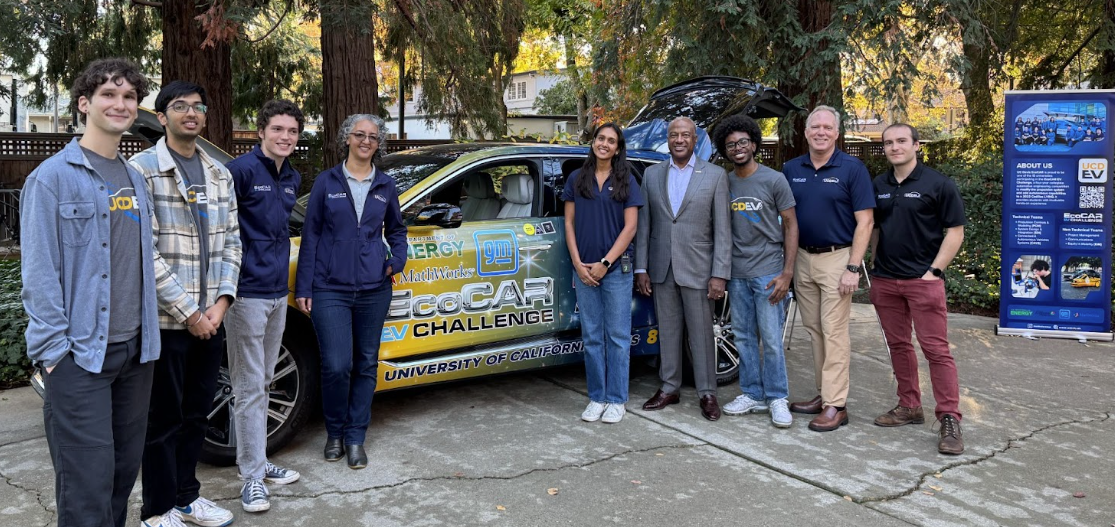
The team of students and advisors from ITS-Davis and the College of Engineering continue their work on the US Department of Energy’s EcoCAR EV Challenge. The four-year competition challenges students from US universities to redesign a Cadillac LYRIQ EV with a new motor, improved energy efficiency, and connected and automated functions. The UC Davis EcoCAR team held a Fall Vehicle Showcase in November at the Chancellor's house, at a reception for College of Engineering faculty. In May, the vehicle and team will travel to Michigan for the final competition.
....................................
The Transportation Research Board 105th Annual Meeting was held in Washington, DC in January 2026. Many ITS-Davis representatives participated in meetings, sessions, and exhibits. (List of presentations)
....................................
| | | | |