|
1. Anti-Zionist purity tests target Jewish identity
Anti-Israel activists are using Jewish identity to select Jews who are allowed to participate in social activities and campus organizations and who are not. Demands to “only engage with anti-Zionist Jews” are not political positions – they are ultimatums that force Jews to renounce a core part of their identity. These tests treat participation and membership as conditional, signaling Jews are only acceptable if they deny who they are.
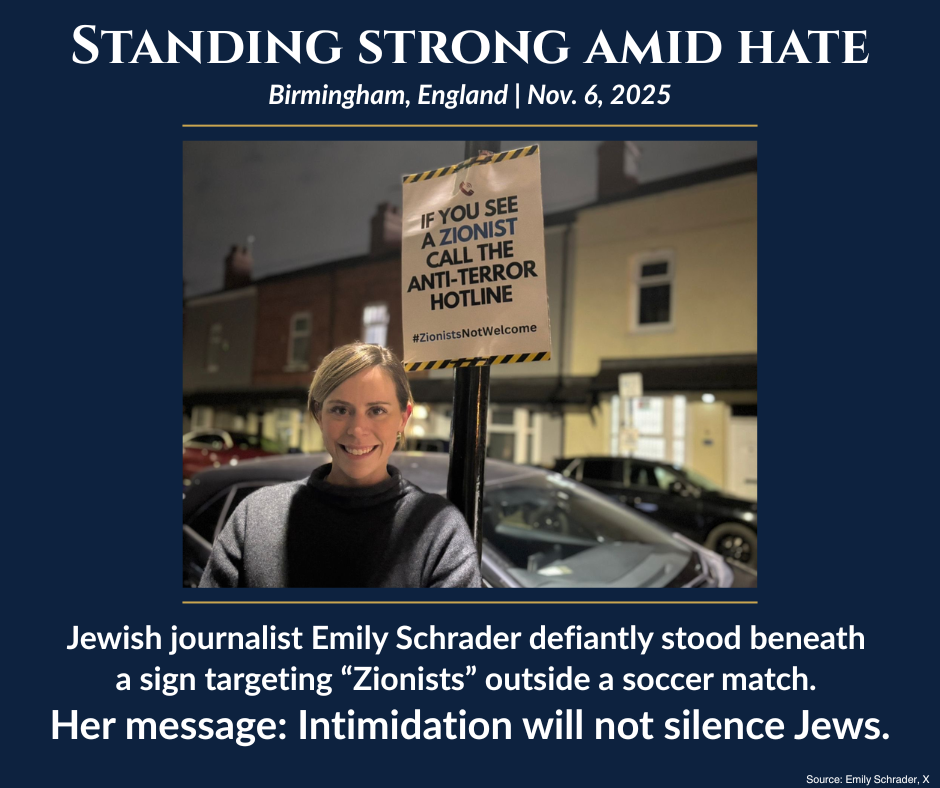
2. ‘Zionists’ are a code word for Jews
Attempts to separate “acceptable Jews” from “Zionist Jews” segregates Jewish identity. Anti-Israel activists are marginalizing, ostracizing and excluding Jews under the appearance of targeting Zionists or Israelis. This distinction misrepresents mainstream Judaism, distorts Jewish life and fuels stereotypes that erase the authenticity of real Jewish identity. This rhetoric must be recognized and rejected for what it is: Excluding Zionists means excluding Jews.
3. Attacks on Zionism silence and marginalize Jewish students
On many campuses, attacks on Zionism have created an environment where Jewish students feel pressured to stay quiet, avoid leadership roles or hide parts of their identity. Students have been questioned about their “objectivity” and “loyalty” because they are Jewish, pushed out of student groups and targeted online. These actions are the opposite of what schools claim to value: freedom of expression and speech. Instead, anti-Israel activists ostracize young Jews and undermine their ability to fully participate in campus life.
4. Historical amnesia fuels modern hate against Jews
When society forgets how often Jews have been scapegoated, expelled or stripped of their rights across different eras, it becomes easier to recycle the same hostility in new forms. Soviet leaders promoted anti-Jewish hate by calling Jews capitalists and some Western leaders justified their discrimination by labeling Jews Soviet Bolsheviks. Now, Jewish history is erased to portray Zionism as foreign or immoral. This amnesia does not just distort the past but also fuels dangerous narratives that legitimize attacking Jews.
5. The expulsion of Jews from Muslim countries helps expose the 'colonizer' lie
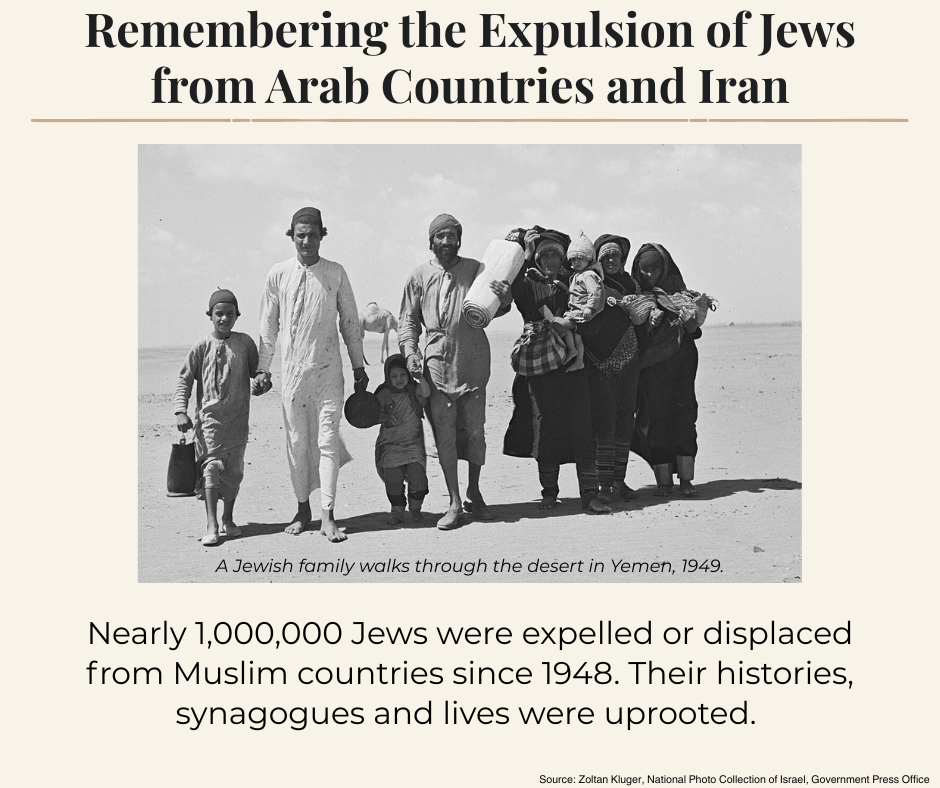
Jews are not strangers to the Middle East and North Africa, where their history dates back more than 4,000 years. The Romans, who conquered the area, enslaved or expelled most Jews from the Land of Israel 2,000 years later. Many Jews resettled in nearby countries and their communities lived across the region for centuries. Following the re-establishment of Israel in 1948, nearly one million Jews were expelled or forced to flee from Muslim countries. The false ‘colonizer’ accusation ignores this continuous presence and erases the experiences of Jews who were driven from their homeland.
6. False narratives are used to justify the social exclusion of Jews
Accusations of ‘apartheid,’ ‘genocide’ or ‘colonization’ are not only inaccurate – they portray Jewish identity and Zionism as immoral. These dishonest claims spread quickly with the backing of influential organizations, journalists and social media personalities. They create a moral pretext for excluding Jews from events, groups and public spaces. When a community is labeled as oppressive, targeting its members becomes easier to justify.
7. Delegitimizing Israel is being used to delegitimize Jews
Efforts to portray the Jewish state as uniquely illegitimate are being extended to Jews who overwhelmingly believe Israel is essential to their identity and security. By framing Israel as immoral, activists label Jews who support it as morally compromised as well. This rhetoric blurs any distinction between criticism of a country and the condemnation of an entire people.
|