|
Illinois Capitol Insights
April 6, 2026
Report Includes:
Legislative Updates
Statehouse News
Political News
Important Dates
JCAR
COGFA & Special Reports
Grant Opportunities
About Us
| | |
Following a quiet week in Springfield, both chambers of the Illinois General Assembly are preparing to resume legislative activity on staggered schedules. The House returns April 7–9, while the Senate will reconvene the week of April 14–17. As lawmakers head back to the Capitol, attention will quickly shift from committee hearings to floor action, with an uptick expected in debate, amendment filings, and caucus-level negotiations. This transition marks a pivotal point in the legislative calendar as bills advance through Second and Third Readings ahead of key deadlines.
This period is expected to shape the trajectory of priority legislation for the remainder of session. With momentum building, stakeholders should anticipate a faster pace and increased engagement across both chambers. We will continue to provide timely updates as activity resumes and the legislative landscape comes into clearer focus.
For more information on specific measures or issues, please connect with a member of the Michael Best team.
The Senate committee schedule can be found here.
The House committee schedule can be found here.
| | |
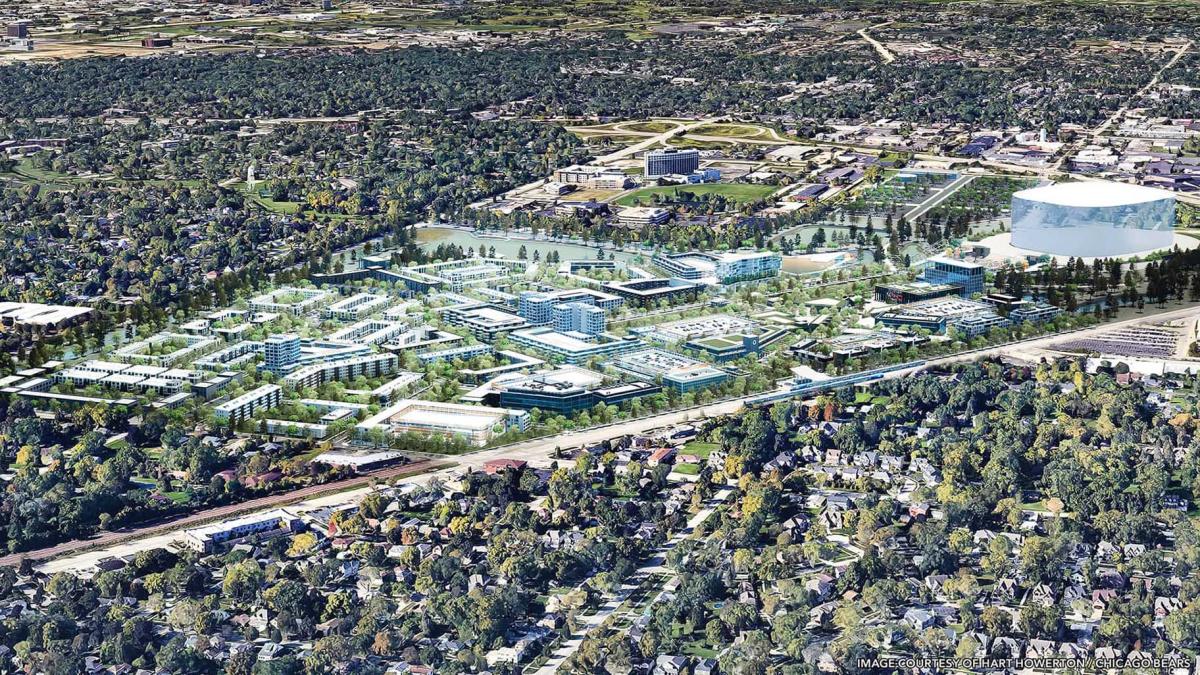
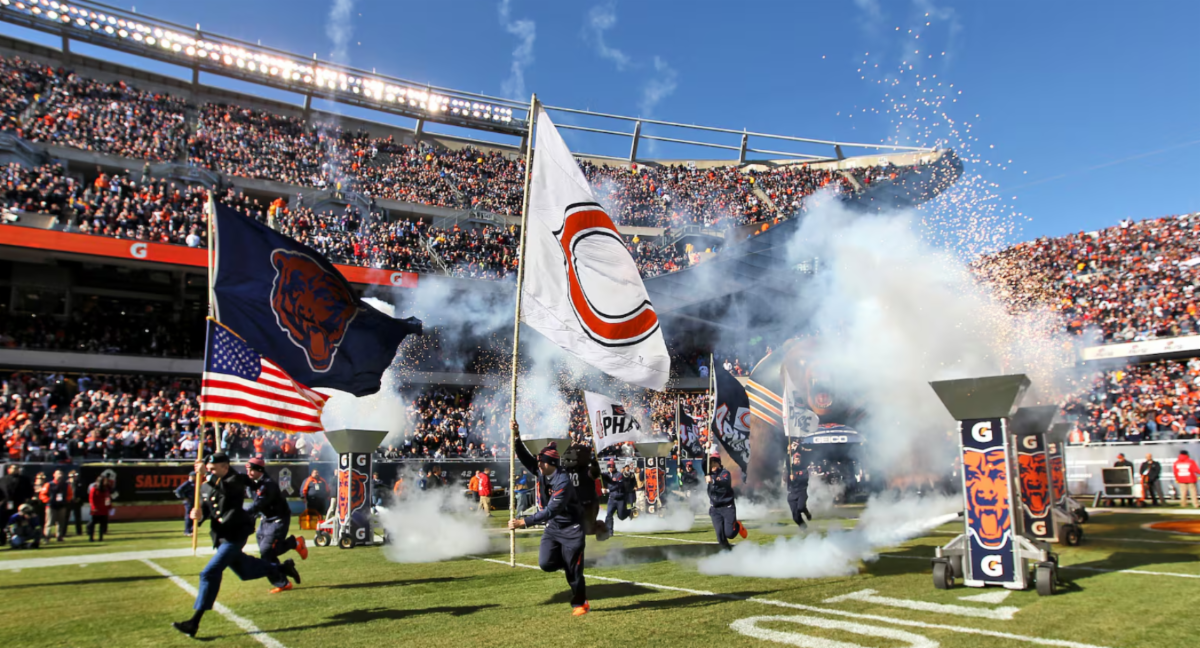
After months of shifting deadlines and mounting pressure, the Chicago Bears are taking a noticeably different approach to securing a new stadium deal. Team leadership, including President/CEO Kevin Warren and Chairman George McCaskey, has walked back earlier urgency, now signaling that a decision may not come until late spring or early summer. The delay reflects ongoing uncertainty in both Illinois and Indiana: while Indiana lawmakers have outlined a potential legislative framework, the proposed Hammond site still requires further evaluation. Meanwhile, Illinois offers a viable Arlington Heights location, but lacks a finalized legislative package to support development.
Behind the scenes, the change in tone suggests a broader recalibration. Lawmakers have resisted artificial deadlines, and logistical hurdles (particularly the need for separate appropriations tied to any incentive package) make quick action unlikely ahead of the state budget process. At the same time, competing political interests remain in play.
Chicago officials continue to push for a city-based solution, while alternative proposals and potential compensatory developments are being explored.
Ultimately, the stadium debate may become part of a much larger economic development package centered on the state’s proposed PILOT program. Whether that evolves into a sweeping deal—or stalls entirely—will likely shape the Bears’ future home and broader investment strategy across Illinois.
| |
State Week: The Data Center Debate
Data centers are considered the backbone of the internet, providing processing power for technology like AI and cloud computing. But they are also controversial.
While they tout jobs and increased property tax revenue, others warn of environmental concerns and higher utility rates.
On this episode, we discuss data centers and how Illinois lawmakers are considering guardrails for the projects.
Host Sean Crawford is joined by Professor Emeritus Charlie Wheeler, Illinois Times reporter Dilpreet Raju and Capitol News Illinois reporter Nikoel Hytrek.
Listen here.
| |
Gov. Pritzker Urges Congress to Provide Long-Term Market Certainty to Illinois Farmers
Governor JB Pritzker sent a letter to Congressional leaders urging for a swift passage of legislation to permanently allow year-round sales of E15 gasoline and bring long term certainty, as Trump’s tariffs and global instability are driving up costs and squeezing Illinois farmers.
“Mounting pressure on the agriculture economy can be traced directly back to recent federal policy decisions,” wrote Governor JB Pritzker. “From the devastating effects of tariffs to ongoing global instability, Illinois farmers are being forced to shoulder rising costs while losing export markets to foreign competitors. Expanding year-round E15 sales would increase domestic demand for ethanol, broaden markets for corn, and provide the kind of certainty farmers urgently need.”
In the letter to leadership of the U.S. House on Environment and Public Works and Senate Energy and Commerce Committees, Gov. Pritzker stressed that instability in global energy supply chains from the war in Iran — combined with tariffs that have disrupted trade flows — has tightened margins for farmers across Illinois and increased gas prices for consumers.
| |
Gov. Pritzker Builds on Economic Momentum as Global Companies Choose Illinois to Invest and Grow
In just the first quarter of 2026, a growing list of global companies are choosing Illinois to invest, expand, and create jobs—driving early-year momentum that has is already outpacing total job creation commitments in recent years.
Companies participating in the Economic Development for a Growing Economy (EDGE) program have committed to creating nearly 4,000 jobs and nearly $2.5 billion in committed investments so far this year, exceeding the total number of jobs committed through EDGE and Reimaging Energy and Vehicles (REV) programs in 2025. These figures represent just one portion of private sector investment and job growth happening across Illinois.
“The rest of the world is starting to capitalize on what we have long known to be true: Illinois is the best place to live, work, and raise a family,” said Governor JB Pritzker. “Global companies continue to choose Illinois for our central location, strong infrastructure, and the hard-working people who make up our diverse workforce. From advanced manufacturing and life sciences to film production, these investments mean more jobs and more goods being produced right here in Illinois.”
“Illinois' record-breaking investments and growth help maintain our state's reputation as a global economic powerhouse,” said DCEO Director Kristin Richards. “Prioritizing our incentive programs has not only resulted in Illinois earning national economic development rankings, but it has also increased job opportunities for hardworking Illinoisians across the state. Most importantly, it has ensured Illinois remains the best place to live, work, and do business.”
Governor Pritzker has focused on making Illinois the best place in the country to do business—prioritizing affordability, workforce development, fiscal responsibility, and long-term economic stability. That strategy is continuing to deliver results across key industries part of the Illinois Economic Growth Plan.
| |
Legislation proposed today by U.S. Sen. Bernie Sanders and Rep. Greg Casar could make it harder for the Chicago Bears to choose Indiana in a race to determine where the NFL franchise will play future games.
Sanders, I-Vt., and Casar, D-Texas, say their bill could protect fans from losing teams and protect taxpayers from being extorted for huge subsidies by the threat of relocation — in part by giving communities the chance to buy teams that are proposing to leave their home state or metro area.
Indiana Gov. Mike Braun on Thursday called the proposal a “crazy” idea and said in a statement that the legislation is an example of why “nothing gets done in D.C.”
It’s not clear whether the proposal has any chance of passage given the U.S. Senate and House are controlled by Republicans. But the bill’s authors are leaning into frustration many Americans feel about the money that communities put into sports stadiums in part to appease professional sports team owners.
| |
A federal judge has halted efforts by the Trump administration to collect data that proves higher education institutions aren't considering race in admissions.
The ruling from U.S. District Court Judge F. Dennis Saylor IV in Boston on Friday granting the preliminary injunction follows a lawsuit filed earlier this month by a coalition of 17 Democratic state attorneys general. It will only apply to public universities in plaintiffs
The federal judge said the federal government likely has the authority to collect the data, but the demand was rolled out to universities in a "rushed and chaotic" manner.
"The 120-day deadline imposed by the President led directly to the failure of NCES (National Center for Education Statistics) to engage meaningfully with the institutions during the notice-and-comment process to address the multitude of problems presented by the new requirements," Saylor wrote.
| | |
The 2026 legislative session began in January and will run through the end of May.
Find 2026 Spring Session Calendars below:
Senate Calendar
House Calendar
Below are all of the legislative deadlines for the spring in Illinois.
Jan. 16, 2026 - LRB Request Deadline
Feb. 6, 2026 - Introduction of both House & Senate Bills Deadline
Feb. 18, 2026 - Budget Address and State of the State
March 13, 2026 - Senate - SBs out of Committee Deadline
March 27, 2026 – House – HBs out of Committee Deadline
April 17, 2026 - Senate - SBs Third Reading Deadline
April 17, 2026 - House – HBs Third Reading Deadline
May 8, 2026 - House - SBs out of Committee Deadline
May 8, 2026 - Senate - HBs out of Committee Deadline
May 22, 2026 - House - SBs Third Reading Deadline
May 22, 2026 - Senate - HBs Third Reading Deadline
May 31, 2026 - Adjournment
| | |
The next JCAR meeting is scheduled for April 14 at 10:30 a.m. in Springfield. The agenda can be found here.
NEW! The April 3 Flinn Report can be viewed here.
-
Driver’s license rules expand oversight and modernize requirements: Proposed changes expand who can report unsafe drivers (including family members), raise the road test age to 87, and update definitions such as prohibiting cheating with electronic devices.
-
Motorcycle safety training program overhaul: The Illinois Department of Transportation proposes restructuring how training is delivered by shifting to approved course providers, expanding course levels, and modernizing application processes.
-
Greater flexibility in training providers with stronger state oversight: New rules allow public, private, and nonprofit entities to provide training, while requiring state approval of curriculum and updates.
-
Advancement to Second Notice stage: Several rulemakings moved to Second Notice, signaling they are progressing toward final adoption and review by the Joint Committee on Administrative Rules (JCAR).
NEW! The April 3 Illinois Register can be viewed here.
-
Automatic Voter Registration framework proposed: The State Board of Elections introduced rules to implement Illinois’ automatic voter registration system, including electronic registration processes, agency roles, and protections for voter data privacy and system integrity.
-
Centralized indirect cost rate system reinforced (GATA/ICRES): Updated rules formalize the use of the State’s centralized Indirect Cost Rate Election System (ICRES), requiring grantees to select a single indirect cost rate option (e.g., de minimis up to 15%, NICRA, or negotiated state rate) that must be accepted across state agencies.
-
Expanded clarity on grant compliance and oversight: Updates clarify responsibilities for state agencies, cognizant agencies, and grantees, including monitoring, documentation, and negotiation requirements tied to indirect cost rates and federal pass-through funding.
-
Public health and emergency services rules recodified: The Illinois Department of Public Health reorganized multiple emergency services-related administrative codes into a new subchapter structure—primarily an administrative update rather than major policy changes.
| | |
NEW! Commission on Government Forecasting and Accountability’s March 2026 Monthly Briefing can be found here.
COGFA’s March 2026 Monthly Briefing Highlights:
- General Funds revenues increased by about $233 million (4.8%) in March, strengthening overall fiscal year gains.
- Through the third quarter, revenues are up roughly $1.57 billion (4.2%), reflecting steady improvement.
- Personal income tax revenues remain the primary driver of overall revenue increases.
- Sales tax receipts posted slight improvement, signaling steady but not rapid consumer activity.
- Corporate income tax revenues declined in March, highlighting continued unpredictability in business-related revenues.
- Other revenue categories and transfers showed inconsistent results, with some declines offsetting gains elsewhere.
Upcoming months—especially April—will be critical in determining whether current positive trends continue.
| | |
There are currently 199 active grant funding opportunities available through State agencies. For a full searchable list of agencies and opportunities, visit the Illinois Catalog of State Financial Assistance CSFA website.
If you have questions about any of these grants, please reach out to a Michael Best team member.
| | | | |
444 West Lake Street
Suite 3200
Chicago, IL 60606
| | | | |