|
Illinois Capitol Insights
April 20, 2026
Report Includes:
Legislative Updates
Statehouse News
Political News
Important Dates
JCAR
COGFA & Special Reports
Grant Opportunities
About Us
| | |
Another key deadline has come and gone in Illinois, as the General Assembly cleared its Third Reading deadline on April 17 and now pivots into a staggered spring schedule. The House returns to session this week (April 21–24) while the Senate is on break, before flipping roles the following week. As of April 20, the House has passed 339 bills this session, and the Illinois Senate had passed approximately 205 bills and resolutions in the 104th General Assembly. Several of these measures may overlap between chambers (companion bills) or consist of shell bills that are later amended and used as legislative vehicles, so totals do not necessarily reflect unique or legislation to become final enacted proposals.
Despite months of discussion, momentum appears to have stalled on a proposed constitutional amendment to impose a surcharge on incomes above $1 million, backed by former Governor Pat Quinn. Timing constraints, coupled with uncertain voter support, have likely sidelined the effort for now. In contrast, House Speaker Chris Welch has introduced a separate constitutional amendment focused on redistricting standards, prioritizing population equality and enhanced protections for voter representation, particularly in anticipation of potential federal changes to voting rights law.
Meanwhile, negotiations continue to advance on a potential stadium deal for the Chicago Bears, with Representative Kam Buckner signaling that discussions are nearing completion.
With compressed timelines, emerging policy proposals, and ongoing negotiations, the weeks ahead will be critical as lawmakers work toward adjournment.
For more information on specific measures or issues, please connect with a member of the Michael Best team.
The Senate committee schedule can be found here.
The House committee schedule can be found here.
| | |
Governor Pritzker released the following statement after the U.S. District Court concluded Illinois v. Trump, the case concerning the Trump Administration’s illegal attempt to deploy National Guard troops to Illinois:
“Today’s order concluding Illinois v. Trump confirms what has been clear to the people of Illinois from the beginning — Donald Trump’s deployment of the National Guard to occupy our streets was a reckless and illegal abuse of power. I’m grateful to the court for siding with our communities and slowing the erosion of our democratic norms.
“I want to applaud Illinois Attorney General Kwame Raoul for securing this win in the courts as he has consistently stood up to defend the rights of our people and stop federal overreach. I also want to thank him and his staff for working around the clock to check Trump’s march toward authoritarianism at every turn.
“Communities should not have to live in fear of masked federal troops occupying their neighborhoods, and our brave National Guard members should not be used as political props. These are foundational principles of any healthy democracy, and the result in this case validates that belief.
“While this is an important result, we know that the Trump Administration will continue to test the limits of its power no matter the cost to our communities. Illinois will keep standing up and fighting for the rights of our people.”
| |
Illinois' budget process moves ahead amid rising revenue and fiscal uncertainty
llinois is on target to bring in more money than expected this year.
The state’s Commission on Government Forecasting and Accountability said through the first nine months of FY2026, Illinois collected more than $1.57 billion in additional tax revenue, or 4.2%, compared to the same period a year ago. CGFA expects the state will wind up just below that pace when the budget year ends June 30.
The windfall provides a rosier outlook for Illinois compared to the dire fiscal warnings of earlier in the year. Illinois saw a year-over-year decline as of last July. It also shows the state on pace to finish ahead of the projected revenue used to craft the current budget.
Personal income taxes, the largest revenue source, have grown 4.9%.Wage growth has offset flat employment numbers, according to CGFA.
Sales tax receipts are also running above estimates while corporate income taxes are lower, due mainly to provisions in the One Big Beautiful Bill that passed congress last summer.
Slower growth is being forecast for the next year and could bring a more cautious approach to the budget-making process.
On Wednesday, the Senate Appropriations Committee called top officials to testify about their proposed fiscal plans. The hearing happened as lawmakers themselves faced an end of the week deadline to advance bills out of the chamber.
While many of the spending numbers have been public since the governor’s delivered his budget address in February, there were other matters brought up. Parts of the hearing turned contentious, including during the questioning of Treasurer Michael Frerichs.
Sen. Rachel Ventura, D-Joliet, raised concerns over the investment of state funds in foreign government bonds. Ventura pressed Frerichs on whether current Illinois investments could be in any way linked to international conflicts with human rights concerns.
Frerichs emphasized that foreign investments have been standard practice in Illinois for the past 20 years and stressed his role as a fiduciary, not a policy maker.
“My job is not to engage in foreign policy. My job is to maximize returns,” said Frerichs, who the committee acknowledged has surpassed the performance of his past five predecessors.
Ventura’s remarks were admittedly tied to her role as chair of the Human Rights Committee and revolved around Illinois state funds being used to buy Israeli government bonds.
In response, Frerichs explained how state statute allows for the Treasury to invest up to three quarters of 1% of the state portfolio into foreign bonds.
“We invest in Israel bonds, $100 million,” he said, adding that any investments made by the state must meet criteria set in state law.
Frerichs further discussed the broader role of his office, noting how investment returns play a key role in supporting state programs and operations.
“Our office made a record $2.5 billion in investment earnings for state and local governments in fiscal year 2025,” said Frerichs. He said that those returns – alongside with more than $2.4 billion in unclaimed property returned to Illinois residents since 2015 – are a part of the broader effort to bring value to the state.
| |
School cell phone ban, human composting bills among hundreds advancing in Springfield
The Illinois House on Thursday approved the latest version of a bill that would require school boards to prohibit public school students from using their cellphones in the classroom.
Senate Bill 2427, sponsored by Rep. Michelle Mussman, D-Schaumburg, passed 102-3, with one present vote. It would require Illinois school districts to adopt policies by the 2027-28 school year banning the use of wireless communication devices like cellphones, tablets, laptops and gaming devices during school time.
“The research is clear: This constant source of distraction is lowering their academic progress, increasing anxiety, depression and cyber bullying, and inhibiting face-to-face communication at a critical time when youth are developing their social skills,” Mussman said.
| |
DCEO’s Opportunity Zone 2.0 Census Tract Nomination Form is open through April 30
Opportunity Zones are a federal tax incentive program aimed at spurring long-term investment in communities facing economic challenges. As the State of Illinois begins a new round of designations, the goal is to identify census tracts where an OZ designation can drive community priorities, attract investment, and support inclusive economic growth. Stakeholders are encouraged to submit nominations for eligible tracts for consideration.
To prepare a strong submission, applicants should review the recorded webinar, FAQ, and whitepaper available on DCEO’s Opportunity Zones page. Competitive nominations should clearly demonstrate:
Economic Need – Evidence of community and economic distress, alignment with local priorities, and opportunities to advance equity
Market Potential – Presence of viable projects or partners, proximity to economic anchors, and the ability to leverage incentives
Site & Infrastructure Readiness – Supportive zoning, infrastructure capacity, and development-ready sites, including housing or mixed-use opportunities
While the nomination form allows for attachments, the written narrative should be clear and complete on its own.
For questions or to discuss potential tracts, contact the Opportunity Zone team at OpportunityZones@illinois.gov.
| |
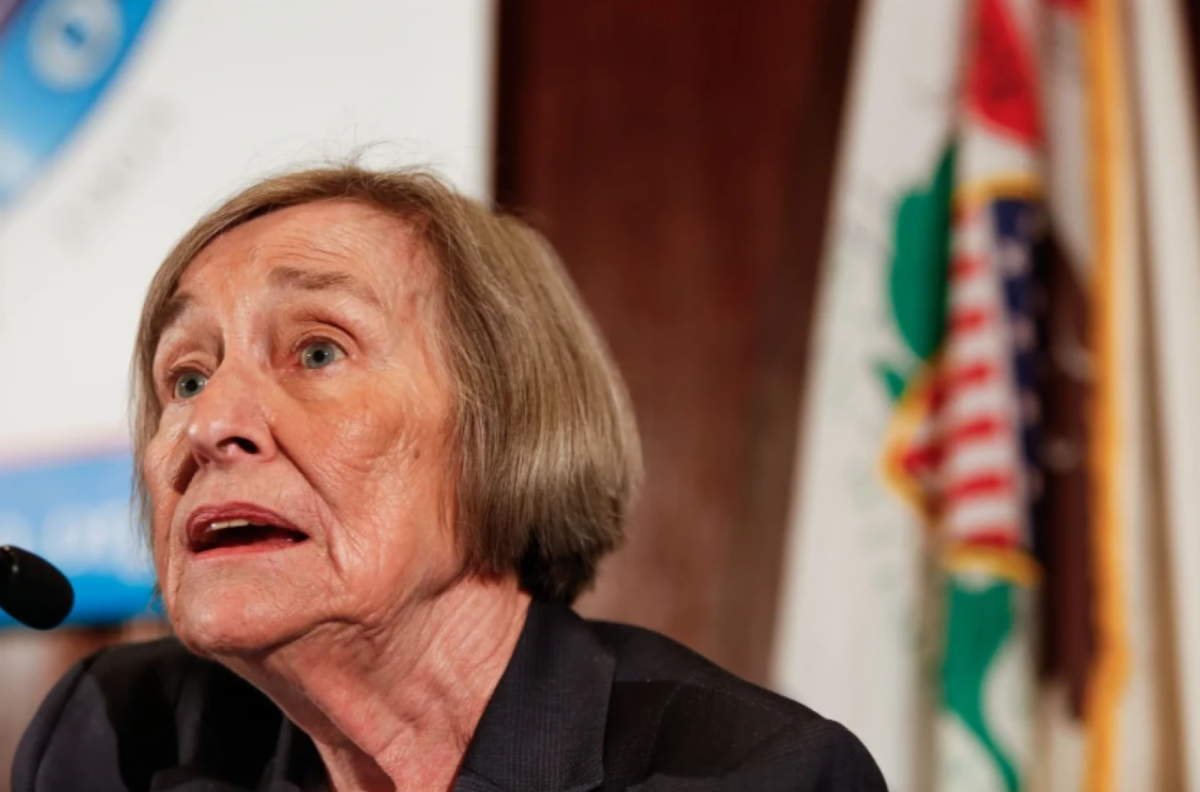
After a vote in the Illinois House on a key part of then-Mayor Rahm Emanuel’s pension relief plan in 2016, Barbara Flynn Currie did something not often seen in these times of divided, dysfunctional government. She crossed the aisle and shook hands with the three Republican lawmakers who broke ranks with the GOP and voted to override Gov. Bruce Rauner’s veto of a measure deferring police and fire pension payments.
That was Currie, 85, who died Thursday. She not only represented her Hyde Park district in Springfield for 40 years — 20 as majority leader and the first woman to hold that role in the Illinois General Assembly — she was a tireless promoter of active, engaged, effective government.
“Last night we lost a giant,” House Speaker Emanuel “Chris” Welch, D-Hillside, posted on his Facebook page Friday. “Barbara Flynn Currie was more than a leader — she was a trailblazer who opened doors for generations of women in the Illinois House, many of whom continue her legacy today. ... She set the standard for what it means to serve with purpose. Her impact will be felt for generations.”
Her district encompassed Hyde Park, Woodlawn, South Shore and Kenwood, and she was a vigorous proponent of liberal causes, such as prohibiting sexual harassment in the workplace, reforming school funding and offering all-day kindergarten. She spearheaded a compromise on welfare reform and helped extend state contracts to minority- and female-owned businesses.
In 2009, she chaired the special 21-member bipartisan committee that recommended the impeachment of Gov. Rod Blagojevich.
”We stand here today because of the perfidy of one man: Rod Blagojevich,” said Currie. “To overturn the results of an election is not something that should be undertaken lightly.”
Every member of the Illinois House and Senate, save one, voted to impeach.
With women making up a record 32% of state legislatures across the country, it might be difficult to remember the male world that Currie entered. When she was elected in 1978, fewer than 11% of Springfield lawmakers were women. When she announced her retirement in 2017, that figure was more than a third, and in 2025 the Illinois Legislature was 42% female.
| |
Why Illinois needs more prescribed burns — and what’s blocking them
Prescribed fire advocates are pushing for new legislation in Illinois, arguing that controlled burns are essential to restoring the state’s native ecosystems—but increasingly difficult to carry out. On Community Voices, Nature Conservancy representatives Ellicia Sanchez and Tharran Hobson explained why they’re urging lawmakers to create a state-backed insurance fund that would remove major barriers for conservation groups.
Sanchez said organizations across Illinois are struggling to obtain affordable, reliable insurance coverage for prescribed burns. Some policies are “prohibitively expensive,” while others limit how many burns can be conducted each year or fail to clearly state whether prescribed fire is covered at all. As she put it, this uncertainty has become “a huge barrier in getting more prescribed fire on the ground,” even though it’s a critical land‑management tool.
Hobson, a veteran burn boss who has led more than 300 prescribed fires, emphasized that Illinois ecosystems evolved with fire. Controlled burns clear leaf litter, suppress invasive species, and help native oaks regenerate—acorns “require being in contact with mineral soil,” he noted, but often sit atop inches of debris without fire. Despite public concerns, he said prescribed burns are highly regulated and remarkably safe, with “less than 0.04 incidents” occurring.
| | |
The 2026 legislative session began in January and will run through the end of May.
Find 2026 Spring Session Calendars below:
Senate Calendar
House Calendar
Below are all of the legislative deadlines for the spring in Illinois.
Jan. 16, 2026 - LRB Request Deadline
Feb. 6, 2026 - Introduction of both House & Senate Bills Deadline
Feb. 18, 2026 - Budget Address and State of the State
March 13, 2026 - Senate - SBs out of Committee Deadline
March 27, 2026 – House – HBs out of Committee Deadline
April 17, 2026 - Senate - SBs Third Reading Deadline
April 17, 2026 - House – HBs Third Reading Deadline
May 8, 2026 - House - SBs out of Committee Deadline
May 8, 2026 - Senate - HBs out of Committee Deadline
May 22, 2026 - House - SBs Third Reading Deadline
May 22, 2026 - Senate - HBs Third Reading Deadline
May 31, 2026 - Adjournment
| | |
The next JCAR meeting is scheduled for May 12 at 10:30 a.m. in Springfield. The agenda can be found here.
NEW! The April 17 Flinn Report can be viewed here.
Key Takeaways
New manufacturing tax credit framework proposed
-
DCEO introduced rules for the Advancing Innovative Manufacturing (AIM) tax credit program, targeting high-growth sectors like energy, semiconductors, and advanced materials. Projects must include at least $10M in capital investment, with credits ranging from 3–7%.
Focus on supply chain resilience and “critical goods”
- The proposal prioritizes businesses producing goods essential to public health, safety, and economic security—signaling a continued state emphasis on domestic manufacturing and supply chain stability.
Equity and job creation built into eligibility
- Additional consideration is given to projects in underserved areas and those creating or retaining significant jobs, reinforcing Illinois’ economic development and equity goals.
NEW! The April 17 Illinois Register can be viewed here.
Key Takeaways
Expanded medical cannabis eligibility
-
The Department of Public Health adopted updates to the Compassionate Use of Medical Cannabis Program, broadening qualifying conditions and patient access.
Increased reimbursement for ventilator care
- HFS significantly raised the add-on rate for ventilator services in nursing facilities (from $208 to $481/day), while easing eligibility requirements—impacting long-term care providers statewide.
Updates impacting workforce and licensing rules
- Changes to commercial driver training rules clarify medical certification standards and licensing requirements, affecting CDL applicants and training programs.
| | |
Commission on Government Forecasting and Accountability’s March 2026 Monthly Briefing can be found here.
COGFA’s March 2026 Monthly Briefing Highlights:
- General Funds revenues increased by about $233 million (4.8%) in March, strengthening overall fiscal year gains.
- Through the third quarter, revenues are up roughly $1.57 billion (4.2%), reflecting steady improvement.
- Personal income tax revenues remain the primary driver of overall revenue increases.
- Sales tax receipts posted slight improvement, signaling steady but not rapid consumer activity.
- Corporate income tax revenues declined in March, highlighting continued unpredictability in business-related revenues.
- Other revenue categories and transfers showed inconsistent results, with some declines offsetting gains elsewhere.
Upcoming months—especially April—will be critical in determining whether current positive trends continue.
| | |
There are currently 169 active grant funding opportunities available through State agencies. For a full searchable list of agencies and opportunities, visit the Illinois Catalog of State Financial Assistance CSFA website.
If you have questions about any of these grants, please reach out to a Michael Best team member.
| | | | |
444 West Lake Street
Suite 3200
Chicago, IL 60606
| | | | |