|
Illinois Capitol Insights
June 1, 2026
Report Includes:
End of Session Updates
Legislative Updates
Statehouse News
Political News
Important Dates
JCAR
COGFA & Special Reports
Grant Opportunities
About Us
| | 2026 Illinois End of Session Updates | | |
It was our privilege to represent our clients' interests in Springfield throughout the 2026 spring legislative session. We appreciate the opportunity to advocate on behalf of businesses, associations, local governments, nonprofits, and organizations across Illinois as lawmakers considered thousands of proposals that could impact their operations and communities.
The 2026 spring session of the 104th Illinois General Assembly has now concluded with the passage of the Fiscal Year 2027 state budget and hundreds of other legislative measures. During the two-year 104th General Assembly, lawmakers introduced 5,796 House bills. Of those measures, 3,136 advanced out of committee, and 856 ultimately passed both chambers of the General Assembly.
| | |
During the 2026 spring session alone 395 bills passed both chambers. More than 90% of those measures were sponsored by Democratic legislators, reflecting the realities of Illinois' current legislative landscape and supermajority control of both chambers.
Throughout the session, the Michael Best Strategies team reviewed and tracked legislation across a wide range of policy areas, working with clients to advance key priorities, negotiate improvements to legislation, and oppose measures that could have created challenges for their organizations and industries. Several client-supported initiatives successfully passed the General Assembly, while numerous problematic proposals were either significantly amended or failed to advance.
While the legislature has adjourned its regular spring session, some issues may return during veto session later this year. The summaries below provide a snapshot of the major budget, tax, labor, healthcare, energy, technology, economic development, and regulatory measures that shaped the final weeks of session.
You can view the full list of legislation that has passed both chambers and is awaiting action by Governor JB Pritzker through the Illinois General Assembly website. Please note that bill status and legislative language remain subject to change until final enrollment and gubernatorial action are completed.
The following bill summaries highlight some of the most notable legislation considered by the General Assembly and provide an overview of where key policy issues stand heading into the second half of 2026.
A comprehensive legislative report, including a detailed analysis of the Fiscal Year 2027 budget, the Budget Implementation Bill (BIMP), revenue package, and additional legislative summaries, will be provided later this week
| | |
Lawmakers approved the FY27 state budget, revenue package, Budget Implementation Bill (BIMP), and bond authorization legislation before adjournment. The budget package includes approximately $800 million in new revenue generated through a series of corporate tax changes.
Several closely watched measures cleared both chambers during the final days of session, including:
- Expansion of the 340B drug discount program, paired with new audit and transparency requirements.
- Comprehensive hemp and cannabis regulation legislation.
- An e-bike regulation measure supported by the Secretary of State.
- Collective bargaining rights for rideshare drivers.
- New online safety protections for minors on social media platforms.
- Property tax sale reforms.
- A Medicaid omnibus package.
- An energy trailer bill.
- State bond authorization legislation.
- A major downtown Springfield redevelopment initiative.
Not every major initiative advanced this session.
Chicago Bears Stadium Proposal: Legislation designed to support the development of a new Chicago Bears stadium failed to secure enough support in the House after passing the Senate. House leadership indicated discussions will continue over the summer, but no action was taken before adjournment.
Housing Initiatives: Several components of Governor Pritzker's housing agenda stalled despite being highlighted during his State of the State address. While portions of the proposal were incorporated into other legislation, key housing measures did not receive final approval.
Data Center Policy: Legislation addressing state incentives and tax benefits for data centers did not advance before adjournment despite significant discussion throughout the session.
Key Bills to Watch
Rideshare Driver Collective Bargaining (HB 5090)
Illinois is positioned to become one of the first states to grant rideshare drivers collective bargaining rights. The legislation allows drivers to organize and negotiate collectively regarding wages, benefits, and working conditions through a statewide bargaining structure.
Hemp and Cannabis Regulation (SB 3222)
Lawmakers approved comprehensive legislation regulating intoxicating hemp products and making significant changes to Illinois cannabis law. The bill creates a regulatory framework for hemp-derived intoxicating products, expands cannabis possession limits for Illinois residents, authorizes additional dispensary operations, and includes new opportunities for social equity license holders.
Children's Online Social Media Safety Act (HB 5511)
The General Assembly unanimously approved legislation establishing new protections for minors on social media platforms. The measure requires age verification safeguards, limits direct messaging between adults and minors, restricts certain algorithm-driven content for minors without parental consent, and prohibits overnight notifications to minor users. Governor Pritzker has indicated he intends to sign the legislation.
While the regular spring session has concluded, several unresolved issues may return during veto session later this year. We will continue monitoring gubernatorial action on passed legislation and provide additional updates as bills are signed, vetoed, or amended.
| | |
The Illinois General Assembly passed a $55.9 billion state FY27 budget centered on making Illinois more affordable for working families, protecting long-term financial stability, and fulfilling the state’s core obligations.
While federal actions and funding cuts keep driving up prices and fueling national economic uncertainty, the FY27 budget prioritizes making housing, education, and health care more affordable and accessible for Illinoisans. Supported by seven years of progress, this eighth consecutive balanced budget strives to maintain the state’s long-term fiscal health while investing in the people who call Illinois home and the economic opportunities that make it the best state to live, work, and do business.
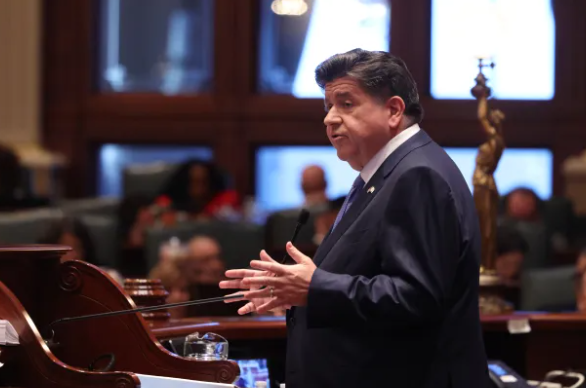
“Every element of the budget for the upcoming fiscal year was thoroughly deliberated with the aim of achieving widespread affordability for all Illinoisans,” said Governor JB Pritzker. “It builds upon seven years of fiscal discipline and efforts to make our state competitive in national and international industries. I look forward to signing the FY27 budget and delivering for Illinois’ working families in all stages of life – whether they are seeking tuition assistance to attend community college, preparing to enter the workforce, hoping to buy their first home, or requiring medical debt relief after receiving health care.”
| |
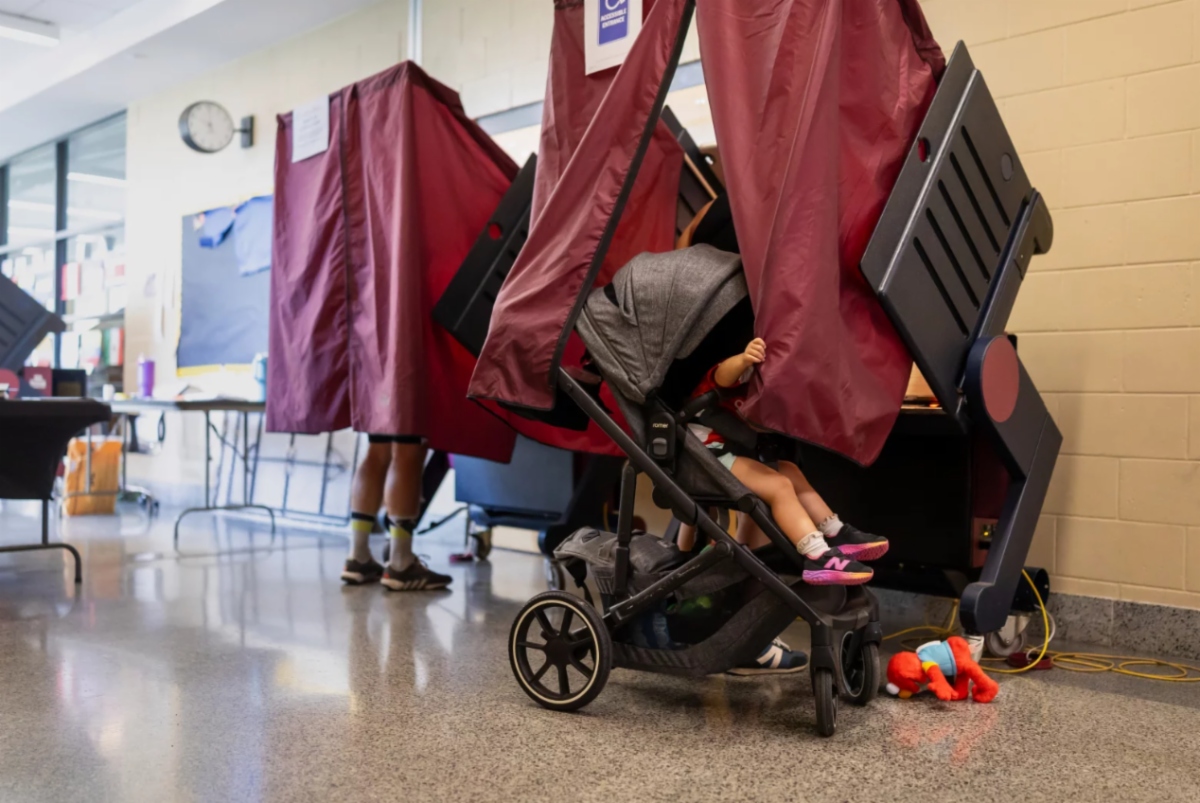
America's voting systems are getting old.
Take Louisiana, for instance, where many Gen Z and millennial voters cast primary ballots this month using machines that were older than they were.
Election officials there talk about having to "cannibalize" parts from dead machines to service others.
"Replacement parts are no longer manufactured," Louisiana Secretary of State Nancy Landry told a state Senate committee earlier this year. "Simply put, the [election] system has reached the end of its life cycle."
A new report out Friday shows the state is not alone in that regard.
If not replaced, by the next presidential election the average age of voting equipment in the U.S. will be more than 9 years, according to research by the Bipartisan Policy Center (BPC) and shared exclusively with NPR ahead of its release.
Historically, jurisdictions replace their equipment right around that age, which could be good timing as voting machine manufacturers have just begun to offer systems that conform with the most recent federal election security guidelines.
Getting counties and states to purchase machines certified to those up-to-date standards is a clear priority for President Trump, who noted the guidelines in his executive order on elections last year.
| | |
The 2026 legislative session adjourned on May 31.
The Fall Veto Session schedule will be made publicly available soon.
| | |
The next JCAR meeting is scheduled for June 16 at 11:00 a.m. in Chicago. The agenda can be found here.
NEW! The May 29 Flinn Report can be viewed here.
Highlights:
Department of Revenue proposes major sales and use tax rule changes affecting Retailers' Occupation Tax, Use Tax, Service Use Tax, and the Leveling the Playing Field for Illinois Retail Act. The proposal would impose a default 15% tax rate on certain destination-sourced sales when retailers fail to provide sufficient location information to determine the correct tax rate.
Supportive housing inspection standards are being modernized. The Department of Human Services proposes adopting the federal HUD National Standards for the Physical Inspection of Real Estate (NSPIRE) for units participating in the Permanent Supportive Housing Bridge Subsidy Program, replacing current state inspection requirements.
Several long-pending child welfare licensing rules advance to JCAR review. Proposed updates to licensing standards for group homes, child care institutions, and maternity centers are scheduled for consideration at JCAR's June 16 meeting.
Tax compliance and administration remain a major regulatory focus. The Department of Revenue's proposals continue the state's efforts to refine implementation of marketplace facilitator and destination-based sales tax laws, with potential implications for retailers, e-commerce businesses, and local governments.
NEW! The May 29 Illinois Register can be viewed here.
Highlights:
Housing & Mental Health Services
- The Illinois Department of Human Services proposed updates to its Permanent Supportive Housing and Bridge Subsidy Program for individuals with mental illnesses.
- The proposal adopts the federal HUD National Standards for the Physical Inspection of Real Estate (NSPIRE) as the inspection standard for subsidized housing units, modernizing housing quality and safety requirements.
Revenue & Tax Administration
The Illinois Department of Revenue proposed several significant tax rule updates affecting:
- Retailers' Occupation Tax
- Leveling the Playing Field for Illinois Retail Act
- Use Tax
- Service Use Tax
These rulemakings continue the state's efforts to clarify tax treatment for remote sellers, marketplace facilitators, and businesses operating in Illinois' evolving retail economy.
Hunting & Landowner Permits
- The Illinois Department of Natural Resources adopted amendments to its Landowner Permit rules.
- The changes affect how landowners and qualifying family members access hunting permit privileges under state wildlife regulations.
Income Tax Rulemaking Under Review
- The Department of Revenue announced a public hearing on proposed Income Tax rules.
- Stakeholders will have an opportunity to provide feedback before the rules advance through the administrative rulemaking process.
Capitol Complex Security Rules Withdrawn
- The Office of the Secretary of State formally withdrew previously proposed amendments regarding public use and security procedures for the Illinois Capitol Complex and Springfield facilities.
- The withdrawal means the proposed changes will not move forward in their current form.
| | |
Commission on Government Forecasting and Accountability’s April 2026 Monthly Briefing can be found here.
COGFA’s April 2026 Monthly Briefing Highlights:
-
Revenues continue to grow modestly, with year-to-date General Funds up compared to FY 2025, driven primarily by income and corporate tax gains.
-
April collections were broadly positive, showing strength across major tax categories and indicating a stable but uneven revenue environment.
- Despite gains, revenues remain below earlier budget expectations, keeping FY 2026 planning under continued fiscal pressure.
- The economic backdrop is mixed but stable, with slow employment growth, easing inflation, and soft but steady consumer activity.
- Key risks remain, including federal funding uncertainty, income tax volatility, and long-term structural budget challenges.
Overall outlook: stable revenue growth, but insufficient to fully ease ongoing budget constraints heading into the next fiscal cycle.
| | |
There are currently 177 active grant funding opportunities available through State agencies. For a full searchable list of agencies and opportunities, visit the Illinois Catalog of State Financial Assistance CSFA website.
If you have questions about any of these grants, please reach out to a Michael Best team member.
| | | | |
444 West Lake Street
Suite 3200
Chicago, IL 60606
| | | | |