|
Illinois Capitol Insights
May 4, 2026
Report Includes:
Michael Best Strategies Updates
Legislative Updates
Statehouse News
Political News
Important Dates
JCAR
COGFA & Special Reports
Grant Opportunities
About Us
| | Illinois Michael Best Strategies Updates | | |
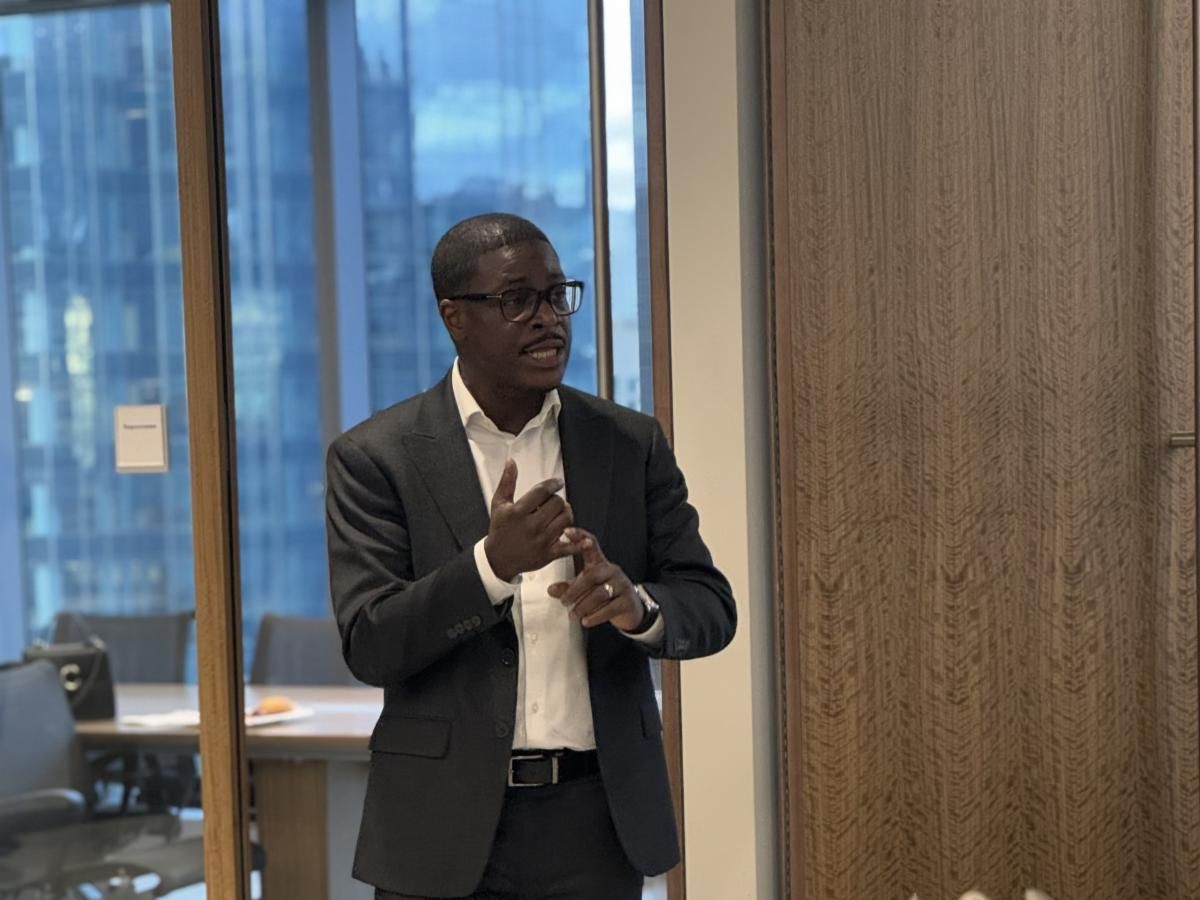
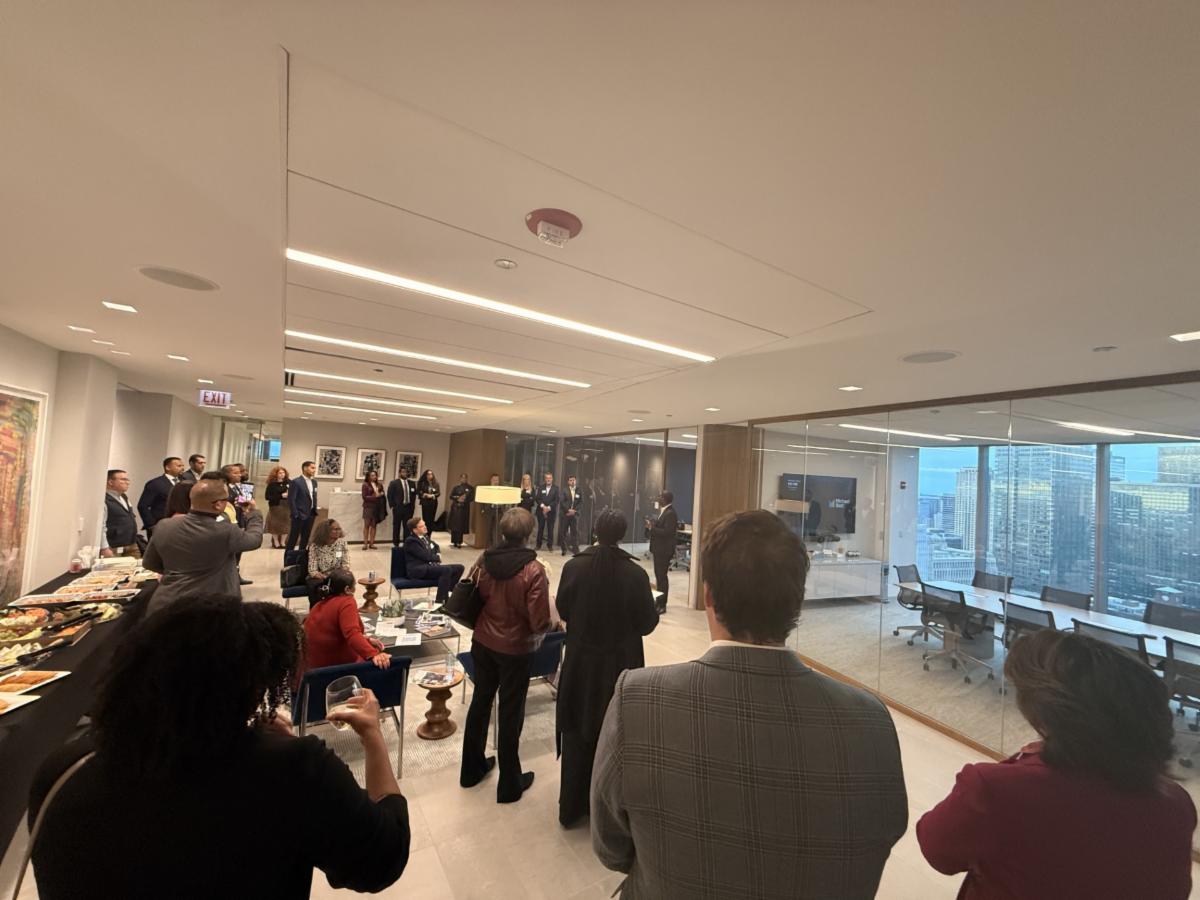
This week, Michael Best Strategies’ Chicago office co-hosted a reception that brought together regional leaders and stakeholders for a conversation on shared policy priorities and cross-border collaboration for David Crowley, candidate for Governor of Wisconsin.
Hosted by Partner Aaron Harris and Principal Robert Dixon, the event welcomed Cook County Clerk Monica Gordon and several Illinois elected officials, highlighting the Chicago office’s role as a convening space for meaningful civic and political dialogue.
| |
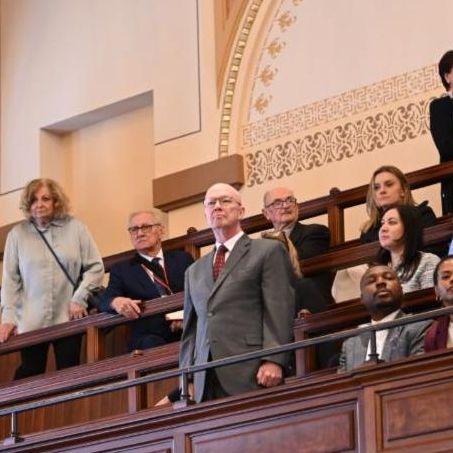
Michael Best Strategies also hosted retired Rear Admiral Jeff Harley in Springfield, where he discussed his current advocacy work with Western Governors University. As Senior Director of Military Engagement, Rear Admiral Harley supports more than 35,000 active-duty military and veteran students pursuing higher education.
He shared perspectives from his distinguished 36-year naval career, including leadership roles during Operation Iraqi Freedom and service as Director of the White House Situation Room, underscoring ongoing efforts to support military-connected students through higher-education policy.
| |
As the Illinois General Assembly enters the final month of the spring legislative session, lawmakers are shifting into a high-intensity period defined by tight deadlines, major policy negotiations, and increased floor activity. With the scheduled adjournment date of May 31, 2026, both chambers are working to advance priority legislation while preparing to finalize the state budget.
A large-scale economic development proposal, referred to as the “megaprojects” bill, continues to draw significant attention as it moves through the Senate. The legislation would allow developers to lock in property tax rates for decades, a provision intended to attract major investments. However, the measure has generated notable debate among stakeholders, including concerns about long-term tax implications and equity. Negotiations remain ongoing, and the bill is considered one of the session’s highest-profile unresolved issues.
A proposed constitutional amendment addressing redistricting has been put on hold in the Senate. The decision follows recent federal developments affecting voting rights law and effectively removes the measure from consideration for the current election cycle.
Work on the Fiscal Year 2027 state budget is accelerating behind the scenes. As in previous years, budget discussions are expected to dominate the final weeks of session, with key considerations including revenue constraints, program funding, and competing policy priorities.
In addition to large-scale proposals, a number of smaller, bipartisan bills continue to advance. Recent activity includes measures addressing rural ambulance staffing, expanding higher education access through community colleges, strengthening protections in school settings, and enhancing services for veterans. These proposals reflect ongoing efforts to address workforce, public safety, and access-to-services challenges across the state.
With just weeks remaining, legislative leaders have aligned the House and Senate calendars to maximize productivity and ensure efficient movement of legislation between chambers. Aside from a few minor exceptions, both chambers are expected to remain in session on coordinated schedules through adjournment.
| | |
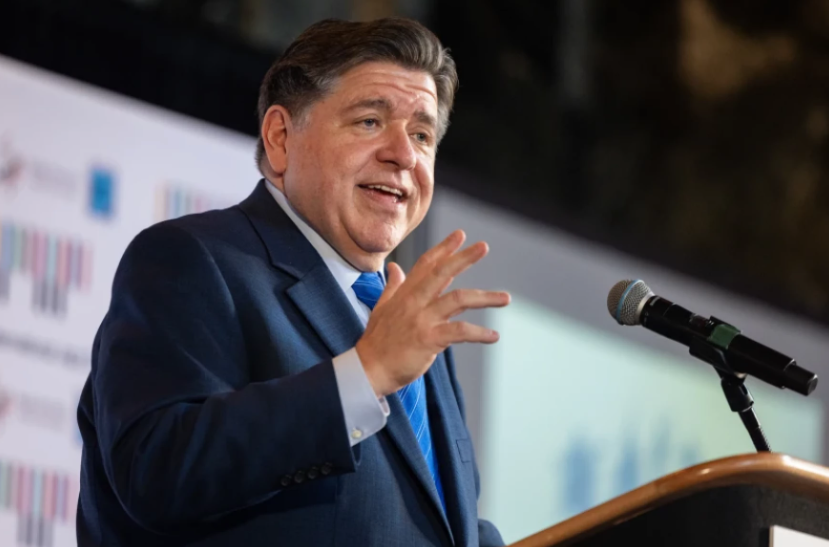
Gov. Pritzker pausing public duties after 'routine' health procedure
Gov. JB Pritzker on Friday underwent a “routine out-patient urology procedure” and will be stepping back from public duties next week.
Pritzker, 61, underwent the procedure on Friday morning and will fulfill his duties next week but pause public events while resting, the governor’s office said.
“The Governor is grateful for well-wishes and looks forward to resuming public events soon,” spokesman Matt Hill said.
The governor has rarely disclosed health issues since taking office in 2018. In 2022, he continued his duties but worked from “home” after a COVID-19 diagnosis. He said then he was experiencing mild symptoms and was taking Paxlovid.
Pritzker’s health has been under a magnifying glass after some substantial weight loss. Last month, he made light of his weight loss and made reference to the popular drug Wegovy.
“I’m JB Pritzker, governor of the great state of Illinois, and if you’re seeing me in person for the very first time, yes, I’m the gov who put ‘gov’ in Wegovy,” Pritzker said at The Gridiron Club and Foundation Spring Dinner. The speech also further fueled speculation of a 2028 presidential bid.
| |
Ghosts of stadiums past haunt Chicago Bears quest for a new stadium deal
As lawmakers consider helping the Chicago Bears build a new stadium, the ghosts of past stadium deals still haunt the present.
Soldier Field, Rate Field and even Lucas Oil Stadium in Indianapolis loom over the landscape, marking steel and concrete warnings and justifications for a new stadium deal. Critics and boosters alike say we should learn from those lessons when considering whether a new deal will be a boon or a boondoggle.
“The big lesson is, read the fine print,” said Neil deMause, author of “Field of Schemes,” a book and website that analyze stadium subsidies. “A lot of deals in the past have gotten approved without legislators or the public examining all the different line items, and it ends up costing a lot more than you expect.”
In the Bears’ case, Illinois lawmakers are weighing whether to let the team negotiate a long-term property tax break with local governments in suburban Arlington Heights. The team would pay $2 billion to build the enclosed stadium at its own cost, but wants the state to pay up to $855 million in infrastructure costs such as roads and utilities.
Across the border, Indiana lawmakers have already authorized building a new domed stadium. As proposed, the Bears would kick in $2 billion, while the state would pay $1 billion.
Funding for the new stadium in Hammond would come from a property tax in a special zone around the stadium, plus a 10% admissions tax, 1% food and beverage tax in Lake and Porter counties, and 5% hotel tax in Lake County.
| |
The Illinois Housing Development Authority (IHDA) is asking local community members, residents, and leaders to participate in the development of the 2027 Illinois Housing Blueprint (Blueprint) through two opportunities: (1) take the resident survey and/or (2) attend a Community Listening Session. The Blueprint is a forward-thinking, grassroots planning initiative designed by IHDA to provide a deeper analysis of the trends and priorities around housing at a regional level that will shape the future of housing policy and investment in Illinois in the years to come.
What Is the Blueprint?
Launched in 2020, the Blueprint is a statewide initiative conducted every three to five years to assess current housing conditions, create a vision for equitable and affordable housing in Illinois, and a pathway to make that vision possible. While IHDA coordinates the Blueprint’s planning process, it is fundamentally collaborative, combining traditional elements such as community engagement with quantitative data analysis. Insights gathered from these engagements are crucial in the creation of a detailed, actionable plan designed to guide Illinois communities in meeting their housing objectives.
Illinois Housing Blueprint Survey
IHDA is asking the public to complete the Blueprint’s online survey. This opportunity allows members of the public to share their opinions to help IHDA understand local housing needs and goals of their community. Responses to the survey are anonymous and will be accepted through Friday, July 31, 2026. Please click here to take the survey.
To help gather accurate and comprehensive information, IHDA is encouraging individuals, elected officials, and local governments to utilize the Blueprint social media toolkit to raise awareness of the survey across personal and professional networks. The more responses received, the more accurate IHDA can be in its analysis, thus providing a more effective tool for communities to describe their current housing needs and planning for the future.
Illinois Housing Blueprint Community Listening Sessions
IHDA is also inviting the public to attend one of their 11 in-person community listening sessions. IHDA is also offering one virtual session that will be conducted in Spanish. At these sessions, IHDA will share data and background specific to the county and region they reside in along with how it compares to other regions in the state. These sessions will provide the opportunity to ask questions and share your thoughts and ideas with staff to ensure the 2027 Blueprint reflects resident input. All attendees must register in advance.
Click here for the list of 2026 Community Listening Sessions. For members of the media, if you would like to speak with someone about the Illinois Housing Blueprint, the survey, or a listening session in your region, please contact Andrew Field at afield@ihda.org.
| |
Educational Labor Relations Board
Lara Shayne will continue to serve as Chair of the Educational Labor Relations Board.
Shayne’s appointment is effective June 2, 2026.
Illinois Pollution Control Board
Michelle Gibson will serve as Chair of the Illinois Pollution Control Board.
Labor Advisory Board
Jerry Womick will continue to serve as a Member of the Labor Advisory Board.
| |
Lost in the shuffle of the 2026 midterms — the unprecedented mid-decade redistricting, President Trump's sagging favorability numbers and Democrats' hopes of retaking the House and potentially the Senate — is an election story that could have implications for 2028 and beyond.
In 23 states, including five presidential swing states, candidates who have denied election results are running for offices that will have a direct role in certifying future elections.
That is according to a new analysis, shared exclusively with NPR ahead of its release, by States United Action, a nonprofit that seeks to protect elections and has been tracking candidate positions on the validity of election results since 2022.
"The goal is to be able to provide voters with the most accurate information possible," said Joanna Lydgate, States United's CEO, "and understand exactly what these candidates stand for and whether they fundamentally believe in free and fair elections in this country."
| |
Redistricting war accelerates winner-take-all political combat that’s straining American democracy
Willie Simon stood outside the Memphis motel where Rev. Martin Luther King, Jr. was assassinated in 1968, now a museum dedicated to the Civil Rights Movement.
Days after the U.S. Supreme Court gutted a key provision of the Voting Rights Act, Simon feared what the decision would mean not just for Black Americans like himself but an entire country where the political guardrails seem to be coming apart.
Simon, who leads the Shelby County Democratic Party in Tennessee, said the court’s conservative majority set a precedent that if you’re “not in the in-crowd group, they can just erase us.”
By weakening a requirement that states draw congressional districts in a way that gives minorities an opportunity to control their own fate, the court escalated the nationwide redistricting war that has seen Democrats and Republicans casting aside decades of tradition in hopes of gaining an edge over the competition. New sessions are scheduled to begin this week in two Republican-controlled states to eliminate U.S. House districts represented by Democrats, and there’s more on the horizon.
It’s the latest example of how the American democratic experiment has been pushed to the breaking point in the decade since Donald Trump rose to power. Extreme rhetoric has become commonplace. There’s been a spike in political violence and a rash of assassinations. Five years after the Jan. 6 attack on the U.S. Capitol, Trump’s allies are trying to harness the same falsehoods about voter fraud to reshape elections.
The rules and norms that once helped smooth over an unruly country’s vast differences have given way to a race for power at all costs.
“I’ve never subscribed to the idea we’re in a civil war, but the gerrymandering wars and the recent decision from the Supreme Court do not make the United States more united,” said Matt Dallek, a political scientist at George Washington University. “It speeds up the hyperpartisan force and atmosphere that people feel on both sides.”
| | |
The 2026 legislative session began in January and will run through the end of May.
Find 2026 Spring Session Calendars below:
Senate Calendar
House Calendar
Below are all of the legislative deadlines for the spring in Illinois.
Jan. 16, 2026 - LRB Request Deadline
Feb. 6, 2026 - Introduction of both House & Senate Bills Deadline
Feb. 18, 2026 - Budget Address and State of the State
March 13, 2026 - Senate - SBs out of Committee Deadline
March 27, 2026 – House – HBs out of Committee Deadline
April 17, 2026 - Senate - SBs Third Reading Deadline
April 17, 2026 - House – HBs Third Reading Deadline
May 8, 2026 - House - SBs out of Committee Deadline
May 8, 2026 - Senate - HBs out of Committee Deadline
May 22, 2026 - House - SBs Third Reading Deadline
May 22, 2026 - Senate - HBs Third Reading Deadline
May 31, 2026 - Adjournment
| | |
The next JCAR meeting is scheduled for May 12 at 10:30 a.m. in Springfield. The agenda can be found here.
NEW! The May 1 Flinn Report can be viewed here.
Highlights:
Elections and Campaign Finance
- The Illinois State Board of Elections continues work on rulemakings related to campaign finance and election administration.
- Items remain in the pipeline from prior notices, signaling ongoing refinement of compliance and operational rules.
Housing
- The Illinois Housing Development Authority’s Homeownership Mortgage Loan Program rulemaking remains active.
- Updates likely focus on program administration and housing affordability efforts.
NEW! The May 1 Illinois Register can be viewed here.
Highlights:
Proposed Rules
Department of Children and Family Services (DCFS)
- Proposed amendments to rules on Reports of Child Abuse and Neglect (89 Ill. Adm. Code 300).
- Updates align rules with statutory requirements related to notification when abuse or neglect involves children in hospital settings.
- Requires coordination with the Departments of Public Health and Healthcare and Family Services in certain cases.
- Clarifies reporting procedures for schools and record handling.
- Includes a 45-day public comment period.
Illinois Commerce Commission
- Proposed updates to Preservation of Records (83 Ill. Adm. Code 350).
- Repeals and modernizes legacy rules governing record retention for electric, gas, and water utilities.
- Reflects an effort to consolidate and update outdated regulatory frameworks.
- Department of Healthcare and Family Services (HFS)
- Proposed rulemaking on Specialized Health Care Delivery Systems (89 Ill. Adm. Code 146).
- Proposed updates to Reimbursement for Nursing Costs for Geriatric Facilities (23 Ill. Adm. Code 2763).
- Continues refinement of healthcare delivery systems and reimbursement methodologies.
Adopted Rules
Department of Agriculture
- Adopted amendments to the Illinois Pesticide Act rules (8 Ill. Adm. Code 250).
- Finalizes updates related to pesticide regulation, compliance, and oversight.
| | |
NEW! Commission on Government Forecasting and Accountability’s April 2026 Monthly Briefing can be found here.
NEW! COGFA’s April 2026 Monthly Briefing Highlights:
-
Revenues continue to grow modestly, with year-to-date General Funds up compared to FY 2025, driven primarily by income and corporate tax gains.
-
April collections were broadly positive, showing strength across major tax categories and indicating a stable but uneven revenue environment.
- Despite gains, revenues remain below earlier budget expectations, keeping FY 2026 planning under continued fiscal pressure.
- The economic backdrop is mixed but stable, with slow employment growth, easing inflation, and soft but steady consumer activity.
- Key risks remain, including federal funding uncertainty, income tax volatility, and long-term structural budget challenges.
Overall outlook: stable revenue growth, but insufficient to fully ease ongoing budget constraints heading into the next fiscal cycle.
| | |
There are currently 191 active grant funding opportunities available through State agencies. For a full searchable list of agencies and opportunities, visit the Illinois Catalog of State Financial Assistance CSFA website.
If you have questions about any of these grants, please reach out to a Michael Best team member.
| | | | |
444 West Lake Street
Suite 3200
Chicago, IL 60606
| | | | |