Immortal Performances’
newest TOSCANINI Edition . . .
Yves St Laurent presents
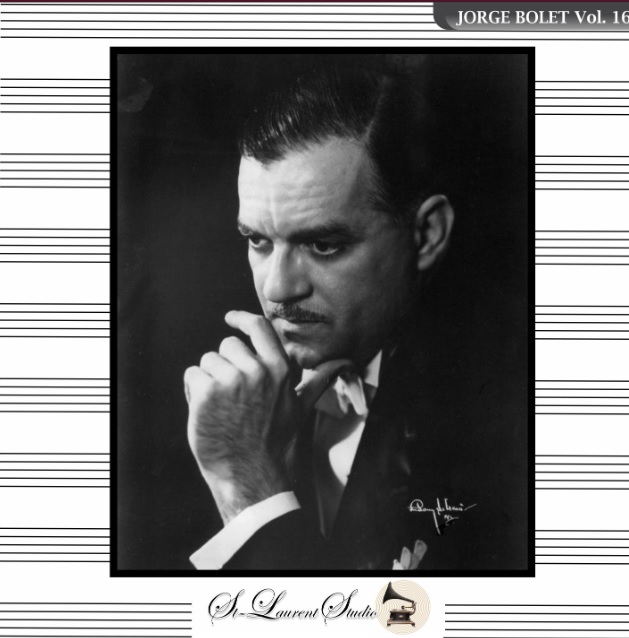
JORGE BOLET, Vol. 16 . . .
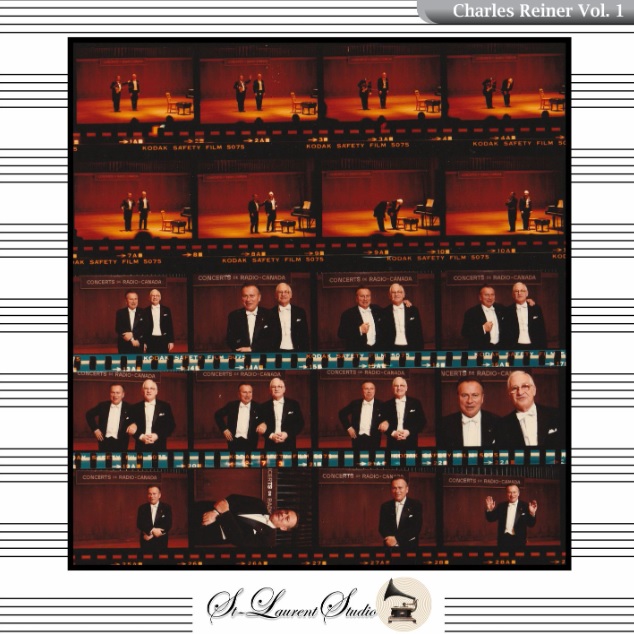
CHARLES REINER & HENRYK SZERYNG . . .
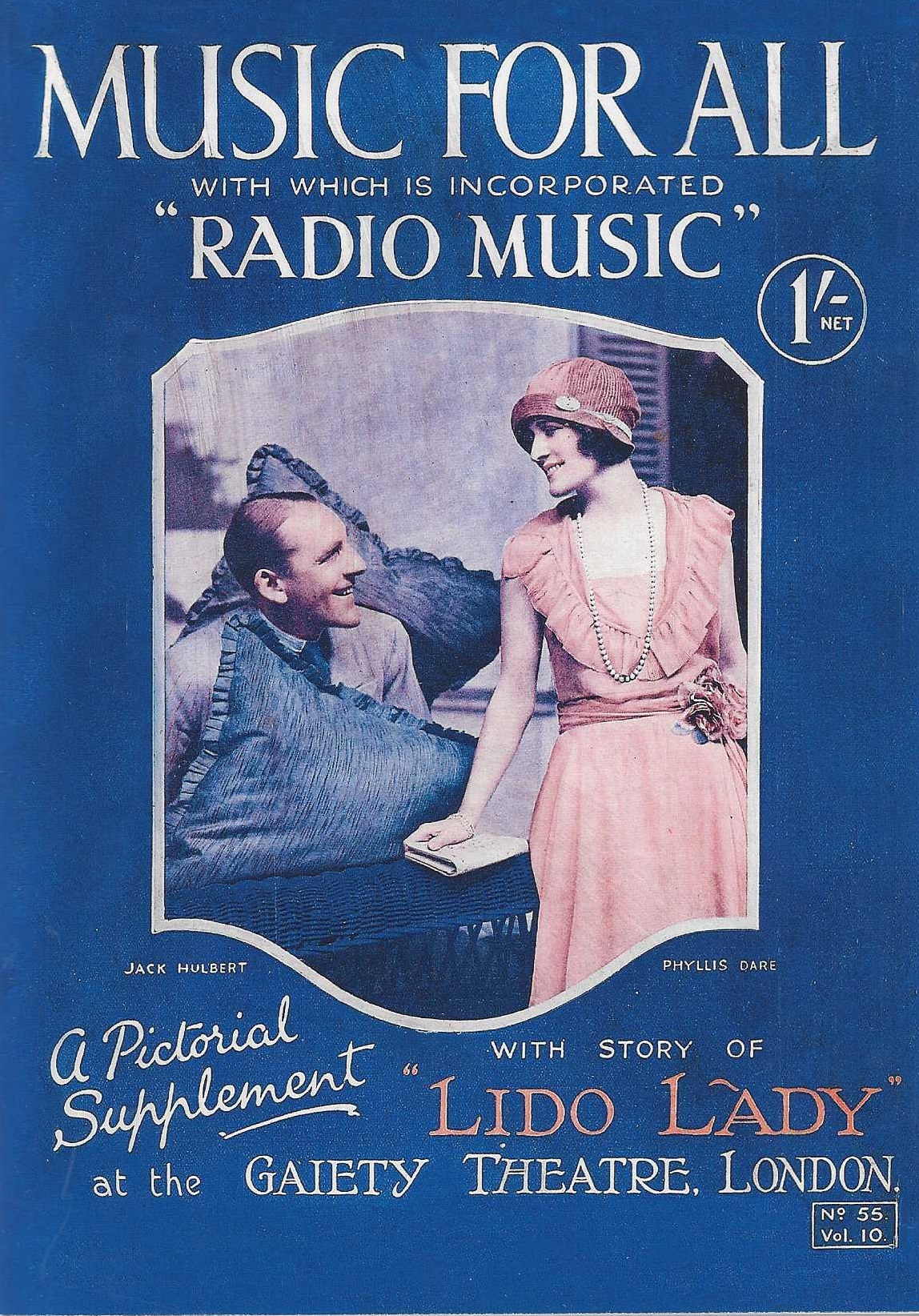
Palaeophonics offers London’s 1926 LIDO LADY . . .
Bodanzky’s TRISTAN - the second 1938 performance -
returns to stock next week . . .
and the ‘sale’ titles continue . . .
|
|
|
|
ARTURO TOSCANINI Cond. NBC S.O: Symphony #2 in D Major, op. 36 (Beethoven); 'Enigma' Variations, op. 36 (Elgar), Live Performance, NBC Studio 8H, New York, 5 November, 1949; 'Enigma' Variations, op. 36 (Elgar), Rehearsal Excerpts, New York, February 14, 1951. (Canada) 2-Immortal Performances IPCD 1152, with Commentary by Ben Grauer. Notes by Robert Matthew-Walker. Transfers by Richard Caniell. (C1969)
|
|
Critic Review
“On November 7, 1951, Arturo Toscanini and the NBC SO performed a concert, broadcast to radio audiences from Studio 8H in New York City. The program included Beethoven’s Symphony #2 and Elgar’s ‘Enigma’ Variations; both products of the composers’ early years, and each bearing the Opus #36. In the studio audience for the broadcast concert was a young man recently promoted to the Sound Division of RCA Victor. As Richard Caniell describes in his Recording Notes for a new Immortal Performances (IP) release of the concert: ‘at the end of the 'Enigma' Variations, everyone just jumped up from their seats (some 1200 in the audience) in one body in an immense ovation. I could scarcely believe that the famed conductor about whom I’d read, conducting the world premieres of LA BOHEME and PAGLIACCI in the 1890s, was actually standing there in front of us, creating such a performance and later, reluctantly bowing his head in acknowledgement of the ovations’.
And now, thanks to Caniell and IP, we can hear this historic concert, released in its entirety for the first time, and restored in superb sound. And as a bonus, IP includes an extended excerpt from a Toscanini-NBC SO rehearsal of the ‘Enigma’ Variations, from February 14, 1951.
Following NBC announcer Ben Grauer’s introductory comments, Toscanini and the NBC SO launch into the Beethoven Symphony #2. This November 5, 1949 performance, with the addition of some touch-up work on October 5, 1951, was included as part of RCA’s iconic Beethoven Symphony cycle with Toscanini and the NBC SO. It is also featured on Volume II of the 72-volume CD set: ‘Arturo Toscanini: The Complete RCA Collection’. In the CD release, the recorded sound of the Beethoven 2 is full-bodied, with a wide dynamic range, and packing considerable visceral impact. But the sonics also suffer from harshness in the loud tutti episodes, and a lack of sweetness in the string tone. IP’s restoration offers a more realistic and better equalized concert perspective. Here, Caniell and IP demonstrate that it was possible to obtain fine-sounding recordings from the often-maligned Studio 8H. This well-known performance is fleet and propulsive, shorn of the first-movement exposition repeat, and featuring a minimal amount of rubato. It is polished to perfection, and played with scintillating energy and precision by Toscanini’s NBC SO. My preference is for Toscanini and the NBC SO’s November 4, 1939 broadcast performance. The 1939 version is broader and more flexibly paced, but without any loss of momentum, and includes the first movement repeat. It’s part of the 1939 Beethoven Cycle that has been superbly restored by IP (IPCD 1064-7; reviewed by me in FANFARE 40:2, Nov. / Dec., 2016). But the 1949 Beethoven 2 is justly famous and now, thanks to IP, may be heard in sound that does the performance proud.
A comparison of the IP restoration of the November 7, 1949 ‘Enigma’ Variations with the one included on Vol. 35 of ‘The Complete RCA Collection’, recorded in Carnegie Hall on December 10, 1951, reveals a similar improvement in the recorded sound. But here, other factors enter into play. The 1949 and 1951 renditions proceed along similar interpretive lines. But the 1949 broadcast performance is notably fleeter. It times out at about 26:00, while the 1951 rendition lasts a bit over 29 minutes. Interesting to note, too, that Toscanini’s June 3, 1935 Queen’s Hall, London performance of the ‘Enigma’ with the BBC SO is similar in TT to the 1951 Carnegie Hall recording (28:24) (there is a fine restoration on WHRA-6046). The stereotype is that Toscanini’s tempi became increasingly quicker as he got older. As with many stereotypes, there is a kernel of truth in that statement. But here, the 1949 is the outlier of three performances spanning the years 1935-51. Having read many of Richard Caniell’s essays on the pressure NBC placed on Toscanini to fit his interpretations within fixed broadcast time blocks, I am tempted to believe this was a performance dictated to some degree by necessity. That said, this is a gorgeous rendition of Elgar’s early masterpiece. Perhaps it goes without saying that Toscanini and the NBC SO perform this work with remarkable precision and energy. But the rich, singing tone, tender and flexible phrasing, and characterful wind playing Toscanini coaxes from the orchestra are all quite remarkable. I’ve always felt that Toscanini’s experience in the opera house served him well in programmatic orchestral music, and it’s wonderful to hear how affectionately and incisively Toscanini etches Elgar’s various character studies. There is also plenty of humor where appropriate; no surprise coming from a conductor who was perhaps the greatest interpreter of Verdi’s comic masterpiece, FALSTAFF. If limited to but one Toscanini ‘Enigma’, I’d probably opt for the 1935 BBC; broad, flexibly phrased, and featuring the seductive string portamentos that were more common in Toscanini’s earlier recordings. But thanks to Richard Caniell and IP, we may hear the 1949 broadcast ‘Enigma’, a considerable performance in its own right, in excellent sound.
The second disc (also a CD premiere) comprises more than an hour of Toscanini rehearsing the ‘Enigma’ with the NBC SO on February 14, 1951, in preparation for a Carnegie Hall concert. If fast tempi are part of the Toscanini folklore, so is the Maestro’s volcanic temper. To be sure, recordings of Toscanini in rehearsal document the occasional flare-up, which can be quite monumental! But for the far greater part, Toscanini was businesslike and collaborative when working with his musicians in rehearsal. Such is the case with the 1951 ‘Enigma’ rehearsal sequence. While some conductors like to engage in lengthy verbal explications, Toscanini allows his musicians to play through the work, stopping only when necessary (which here, is infrequently). It’s instructive to hear that the legendary precision of execution by Toscanini and the NBC SO was the product of scrupulous and repetitive attention to challenging passages. Toscanini’s temper does not emerge until the rehearsal of the ‘Enigma’s final section, a musical depiction of Elgar. There, Toscanini is not pleased with the string basses, and tells them in no uncertain terms (The contrabasses inspired another Toscanini explosion during rehearsals for the 1949 televised broadcast of Verdi’s opera AIDA. This led to one of Toscanini’s finest zingers: ‘Don’t play from memory. You have no memory’). Caniell and IP do a fine job of equalizing the volume levels of the orchestral playing with Toscanini’s comments (the engineers at the time ran the rehearsal tape without much attention to such details). Thanks to IP, we have a prime seat in Carnegie Hall to witness Toscanini and the NBC SO, intensely preparing a masterwork. That’s quite the gift. The rehearsal CD contains 14 separate tracks, allowing easy access to various portions.
The CD set’s booklet includes engaging and informative commentary by both Robert Matthew-Walker and Richard Caniell. I have to confess that reading some of Caniell’s first-hand accounts of the concert we hear on this release inspired goosebumps. How wonderful that he chose to share that experience, restored in its finest sonic guise. This superb release is self-recommending for Toscanini devotees. But its appeal and value are considerably more far-reaching.
5 Stars: A superb 1949 Toscanini/NBC SO concert, and 1951 ‘Enigma’ rehearsal, beautifully restored.”
- Ken Meltzer, FANFARE, Nov. / Dec., 2021
|
|
|
|
LIDO LADY (Lorenz Hart, Guy Bolton, Bert Kalmar & Harry Rudy; music by Richard Rodgers), w.Harold French, Ciceley Courtneidge, Jack Hulbert, Phyllis Dare, Sydney Baynes, Percy Mackay (singing), Percival Mackay's Band, Fred Rich and his Hotel Astor Orch. (England) Palaeophonics 171, w.Elaborate 'The Play' 13pp. Brochure. Opening at London’s Gaiety Theatre on 1 December, 1926, the show was intended to cash-in on the popularity of American-style musicals. It ran for 261 performances. Excellently transferred from the legendary early electrical 78rpm English Columbia & HMV rarities. Among Dominic Combe's most delightful charmers, produced via his enhanced equipment! Again, for this production he had access to fabulous archival material and superb original 78s with which to work! (PE0363)
|
|
Critic Review
"This week, I’m having a look over LIDO LADY (1926), which was different from the previous Rodgers and Hart musicals for a couple of reasons. Firstly, it was a project that had its origins in London. Jack Hulbert was planning to produce a play as a vehicle for his wife, Cicely Courtneidge, and himself. He wanted songs with an American flavour because the music of NO, NO, NANETTE and LADY, BE GOOD was trending like a viral hashtag in London and so he hired Rodgers and Hart to write some material for the show. This was all the more remarkable because the pair had yet to have a hit in London, a city that had not seen productions of DEAREST ENEMY or THE GIRL FRIEND. Secondly, the script had already been written, so Rodgers and Hart were seeking out and writing for obvious song spots rather than creating original material with a collaborator as they went along or even tailoring previous songs to fit new situations as they had done before.
As per tradition when it came to musical comedies in the 1920s, LIDO LADY didn’t amount to much plot-wise. Set in Venice, on the Lido, Fay Blake is the tennis-playing daughter of a wealthy sports goods manufacturer. Amidst all sorts of romantic shenanigans, there is some business about a tennis ball design going missing – and that’s about it.
Added to the songs Rodgers and Hart composed for the piece were ‘It All Depends on You’ from Buddy de Sylva, Lew Brown and Ray Henderson’s ‘Big Boy’ and ‘Tomorrow the Skies May Be Gray (But Not Today)’ by Con Conrad. One of the highlights of the score was ‘Try Again Tomorrow’, which was a duet for Courtneidge and Hulbert, who played siblings in the show. It’s a catchy and witty little number that elicits an easy chuckle – Just a couple of minutes of unadulterated fun.
Rodgers and Hart also interpolated ‘Here in My Arms’ from DEAREST ENEMY into LIDO LADY. In fact, several songs bounced between various Rodgers and Hart projects of this period, partly because they were juggling so many projects as they hustled through the roaring twenties. Those easy shifts made me wonder why there hasn’t been a Rodgers and Hart equivalent of ‘My One and Only’, ‘Crazy For You’ or ‘Nice Work if You Can Get It’. There seems to be so much material to re-envision. It’s difficult to argue for any kind of respect for the much-maligned 1920s musicals, even the ones that do hold together relatively well – but it seems that so much of what Rodgers and Hart did during this decade has been written off wholesale. Of course, there are some 1920s shows that can’t be revived for anything but pure historical interest and that’s just the way it is. Some things are meant for history books or historical reconstructions – but I can’t help wonder if there’s a missed opportunity here.
Another interesting aspect of the LIDO LADY journey was the criticism that was aimed by the British critics at Hart’s lyrics, particularly at the more inventive wordplay in pursuit of rhyme, which they viewed as nonsensical, or at lyrics that required a performer to distort the word to fit the musical line, something that also happened in the pursuit of a rhyme on the page. I found this intriguing as Hart’s reputation as a lyricist appears to be based less on his technical craft but on his often cynical tone, humour and the pathos created through the apparent encoding of his life experiences into his lyrics. Perhaps that’s a good topic for a deep dive here on Musical Cyberspace sometime down the line.”
- David Fick, 11 Feb., 2022
|
|
|
|
JORGE BOLET: My Joys (Chopin-Liszt); w.John Eliot Gardiner Cond. Orchestre national de Lyon: Wanderer Fantasy (Schubert-Liszt), Live Performance, 21 Aug., 1987, Montpellier; w.Erich Leinsdorf Cond. Boston Symphony Orch.: Fantasie uber Motive aus Beethoven's Ruinen von Athen (Liszt); Parergon on Symphonia Domestica (Strauss), Live Performance, 9 Aug., 1964, Tanglewood. [An exceptionally unexpected Bolet treasure of equally rarified programming!] (Canada) St Laurent Studio YSL T-1265. Transfers by Yves St Laurent. (P1416)
|
|
CRITIC REVIEW
"Bolet was a master of color and texture and had a world-class technique, all still evident here at the end of his life. This abounds in colors and subtle voicings."
- James Harrington,
AMERICAN RECORD GUIDE,
March / April, 2011
“Accomplished British conductor John Eliot Gardiner is noted for founding and directing the Monteverdi Choir in 1964 and its complement Monteverdi Orchestra in 1968. Although he conducted all types of music, he is a renowned authority in a variety of 17th and 18th century styles, and conducted Gluck's ALCESTE for the British Broadcasting Corporation (BBC) and IPHIGENIE ENTAURIDE at Covent Garden in 1973. He founded the English Baroque Soloists in 1977, which he conducted in performances that featured original instruments of the Baroque era. Gardiner appeared in many of the major music centers of the world as a guest conductor. He was made an officer of the Ordre des Artes et des Lettres in 1988, and a Commander of the Order of the British Empire in 1989 in recognition of his long, illustrious, and varied career. Tim Page of THE NEW YORK TIMES wrote, ‘Mr.Gardiner transcends syntax and goes directly to the heart of the music’.
Gardiner prided himself on transcending academic concerns in music, but proved that he had an aptitude for scholarship when preparing new editions of Jean Philippe Rameau's DARDANUS, LES FETES D'HEBE, and LES BOREADES for London concert performances between 1973-75. In order to mark the tenth anniversary of the Monteverdi Choir on April 19, 1975, Gardiner conducted Rameau's final opera, LES BOREADES, in London's Queen Elizabeth Hall for the first performance in modern times. LES BOREADES was subsequently presented as a fully staged production at the Aix-en-Provence Festival in 1982. By the late 1970s, Gardiner and his ensembles were in great demand throughout the United States and Europe. The Monteverdi Orchestra was renamed the English Baroque Soloists in 1978 after switching to original-period instruments.
In 1989 Gardiner celebrated the silver anniversary of the Monteverdi Choir with an international tour that included the Unites States, India, Japan, and Australia. Gardiner also conducted the Philharmonic Orchestra at the Royal Festival Hall in London in 1989, in the premier of a new version of Debussy's LA MER, as edited by Marie Rolf. A year later, he introduced with little acclaim a new period-instrument orchestra called the Orchestre Revolutionnaire et Romantique that was identical in personnel to the English Baroque Soloists. As a guest conductor, Gardiner led symphony orchestras in Dallas, San Francisco, Boston, Toronto, Montreal, and Detroit. He also led the New York Philharmonic, and the Orchestra of St. Luke's, with whom he made his Carnegie Hall debut in November 1988. In Europe he conducted the Philharmonic Orchestra, the Royal Philharmonic Orchestra, the Bournemouth Symphony Orchestra, the City of Birmingham Symphony Orchestra, and the Oslo Philharmonic.”
- B. Kimberly Taylor
|
|
|
|
CHARLES REINER: Partita #3 for solo Violin in E (Bach); w.HENRYK SZERYNG: 'Tombeau' Violin Sonata in D, Op.9, #3 (Leclair); Violin Sonata #2 in D, Op.94a (Prokofiev); King Roger - Le Chant de Roxanne (Szymanowski). (Canada) St Laurent Studio YSL T-1229, Live Performance, 10 Dec., 1982, Salle Claude-Champagne, Montreal. Transfers by Yves St Laurent. (P1415)
|
|
Critic Reviews
“In violin recitals of yore, a pianist could usually be described somewhere in the background, plunking unobtrusively away, foot on the soft pedal, while the fiddler dominated the program like a Nero in tails. That school of violin playing is not so prevalent today, and it was the newer style that held the stage yesterday afternoon at Hunter College Assembly Hall, where Henryk Szeryng and Charles Reiner played a program that was a model of shared responsibility and shared glory.”
- Donal Henahan, THE NEW YORK TIMES, 6 Dec., 1971
“At a young age, Charles Reiner was soloist with the Budapest Philharmonic Orchestra. After his release from a concentration camp in Austria, Reiner attended the Franz Liszt Academy in Budapest, and in 1947 received a concert diploma. His teachers were Arpad Hanak, Arnold Szekely, and Bela Böszörmenyi-Nagy. He won the 1948 International Competition for Musical Performers in Geneva and in 1949 was awarded first prize for virtuosity by the Geneva Conservatory, where he had studied with Dinu Lipatti and Louis Hiltbrandt. After performing in various European centres, he won first prize (1950) in a United-Nations-sponsored competition of the International Refugees Organization.
Reiner moved to Montreal in 1951 and that year made his solo recital debut 27 Nov. at the Ritz-Carlton Hotel, followed by around 40 concerts for Jeunesses Musicales of Canada. In an impressive career as accompanist he has performed with Henryk Szeryng, Igor Oistrakh, Ruggiero Ricci, Hyman Bress, Antonio Janigro, Arthur LeBlanc, Jean-Pierre Rampal, Richard Verreau, Maureen Forrester, and others. A favourite accompanist of Szeryng over the years, Reiner recorded with him many times, toured South Africa and elsewhere, and played at Carnegie Hall.
Reiner also gave solo recitals in North America, Europe, and South Africa, and appeared innumerable times on radio and TV. He was a founding member of the Canadian Piano Quartet, and of Musica Camerata Montreal in 1971. In 1985 he was invited by the Shanghai Conservatory to teach the complete Beethoven and Brahms sonatas for violin and piano, which he performed with 14 Chinese violinists in five recitals.”
- THE CANADIAN ENCYCOPEDIA
|
|
. . . REPEATED . . .
FROM THE RECENT PAST . . .
|
|
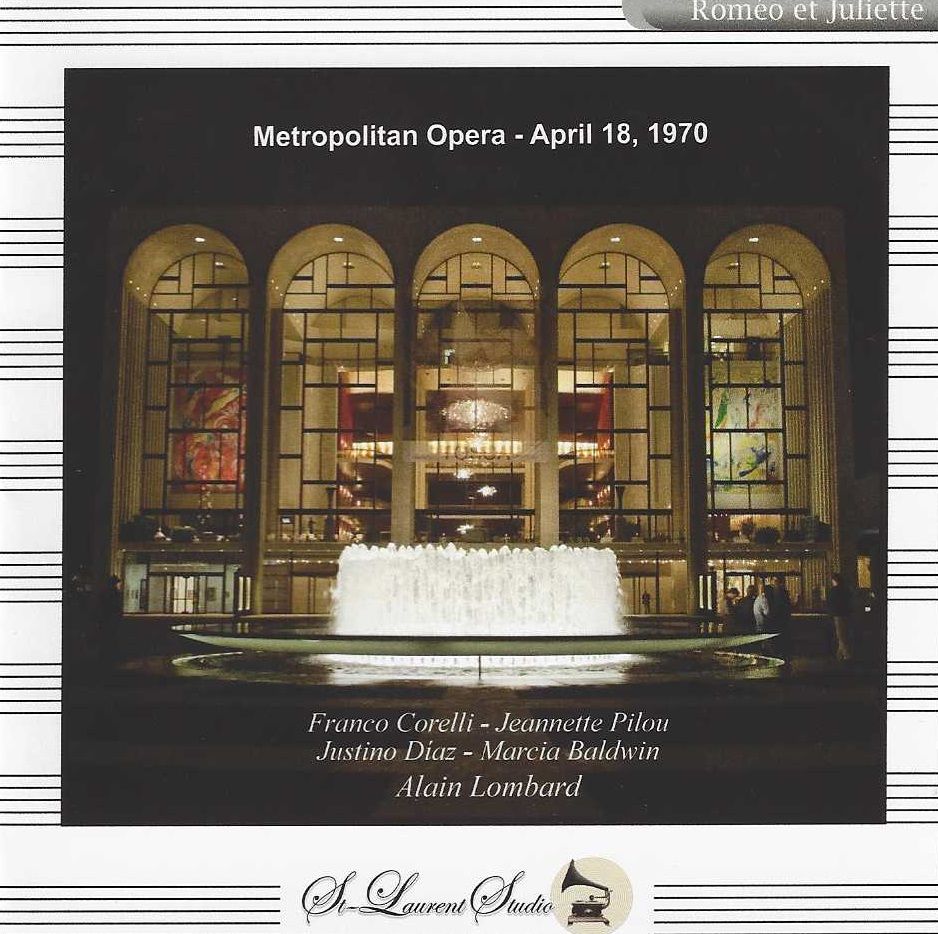
ROMEO ET JULIETTE, Live Performance, 18 April, 1970, w.Alain Lombard Cond. Met Opera Ensemble; Franco Corelli, Jeannette Pilou, Justino Diaz, Marcia Baldwin, John Reardon, Gene Boucher, etc. (Canada) 2-St Laurent Studio YSL T-1280. Transfers by Yves St Laurent. (OP3438)
|
|
FAUST (in German), w.Bruno Seidler-Winkler Cond. Court Opera Berlin Ensemble; Emmy Destinn, Karl Jorn, Paul Knupfer, Desider Zador, Ida von Scheele-Muller, etc.; EMMY DESTINN: Arias from Il Trovatore, Aida, Madama Butterfly, Mignon, Hubicka, Dalibor, Der Fliegende Hollander, Lohengrin & Tannhauser - recorded 1906-09. 2-Marston 52074, recorded 1908. (OP3439)
|
|
LEONARD BERNSTEIN Cond. Orchestre National de Monte Carlo: 'Titan' Symphony #1 in D (Mahler); Candide - Overture (Cond. by the Composer); Piano Concerto #17 in G, K.453 (Mozart). (Canada) 2-St Laurent Studio YSL T-1258, Live Performance, 11 Aug., 1962, Palais du prince, Monaco. Transfers by Yves St Laurent. (C1967)
|
|
ARTHUR NIKISCH Cond. Berlin & London Phil.: Nozze - Overture (Mozart); Symphony #5 in c (Beethoven); Rhapsodie hongroise #1 (Liszt); Le Carnaval romaine - Overture (Berlioz); Oberon - Overture (von Weber). (Canada) St Laurent Studio YSL 78-1197, recorded 1913-21. Transfers by Yves St Laurent. (C1968)
|
|
MARCELLE MEYER: Scarlatti, Debussy & Chopin; w.Manuel Rosenthal Cond. RTF S.O.: Piano Concerto #3 (Rieti). (Canada) 2-St Laurent Studio YSL 33-1270, recorded 1955-57. Transfers by Yves St Laurent. (P1414)
|
|
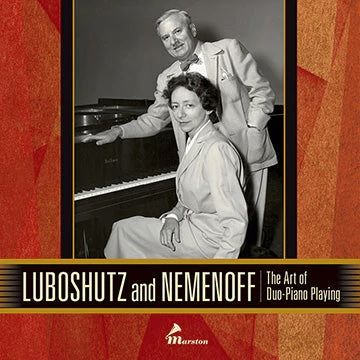
LUBOSHUTZ AND NEMENOFF: The Art of Duo-Piano Playing, w.Serge Koussevitzky, Robert Shaw & Harl MacDonald: Bach-Vivaldi, Handel, Mozart, Brahms, Chopin, Debussy, Saint-Saens, Mendelssohn, Weber, Reger, Schumann, Strauss, Glinka, Cui, Khachaturian, Mussorgsky, Kreisler, de Falla, Rossini, Levitzki, Milhaud, Luboshutz, Portnoff, Shostakovich, Stravinsky & Harl McDonald. 4-Marston 54010. (P1413)
|
|
L'AMORE DEI TRE RE (Montemezzi), Live Performance, 15 Feb., 1941, w.Montemezzi Cond. Met Opera Ensemble; Grace Moore, Ezio Pinza, Charles Kullman, Richard Bonelli, Alessio de Paolis, etc. [A vivid demonstration of all that is missing in opera performances of today! This verismo jewel belongs in every operatic collection!] (Canada) 2-St Laurent Studio YSL T-1277. Transfers by Yves St Laurent. (OP3434)
|
|
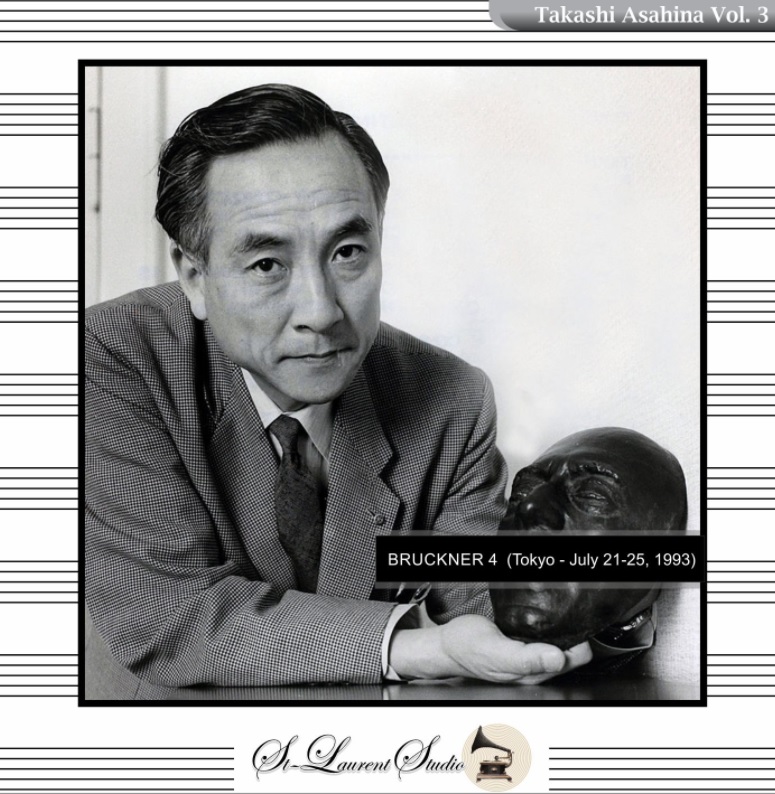
TAKASHI ASAHINA Cond. Osaka Phil.: 'Romantic' Symphony #4 in E-flat (1881 version, ed. Haas) (Bruckner). (Canada) St Laurent Studio YSL T-1247, Live Performance, 21-25 July, 1993, Festival Hall, Osaka. Transfers by Yves St Laurent. (C1960)
|
|
HERBERT von KARAJAN Cond. Berlin Phil.: 'Tragic' Symphony #6 in a (Mahler). (Canada) St Laurent Studio YSL T-1196, Live Performance, 13 May, 1978, Salzburg Festival. Transfers by Yves St Laurent. (C1958)
|
|
ZDENEK MACAL Cond. Milwaukee S.O.: 'Titan' Symphony #1 in D (Mahler); w.RUDOLF FIRKUSNY: Piano Concerto #24 in c, K.491 (Mozart). (Canada) 2-St Laurent Studio YSL T-1159, Live Performance, 20 Feb., 1981 Uihlein Hall, Milwaukee. Transfers by Yves St Laurent. (C1957)
|
|
KLAUS TENNSTEDT Cond. Philadelphia Orch.: Symphony #9 in D (Mahler). (Canada) St Laurent Studio YSL T-1250, Live Performance, 19 Jan., 1988, Carnegie Hall. Transfers by Yves St Laurent. (C1948)
|
|
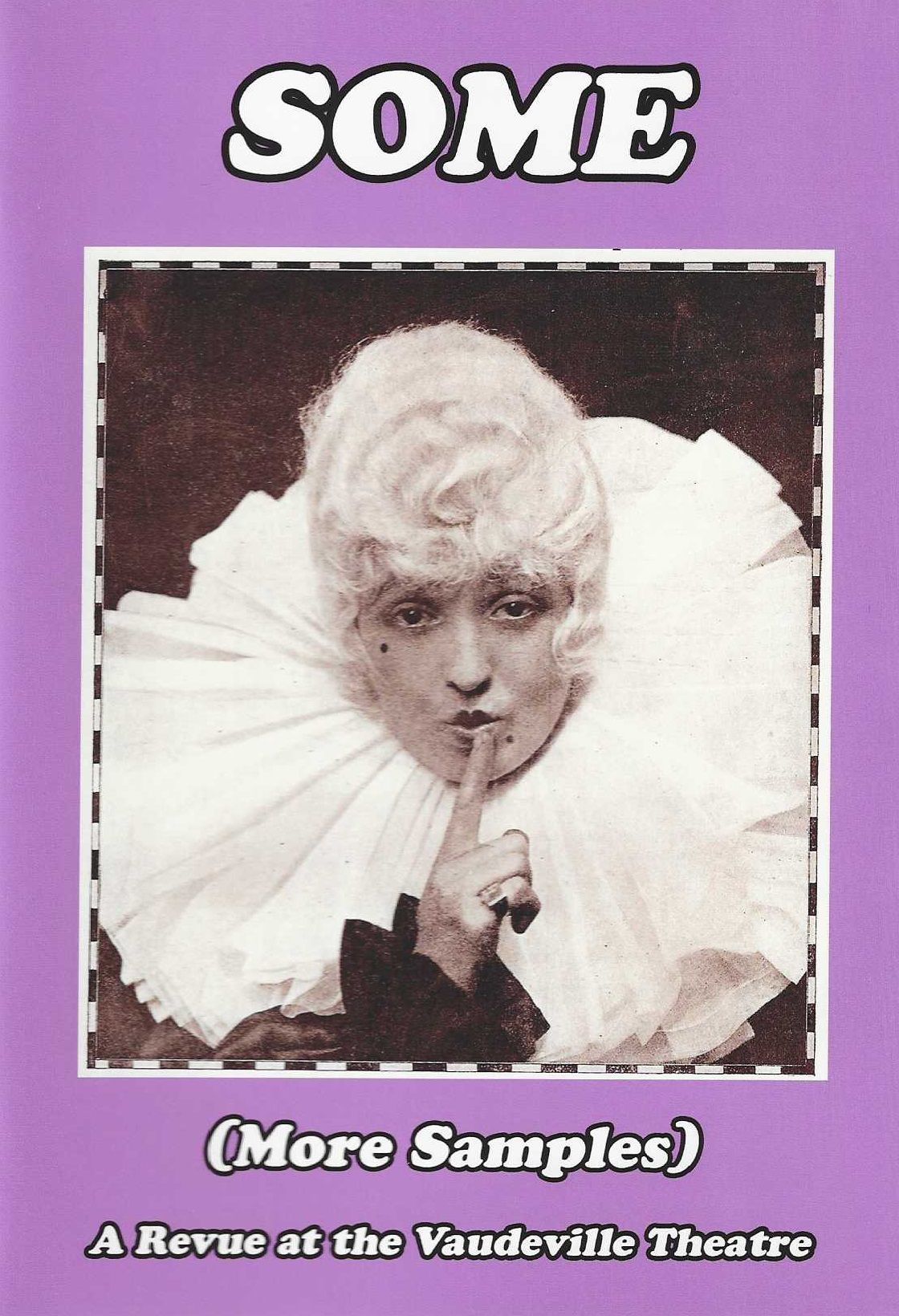
SOME (MORE) SAMPLES OF ODDS AND ENDS, ‘A REVUE’ (which, as its title suggests, is of a more scrappy order than usual). (Harry Grattan & James W. Tate), Opened 9 June, 1916, running for 273 performances, w.Lee White, Clay Smith, Gene Gerard, Rebla, Barrington, Moxon & Billie Carleton. (England) Palaeophonics 154, w.Elaborate 'The Play' 16pp. Brochure. Excellently transferred from the legendary 78rpm English Columbia 1916 rarities. Dominic Combe's enchanting delight, produced via his enhanced equipment! Again, for this production he had access to fabulous archival material and superb original 78s with which to work! [Among Dominic Combe's most delightfully charming releases!] (PE0362)
|
|
BOOKS ON SALE
“Books have become our lonely stepchildren! By spending so many hours constantly revising our thousands of CDs we realize we have paid scant attention to our BOOKS ON SALE, thus many have been added (with more appearing), accompanied by greatly reduced prices! Have a glance at our SALE section - for BOOKS!
[many sealed copies of
numerous out-of-print additions:
The Record Collector, Naxos, VRCS, Issues of
Symposium's Harold Wayne series,
Romophone, GOP &
many Met Opera broadcasts &
operas from Moscow's Aquarius, plus
numerous lesser-known operas have been added
throughout our listings, in appropriate categories. .
out-of-print books [many biographies,
Record Catalogue-Discographies . . .
numerous CDs are added each week] . . .
Once again . . .
Welcome to our new bookshop & list of Original Cast LPs, www.norpete.com where you will see a vast array of excellent, used out-of-print books. You're sure to find many books of interest which may have long eluded you, so now is your opportunity to fill in missing gaps. Our online bookshop includes composer and performer autobiographies and biographies. Soon we will include musical criticism, theory and history, plus histories of symphony orchestras, opera houses and festivals. In addition, we shall offer quite an array of vocal scores, many of which are most rare and unusual.
Take a look at our exciting array of Broadway & Off-Broadway Original Cast and London Original Cast LPs, all in superb condition.
We carry splendid CD offerings from Yves St Laurent, VRCS, The Record Collector, Marston, Palaeophonics, Immortal Performances (Canada), Malibran, Aquarius, Truesound Transfers, Walhall, Bongiovanni, Clama and many other labels.
As always, please contact us with any special requests.
Please remember that we can take your order over the telephone from 10:00am to 6:00pm (EST), thereby providing you with the most current status of your order. Should you order by email or shopping cart and do not receive a timely acknowledgement of your order, please telephone.
Thank you again for your loyal support, and happy browsing our new website and exciting offerings.
|
|
|
Norbeck, Peters & Ford | 1-802-524-7673 or 1-800-654-5302
|
|
|
|
|
|
|