May 2026

Any comments/suggestions please email the editor at editor@redrockrx.com

Edited by Malcolm Fraser MD, CMD

Antiviral Flu Chemoprophylaxis Does Help!

For many years here at Red Rock Pharmacy, we have advocated for appropriate antiviral flu chemoprophylaxis.


A recently published study has once again vindicated our approach. According to a March study published in JAMA Internal Medicine, nursing homes that administered antiviral chemoprophylaxis (or chemoprevention) to at least 70% of potentially affected residents within the first two days of an influenza outbreak reduced the risk of hospitalization among residents by 21%. This is HUGE!


The study examined over 400 outbreaks across more than 300 nursing homes between September 2018 and May 2022, generating 35,086 resident prophylaxis trials. The authors noted that future research should identify which combinations and timing of outbreak-control measures are most effective for reducing viral transmission and improving clinically important outcomes in nursing homes.


  1. Nationwide, during the 2024–25 influenza season, influenza vaccination coverage was 61.3% among nursing home residents and 42.1% among healthcare personnel (HCP) working in nursing homes.
    
  2. Older adults who received a high-dose influenza vaccine experienced a decreased risk of developing Alzheimer’s disease compared with those who received a standard-dose influenza vaccine, according to a study published in Neurology. The results showed that the high-dose vaccine was associated with a significantly lower risk of Alzheimer’s disease during the 25 months following vaccination. The exact magnitude of the reduction is unclear.
    

Using evidence-based medicine, we will continue to advocate for our residents.


Shixian Wang

Director of Operations


SURVEY UPDATE


1. Effective April 30, 2026: Major CMS Survey Guidance Revision


  • Survey teams are expected to be onsite for at least five consecutive hours on Day 1 after entrance, unless work is completed or an emergency arises.
  • Standard surveys: First two days must be conducted on consecutive calendar days.
  • Abbreviated surveys: Generally conducted over two consecutive days.
  • Reduced ability for surveyors to “pop in briefly” and return at a later time.


What this means: Facilities should expect more concentrated, more intensive surveys, with larger documentation requests early in the process.


2. Immediate Jeopardy (IJ) Guidance Tightened

CMS has revised examples and definitions related to IJ prioritization. Serious unsafe discharges and urgent harm allegations are receiving increased attention.

Facilities should review:

  • Unsafe transfer and discharge processes
  • Elopement prevention
  • Response times for neglect allegations
  • Falls with delayed evaluation
  • Severe dehydration or missed treatment scenarios


3. Off-Hours / Less Predictable Surveys Continue

CMS performance standards continue to emphasize off-hours survey starts and unpredictability.


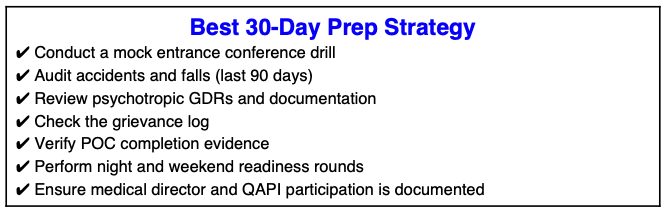
What Surveyors Are Commonly Focusing On (Q2 2026)

  1. Staffing sufficiency and competency
  2. Infection prevention
  3. Accidents and falls
  4. Psychotropic use and unnecessary medications
  5. Pressure injuries
  6. Abuse and neglect investigations
  7. Discharge rights and transfers
  8. QAPI programs that exist only on paper

What Customer Service Really Means in Long-Term Care Pharmacy 

In long-term care, customer service is often discussed in broad terms—but for Administrators and Directors of Nursing, it has a very specific meaning. It shows up in day-to-day operations: when a medication is needed after hours, when a nurse needs an immediate answer, or when a survey is approaching and every detail matters. At Red Rock Pharmacy, customer service is built around supporting these realities in a practical and consistent way.


One of the most important elements is accessibility. When your team calls the pharmacy, they are connected directly to a person who is physically located in the pharmacy—no phone trees or voicemail systems to navigate. This approach is intentional. It reduces delays and ensures questions are answered in real time by someone who understands the workflow and can act quickly.


Availability is another critical component. The needs within a building don’t follow a standard schedule, which is why we operate seven days a week, including holidays. With multiple daily deliveries and a late final run, our goal is to keep medications moving efficiently and minimize gaps that can create stress for staff or impact resident care. This consistency reduces the need for workarounds and allows clinical teams to stay focused on what matters most.


Equally important is local, engaged support. Our representatives are present in the buildings we serve, working directly with staff and developing a clear understanding of each facility’s routines and challenges. This hands-on presence leads to more effective communication, faster issue resolution, and stronger long-term partnerships.


Customer service in this setting also extends beyond responsiveness into clinical support. Our pharmacists provide in-depth psychotropic and medication regimen reviews, offering an added layer of oversight that supports both quality of care and regulatory compliance. For many teams, this brings confidence that potential concerns are being identified and addressed proactively.


Finally, we recognize that no two buildings operate the same way. Differences in staffing, workflows, and resident populations all influence how pharmacy services should be delivered. That’s why flexibility is central to our approach—we tailor our services to fit each building, rather than expecting buildings to adapt to a fixed model.


Customer service, in this context, isn’t a single feature—it’s the combination of accessibility, availability, local support, clinical involvement, and adaptability working together to support daily operations.


How can Red Rock Pharmacy help your building reach the next level?


Dave Rimlinger,

Director of Marketing


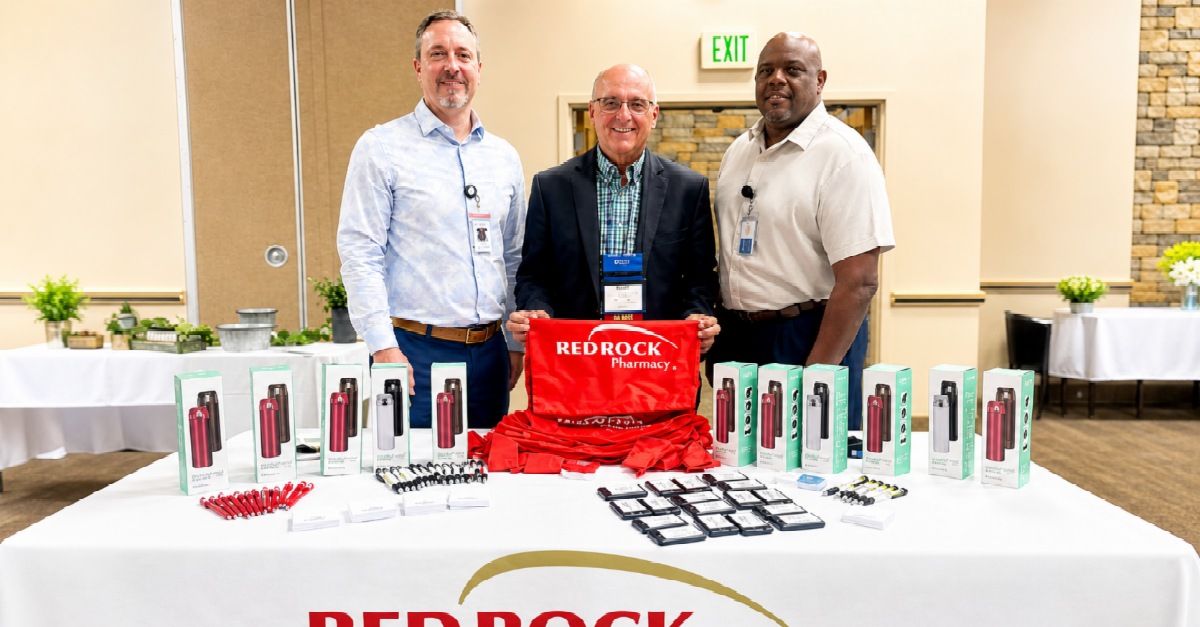
Red Rock Pharmacy at the CMDA Annual Conference 


Red Rock Pharmacy was proud to attend the Colorado Medical Directors Association (CMDA) Annual Conference on April 24. This event brings together Medical Directors, state surveyors, physician groups, and senior healthcare leaders to explore emerging trends and challenges across the industry.


Our team had the opportunity to engage in meaningful conversations around regulatory changes, clinical best practices, and the evolving needs of long-term care communities. As always, we value these opportunities to listen, learn, and strengthen partnerships that ultimately enhance the care we help deliver every day.


Pictured (left to right): Dave Rimlinger, Regional Director of Marketing; Dr. Malcolm Fraser, Medical Director; Brian Martin, Marketer.


Severe Strokes Linked to Increased Risk of Alzheimer’s Dementia


Severe strokes are a significant risk factor for developing Alzheimer’s dementia.


Patients who experience a severe ischemic stroke have up to a fivefold higher risk of developing dementia compared to those who have not suffered a stroke, according to an April study published in JAMA Network Open.


The study identified 1,055 first-ever ischemic strokes with available severity data. Of these, 879 (83.3%) were categorized as minor, 125 (11.9%) as mild to moderate, and 51 (4.8%) as moderate to severe.


After a median follow-up period of 11.1 years, higher stroke severity was associated with a progressively steeper annual decline in global cognitive function. Additionally, patients who experienced mild to moderate and moderate to severe strokes had threefold and fivefold increased risks of developing Alzheimer’s dementia, respectively, compared to those with no history of stroke.


Medicaid NH funding pressure still a major concern


Kaiser Family Foundation (KFF) reports many states with major Medicaid fiscal stress after the 2025 federal reconciliation law, with estimated federal Medicaid reductions of $911 billion over 10 years. Since Medicaid is the dominant payer (44% in 2023) for nursing home long-stay care and a major payer for home care, this is highly relevant to operators, residents, and families. 


Why this matters for nursing homes:

• States may slow rate increases or even make decreases 
• Greater pressure on staffing budgets 
• Tougher access for marginal facilities 


What I’d Watch in the Next 90 Days.

1. State Medicaid budgets (rate freezes/cuts)

2. Staffing mandate court outcomes

3. Occupancy rebound trends

4. Immigration/workforce policy (CNAs, aides) 
5. Managed Medicaid pressure on post-acute payments


What Medical Directors Need to Focus on Regarding Nursing Home Surveys

I had the pleasure of attending the Annual Meeting of the Colorado Medical Directors Association in Denver in late April.


One topic that stood out to me as a Medical Director is what surveyors will be focusing on over the next few months, particularly as it relates to Medical Director involvement.


In general, federal guidance has instructed surveyors nationwide to increase engagement with Medical Directors. As mentioned in the April Red Rock Report, I prefer to speak with surveyors with a third party present to ensure I communicate clearly. Currently, I am interacting with surveyors approximately once per month, compared to once per quarter just three years ago.


Malcolm Fraser, MD, CMD


Medication Update


1. Antipsychotic Quality Measure Update

Effective January 28, 2026, CMS has incorporated an updated long-stay antipsychotic quality measure into Nursing Home Care Compare. CMS estimates the national antipsychotic use rate will increase from 14.64% to 16.98%, as the revised methodology captures a broader set of data.


2. Medication Safety in Dementia Back in Focus

A 2026 JAMA-related study found that approximately 25% of older Medicare beneficiaries with dementia were prescribed CNS-active medications, including antipsychotics, benzodiazepines, barbiturates, sedative-hypnotics, or strongly anticholinergic antidepressants. These findings raise concerns regarding increased risks of falls, confusion, and overall medication appropriateness.


If you have any questions, ask your Red Rock Consultant Pharmacist