|
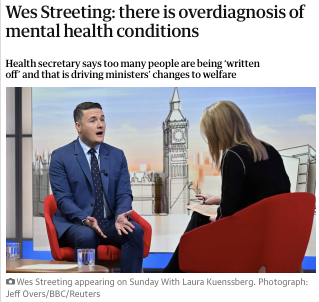
Over the weekend, our great leader was on the telly, telling us that mental health conditions are ‘over-diagnosed’.
He said;
…. he agreed with experts that warn of an over-diagnosis of mental health conditions and wanted to ‘follow the evidence’.
He told the BBC:
… mental wellbeing, illness, it's a spectrum.
… too many people [are] being written off.
… too many people … aren’t getting the support they need.
... he highlighted his plan to recruit 8,500 more mental health staff.
Make sense of that, if can.
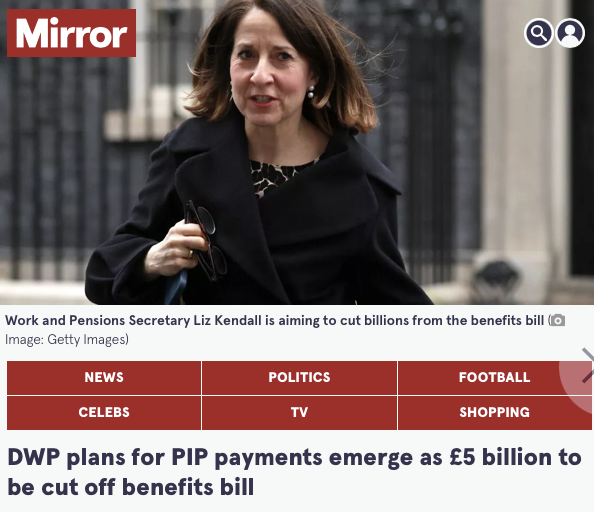
HMG has got itself into a mess about working age disability claims… personal independence payments.
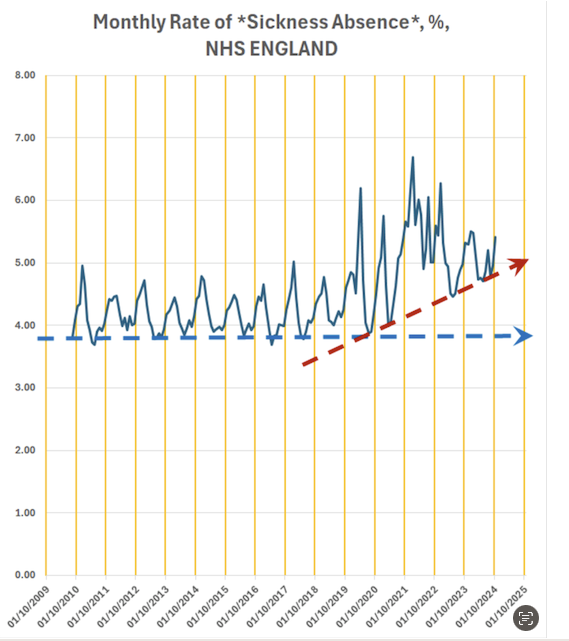
As a percentage of the population we have more people, than any comparable economy, who claim they are unable to work because they are not well enough, and far more claim their un-wellness is their mental health.
Blame Covid? Lockdown? Well, France and Germany and Spain and others had lockdowns but they don’t have the problems we have today.
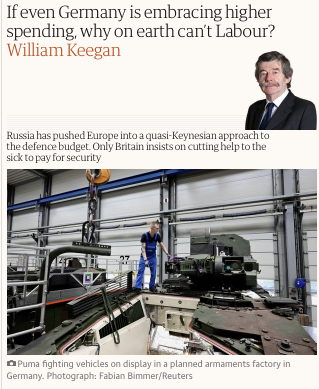
If the bill continues rise we are heading for £100bn, at a time when the economy is not growing and the spectre of conflict in Europe is casting an imminent shadow over all our spending plans.
When governments make substantial policy changes it is good practice to subject the plans to an impact analysis.
In fact, HM Treasury's Green Book sets out how policies, programmes and projects should be assessed. It recommends a cost-benefit analysis and a distributional impact assessment…
... but does not mandate them.
The Department for Work and Pensions Best Practice tells us major welfare changes will typically include an impact assessment, especially when they affect vulnerable groups.
No formal impact assessment of their PIP changes has been published.
HMG may have conducted internal assessments, but not making them publicly available is an error.
By way of contrast;
- The transition from Disability Living Allowance to PIP under the Welfare Reform Act 2012, were accompanied by detailed impact assessments.
- The Department for Work and Pensions published an impact assessment in May 2012, outlining the expected effects of the DLA reform and the introduction of PIP.
By not publishing an impact assessment HMG faces Judicial Review and the courts may well block or delay the policy.
Without understanding the impact, the public will become unsure which side of the argument to land. Who to believe… adding fuel to controversy…
... and HMG will have to deal with …
… the unintended consequences that may increase costs elsewhere. For instance more strain on the NHS, homelessness, or reliance on other welfare.
Government is facing huge distractions.
Starmer, preoccupied with trying to prevent a Carthaginian peace being imposed on Ukraine.
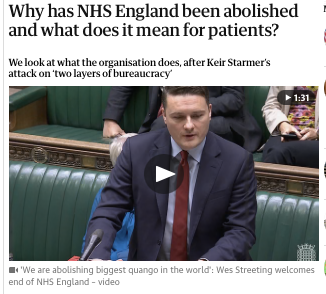
Streeting will be tangled up in his web of NHS reforms for months to come.
Rachael Reeves, the Chancellor has to decide if cutting benefits is just a way of filling a black hole in the nation’s finances, or a genuine attempt at reforming welfare payments…
… if it is the latter it will need a political touch far less brittle than Liz Kendle’s.
In 123BC Gaius Gracchus, as a welfare measure, provided subsidised-grain to Rome’s poor. Julius Caesar panicked at the growing costs and tried to cut the number of recipients.
It became a policy disaster.
The list of recipients ballooned and became economically unsustainable. When authorities tried to cut it, riots erupted.
The struggling system contributed to Rome’s decline and fall.
The lesson of history… a well-intended benefits system, if expanded irresponsibly, can create long-term economic and political problems…
… and it is much harder to stop something, than it is to start something.
That’s why impact analyses are very important.
|