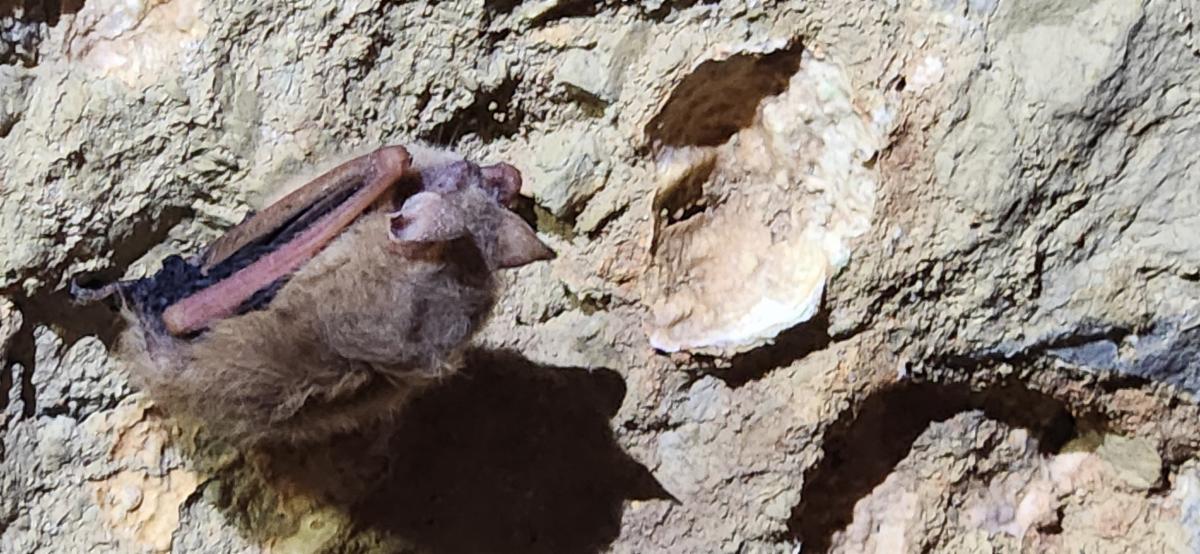
Certain bats are among the protected species environmental teams look for in the vicinity of projects along the I-81 corridor | |
Balancing Progress with Protection
VDOT’s Environmental Teams Play Powerful Role in I-81 Projects
| |
Think of it as a reclusive introvert who prefers to hide out in caves and small springs. Look closely – very closely – and you might find one resting in Ogden’s Cave in Frederick County. Or perhaps moving ever-so-slowly through other parts of the Shenandoah River basin.
At only a few millimeters long, the Appalachian springsnail doesn’t exactly command attention. But as a state-protected species, it’s one of many concerns that Virginia Department of Transportation (VDOT) considers along the I-81 corridor.
Collaborative studies with the Virginia Department of Conservation and Recreation (DCR) in 2025 determined the snails were present in the vicinity of the planned I-81 widening project at Winchester. Subsequent coordination with resource agencies resulted in enhanced erosion and sediment control plans, as well as avoidance measures during construction. That I-81 widening project also includes protections for bats, nesting/migratory birds and native rainbow trout.
"Overall, VDOT’s decision to widen I-81 toward the median has minimized impacts to cultural resources and reduced the need for new archaeological surveys," said Liz Jordan, the Staunton District’s Environmental Manager. Still, her team and others coordinate from a project’s earliest stages with other resource agencies. They all follow key regulations such as the National Environmental Policy Act, the National Historic Preservation Act, the Clean Water Act and the Endangered Species Act.
| | |
Environmental reviews may consider:
-
Water and wetlands: VDOT evaluates impacts to streams, rivers and wetlands and incorporates stormwater management and erosion-control measures into project designs.
-
Threatened and endangered species: Along I-81, specialists survey bridges, streams and wetlands for protected species and habitat. In the Salem area, for instance, surveys have included acoustic monitoring for bats and investigations for species such as the Roanoke logperch, James spinymussel, yellow lance, Virginia smooth coneflower and Virginia fringed mountain snail.
-
Cultural and historic resources: Projects are reviewed for potential impacts to archaeological sites, historic properties and other cultural resources with teams working to avoid and mitigate impacts to those resources.
-
Geology: Portions of the I-81 corridor contain karst geology, for instance, where limestone can dissolve to form caves. These features require special consideration for roadway and bridge foundations and drainage, since direct roadway runoff into caves must be avoided, so VDOT works closely with contractors to adjust projects as needed.
-
Noise: VDOT conducts noise analyses to determine whether projects could affect nearby homes and businesses and consults with those stakeholders to determine whether noise barriers or other measures may be appropriate.
-
Air quality: Construction contracts include federal and local air-quality requirements. For instance, contractors may be required to control dust by wetting disturbed soil, and work can be adjusted based on atmospheric conditions.
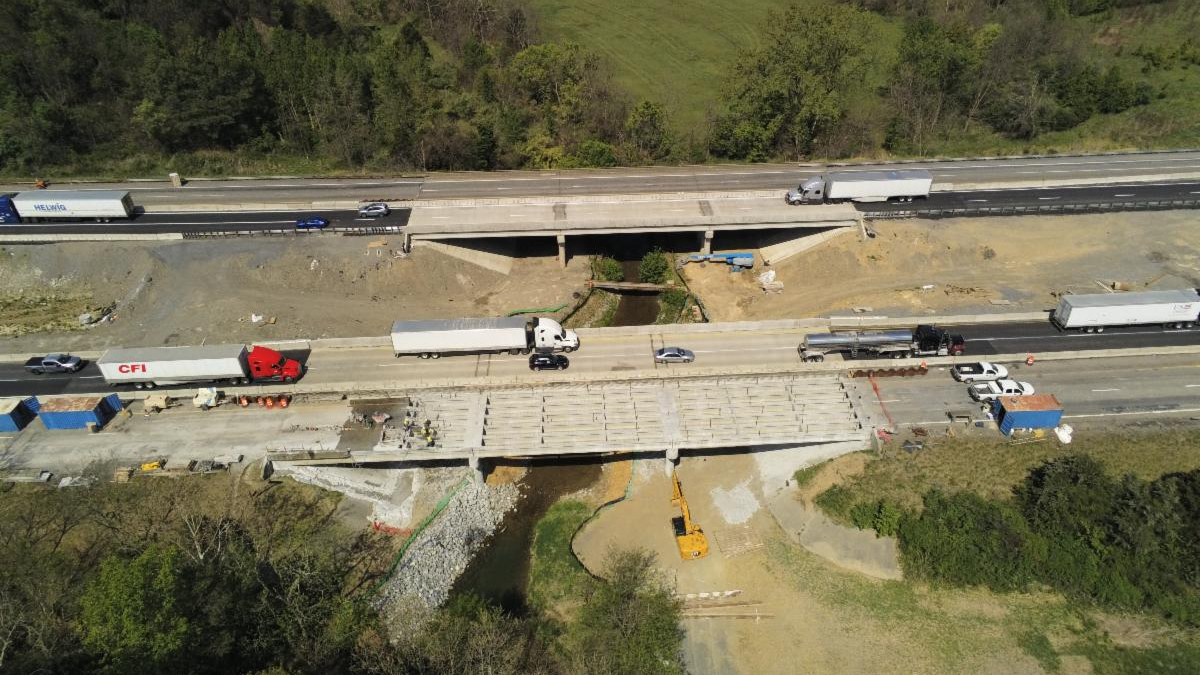
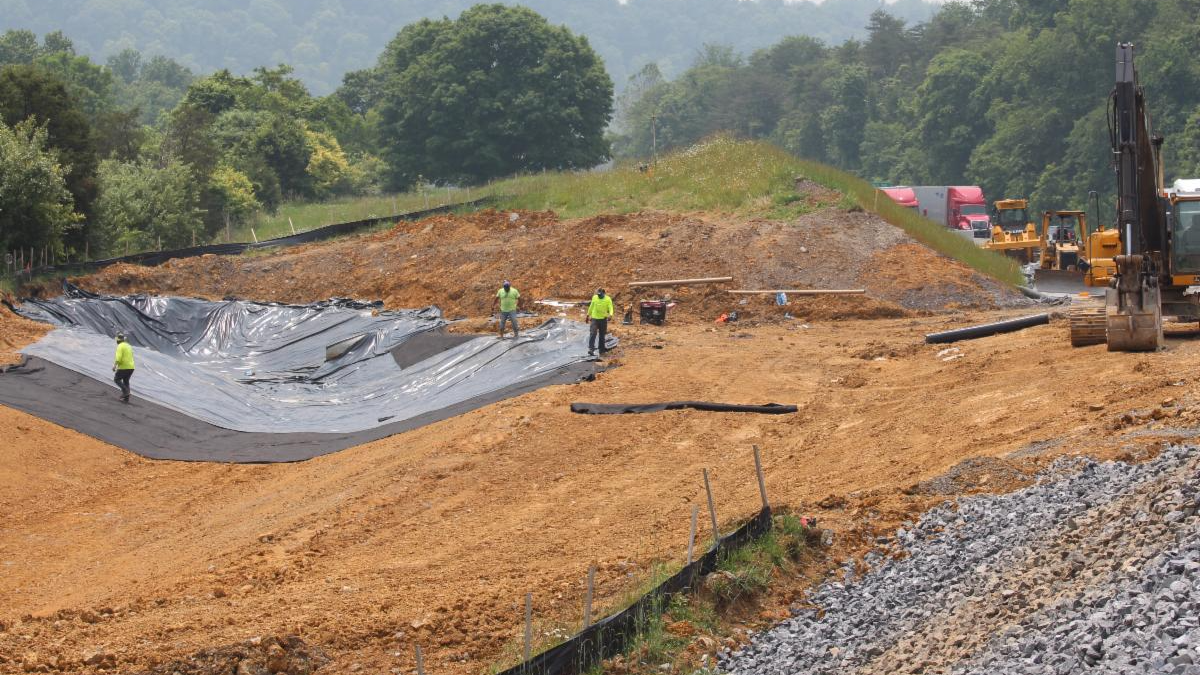
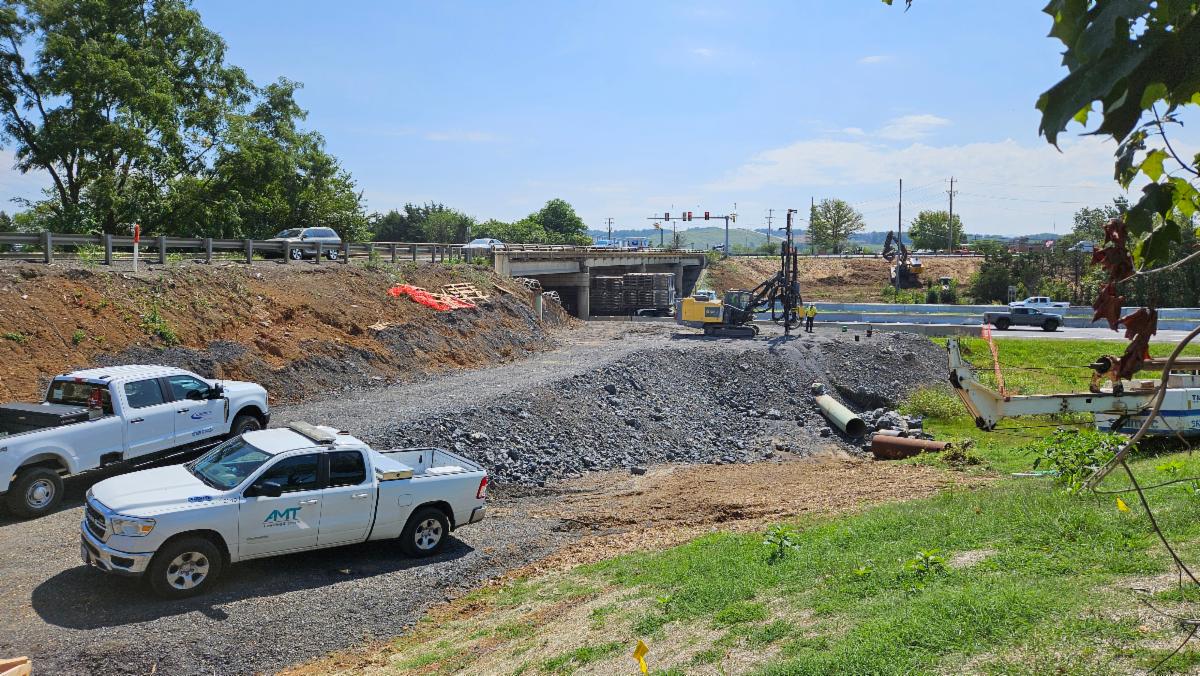
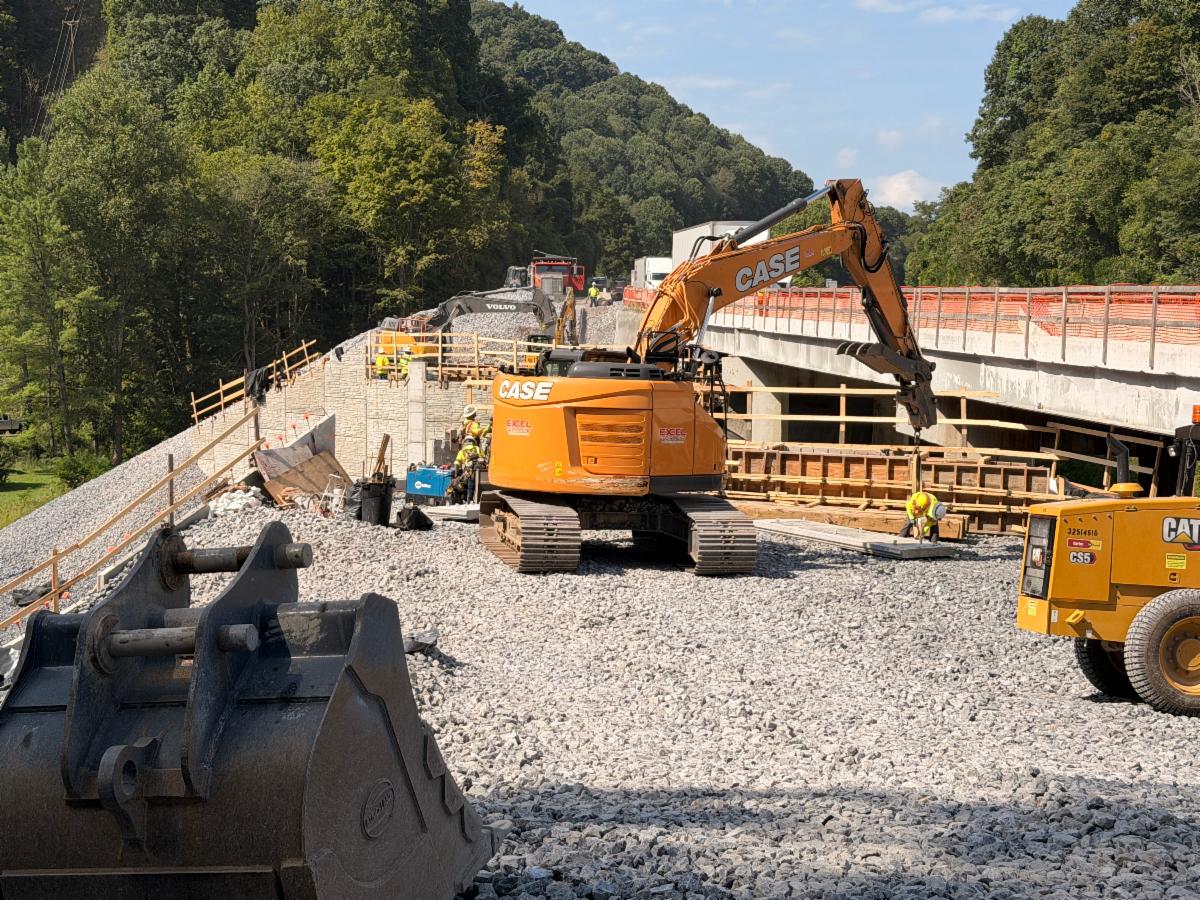
| | Environmental protections over Lewis Creek for a widening project near Staunton | | Stormwater management at a truck-climbing lane project in Smyth County | | |
When sensitive resources cannot be completely avoided, VDOT works to minimize impacts. That may mean shifting the project footprint, restricting work during sensitive times of year or, in some cases, replacing a portion of an affected stream or wetland within the same watershed.
For example, an upcoming I-81 widening project near Ironto in Montgomery County has deepened collaboration between VDOT and environmental agencies. About 80 feet below the surface, a study determined the presence of endangered tricolored bats in nearby Dixie Caverns – a site known to host hibernating bats in the past.
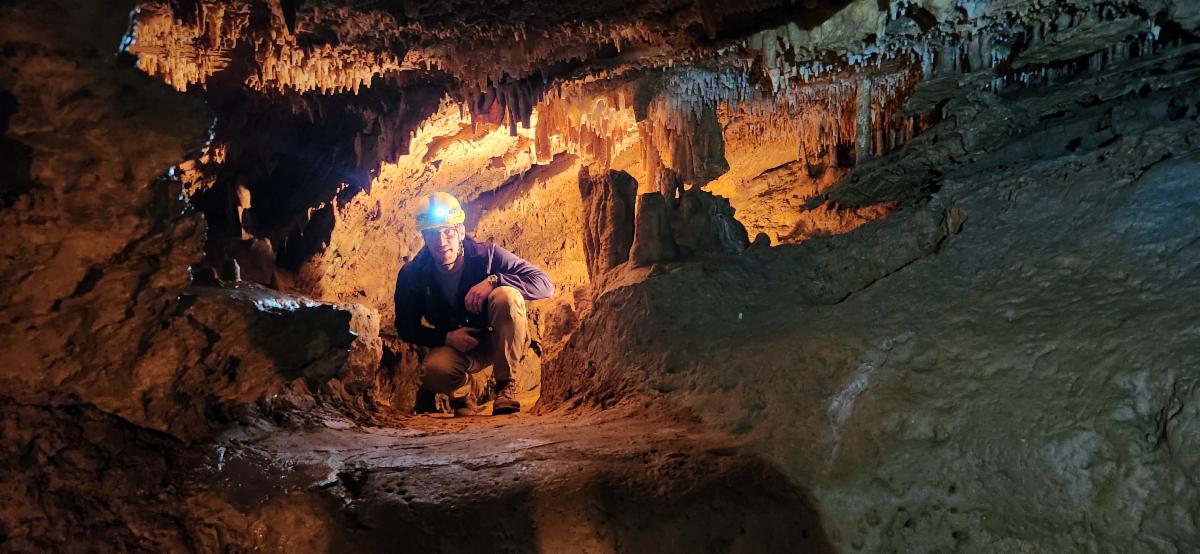
After safety training provided by DCR, a small group including bat biologists with the Virginia Department of Wildlife Resources (DWR) and VDOT Salem District’s Assistant Environmental Section Manager Eric Kessler and Endangered Species Specialist Eric Wolf rappelled into the caves to take a closer look.
Equipped with headlamps, a 1960s cave map and their own expertise, the group navigated the cave passage by passage, systematically searching for tiny, 10-gram creatures in millions of potential hiding places.
“For almost any environmental professional, a bad day in the field is better than a good day in the office,” said Wolf. “A good day in the field can spur some of the most memorable parts of your career.”
The collaborative effort proved valuable as several tricolored bats were found within the caves, adding to DCR’s body of knowledge and informing environmental assessment and considerations to minimize potential impacts.
“To find the intersection between completing the project as true to the schedule and budget as possible while also protecting the environment to the greatest extent possible is why we do what we do,” Kessler said.
| | VDOT Salem District's Assistant Environmental Section Manager Eric Kessler caving in Dixie Caverns | | New Ramp Extensions Enhance Safety on I-81 | | |
Drivers now have more room to accelerate and enter Interstate 81 with two new ramp extensions recently opened in the New River Valley.
The I-81 southbound Exit 94 entrance ramp (Pulaski) in Pulaski County was extended about 950 feet, helping drivers approach interstate speed while merging into traffic.
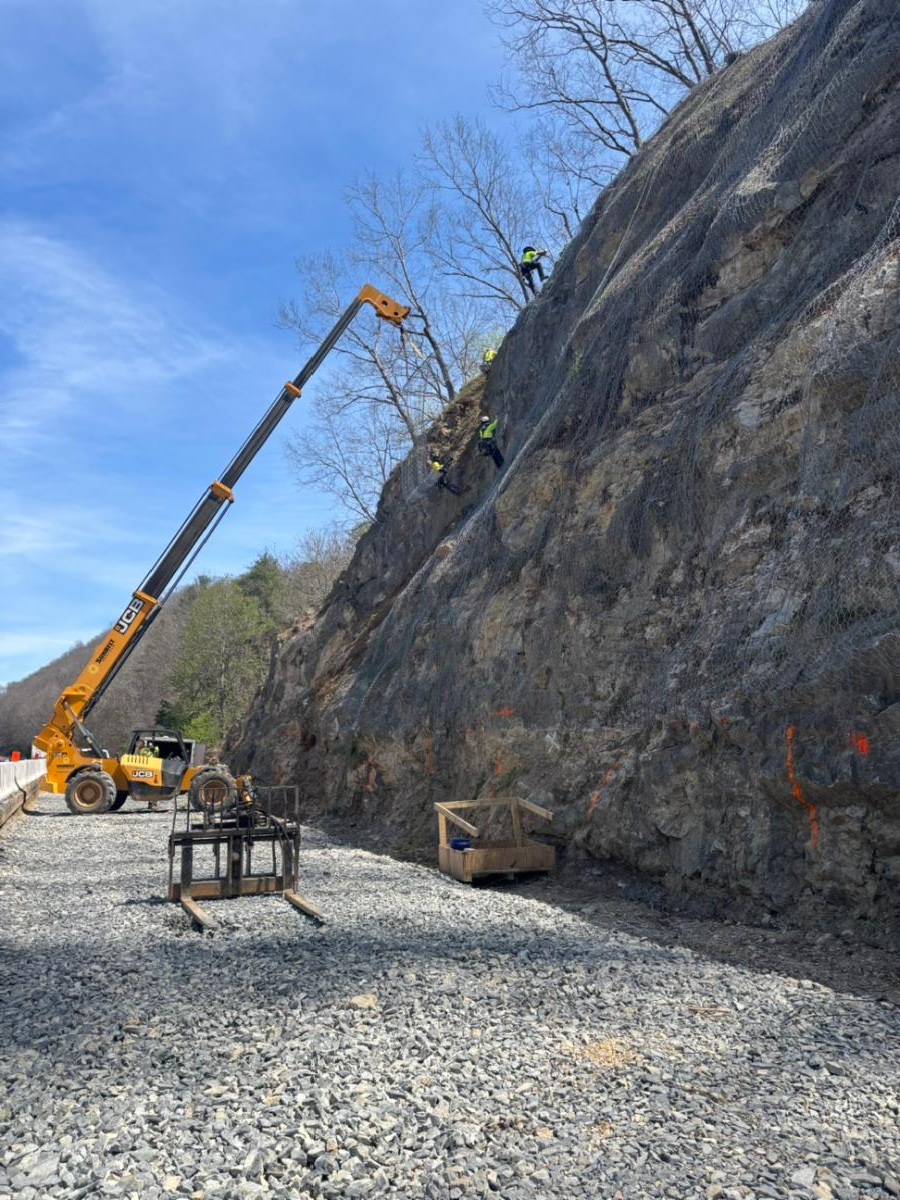
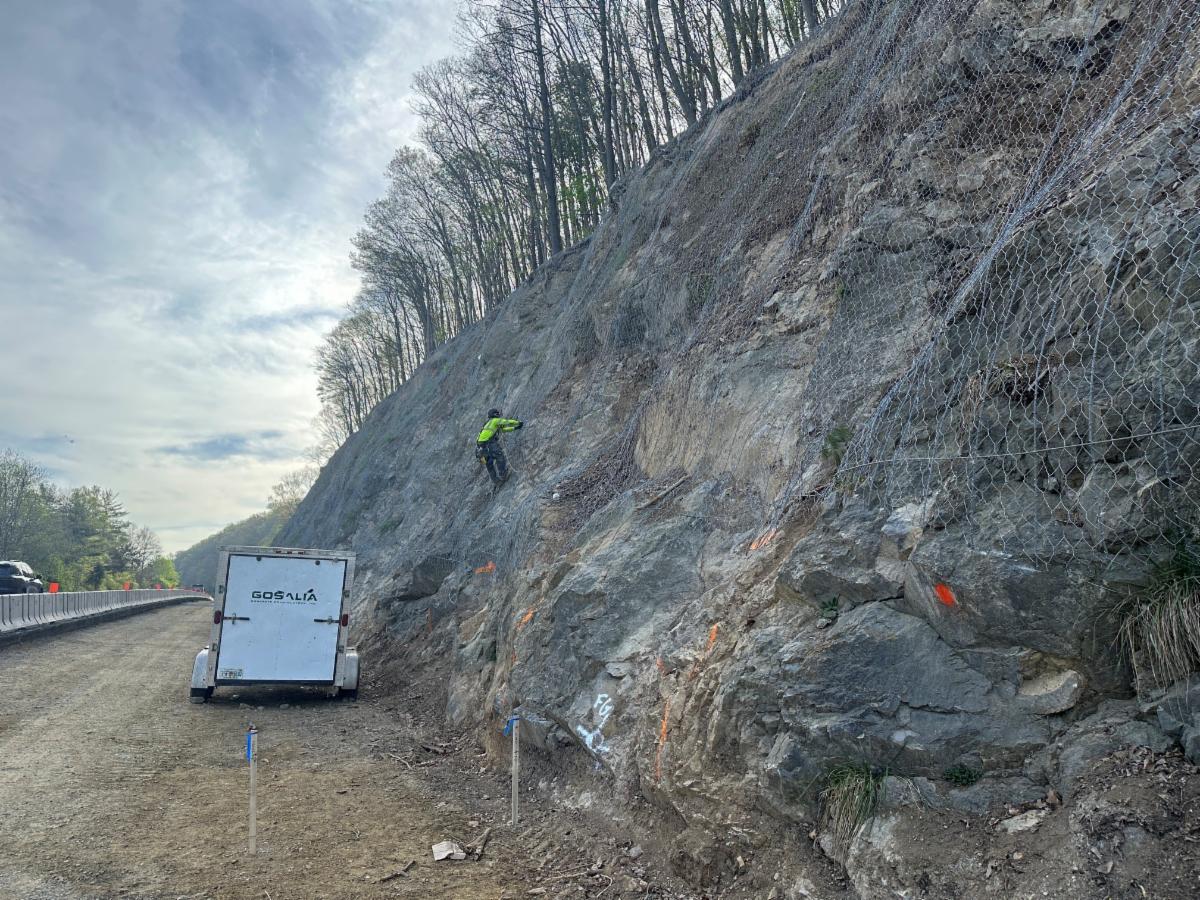
The I-81 northbound Exit 105 entrance ramp (Radford) in Montgomery County was extended about 2,000 feet. Because the shoulder was converted to an active travel lane next to a near-vertical rock slope, a unique feature of this entrance ramp is a rock drape to reduce the chance of falling rocks reaching the travel lanes and enhancing safety for drivers. This is the first time a rock drape has been used on I-81.
The rock drape was designed by VDOT's contractor HDR and installed by Geostabilization International (GSI), a specialty subcontractor. GSI’s crews rappelled on the slope for several weeks to remove loose rocks before the drape was placed.
The drape consists of high-strength wire mesh panels laid over the rock slope and tied together both vertically and horizontally to form a continuous cover. The system is anchored into bedrock at the top of the slope and allowed to drape freely down to the bottom. This design slows the movement of any falling rocks from underneath the drape, causing them to hit the mesh, lose momentum, and fall into a new ditch, preventing them from bouncing into the road. The drape blends into the slope, and because it lays directly on the rock surface, it does not impede sight distance.
Construction started in fall 2025 at Exit 94 and Exit 105. They are among 36 projects along the I-81 corridor to lengthen acceleration or deceleration lanes.
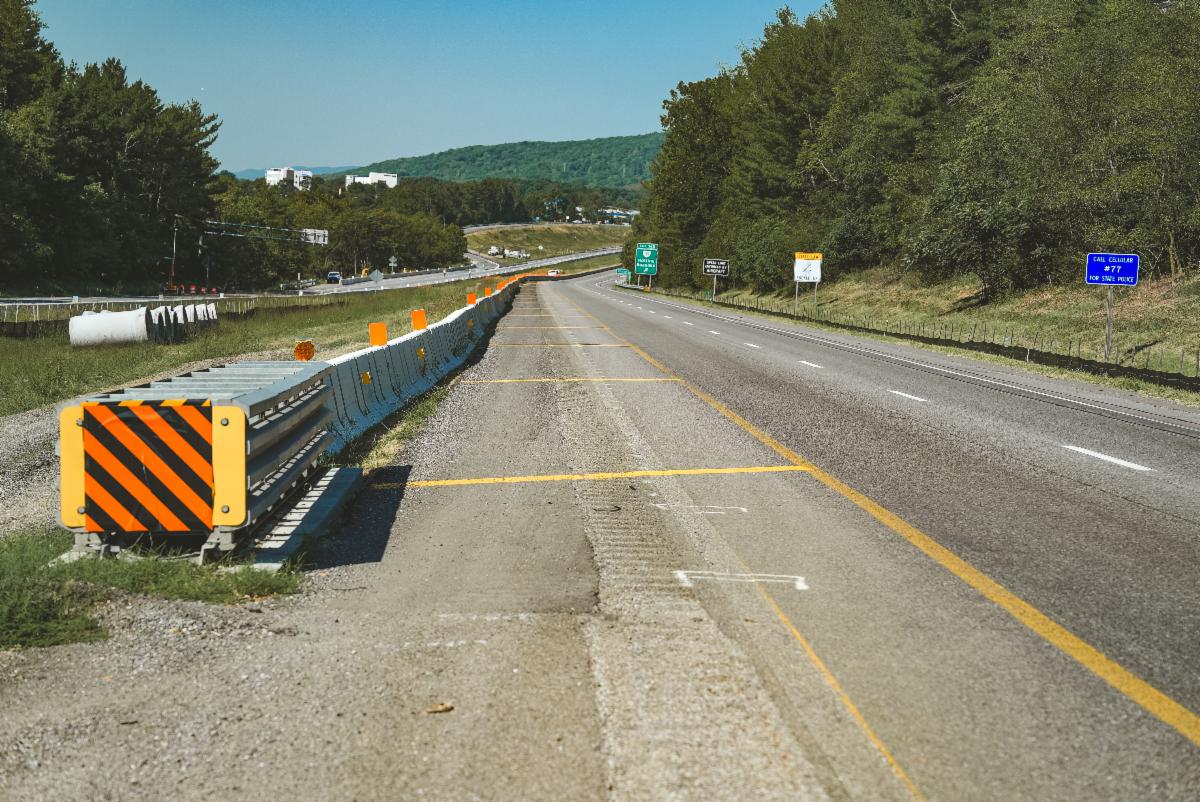
The entrance ramp from Route 11 onto northbound Interstate 81 at Exit 162 (Buchanan) in Botetourt County is also being extended about 1,000 feet along with the installation of drainage structures and constructing a retaining wall alongside the slope. Work is expected to be completed in late 2026.
| | Rock drape enhances safety by reducing risk of falling rocks reaching travel lanes | | Three Lanes Are Now Open on I-81 Between Exits 137-141 | | |
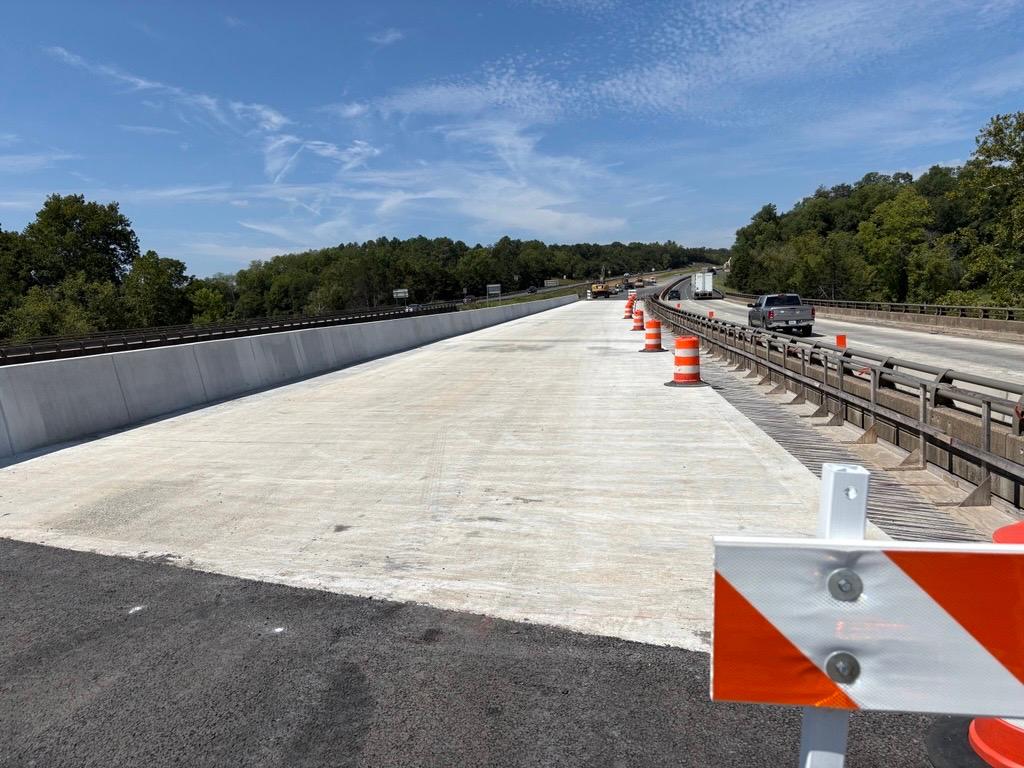
Drivers now have a third lane to use on Interstate 81 northbound and southbound between Exits 137 and 141 in Roanoke County and Salem.
The I-81 widening project includes additional benefits and features such as:
- New bridges over Route 112 (Wildwood Road), Route 635 (Goodwin Avenue) and Route 619 (Wildwood Road)
- Wider bridges over Route 311 (Thompson Memorial Drive) at Exit 140
- Intersection improvements at the southbound Exit 137 off-ramp and Wildwood Road
- New interchange lighting at Exits 137, 140 and 141
- Acceleration and deceleration lanes improved
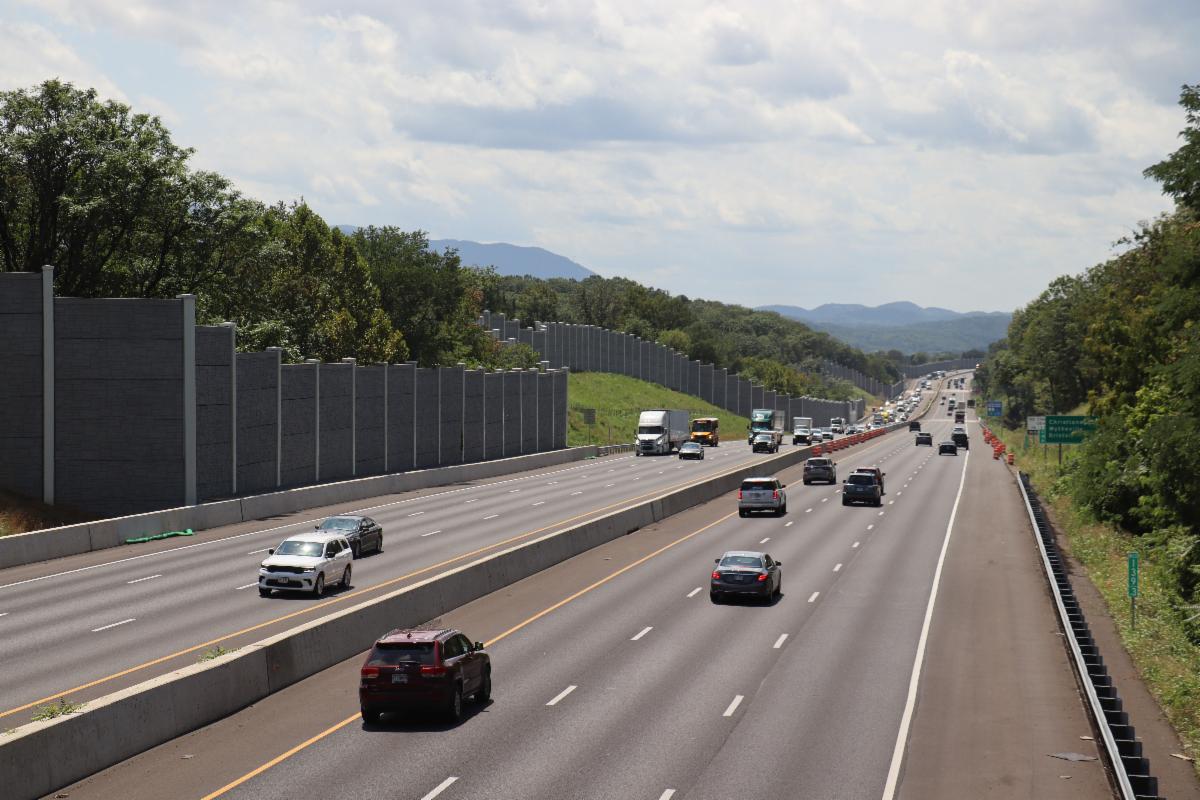
- About 2.6 miles of new sound barrier walls along the northbound lanes
The five-mile stretch widening the interstate from two to three lanes is a part of $179 million design-build project. Construction started in early 2022 and was the first widening project of the I-81 Corridor Improvement Program (CIP).
This project combines with a previous widening to give drivers three travel lanes in each direction of I-81 between Exit 137 and Exit 143 (Interstate 581).
“VDOT would like to thank drivers for their patience during this construction project. As we continue to make improvements to enhance safety and operations along the I-81 Corridor, please continue to be patient and drive the speed limit within work zones so that everyone can return home to their families every night,” said Dave Covington, I-81 program delivery director for the VDOT.
Work to finish several features including landscaping, sign installation and slopes is ongoing. Lane closures will continue to be necessary for crews to safely complete these project elements, which will benefit surrounding communities and local travelers.
| Widening project opens to traffic | | Improve81 Construction Updates | Counties of Frederick, Warren, Shenandoah, Rockingham, Augusta and Rockbridge | | |
Ten active work zones along I-81 in Virginia are adding new travel lanes, replacing bridges or making significant interchange improvements.
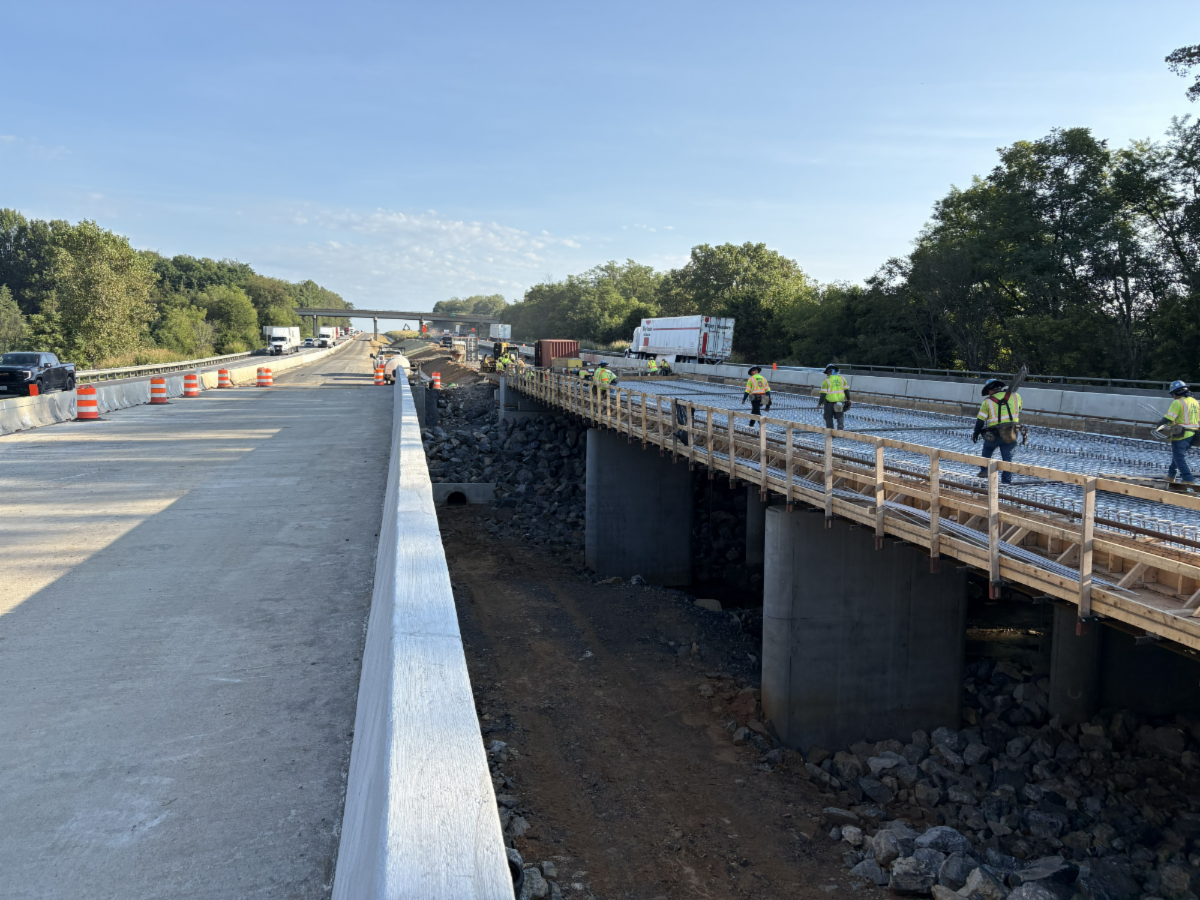
The northernmost project is from about mile marker 300 to 295 in Shenandoah and Warren counties. Shirley Contracting has a $58.6 million contract to add a third southbound lane, replace the bridge over Cedar Creek and widen the bridge over the CSX railway. A traffic shift this fall moves southbound motorists toward the median, onto newly built portions of the bridges and roadway. Bridge work, excavation and base-layer paving continue this fall. The Strasburg project is slightly more than halfway complete and is scheduled for final completion in about two years.
| | | |
Triton Construction is in the early phases of widening northbound and southbound I-81 at Harrisonburg. The $219 million contract includes a third travel lane from about mile marker 242 to 249 and replacement of nine bridges. The first one, the Pleasant Valley Road overpass, is being constructed just south of the current bridge and should be ready for traffic in fall 2027.
Contractors have strengthened and widened shoulders on the southern portion of the project and are making similar improvements on the northern end. Once shoulder work is completed, all I-81 traffic will shift toward the right, allowing the widening work to take place in the median. Final completion of the Harrisonburg widening is scheduled for 2032.
| | Harrisonburg widening work at Pleasant Valley Road overpass | | |
The truck-climbing lanes project near the Augusta-Rockingham county line is more than halfway complete. Branch Civil has a $61 million contract to build new northbound and southbound lanes from about mile marker 234 to 238. Current work includes grading and rock excavation, construction of a paved drainage ditch in the median, and widening of the bridges over Naked Creek. Bridge work and grading will continue this fall. Final projection completion is set for late 2027.
Around the end of 2026, northbound I-81 drivers should be using three lanes of travel through the Staunton area. That interim milestone is part of the $101 million design-build project to widen both directions of the interstate between Exits 221 and 225. Fall 2026 brings paving and drainage work, sign installations, and continued bridge widening at several locations. Contractor Kokosing Inc. is scheduled to finish the entire project in mid-2027.
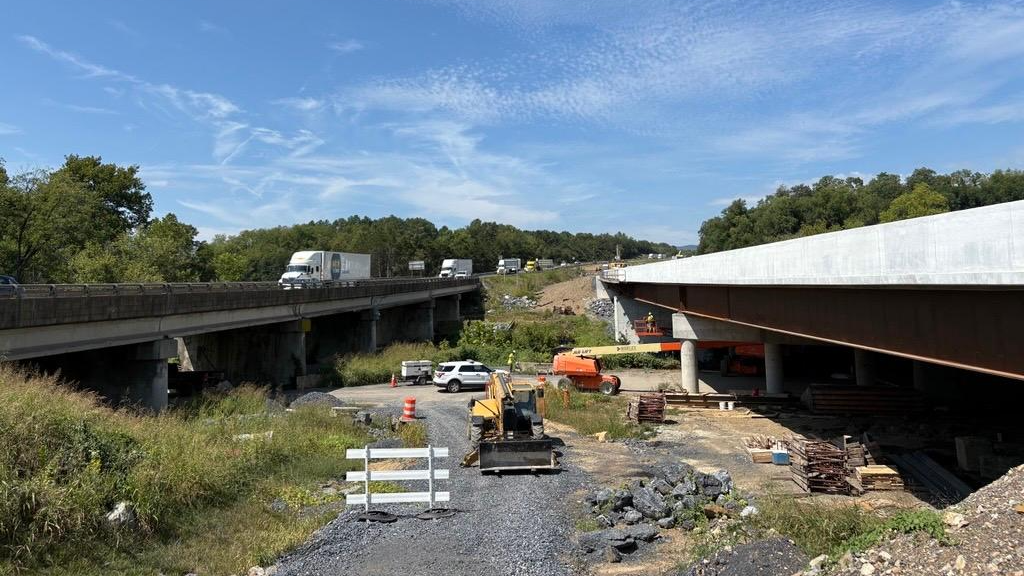
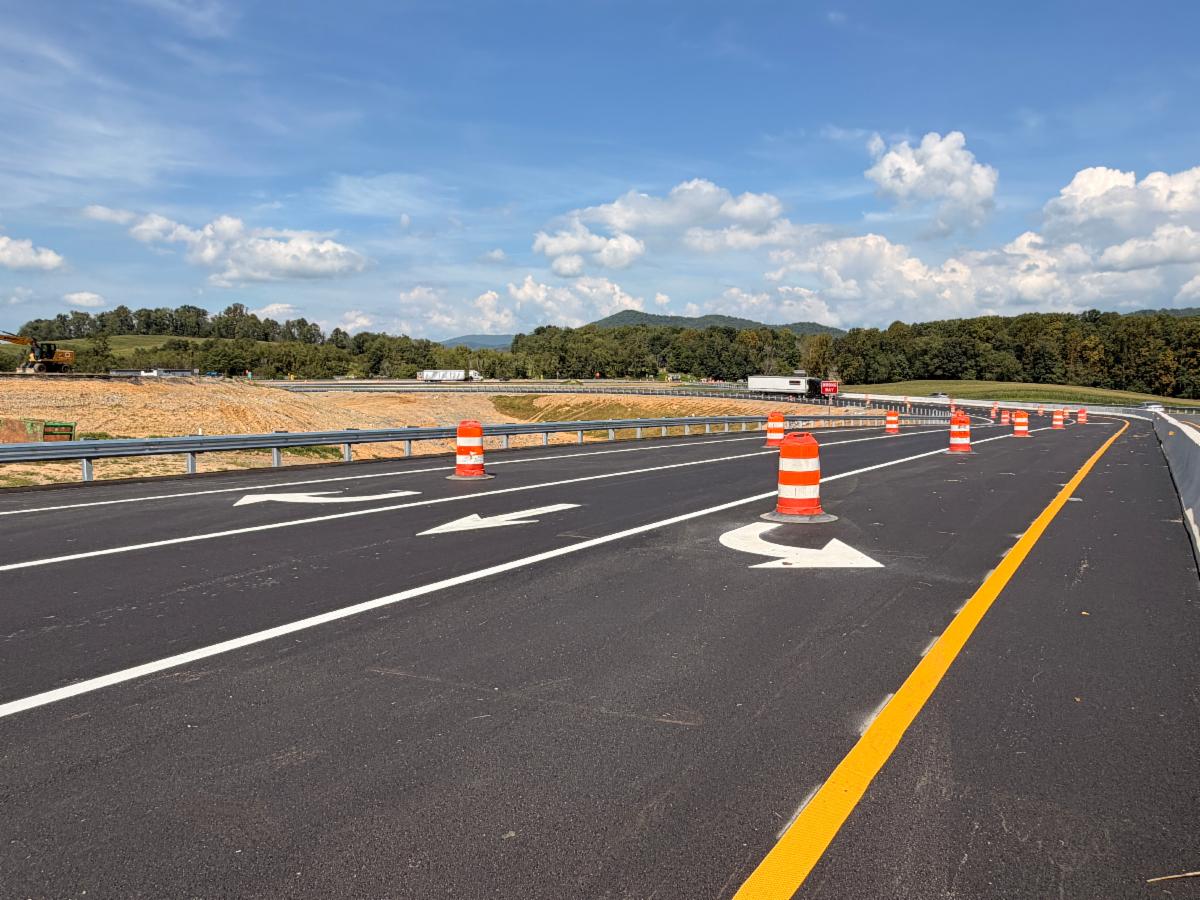
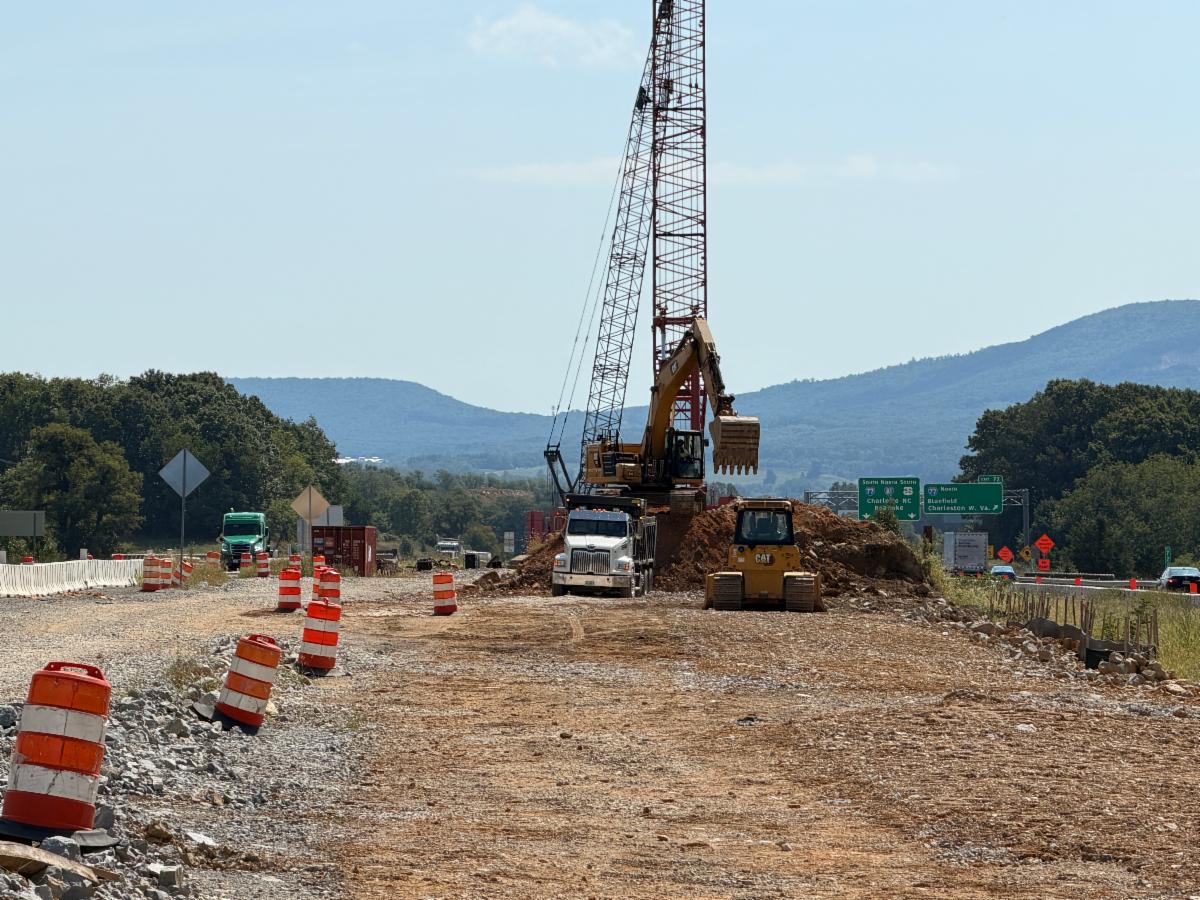
| | Weyers Cave truck climbing lane project near Augusta-Rockingham county line | | Counties of Botetourt, Roanoke, Montgomery and Pulaski | | Construction access near Exit 146 | | Blasting operations and traffic-pattern changes are part of the seven-mile widening of I-81 in Roanoke and Botetourt counties. Branch Civil Inc. is delivering the $361 million design-build project. It adds a third lane in each direction, replaces eight bridges, and reconstructs part of the southbound Exit 150 interchange with Route 220. | | |
The new Exit 150B off-ramp from southbound I-81 will connect Route 220 at Tinker Mountain Road, where a new traffic signal will allow drivers to turn toward Route 11, Daleville, and surrounding areas. The realigned ramp is set to open in late 2026 or early 2027, after which southbound Exit 150A will close permanently.
I-81 drivers between mile markers 143 and 150 can expect blasting operations through October 2026. This work requires brief slow-roll closures (rolling roadblocks) for up to 15 minutes during late-morning hours, Tuesdays through Thursdays as needed. Throughout construction, motorists should also be alert for heavy equipment using entrance and exit lanes that are clearly marked with diagonal yellow stripes.
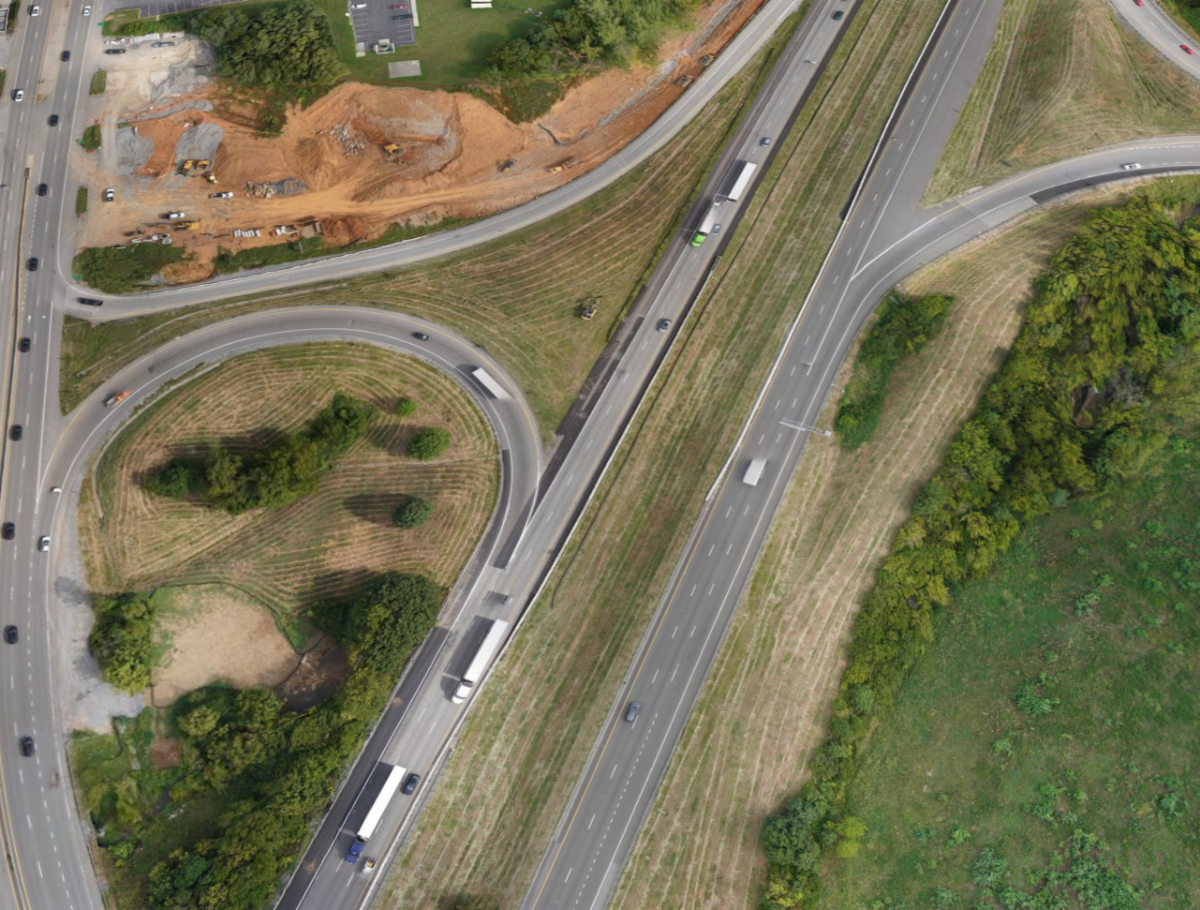
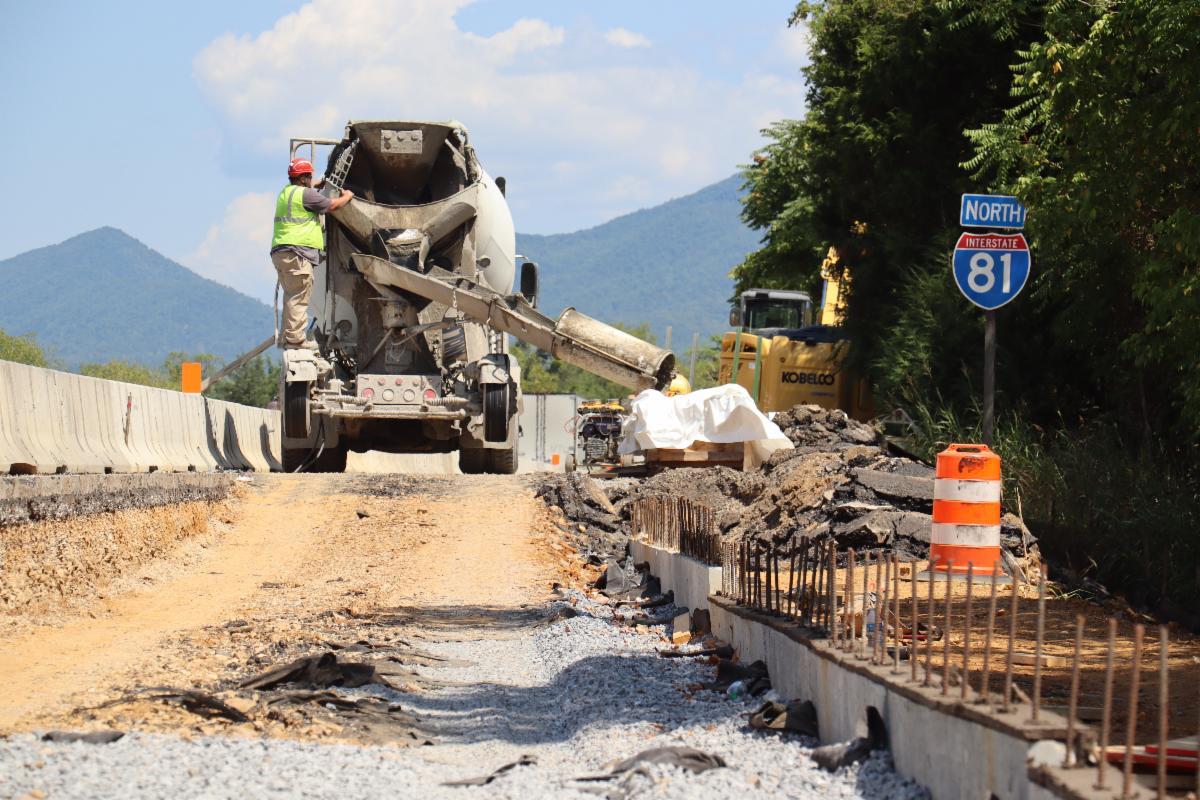
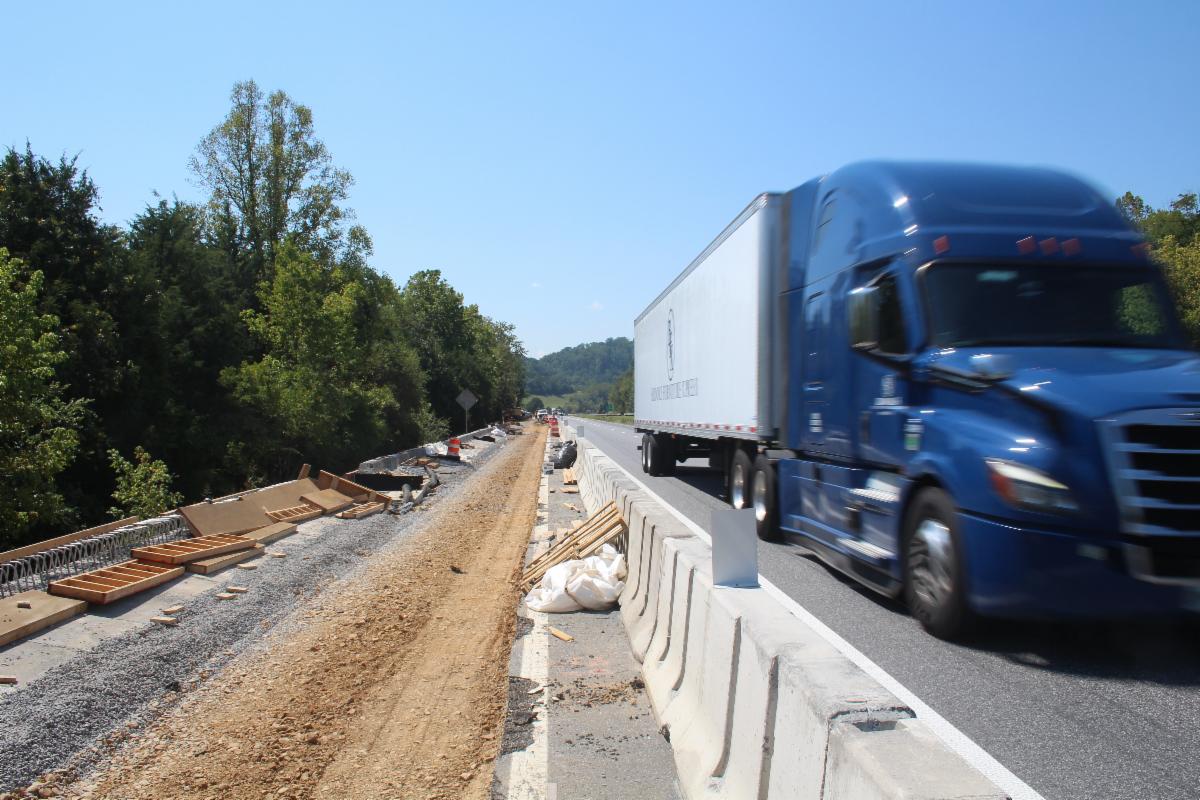
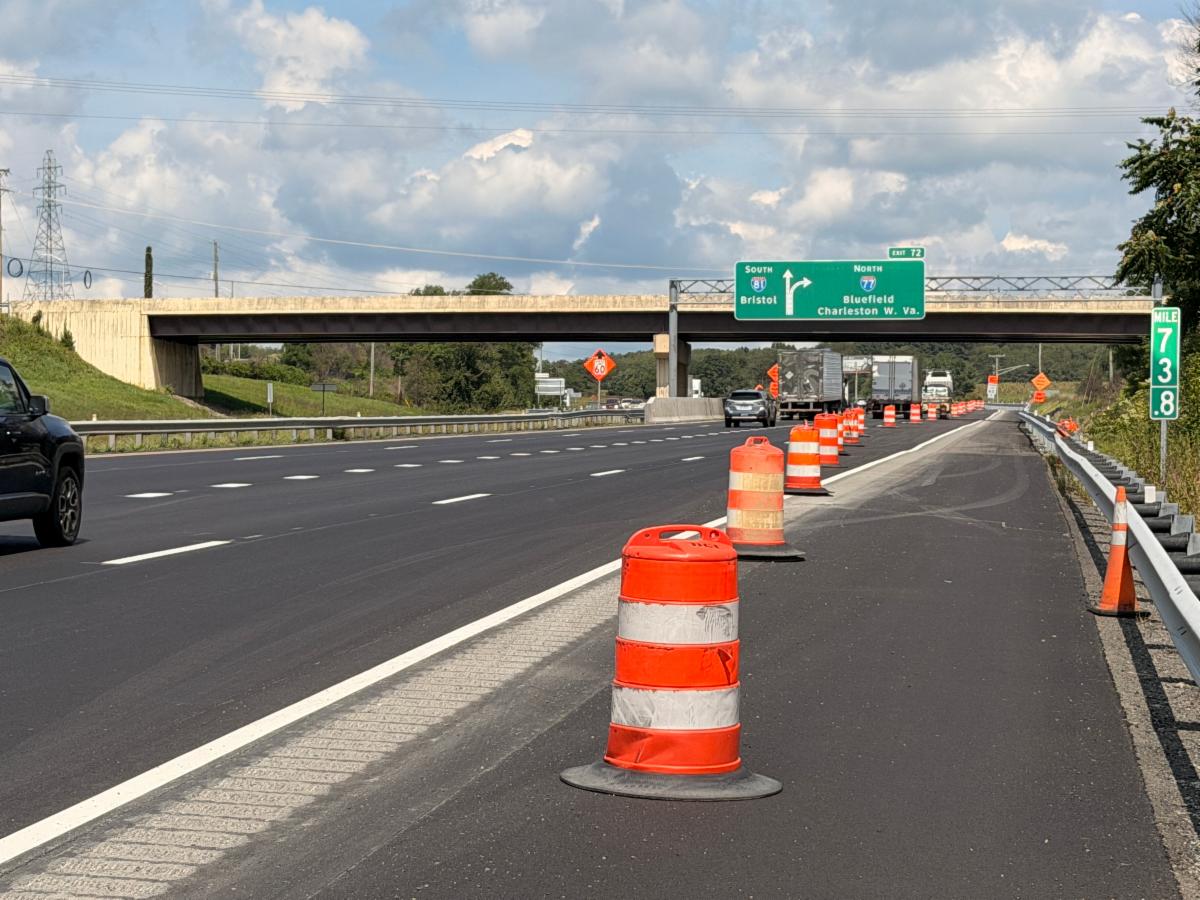
| | Aerial photo of Exit 150B off-ramp is being realigned | | Farther north in Botetourt County, contractors are in the final stages of extending the I-81 northbound acceleration lane at Exit 162. Crews have been building a retaining wall along the ramp shoulder, and will finish the project with paving, drainage and guardrail work. Drivers should be using the extended ramp by the end of 2026. | | Northbound acceleration lane extension at Exit 162 | | Counties of Wythe, Smyth and Washington | | Two of the four improvement projects around the junction of I-81 and I-77 near Wytheville reached milestones in September. One is a southbound I-81 auxiliary lane to help ease congestion and enhance safety between Exit 73 and 72. The other is a new northbound off-ramp at I-77 Exit 41, just north of the I-81 interchange. The reconstructed loop ramp improves access for tractor trailers and aligns with the intersection of Nye Road and Peppers Ferry Road. Motorists should be alert for sign installation and drainage work on both projects this fall. | | Two of four projects at the junction of I-81 and I-77 are open to traffic | | A design-build contractor is building new, wider bridges carrying northbound and southbound I-81 over Peppers Ferry Road. This allows for safety and traffic-flow improvements where the two interstates come together. I-81 traffic shifts toward the median this fall, allowing crews to start the second phase of the project. Also in autumn 2026, paving takes place for the extended deceleration lane and reconfigured ramp at northbound I-81 Exit 72, which provides access to northbound I-77. | | Median work takes place between Exit 72 and Exit 73 northbound | | Work on deceleration lane at Exit 45 | | In Smyth County near the town of Marion, contractors are extending the northbound deceleration lane for I-81 Exit 45. A wider bridge over Matson Drive creates space for the extended ramp, which should open to traffic in late 2027. Over the past few months, crews have completed extensive earth-moving and reinforced a retaining wall, which will allow them to start pouring concrete footers for the new bridge. | | | Virginia Department of Transportation | 1401 E. Broad Street | Richmond, VA 23219 US | | | | |