View as Webpage

X Share This Email
LinkedIn Share This Email

nhsManagers.net

9th January 2026


News and comment from

Roy Lilley


Improvement...

_____________

Short on time? Get yer ears-on and listen to Roy Lilley read this morning's eLetter... free!

The forest was still.


The Californian sun, just starting to slip behind the horizon.


The creatures in forest getting ready for the night…


… but no.


They sensed something was wrong. They sniffed the air. Somewhere, the forest was smouldering. By daybreak a fire had swept through the mountainside. Nothing left but ashes.


A year ago this January, the wildfires in Los Angeles;


  • 30 deaths,
  • 150,000 evacuations,
  • 11,500 homes destroyed.
  • Economic losses around $140 billion.


The fires destroyed over 57,000 acres, impacting hundreds of species; salamanders, owls, pollinators. Official counts focus on human lives and property, but…


… studies highlighted the loss of critical nesting sites, the destruction of habitat and long-term population declines.


There is a complex interaction between fire patterns and wildlife. It’s called pyrodiversity. 


The thing about forest fires is their terrifying speed. How nigh-impossible they are to contain.  


Sniff the air. Can you smell it? There’s a forest fire in the making the NHS and I'm far from sure it will be contained.  


Over the last eighteen months the NHS has experienced a level of senior leadership turnover that’s way beyond anecdotal. 


It’s worrying. 


In management terms, as worrying as any forest fire. Almost impossible to extinguish.


Management theory tells us, warns us… this is exactly what happens during large-scale organisational disruption.


What is striking is how closely the NHS is tracking that evidence.


Michael Porter’s work on mergers and major organisational change suggests that around 18% of top leadership leave during periods of significant restructuring. 


Other studies of mergers and acquisitions put senior executive turnover even higher… 20–30% within two to three years… particularly where roles, authority and accountability are reset mid-flight.


So what does that mean for us?


  • England has around 215 NHS trusts and
  • 42 Integrated Care Boards, plus
  • NHS England.
  • That’s roughly 260 organisations each led by a chief executive or equivalent, excluding deputies and national directors.


If we apply Porter’s conservative 18% benchmark, we would expect ~45 chief executives to leave during a major system reorganisation.


If we use the higher figures from healthcare and corporate merger studies, the number rises to 60–75 senior leaders.


What do we actually see? Public reporting over the last eighteen months points to exits by:


  • NHS England CEO, plus
  • a cluster of senior national directors exiting.
  • At least 10 ICB chief executives stepping down or being replaced.
  • Trust CEO turnover approaching a quarter of posts;
  • implying 50 or more trust-level departures, including permanent and unplanned exits.


Taken together, a guesstimate is between 60 and 80 chief executives and equivalent senior leaders have left their roles across the NHS in the last eighteen months. 


That is a forest fire sweeping through top NHS management and puts the system squarely within… and arguably above… the range predicted by management research during disruptive change.


Heaven knows what the numbers are in the middle ranks facing redundancy, or those who have just had enough, gone... adding fuel to the fire of losses.


This is not coincidence. Not a failure of resilience or commitment.


It is what happens when leaders recruited to run organisations find themselves instead, managing perpetual transition, blurred accountabilities, moving goalposts, financial retrenchment, political intervention and rising personal exposure with diminishing authority.


Hospital Boards... vassal boards, in name only. The delivery arm… the Amazon for NHSE that is, in turn, the Deliveroo for the DH+. Administrators. Processors.  


The risk is not just the loss of talented individuals…. the latest of which is Rob Webster, who, in our recent Podcast sounded to me like he was pleased to be strapped-in for a the rocky-ride ahead? Now, now he is going.


Each departure takes with it institutional memory. What’s been tried, what failed, what nearly worked and why. 


New leaders arrive needing time to learn the landscape, rebuild relationships. Re-establish credibility. Strategies pause, rebrand or quietly disappear. Improvement programmes stall.


There’s also a cultural signal. 


High turnover at the top tells the rest of the system that leadership is temporary. Risk is unrewarded and survival matters more than stewardship.


Authority is put at question.


That encourages short-term-ism, compliance and caution. Precisely the opposite of what complex service reform needs.


Management studies are clear... successful transformation depends on leadership stability, clarity of purpose and time. The NHS currently offers its leaders ambiguity, turbulence and impatience.


The threat is not chaos tomorrow morning. It’s a slower burn and more dangerous…


… a system that learns to be very good at reorganising itself and steadily worse at delivering lasting improvement.

________

Have the best weekend you can...

NEW YEAR - NEW PODCAST

In the Loop...

the BIG Questions 

Niall Dickson CBE and Roy Lilley

with their latest guest

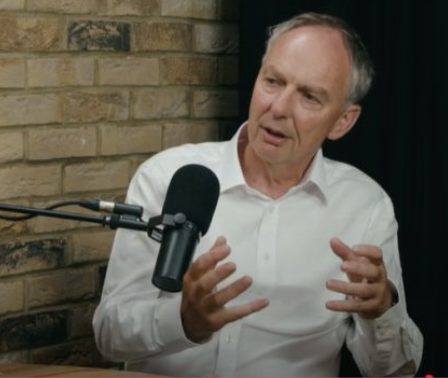
David Gregson

founder of

#BeeWell


To start their 2026 podcasts, Niall and Roy make a departure from their usual focus on the politics and management of the NHS, and explore the worrying state of our young people. 


The awful reality is that youngsters in the UK appear to be unhappier than nearly all their European counterparts. 


Their first guest of the New Year is David Gregson an entrepreneur and philanthropist who has embarked on an ambitious and innovative programme called #BeeWell.


Its aim is to improve the wellbeing of young people throughout the country, starting in Greater Manchester and a few other areas of England.


Working with the Mayor, Andy Burnham together with schools, local authorities and the NHS, the architects of the #BeeWell approach already claim to be having a significant impact, affecting the lives of thousands of young people. 


But can this programme, which demands action and a mind-shift from statutory and voluntary services, really be the catalyst to change the prospects of the next generation? 


In a fascinating exchange, David Gregson points to weaker family relationships, restrictions on child freedom, and the fact that adults often no longer understand the world in which their youngsters live.


He applauds moves by the UK government to raise the profile of youngsters’ wellbeing and its support for idea of conducting surveys in every school, but he wants them to go further and faster.

For all the previous

In the Loop

podcasts with

Dr Charlotte Refsum

Tony Blair Institute

Rob Webster

ICB CHEx

Sarah Woolnough

CEO of the King's Fund

Sir Jim Mackey

Dame Jennifer Dixon

Lord Darzi

Professor Tas Qureshi

Dr Penny Dash, chair NHSE

Richard Meddings,

former chair NHSE,

Sir Jeremy Hunt,

Sir Andrew Dilnot,

Paul Johnson IFS

CLICK HERE


-oOo-


Probably, the most listened to

Podcast in the NHS!

FREE!

Want to contact Roy Lilley?

Please use this e-address

roy.lilley@nhsmanagers.net 

-----------

Know something I don't

email me

in confidence.

Leaving the NHS, changing jobs - you don't have to say goodbye to us!

You can update your Email Address from the link you'll find right at the bottom of the page,

up-date-your-profie,

and we'll keep mailing.

----------

GDPR

We don't sell or give access to your email address to any third parties.

You can unsubscribe at any time.

Click on the link right at the bottom of the page

---------

Disclaimer

... yes, 60 countries listen

to Roy Lilley's podcast, free.

You can, too.

Just click here

Dr Paul Lambden


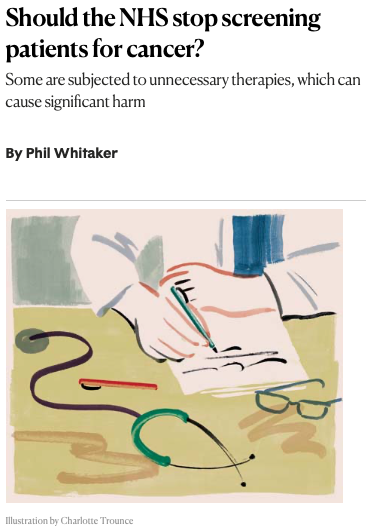
Oesophageal Cancer


'... Over Christmas, the BBC showed repeats of programmes starring the late, great comedian and writer, Victoria Wood, CBE, who died in 2016 at the age of 62 from oesophageal cancer... her talent was lost too early. The UK has rates of oesophageal cancer that are higher than in most of Europe and it is unclear why this should be the case.'


News and Other Stuff

---

>> CEO of leading ICS -to step down.

>> Wes Streeting heads back to the negotiating table with doctors - to avoid NHS strike.

>> New data reveals wide variation in absences - due to resident doctor action

Click here for a free download.

Guest Editorial from Managers in Partnership


What’s the point of a Union at a time like this?


'Severe damage to management capacity and capability, just as happened after the 2012 Lansley changes… will hobble its own mission to get the NHS back on its feet.

Many members have been put in a very difficult position: invited to consider VR without meaningful information about new structures and the future of their jobs.'


Today's cuppa-builder's read.

'They said what?" - CPD accredited hepatitis C and stigma training


This is what I'm hearing, unless you know different. In which case, tell me, in confidence

__________


>> I'm hearing - the number of beds occupied by flu patients is 46% lower than this time last year, nmeaning the pressure is not as acute as the previous winter. So much for Streeting's dire warnings of an imminent NHS collapse.

>> I'm hearing - as predicted, Danny Mortimer is appointed to director general for people from February.

EU flag

Alternative European Healthcare Perspectives January 2026


Roger Steer


'Palantir, whose chair Peter Thiel has publicly argued that the NHS should be privatised and likened public support for it to ‘Stockholm syndrome.'


'Expect to be spun off, outsourced, rationalised and commercialised in due course...'

More News

----

>> New data shows 'NHS staff pulled out all the stops' - to keep care going during previous strikes.

>> New tools to tackle unmet needs in respiratory diagnostic and treatment - can be used in the NHS.

>> A chief executive who retired from an integrated care board - received about £300,000 in payments for redundancy and in lieu of notice in October.

Twitter  
Managers Logo