|
Improving Surgical Outcomes Through Frailty Screening: An Overview of the Risk Analysis Index
By Matthew A. Taylor, PhD & Daniel E. Hall, MD, MDiv, MHSc
| | |
Reports of Complications Related to Surgery or Invasive Procedures. More than 31,000 events involving complications related to a surgery or invasive procedure were reported to the Pennsylvania Patient Safety Reporting System (PA-PSRS) in the five-year period between January 1, 2020, and December 31, 2024.† Of those events, more than 15,000 resulted in serious patient harm or death.
Patient Frailty and Preoperative Use of the Risk Analysis Index Tool. Patient frailty is a significant predictor of postoperative morbidity and mortality.1-5 The collective body of research over recent years has made a strong argument for preoperative use of a Risk Analysis Index (RAI) tool to evaluate the patients for frailty, as a proxy for physiologic reserve.3,5,6 The RAI tool can be completed by the patient/representative or staff and the scores are then tallied to estimate the degree of patient frailty. Higher RAI scores indicate that a patient would have greater frailty-associated risks. For ease of interpretation, the RAI scores are often grouped into the following four categories of patient status: robust, normal, frail, or very frail.
This tool is intended to be used with patients who are potential candidates for nonemergent or elective surgeries. Use of the RAI to identify patients who are frail or very frail may guide the surgeon and patient to consider preoperative rehabilitation (i.e., prehabilitation) or to not have surgery (i.e., opting for nonoperative treatments for symptom management, sometimes including palliative care).3-5,7-10 This decision among frail patients could reduce the likelihood of a morbidity and premature mortality.3,4,7-10 Overall, the use of RAI and related interventions have been associated with improved long-term outcomes for frail patients.9,11
| | |
Background and Considerations for Use of the Risk Analysis Index
Validity and Predictive Ability of RAI
-
The RAI tool has been validated for point-of-care use for clinicians to screen patients for frailty.4,6,8,11,12 Readers should note that numerous other frailty indices exist, but some are not suitable for point-of-care use (e.g., other frailty indices use dynamometers and walking tracks, were designed to be used retrospectively, or impose excessive respondent burden).4,6,13,14
-
The RAI tool is effective for identifying approximately the 10% of patients that are at greatest risk for postoperative morbidity and mortality, due to their extent of frailty.15,16
-
The RAI has been validated to predict postoperative mortality13 across 30-,10 90-,3 180-,8,10 and 365-day3 time frames.
-
Studies demonstrated the predictive ability of the RAI across a range of clinical context,4,8,9 including the following surgical specialties: oncology,16 spine,3,5 cardiovascular,17 urology,18 neurology,10,19 plastic,10 otolaryngology,10 orthopedic,10 gynecology,10 vascular,10 and thoracic.10
-
Research indicates that the RAI can and should be used with patients of all ages17 and across the full range of surgical procedures, including procedures of low physiological stress (i.e., operative stress scores).10,20,21
-
In a study of both young and old patients, those with higher preoperative RAI scores (i.e., greater frailty) were associated with significantly more postoperative days away from home (e.g., rehabilitation, skilled nursing facilities) and a higher likelihood of losing independence after surgery.22
-
The RAI demonstrates greater predictive ability for both morbidity and mortality when compared with the five-factor modified frailty index‡ (mFI-5)5,24 and has similar predictive ability when compared to the other indices;13 Fried frailty phenotype (FFP),25 Edmonton Frail Scale (EFS),26 and the Canadian Study of Health and Aging.27
| |
Versions and Access to RAI
-
There are several similar versions of the RAI tool (e.g., RAI-A, RAI-C, RAI-ICD, and RAI-VQI) and the primary differences are the data sources used to estimate patient frailty.4,12,28
- For most clinical applications, we suggest using the RAI-C version, based on its ease of use at the point-of-care.
-
The RAI-C is available as a printable version and to users of Epic (through EpicShare),29 Cerner, REDCap, Microsoft’s PowerApp, and Veteran Affairs’ Computerized Patient Record System (CPRS).12,15,28
-
To access the RAI-C and for information about the other RAI versions, see reference 28.
| |
Implementation and Features of RAI-C
-
For a user guide and supporting materials, see references 12 and 28.
-
The RAI-C is intended to be used preoperatively within the existing workflow to estimate patient frailty.12
-
The tool targets the following five domains of health: physical, functional, social, nutritional, and cognitive.4,6
-
The RAI-C consists of 14 questions3,6,9,28 and is available in English, Spanish, Portuguese, and Chinese languages.28
-
The questions on the tool can be completed by staff, but are most often completed by the patient/representative, which will take them less than two minutes.12
-
The score from a completed tool can be quickly tallied manually or with an online calculator (available at efrailty.hsl.harvard.edu/ToolRiskAnalysisIndex.html) by a range of staff, including medical assistants and nurses.6,8,12,15 Staff have reported calculating the RAI-C score in a median of less than 40 seconds per patient.8,13
-
The cutoff scores used to classify frailty can be adjusted to fit the setting and available resources.4
-
The RAI-C score, ranging from 0 to 81, will categorize the patient as being robust (≤29), normal (30–36), frail (37–44), or very frail (≥45).12
| |
Treatment Decisions and Clinical Actions
-
Patients identified through the RAI as being frail or very frail should then participate in a more thorough assessment that would be used to further inform patient and provider decisions.6,15 The follow-up could target multiple areas of frailty through various tests, such as geriatric assessment, serological biomarkers, and functional performance (e.g., gait speed, grip strength).6,15
-
Patients and providers engage in shared decision-making based on the predicted trajectory of frailty-associated risks4,6,9,11,22 and the patient’s health-related goals.15
-
Depending on the degree of patient frailty and their goals, the patient may choose not to proceed with the surgery and instead opt for medical symptom management, sometimes including palliative care. Other patients may choose to prepare for surgery with preoperative rehabilitation (i.e., prehabilitation).9,13 Use of preoperative rehabilitation may increase the odds of postoperative recovery at home, as opposed to being postoperatively placed in a rehabilitation facility.15
-
Frailty-associated risks can be reduced through optimized care and prehabilitation,3,7,9,11,15 which may include glycemic control, anemia management, adjustment of medication, multimodal anesthesia, nutritional supplementation, evaluation of home support, care coordination, respiratory muscular training, balance and strength training, cardiovascular exercise, and use of upper body ergometers.
| |
†The frequency of reports is based on the following category of the PA-PSRS taxonomy: Event Type of “Complication of Procedure/Treatment/Test” and Subtype of “Complication following surgery or invasive procedure.”
‡The modified frailty index (mFI)23 was developed before the RAI, based on 11 variables in the American College of Surgeons National Surgical Quality Improvement Program (ACS NSQIP) dataset, but has never been widely validated for prospective survey-based administration. A shortened version (mFI-5) became necessary when the ACS eliminated six of the original 11 variables, degrading its predictive power and construct validity as a frailty measure, and for these reasons it should be considered obsolete.12
| | |
References
1. Arya S, Kim SI, Duwayri Y, et al. Frailty Increases the Risk of 30-Day Mortality, Morbidity, and Failure to Rescue After Elective Abdominal Aortic Aneurysm Repair Independent of Age and Comorbidities. J Vasc Surg. 2015;61(2):324-31. doi:10.1016/j.jvs.2014.08.115
2. Revenig LM, Canter DJ, Master VA, et al. A Prospective Study Examining the Association Between Preoperative Frailty and Postoperative Complications in Patients Undergoing Minimally Invasive Surgery. J Endourol. 2014;28(4):476-80. doi:10.1089/end.2013.0496
3. Agarwal N, Goldschmidt E, Taylor T, et al. Impact of Frailty on Outcomes Following Spine Surgery: A Prospective Cohort Analysis of 668 Patients. Neurosurgery. 2021;88(3):552-7. doi:10.1093/neuros/nyaa468
4. Arya S, Varley P, Youk A, et al. Recalibration and External Validation of the Risk Analysis Index: A Surgical Frailty Assessment Tool. Ann Surg. 2020;272(6):996-1005. doi:10.1097/SLA.0000000000003276
5. Bowers CA, Varela S, Conlon M, et al. Comparison of the Risk Analysis Index and the Modified 5-Factor Frailty Index in Predicting 30-day Morbidity and Mortality After Spine Surgery. J Neurosurg Spine. 2023;39(1):136-45. doi:10.3171/2023.2.SPINE221019
6. Hall DE, Arya S, Schmid KK, et al. Development and Initial Validation of the Risk Analysis Index for Measuring Frailty in Surgical Populations. JAMA Surg. 2017;152(2):175-82. doi:10.1001/jamasurg.2016.4202
7. Hall DE, Youk A, Allsup K, et al. Preoperative Rehabilitation is Feasible in the Weeks Prior to Surgery and Significantly Improves Functional Performance. J Frailty Aging. 2023;12(4):267-76. doi:10.14283/jfa.2022.42
8. Varley PR, Borrebach JD, Arya S, et al. Clinical Utility of the Risk Analysis Index as a Prospective Frailty Screening Tool Within a Multi-Practice, Multi-Hospital Integrated Healthcare System. Ann Surg. 2021;274(6):e1230-e7. doi:10.1097/SLA.0000000000003808
9. Hall DE, Arya S, Schmid KK, et al. Association of a Frailty Screening Initiative With Postoperative Survival at 30, 180, and 365 Days. JAMA Surg. 2017;152(3):233-40. doi:10.1001/jamasurg.2016.4219
10. George EL, Hall DE, Youk A, et al. Association Between Patient Frailty and Postoperative Mortality Across Multiple Noncardiac Surgical Specialties. JAMA Surg. 2021;156(1):e205152-e. doi:10.1001/jamasurg.2020.5152
11. Varley PR, Buchanan D, Bilderback A, et al. Association of Routine Preoperative Frailty Assessment With 1-year Postoperative Mortality. JAMA Surg. 2023;158(5):475-83. doi: 10.1001/jamasurg.2022.8341.
12. Hall DE, Jacobs CA, Reitz KM, et al. Frailty Screening Using the Risk Analysis Index: A User Guide. Jt Comm J Qual Patient Saf. 2025;51(3):178-91. doi:10.1016/j.jcjq.2024.12.005
13. Shah R, Borrebach JD, Hodges JC, et al. Validation of the Risk Analysis Index for Evaluating Frailty in Ambulatory Patients. J Am Geriatr Soc. 2020;68(8):1818-24. doi:10.1111/jgs.16453
14. Kojima G, Iliffe S, Walters K. Frailty Index as a Predictor of Mortality: A Systematic Review and Meta-Analysis. Age Ageing. 2018;47(2):193-200. doi:10.1093/ageing/afx162
15. Hall DE, Hagan D, Ashcraft L, et al. The Surgical Pause: The Importance of Measuring Frailty and Taking Action to Address Identified Frailty. Jt Comm J Qual Patient Saf. 2024;51(3):167-77. doi:10.1016/j.jcjq.2024.11.011
16. Estock JL, Schlegel C, Shinall MC, et al. Interpreting the Risk Analysis Index of Frailty in the Context of Surgical Oncology. J Surg Oncol. 2023;127(6):1062-70. doi:10.1002/jso.27218
17. Kochar A, Deo SV, Charest B, et al. Preoperative Frailty and Adverse Outcomes Following Coronary Artery Bypass Grafting Surgery in US Veterans. J Am Geriatr Soc. 2023;71(9):2736-47.
18. Isharwal S, Johanning JM, Dwyer JG, Schimid KK, LaGrange CA. Preoperative Frailty Predicts Postoperative Complications and Mortality in Urology Patients. World J Urol. 2017;35:21-6. doi:10.1007/s00345-016-1845-z
19. Thommen R, Kazim SF, Rumalla K, et al. Preoperative Frailty Measured by Risk Analysis Index Predicts Complications and Poor Discharge Outcomes After Brain Tumor Resection in a Large Multi-Center Analysis. J Neuro-Oncol. 2022;160:285-97. doi: 10.1007/s11060-022-04135-z.
20. Shinall MC, Arya S, Youk A, et al. Association of Preoperative Patient Frailty and Operative Stress With Postoperative Mortality. JAMA Surg. 2020;155(1):e194620-e. oi:10.1001/jamasurg.2019.4620
21. Yan Q, Kim J, Hall DE, Shinall Jr MC, Reitz KM, Stitzenberg KB, et al. Association of Frailty and the Expanded Operative Stress Score with Preoperative Acute Serious Conditions, Complications, and Mortality in Males Compared to Females: A Retrospective Observational Study. Ann Surg. 2023;277(2):e294-e304. doi:10.1097/SLA.0000000000005027
22. Jacobs MA, Jacobs CA, Intrator O, et al. Long-Term Trajectories of Postoperative Recovery in Younger and Older Veterans. JAMA Surg. 2025;160(1):56-64. doi:10.1001/jamasurg.2024.4691
23. Velanovich V, Antoine H, Swartz A, Peters D, Rubinfeld I. Accumulating Deficits Model of Frailty and Postoperative Mortality and Morbidity: Its Application to a National Database. J Surg Res. 2013;183(1):104-10. doi:10.1016/j.jss.2013.01.021
24. Deol ES, Sharma V, Fadel AE, et al. Comparing Frailty Indices for Risk Stratification in Urologic Oncology: Which Index to Choose? Urology. 2024;194:154-61. doi:10.1016/j.urology.2024.08.055
25. Fried LP, Tangen CM, Walston J, et al. Frailty in Older Adults: Evidence for a Phenotype. J Gerontol: Series A. 2001;56(3):M146-M57. doi:10.1093/gerona/56.3.M146
26. Rolfson DB, Majumdar SR, Tsuyuki RT, Tahir A, Rockwood K. Validity and Reliability of the Edmonton Frail Scale. Age Ageing. 2006;35(5):526-9. doi:10.1093/ageing/afl041
27. Rockwood K, Song X, MacKnight C, et al. A Global Clinical Measure of Fitness and Frailty in Elderly People. Can Med Assoc J. 2005;173(5):489-95. doi:10.1503/cmaj.050051
28. Hall DE, Jacobs CA, Reitz KM, Jacobs MA. Repository for “Frailty Screening Using the Risk Analysis Index: A User Guide.” OSFHOME. https://osf.io/egn8u/. Published January 25, 2025. Accessed March 2025.
29. Walker P. Risk Score Helps Patients and Doctors Make Informed Decisions About Whether to Go Ahead With Surgery. EpicShare. https://www.epicshare.org/share-and-learn/risk-score-helps-patients-and-doctors-make-informed-decisions-about-whether-to-go-ahead-with-surgery. Published January 11, 2025. Accessed March 2025.
| | |
Upcoming Webinars
Register now for these free educational events
| | |
Nontraditional Learning Needs Assessment to Guide Staff Education
Tuesday, April 15, 2025
11 a.m. to 12 p.m. EDT
In this free webinar, Judy L. Bowman, MSN, RN, quality analyst and educator at the Reading Hospital SurgiCenter at Spring Ridge, will cover how to conduct a nontraditional learning needs assessment (LNA) to meet the unit's educational needs, how knowledge gaps gathered by an LNA can be utilized for staff projects, and how staff learning needs can act as a bridge to conduct an evidence-based project.
1.0 continuing education hours will be awarded for completion of this course. Continuing education credits apply to Pennsylvania registered nurses only.
|
| |
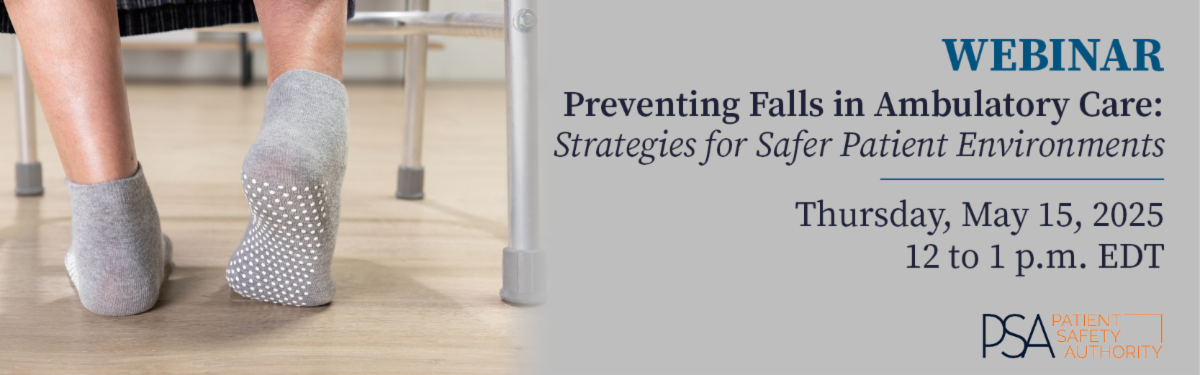
Preventing Falls in Ambulatory Care: Strategies for Safer Patient Environments
Thursday, May 15, 2025
12 to 1 p.m. EDT
Join us for an informative webinar on the challenges of preventing patient falls in ambulatory healthcare settings. In this session, the Quality and Safety Team; Patricia Macolino, director of Quality Ambulatory Care; and Katie Fox, master improvement advisor, of the Clinical Practices of the University of Pennsylvania (CPUP), will share their quality improvement efforts in reducing falls in ambulatory care.
1.0 continuing education hours will be awarded for completion of this course. Continuing education credits apply to Pennsylvania registered nurses only.
|
| |
Essentials for Infection Prevention in Long-Term Care
Are you a new infection preventionist (IP)? Or maybe you just want to brush up on Pennsylvania healthcare-associated infection (HAI) reporting requirements?
After completing this series, broken into two easy-to-digest modules, you’ll understand your role as an IP, how key components of MCARE relate to infection control, the elements of an infection control plan and infection control committee, and the importance of HAI and utilization data reporting. PSA tools and resources will also be provided for ongoing usage. HAI surveillance and criteria for reporting to PA-PSRS and HAI data analysis will be introduced as infection prevention strategies. Common outbreak pathogens will be reviewed, along with techniques for investigating and tracking them.
Module I: MCARE Overview
Wednesday, May 14, 2025 – 12:30 to 1:30 p.m. EDT
Registration Link: https://papsa.webex.com/weblink/register/rb408493d542af6b917bcc70a3e71a1da
Module II: HAI Surveillance and Criteria
May 21, 2025 – 12:30 to 1:30 p.m. EDT
Registration Link: https://papsa.webex.com/weblink/register/r4387591627190431491d14190c842838
1.0 continuing education hours will be awarded for the completion of each individual module listed above. Continuing education credits apply to Pennsylvania registered nurses only.
Note: While anyone is still welcome to attend, please come aware that the information being presented in these sessions is specific to Pennsylvania long-term care facilities. If your facility is not both located in Pennsylvania and a long-term care facility, some of this information will not apply to you.
|
|
Lessons From Event Reports:
Assessing Respiratory Risk With Opioid Use
Opioid use results in decreased respiratory rate, low oxygen saturation, and sedation, a condition known as opioid-induced respiratory depression (OIRD), which may result in serious harm—including death or brain damage. About 300,000 in-hospital cardiopulmonary arrests (IHCAs) occur each year, and in nearly half of those cases, opioids had been administered to patients. Recognizing the risk of inaccurate respiratory monitoring of medical-surgical patients, an interdisciplinary team at a medical center studied OIRD events involving post-orthopedic surgery patients receiving opioids. They discovered that in these cases, monitoring respiratory function via capnography (ETCO2 monitoring) detected 146 episodes of OIRD while pulse oximetry only detected six episodes. To address this problem, they embarked on a two-year project to develop a novel assessment tool to screen med-surg patients for risk of OIRD.
The screening instrument they developed combines preexisting, evidence-based assessment tools and is integrated into the electronic health record (EHR). It was piloted in April 2017, introducing a new protocol and providing online, hands-on, and simulation training to 50 staff nurses and respiratory therapists in using the EHR tool, capnography during opioid delivery, using new monitoring equipment, and interpreting the results. Overall, 98% education compliance was achieved prior to go-live for frontline staff and data collected throughout the pilot was used to adjust the process measures of the OIRD screening tool and the implementation of capnography. At the end of the 90-day pilot, there were zero code blue/rapid response team events, zero unplanned intubations, zero administration of reversal agents such as naloxone, and zero unplanned transfers to the intensive care unit. When data was compared to the same 90-day period of the previous year, there was at least an overall reduction of 46% of the four outcome measures. The nursing and respiratory staff have integrated the assessment and protocol as part of the standard of care.
| | | | |