|
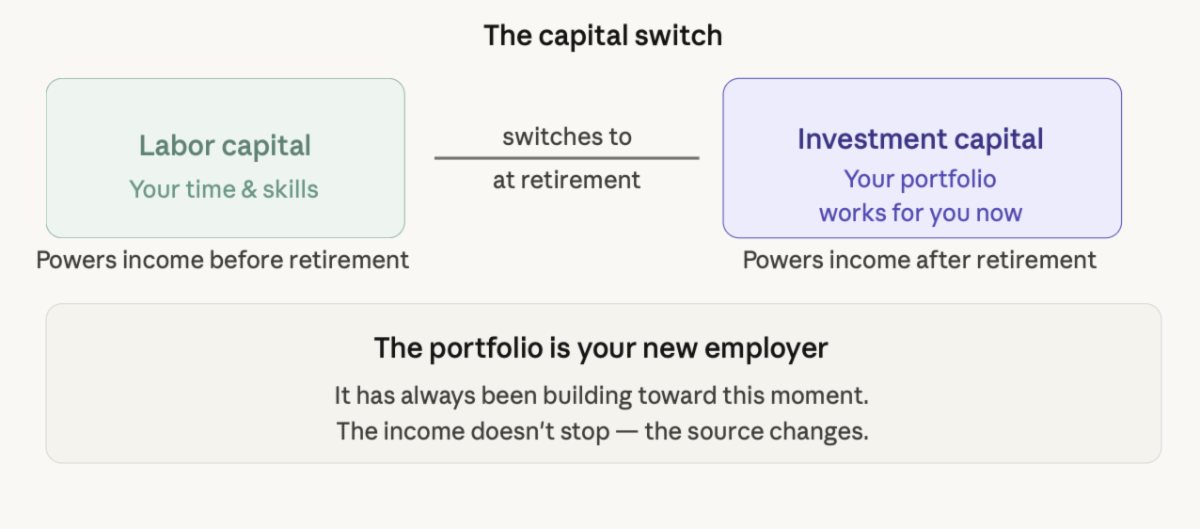
That switch is one of the most significant financial transitions we will make. And it's more complex and more liberating than most people expect.
This is the transition I've been working through with a number of clients lately, accomplished women who built wealth and now find themselves in unfamiliar territory. Not because anything went wrong. Because things went right, and now the portfolio has to justify itself.
The anxiety is real and worth naming. The capital switch asks you to trust that the portfolio will show up the way the paycheck always did. That's a surprisingly hard psychological shift, even when the math is clearly in your favor.
To ease that transition, I focus on two things.
First, we build a cash cushion before distributions begin. Depending on your comfort level, that's typically 9 to 18 months of expenses sitting in cash, not invested, just there. That buffer is less about the numbers and more about giving you permission to stop watching the market every morning.
Second, we start with monthly distributions. If you're an early retiree, seeing money land in your checking account each month mirrors the paycheck rhythm you're used to. Usually around the two-year mark, you've internalized the new reality and are comfortable moving to quarterly distributions.
Beyond the cash cushion, the broader coordination is where the real complexity lives. Social Security timing, IRA withdrawals, Roth conversions, tax brackets, Medicare premiums, required minimum distributions, legacy goals — these decisions don't live in separate boxes. They interact with each other, sometimes in ways that aren't obvious until it's too late to course correct.
One example worth understanding: many people instinctively delay drawing from their IRAs, preferring to let tax-deferred assets keep growing. It feels prudent. But it can backfire. Larger balances mean larger required minimum distributions later, which can push you into higher tax brackets, increase Medicare premiums, and trigger more taxation on Social Security income. What feels like patience in your sixties can quietly become what tax planners call a "tax torpedo" a decade later.
The smarter approach is usually lifetime tax optimization rather than minimizing this year's tax bill. That distinction, this year versus over a lifetime, changes almost every decision.
Here's what I've come to believe after working through this with clients: the greatest deliverable of this planning isn't the investment strategy. It's confidence. Understanding where your income is coming from, why the sequencing is what it is, and what your cash cushion is there for, that's what lets you enjoy your life.
You know what you built it for. And you know you can afford to live on your own terms.
|