|
Friends: The year 2024 will not be remembered fondly--the Middle East War, Ukraine, trump's election; the tragedies just piled up. In contrast, family, friends, books, travel provided much to be grateful for. Sending you my best wishes for this holiday season. May the year to come be peaceful, healthy, happy, and full of good things.
Here's what I read in December in the order read:
- The Waiting, Michael Connelly
- What I Ate in One Year and Related Thoughts, Stanley Tucci
- Heirs of General Practice, John McPhee
- It's This, Laura Foley
- Hateship, Friendship, Courtship, Loveship, Marriage, Alice Munro
- Taking the Leap: Freeing Ourselves from Old Habits and Fears, Pema Chodron
- The Bloodied Nightgown and Other Essays, Joan Acocella
- Reading Lyrics, Robert Gottlieb and Robert Kimball
- His Final Battle: The Last Months of Franklin Roosevelt, Joseph Lelyveld
- Winter Solstice, Nina MacLaughlin
- Soul Says: On Recent Poetry, Helen Vendler
- 4 3 2 1, Paul Auster
Even before I neared my eighth decade, I had long been obsessed with mortality and the finitude of our time on earth. My favorite quotation from literature is Nabokov's opening sentence in his memoir "Speak, Memory" which reads: “The cradle rocks above an abyss, and common sense tells us that our existence is but a brief crack of light between two eternities of darkness.” It is with that sense of the passage of time that I focus my December reading each year on works of those who have recently died.
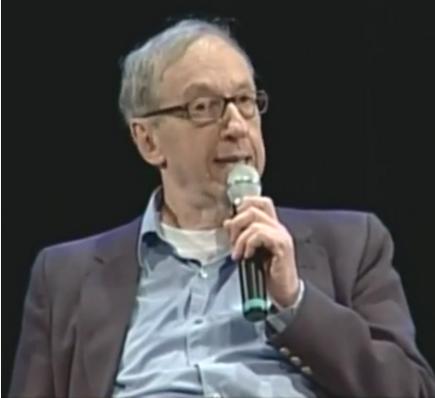
Among the many who shuffled off this mortal coil in 2024, I chose the six writers shown above. From the upper left corner clockwise: Robert Gottlieb, Joan Acocella, Helen Vendler, Alice Munro, Joseph Lelyveld, and Paul Auster--an editor, a literary and cultural critic, a professor of poetry, a Nobel Prize-winning, Canadian short story writer, a New York Times editor, and a Booker Prize short listed novelist. Each of them in their own way, have moved me with their work. As an aside, given the In Memoriam theme, I'd urge you to read what Leo Tolstoy's Ivan Ilyitch has to say about dying in the quote at the end of this Update.
Robert Gottlieb died on June 14, 2023 at the age of 92. Perhaps the most distinguished editor of our times, a fitting successor to Maxwell Perkins, he edited novels by John Cheever, Doris Lessing, Chaim Potok, Salman Rushdie, John Gardner, Len Deighton, John le Carré, Ray Bradbury, Elia Kazan, Margaret Drabble, Michael Crichton, Mordecai Richler, and Toni Morrison and non-fiction books by Bill Clinton, Janet Malcolm, Katharine Graham, Nora Ephron, Katharine Hepburn, Barbara Tuchman, Jessica Mitford, Robert Caro, Antonia Fraser, Lauren Bacall, Liv Ullmann, Paul Simon, Bob Dylan, Bruno Bettelheim, and many others. In the documentary film Turn Every Page (which I highly recommend!), Gottlieb estimated that he had edited between 600 and 700 books. In addition, he loved the ballet and music. His book "Reading Lyrics" compiles the words from more than 1000 popular songs, many from Broadway shows between 1900 and 1975. The work of 119 lyricists, from the famous to the little known, provides through music a panoramic view of the last century and its relative innocence. This 750+ page tome is not meant to be read cover to cover, but to be dipped into for a refreshing change from the day's headlines. Randomly opening the book will have you humming all day.
Joan Acocella died on January 7, 2024 at 78. She was the long time dance critic for "The New Yorker" and wrote articles on literature, dance, and psychology for "The New York Review of Books". "The Bloodied Nightgown and Other Essays" collects 24 essays that appeared in these two periodicals between 2007 and 2021. On topics from Dracula to Kahlil Gibran’s “The Prophet,”from Evelyn Waugh’s son’s book about his famous family of writers to Agatha Christie's 66 detective novels, from the Book of Job to Louisa May Alcott’s “Little Women” and Elmore Leonard’s "Get Shorty", Acocella brought a discerning eye, a sense of humor, and a readable style to each of these gems. I regretted the title but loved the bright red covers and everything between them.
Helen Vendler died on April 23, 2024, just short of her 91st birthday. The first woman University Professor at Harvard where she taught for 40 years, Vendler was our most distinguished poetry critic, reviewing poetry for both "The New Yorker" and "The New York Review of Books". "Soul Says: On Recent Poetry" was directed at a somewhat more academic crowd featuring essays about the life and poetry of 21 poets, from the well-known (Ginsberg, Snyder, Dove, Ashbery, Gluck, Ammons, Simic, Merrill) to the more obscure (Schuyler, Goldbarth, Davie, Kleinzahler). Her criteria for choosing these poets were their "presence, force, originality, strenuousness, daring, and idiosyncrasy". Her clear, concise, and straight-forward style when focused on even the most obscure poems provides insight, understanding, and ultimately an appreciation of the poet’s craft. She quotes 'ah, ah' lines from many poems, e.g. A.R. Ammons' “I go to/nature because man is scary.” or James Schuyler’s “The day/offers so much, holds/so little or is it/simply you who/asking too much/take too little.” And then there is this quote from the poet Alan Williamson who wrote about “little defiant rescues of pure momentariness from the grid of generalized time that is built into grammar itself.” This is not a book to take on a long airplane flight, but one to dip into on a cold night when one seeks comfort in words.
Alice Munro died on May 13, 2024 at the age of 92. She won the Nobel Prize for Literature in 2013 for her work as the “master of the contemporary short story who could accommodate the entire epic complexity of the novel in just a few short pages.” Her stories are set in Canada and deal with ordinary people caught up in ordinary lives. Her 14 collections of stories include "Hateship, Friendship, Courtship, Loveship, Marriage" with its nine stories that deal with the fraught relationships between men and women and with family and the complex interplay between parents, children, and siblings. The stories, written with sudden and unexpected shifts in time, place, and life events, explore the incredible richness of life and its unpredictable ups and downs. Sadly, Munro's legacy appears to be taking a major hit as news stories of her failure to protect her daughter from a predatory step-father have appeared recently in the "New York Times Magazine" and "The New Yorker." If you can separate the writer from the work, Munro's short stories are well worth the time.
Joseph Lelyveld died on January 4, 2024 at 86. A longtime columnist and editor at "The New York Times", he won a Pulitzer Prize for his book on Souith Africa. In "His Final Battle: The Last Months of Franklin Roosevelt" the rich reportorial and editorial skills of this fine writer are on full display. In 450 pages, Lelyveld takes us through 1944 with FDR's summit meetings with Churchill and Stalin at Teheran and Yalta, D-Day, the first atomic bomb tests, and FDR's efforts to create the United Nations and a post-WWII peace. Through it all, we learn of FDR's increasing fragility and ultimately death from malignant hypertension and heart failure only six weeks after his re-election to an unprecedented fourth term. This is a fine book for any history buff who is interested in WWII, FDR, or the post war world.
Paul Auster, the 'patron saint of literary Brooklyn" died on April 30, 2024 at 77. His novels, poetry, and memoirs have been translated into 40 languages. I've read several of his books, finding them both fascinating and challenging in their post-modern style and often surreal content. And here, I have a confession to make. Having started and discarded two of his short novels this month, I settled with some trepidation on his major work, "4 3 2 1", an enormous book of 800+ densely worded pages, and I'm thrilled I did. It's an incredibe novel (actually it's four incredible novels!), but one that I continue to work my way through. Stay tuned for the completed review next month, but suffice it to say, the effort has been worth every minute (?hour, ?day, ?week) spent reading it.
That brings me to the six other books whose authors, when I last checked, were still blessedly alive. What a wonderful pot pourri of reading! In contrast to last month's disappointments with several mystery writers, Michael Connelly has turned out another excellent book in "The Waiting". He has stayed fresh and sharp since 1992 through 37 books set in LA by allowing the main character, Harry Bosch formerly of the LAPD, to age through the years and the books. Bosch eventually retires but continues to appear in each book as a support and occasional consultant to a new major character, Detective Rene Ballard. Kudos to Connelly for his creativity that has kept me reading every one of his books! Can't wait for the next one.
How can you not love Stanley Tucci? The co-star of this month's top-rated movie "The Conclave", Tucci is also known for his TV series on eating his way through Italy. "What I Ate in One Year and Related Thoughts" continues the culinary theme, taking us through 2023, day by day describing his meals, the restaurants, his dinner companions, his own cooking, and his life in London, New York City, and Rome. It's fun, and it's never dull. If you like to eat, or cook, or both, you'll enjoy this light-hearted book, a pleasant relief from the daily news.
John McPhee's "Heirs of General Practice" continues my quest to read all of his books. This is the 18th book in the series that began in 1965 with a delicious book about Bill Bradley and his basketball days at Princeton, a star turn that brought that Ivy League team to the NCAA Final Four. In "Heirs", McPhee turns his discerning eye, his deep research, and his inimitable writing style on a group of idealistic medical students in the early 1970's who are committed to practicing family medicine in rural Maine. This book was particularly interesting for me since I graduated medical school at about the same time as the doctors he features but made very different career choices. Also, I know one of the physicians featured in McPhee's book, the daughter of my neonatology mentor and colleague. Even if you don't know a stethoscope from a telescope, you'll enjoy this fine book about idealism, professionalism, and their collision in the real world.
Laura Foley's ninth poetry collection, "It's This" contains quiet poems mostly set in our Vermont countryside where she lives in a neighboring town. This is a lovely volume which I read twice straight through, jotting notes and circling lines and stanzas in pencil for later review. The thing about poetry is that when it works, one ends up quoting and noting nearly the whole book, and this book works. Here are a few of my favorite lines. In “Breaking Free: Zen Ordination” she writes “….Driving home after two weeks,/breathing freely, you find your new self stuck in traffic,/ smiling and not smiling in almost equal degree”. Those lines pick up on Jung’s quote that serves as the epigraph to this poem, “If you are free of illusion, life is worthwhile and not worthwhile in almost equal degree”. I love the opening lines of “To See It”: “We need to separate/to see the life we’ve made” which refers to her climbing the hill by her house to “look back and see,/on the hilltop, our life,/lit from the inside.” This is a good book to nestle into the couch with on a snowy day as are the next two books.
Pema Chodron, an American-born, Tibetan Buddhist monk is one of the most productive authors writing about meditation and mindfulness today. In "Taking the Leap: Freeing Ourselves from Old Habits and Fears" she provides an essential 'take home lesson'---to just get over it! Chodron writes about the triggers that hook us and trap us in bad behavior---those old stories, narratives, and add-ons that we pile atop everyday events that end up with us racing down the rabbit holes of anger, hostility, frustration, and generally bad actions which we later regret. Her advice is to embrace and accept those feelings rather than using our energy to reject and flee from them. Like Tara Brach's RAIN, Chodron urges us to welcome in those feelings, investigate them, understand them, and most practically, "pause, take 3 deep breaths, and move on". Great if you can do it. I'm trying.
Finally, Nina MacLaughlin, a Cambridge neighbor, has written in "Winter Solstice" a lyrical accompaniment to her prior volume "Summer Solstice". Unlike the promising light, warmth, and green world of summer's longest day which gives us joy and comfort, we are given the dark, cold, death-reminder of the shortest day of the year. MacLaughlin pairs this depressing bit of news with hope and the reality that the next day will be a bit longer and will eventually take us to the longest day of the year. Reading this book in dark and frigid Vermont on the winter solstice with its 8 hours and 50 minutes of daylight made it all the more real. MacLaughlin writes with tenderness, skill, and realism. Worth reading this slim volume.
While I continue to work with my webmaster on resurrecting the Poetry Tree on the Charles, here are some poems that echo the In Memoriam theme. The poems appear in an extraordinary book edited by Harold Bloom entitled "Till I End My Song: A Gathering of Last Poems" in which he gathered the final work of 100 poets from Shakespeare and Milton to T.S. Eliot and Robert Frost. Here are several of those 'final' works:
-
A Silence, Amy Clampitt
- In View of the Fact, A.R. Ammons
- Elegiac Verse, Henry Wadsworth Longfellow
- One More Brevity, Robert Frost
- Lullaby, W.H. Auden
I'll conclude once again with a lengthy portion of the dying Ivan Ilyitch's thoughts from the eponymous work by Tolstoy: "The example of a syllogism which he had learned in Kiezewetter's "Logic": 'Caius is a man, men are mortal, therefore Caius is mortal' has seemed to him all his life to be true as applied to Caius but certainly not as regards to himself. That Caius--man in the abstract---was mortal, was perfectly correct; but he was not Caius, nor man in the abstract; he had always been a creature quite, quite different from all others. He had been little Vanya with a mamma and a papa, and Mita and Volodya, with playthings and the coachman and nurse; and aferwards with Kaya and with all the joys and griefs and ecstasies of childhood, boyood, and youth. What did Caius know of the smell of that striped leather ball Vanya had been so fond of? Was it Caius who had kissed his mother's hand like that, and had Caius heard the silken result of her skirts? Was it Caius who had rioted like that over the cakes and pastry at the Law School? Had Caius been in love like that? Could Caius preside at sessions as he did? And Caius was certainly mortal, and it was right for him to die; but for me, little Vanya, Ivan Ilyich, with all my thoughts and emotions---it's a different matter altogether. It cannot be that I ought to die. It would be too terrible."
|