CfJJ in the News:

Resisting Local Law Enforcement Collusion with ICE

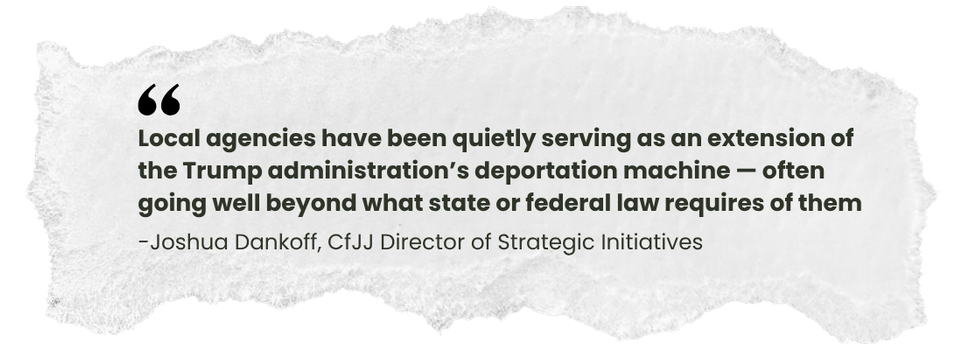
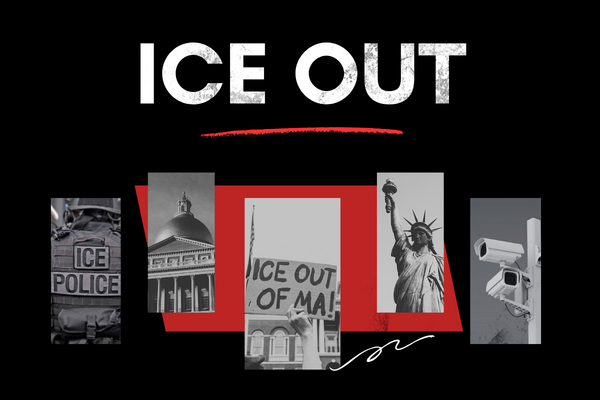
CfJJ recently published a report, ICE out: Mapping and Resisting Local Law Enforcement Collusion with ICE in Massachusetts, examining the role that Massachusetts local law enforcement and justice actors play in federal Immigration and Customs Enforcement (ICE) operations. We found that local police, sheriffs, and courthouse staff regularly collaborate, and share information, with federal immigration authorities, thereby acting as ‘force multipliers’ for ICE.

These findings are especially important in the context of aggressive federal immigration enforcement that has shifted away from the border and into our communities. While Massachusetts is often viewed as a state with strong protections for immigrants, our research shows that local systems continue to quietly facilitate federal immigration enforcement.


By amplifying these findings, journalists and media outlets are helping ensure that policymakers, advocates, and community members understand the real impact of local collaboration with ICE.


Recent coverage includes:

Mass Live - "New report argues Mass. law enforcement is ‘quietly serving’ as extension of ICE"


“In its report, Citizens for Juvenile Justice (CfJJ) urges state lawmakers to place stricter limits on the ways in which local police, sheriff departments and courthouses can work with Immigration and Customs Enforcement (ICE)."


Read the article

WGBH - "Cooperation with ICE common among Mass. law enforcement, new report finds"


"Most municipal, county, and state institutions that make up the criminal justice systems in Massachusetts share information and collaborate with federal immigration authorities, according to a report published by social services nonprofit Citizens for Juvenile Justice."


Read the article

Bay State Banner - "Police, courts maintain flow of information to ICE officials"


“The PROTECT Act does place limitations on ICE and on contact with ICE, but it could go a lot further,” said Leon Smith, executive director of Citizens for Juvenile Justice (CfJJ), an advocacy group that in April released a report documenting different ways local police departments, courts and correctional facilities collaborate with ICE. “If we’re going to take a shot at reducing the harm ICE is causing, we should really dot the ‘i’s and cross the ‘t’s.”


Read the article

 
Facebook  Linkedin  Instagram  Youtube