|
Inclusion Matters
July 2026
| | |
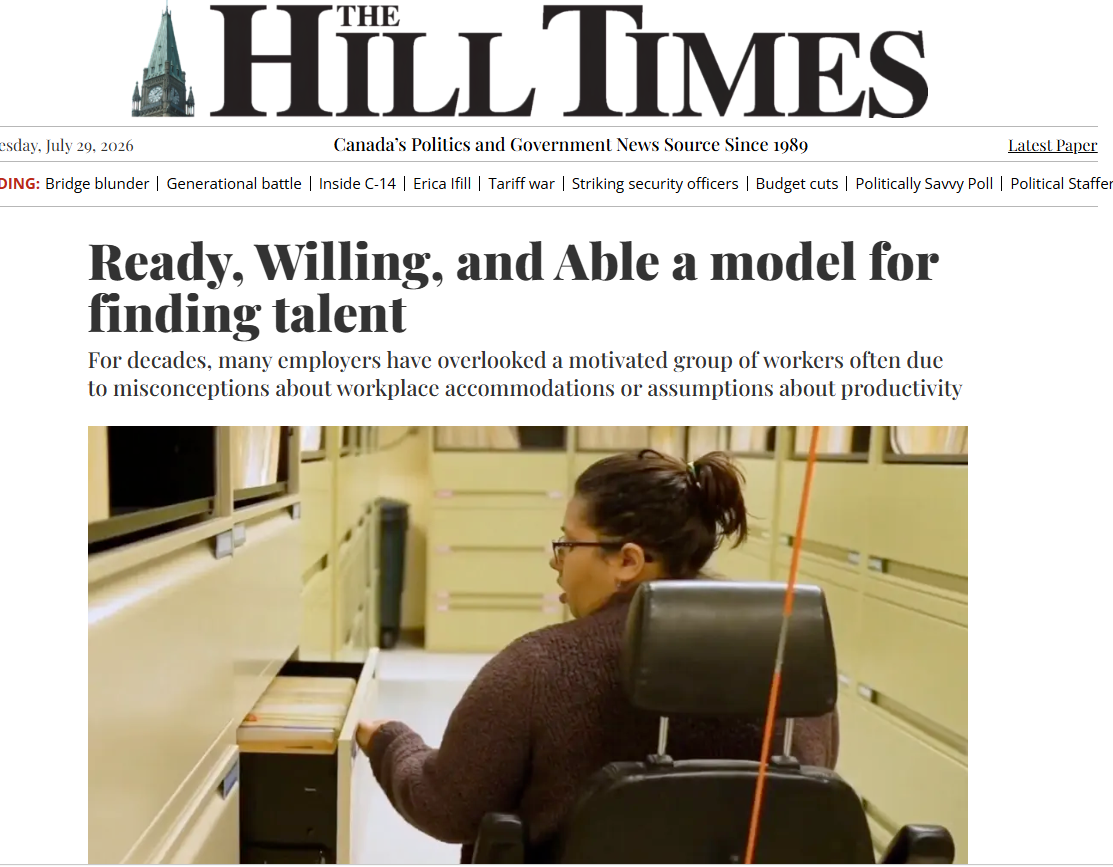
Canada's labour shortage is growing, yet nearly 500,000 people with intellectual disabilities and autism who are ready and able to work remain jobless or underemployed.
In a current opinion piece, Inclusion Canada CEO Krista Carr and Autism Alliance of Canada Executive Director Jonathan Lai discuss how the Ready, Willing and Able (RWA) program is tackling this gap by linking employers with capable job seekers.
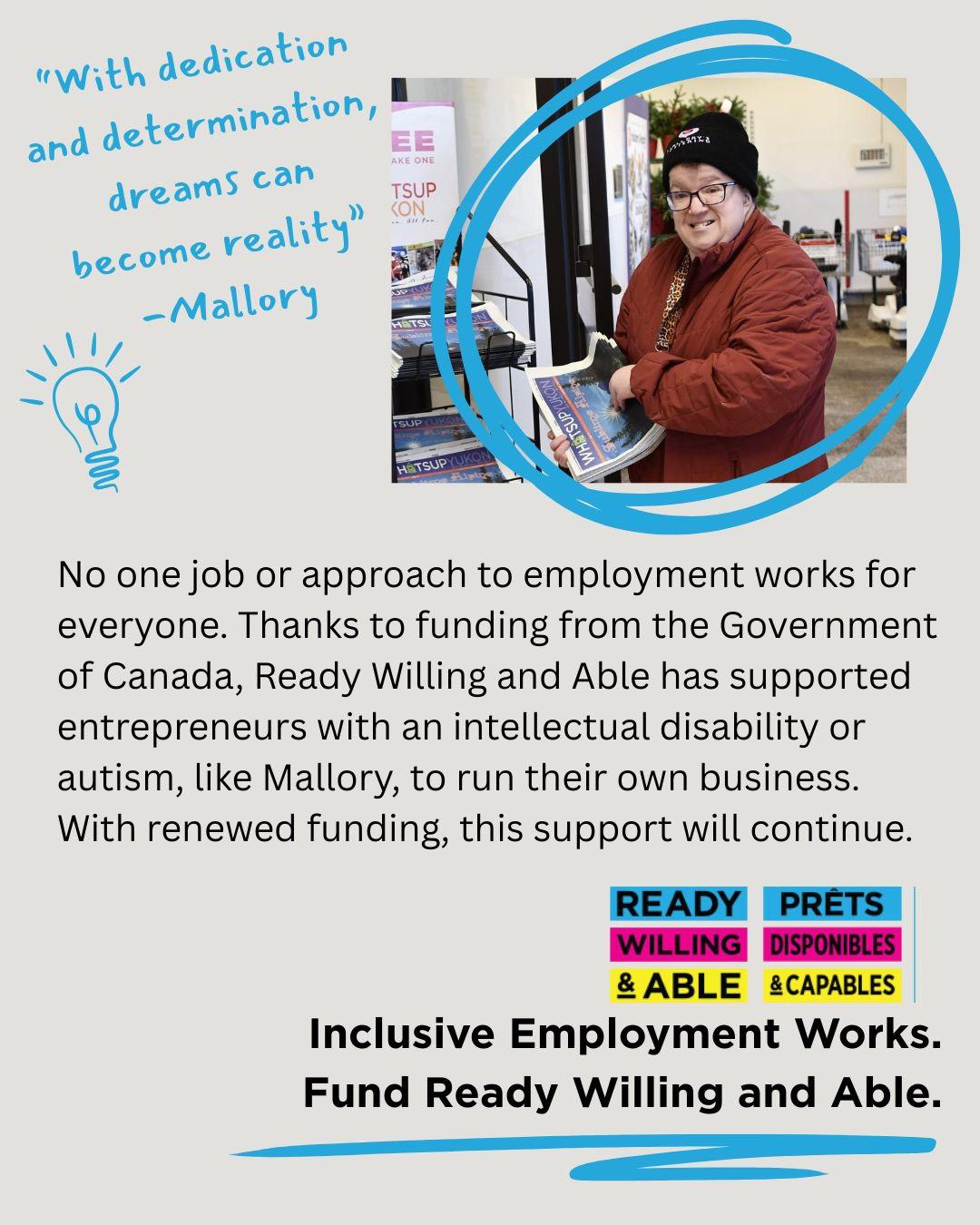
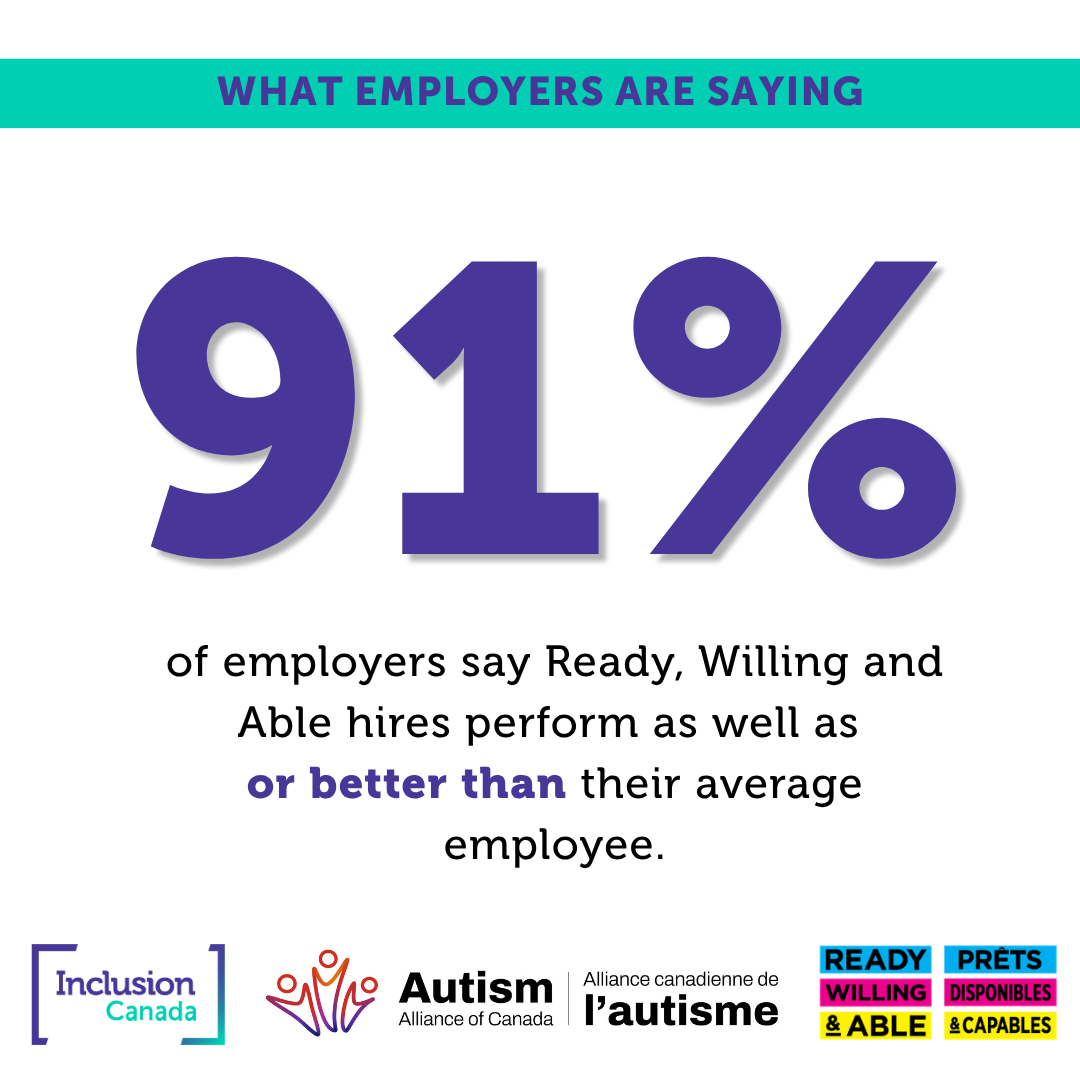
Since 2014, RWA has generated over 6,300 job opportunities nationwide- a story we've been proud to share across print, digital, broadcast and social media throughout July.
Building on this momentum, Inclusion Canada and Autism Alliance of Canada have jointly filed an RWA pre-budget submission with recommendations to boost inclusive employment and workforce participation.
Here are some of the ways we've been sharing the success of RWA:
| | | | Click above to watch Krista Carr on CTV Vancouver | |
Need Help Applying for Disability Benefits?
Inclusion Canada's Barrier-Free Benefits program eliminates bureaucratic hurdles by providing free, personalized, one-on-one support to people with disabilities.
Trained navigators guide individuals and families through the complex processes of applying for and managing vital federal supports, including the Disability Tax Credit, Registered Disability Savings Plan, and Canada Disability Benefit.
By directly assisting with applications, documentation, and advice with personal income tax filing, this vital initiative ensures people can secure the financial resources they critically need.
For many people, this kind of personalized, knowledgeable guidance makes the difference between giving up and getting the support they're entitled to.
Individuals with disabilities are often left behind in systems that don't account for their communication styles, cognitive needs, or the extra time required to gather documentation and navigate bureaucracy. The Barrier Free Benefits program is designed to meet people where they are, literally and figuratively with flexible meeting times to accommodate work schedules and personal commitments.
Again, it's completely free.
To book an appointment, contact the Inclusion Canada Navigator Team directly by phone or email.
Appointment Booking Methods
-
Toll-Free Phone: Call the national support line at 1-855-661-9611.
-
Regional Email: Contact the specific navigator assigned to your area:
Once you reach out, a regional navigator will schedule a free, individual meeting and provide support from start to finish!
| | |
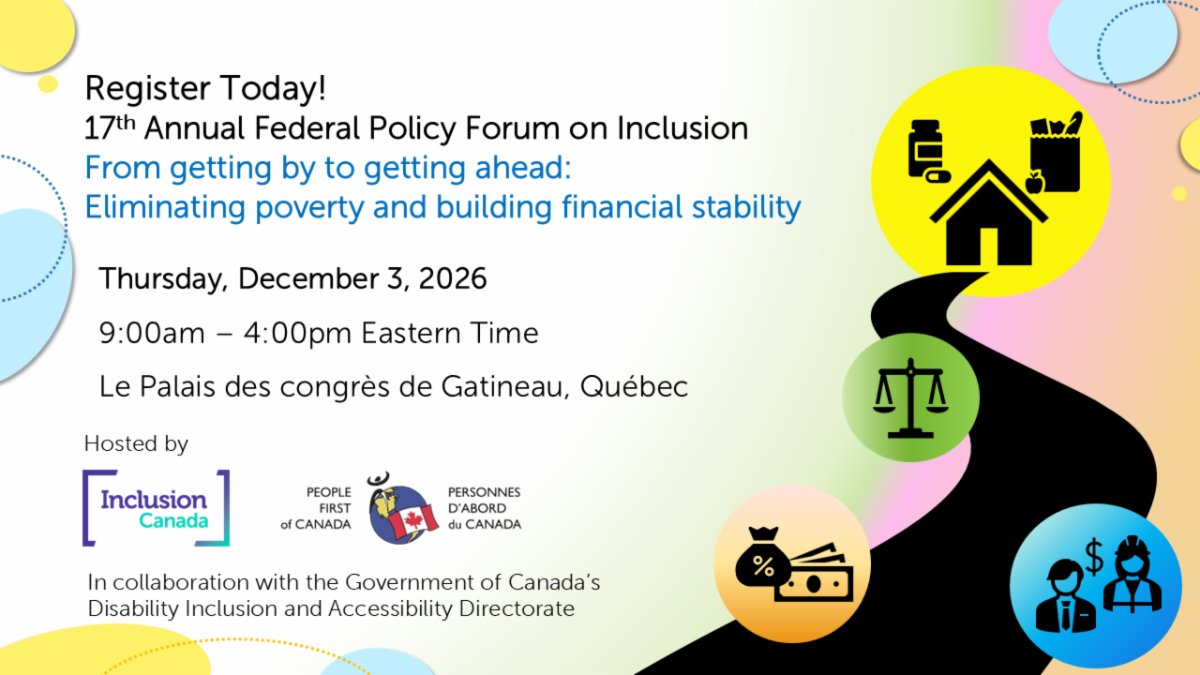
Join us December 3, 2026, at the Palais des congrès de Gatineau for our 17th Annual Federal Policy Forum on Inclusion, From getting by to getting ahead: Eliminating poverty and building financial stability.
This year's policy forum will explore what it takes to eliminate poverty and build financial stability for people with an intellectual disability and their families. This in-person event will feature a series of panels and interactive question & answer periods. Panels include lived-experience perspectives as well as research and policy expertise.
Learn more and register today at https://www.inclusioncanada.ca/page/2026-policy-forum
| |
We Want to Hear from You:
Focus Groups on School Inclusion
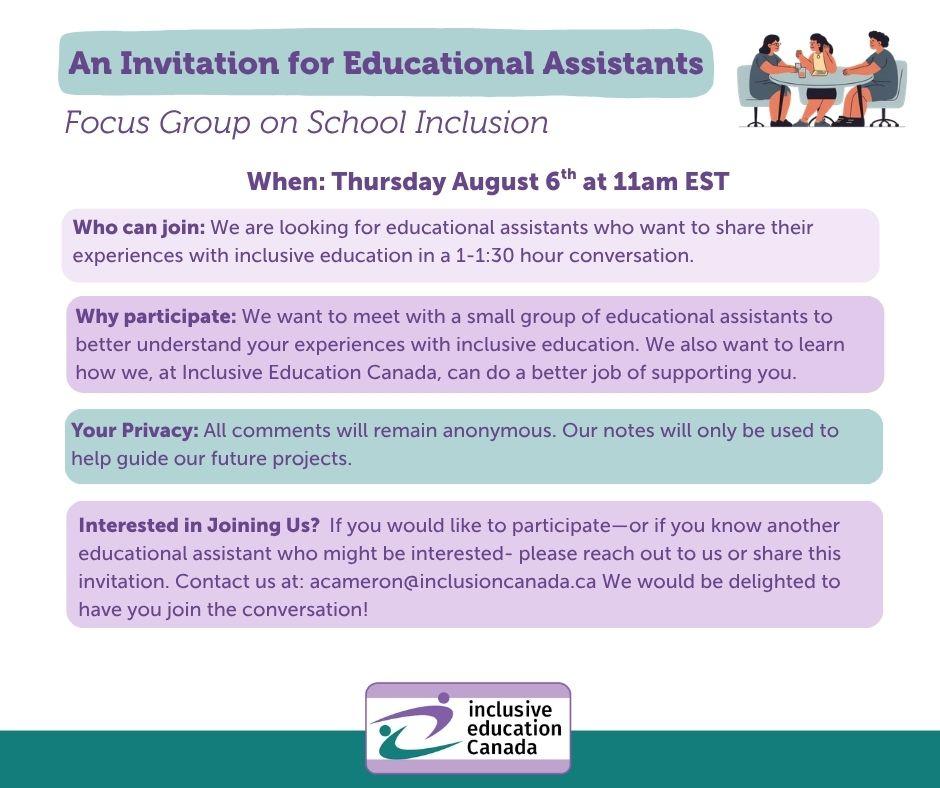
Inclusion Canada's initiative, Inclusive Education Canada, is hosting two upcoming focus groups, and we're looking for educators who want to share their experiences.
For Educational Assistants — August 6th at 11am EDT
Educational Assistants bring a unique perspective to inclusion. Join a small group conversation (about 90 minutes) to share your experiences in a candid, confidential setting. All responses are anonymous.
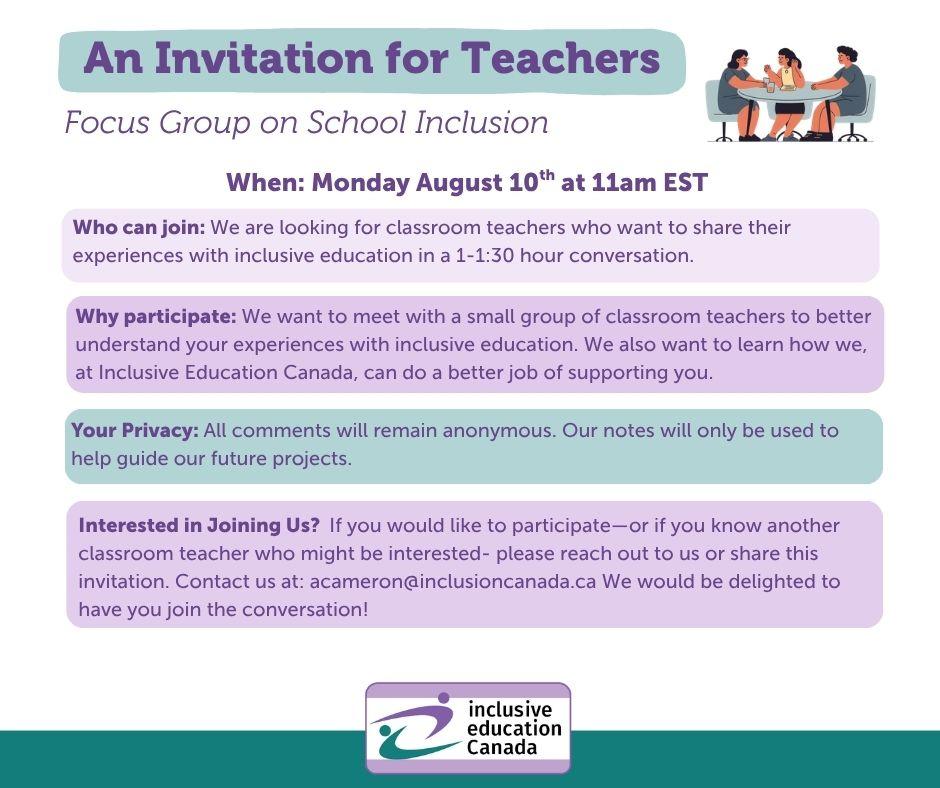
For Teachers — August 10th at 11am EDT
Are you a classroom teacher navigating inclusive education? We'd love to hear from you. Join a small group conversation (about 90 minutes) to share what's working, what's hard, and how Inclusive Education Canada can better support you. All responses are anonymous.
To sign up or share this invitation with a colleague, reach out to acameron@inclusioncanada.ca
| | |
Inclusion Canada in Action
| | |
Medical Assistance in Dying back in court
Inclusion Canada had intervener status during proceedings at the Ontario Superior Court of Justice on July 20 and 21.
The Court heard a motion seeking an interim exemption from the Criminal Code provision that excludes mental illness as a sole underlying medical condition for medical assistance in dying (MAiD).
Track 2 of Canada’s MAiD framework provides a pathway for persons with disabilities whose natural deaths are not reasonably foreseeable to receive MAiD from a physician or nurse practitioner. The law currently excludes persons whose only condition is a mental illness. An individual applicant, a physician and a lobby group are challenging that exclusion, and this motion is part of that challenge.
Inclusion Canada was an intervener on the motion. Our position is straightforward. An interim order is meant to hold the line and prevent harm that cannot be undone while a case is being decided. This motion asked the Court to do the opposite: authorize a death that no trial and no later judgment can undo.
“Constitutional questions this big should be decided on full evidence, after a full hearing,” said Krista Carr, Chief Executive Officer of Inclusion Canada in the Globe and Mail.
As the Supreme Court of Canada recognized in Harper v Canada (AG), 2000 SCC 57, courts should be reluctant to grant interim orders that effectively deliver the final result before a full hearing. Inclusion Canada intervened to protect the integrity of that process for persons with disabilities.
The hearing takes place as Parliament’s Special Joint Committee on Medical Assistance in Dying recommended in June that the exclusion for mental illness remain in place. It also comes as two constitutional challenges involving Track 2 MAiD are before the courts, including a challenge to Track 2 itself brought by Inclusion Canada and its co-applicants. Inclusion Canada is calling for Track 2 MAiD to be repealed and government to address the systemic issues that impact persons with disabilities – from poverty to lack of accessible housing, cost of living, access to health care, and other community-based supports
In May, Inclusion Canada and 89 other disability and mental health organizations wrote to Prime Minister Mark Carney, federal cabinet ministers and parliamentarians urging the Government of Canada not to expand MAiD for persons whose sole underlying medical condition is a mental illness.
| |
Leaving a Legacy of Inclusion
What kind of future do you hope to help create? For many supporters of Inclusion Canada, the answer is simple: a future where people with intellectual disabilities and their families are valued, supported, and fully included in their communities.
One way to help make that vision a reality is through a planned gift. We have launched Inclusion Canada’s Planned Giving: Your Legacy program to provide the opportunity to those looking to make a lasting impact on inclusion.
Many people are surprised to learn that planned giving is often much simpler than they think. You do not need a large estate to make a meaningful difference, and you can continue to prioritize your loved ones while supporting a cause that reflects your values.
Whether through a gift in your will, life insurance, or appreciated securities, Your Legacy can help ensure that Inclusion Canada's work continues for generations to come.
If you have ever wondered about planned giving, we invite you to learn more. You may discover that leaving a lasting legacy of inclusion is easier than you think.
| |
Our Federation- Provincial/Territorial Member Updates
Did you know Inclusion Canada has a federation of 13 provincial/territorial and over 300 local member associations across Canada? In this section, you'll learn more about their work to advance inclusion across the country!
| | |
-
Inclusion Saskatchewan welcomed Hon. Buckley Belanger, Secretary of State for Rural Development and MP for Desnethé—Missinippi—Churchill River, to brief him on their work and the Ready Willing and Able program. Ready Willing and Able is a national program that supports employers with inclusive hiring and facilitates employment opportunities for people with intellectual disabilities and autism. Inclusion Saskatchewan was also pleased to welcome Carlton Trail - Eagle Creek Member of Parliament Kelly Block to brief her on the RWA program.
-
Inclusion New Brunswick hosted its annual Garden Walk fundraiser in Saint John, generously supported by Dr. Lynn Lamont and Mike McGinnis, who once again opened their beautiful garden to the community. Lynn and Mike were presented with an Inclusion Champion Award in recognition of their outstanding commitment to inclusion.
-
Community Living Ontario is partnering with Jess Whitley at the University of Ottawa to conduct a study to better understand children with disabilities’ school experiences. They are interested in hearing about child(ren)’s experiences, including specific questions about exclusion, seclusion, and restraint. To learn more and participate, click here
-
Inclusion Nova Scotia is hosting a webinar, "The Human Rights Remedy: Imagining What Is Possible," on Thursday, August 20, 2026. The session will help families understand what the Human Rights Remedy means for housing, supports and community living in Nova Scotia — and how government and community partners need to change the way they work to make it happen. Sessions run 1:30–3:00 PM and 6:00–7:30 PM, virtually. Register here.
-
Inclusion Winnipeg is hosting "Fall for Fashion: Made in Manitoba", an inclusive fashion show gala featuring Inclusion Ambassadors and their professional counterparts walking the catwalk together in this season's finest local fashions. Throughout the evening, guests will hear stories of strength and growth from the Inclusion Ambassadors. This year's event supports people living with intellectual disabilities and their families. The gala takes place September 24, 2026 at 5 pm. Click here to get your tickets.
-
Community Living Ontario is partnering with Jess Whitley at the University of Ottawa to conduct a study to better understand children with disabilities’ school experiences. They are interested in hearing about child(ren)’s experiences, including specific questions about exclusion, seclusion, and restraint. To learn more and participate, click here
| |
| | | |