|
This third of four briefs on "Financial Literacy Month" was written by the The Financial Awareness Foundation.
SIX STEPS TO SUCCESSFUL FINANCIAL PLANNING
Now is the perfect time to put your clients and your financial & estate and gift planning house in order.
Comprehensive financial planning involves a lot of factors, which can seem complex and confusing. If you don’t know the essential principles of smart financial management and how to use them, you may not even try. Armed with the correct knowledge, financial planning can be very rewarding, as you see yourself actually progressing toward your financial goals.
First, you need to do some serious (and playful) thinking about your goals, both personal and financial. These will serve as the basis for all of your planning, giving your actions meaning and direction. Then, to simplify and clarify financial planning, follow the six-step system for analyzing and planning any area of your financial life. This six-step system will guide you in a logical progression toward establishing, understanding, and meeting your financial goals for:
- Financial Independence & Retirement
-
Major Expenditures
- Investments
-
Taxes
- Insurance / Risk Management
- Estate & Gift Planning
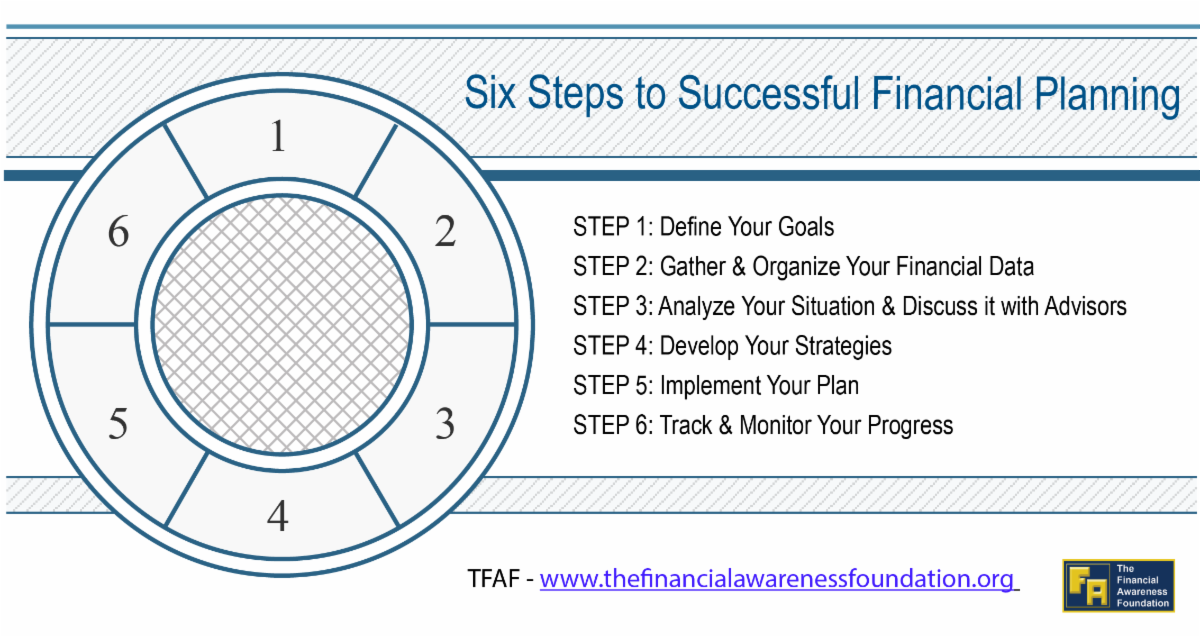
THE PROCESS - SIX STEPS TO SUCCESSFUL FINANCIAL PLANNING
1. Define Your Goals: State your personal and financial goals as concisely as possible.
2. Gather & Organize Your Data: Make sure your financial information is organized so that your current financial position is clear. Hopefully you’ve already done this by working through Part I of this book. (Refer to your Net Worth Statement and Cash Flow Planners.) If not, do so as you address each of the six areas of personal finance in this section.
3. Analyze Your Situation: Look at your current financial position. Are you meeting your goals, or are you falling short?
4. Develop Your Strategies: Identify plans that will help you achieve your goals in the most efficient manner.
5. Implement Your Plan: This is your action step. Take definitive measures to achieve your goals.
6. Track & Monitor Your Progress: Depending on which of the six areas you are reviewing, check your progress on a monthly, quarterly, semiannual, or annual basis. Learning, understanding, and using the essential principles of smart financial management is very important as it gives you the tools to address everyday financial decisions in a more informed manor.
April - during Financial Literacy Month - is a great time to do this!
Rich, poor or somewhere in between--that’s about half the adults in your hometown: many prospects that need your assistance and are able to pay for your expertise.
Click here for a Financial Planning Article you are welcome to share with client, friends and family
|